
A gravel frameset is easy to fall for and expensive to undo. The finish looks right, and then the tire you actually ride rubs in wet clay, the hanger is a special-order part, or the bottom bracket needs a tool you do not own.
This checklist is for DIY builders and small brands shortlisting a platform before paint, inventory, and warranty become real costs. Decide the job, then fit, then clearance, then the standards you can still service in five years.
When you are ready to compare live geometry and finishes, browse the gravel frames lineup with two candidates, not twelve.
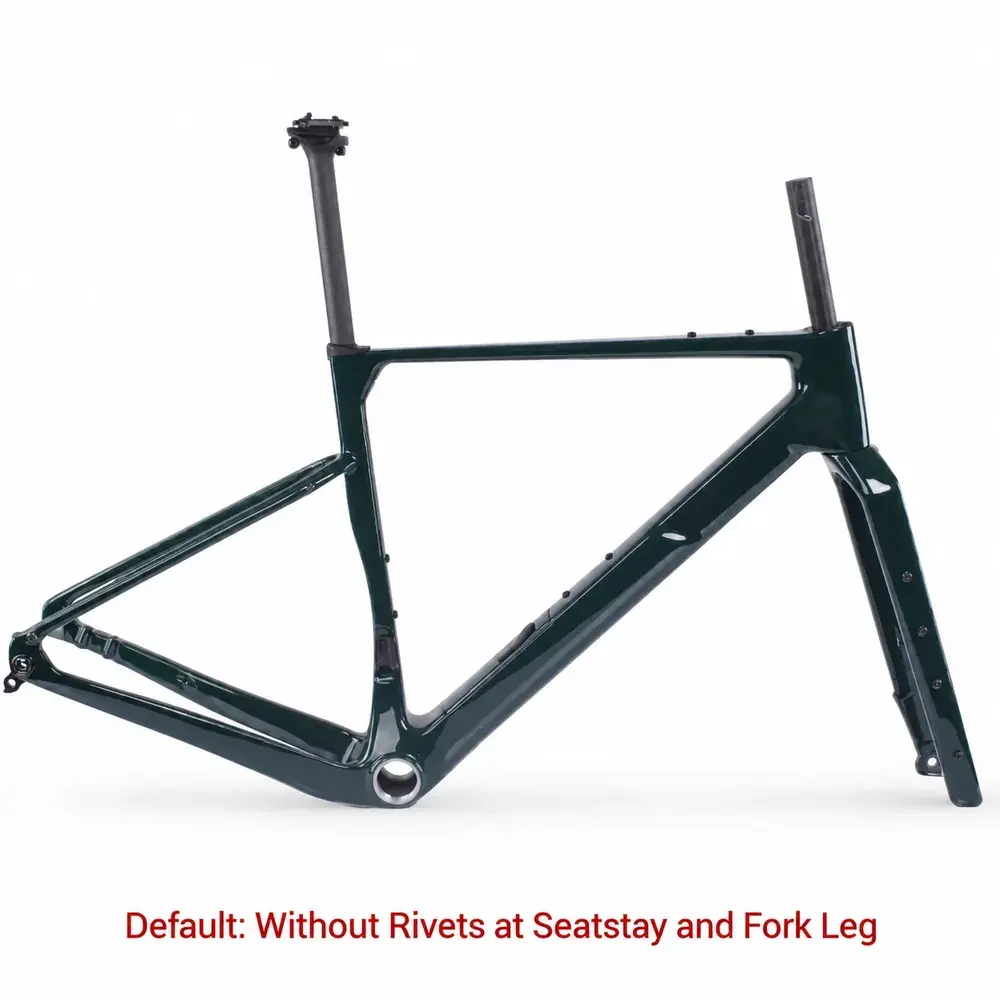
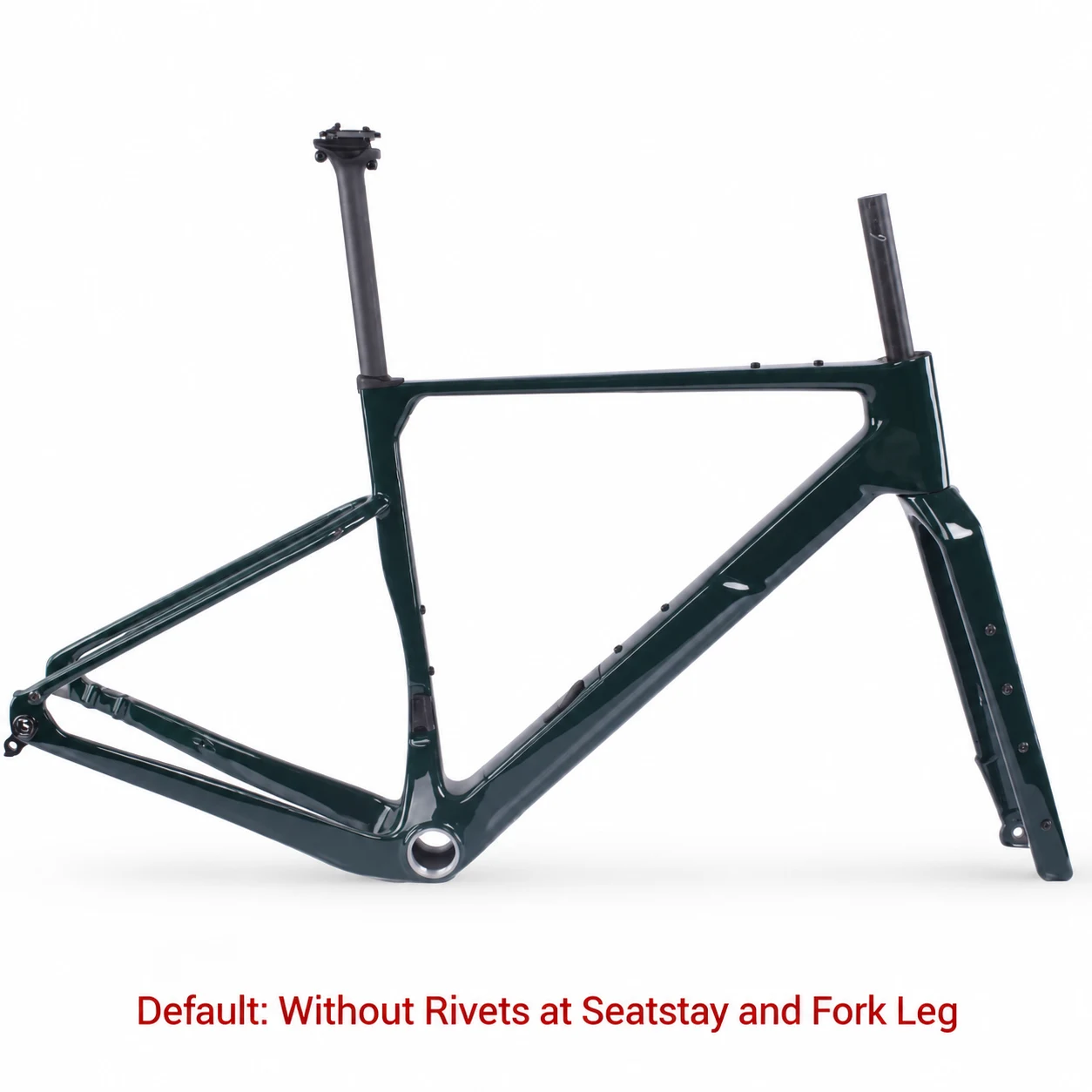
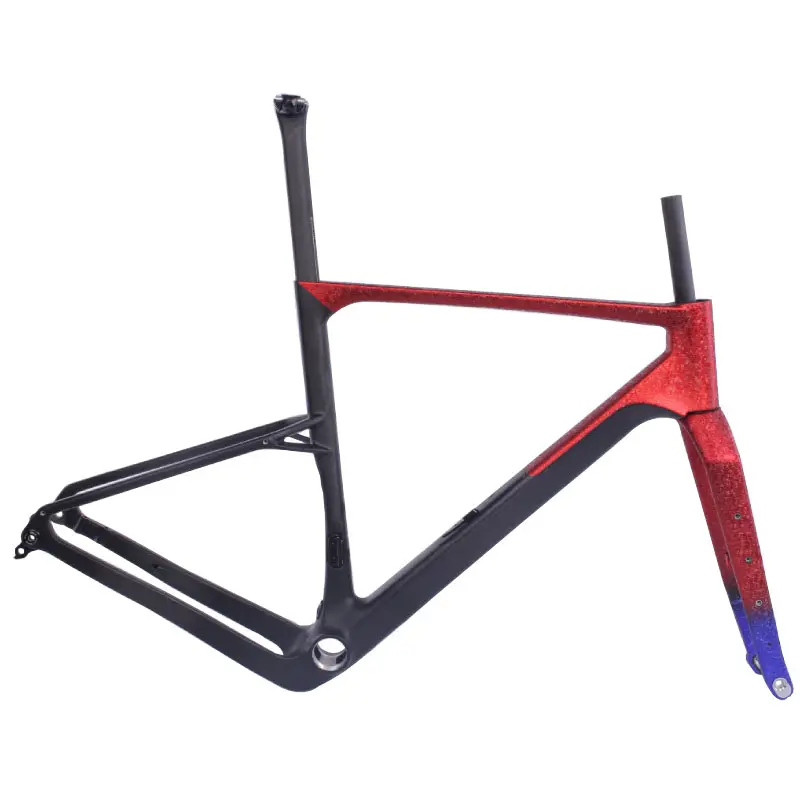
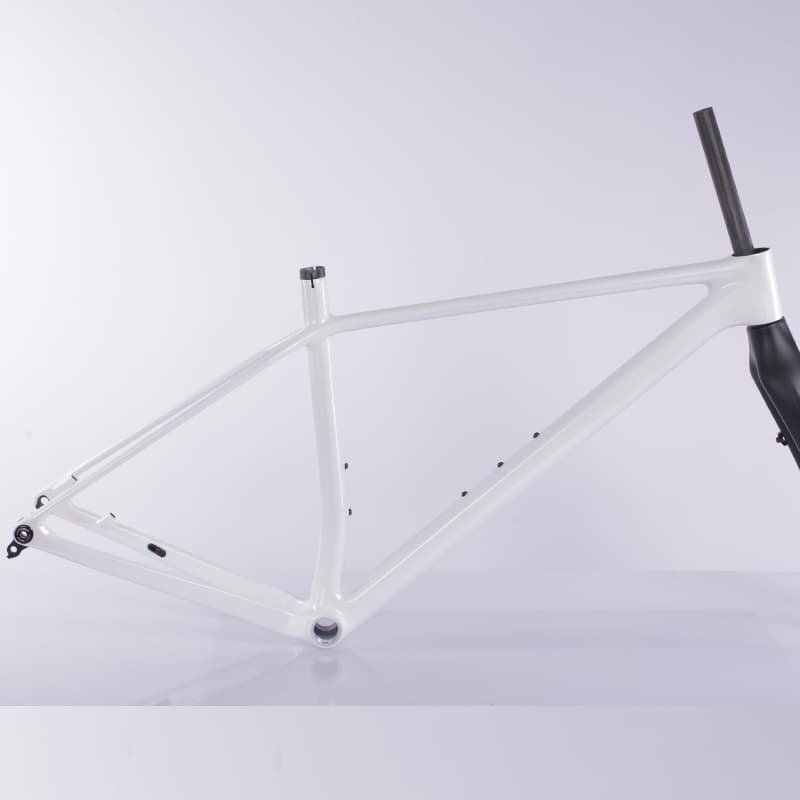
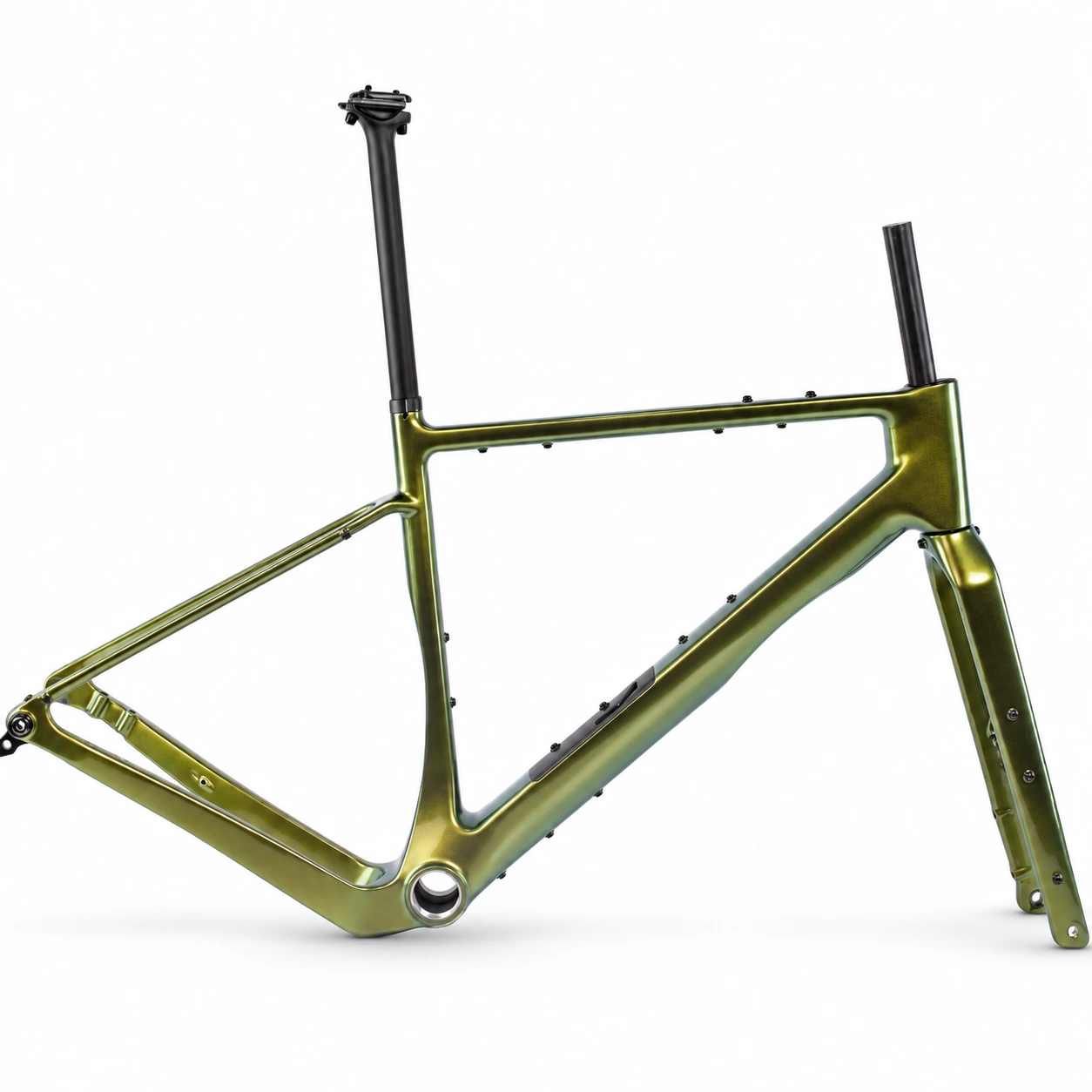
Start from the job and fit, then shortlist platforms like FM376 against clearance and standards.
Start with the job, not the brochure
Most regretted frames were asked to do three jobs at once. Pick one primary use and one secondary use. If the third use happens twice a year, solve it with a tire or a bag.
| Primary use | Prioritize | Usually skip |
|---|---|---|
| Gravel race / fast mixed | Stiff BB, moderate clearance, clean routing | Heavy racks, unused tire room |
| All-road / weekend gravel | Balanced stack and reach, 45–50 mm with mud room, serviceable standards | Ultra-low race stack |
| Bikepacking / loaded adventure | Stability with luggage, high clearance, real mounts | Min-weight race shaping with nowhere to hang bags |
Decision tree:
- Known 40–47 mm tire on hardpack and events: stay in the moderate-clearance band. Storage is a convenience.
- Regular loose, broken, or muddy routes, and you want a 50–57 mm option: start from clearance.
- Overnight kit or soft surfaces: choose the wide-clearance, mount-rich platform even if you race once a year.
- Undecided groupset: treat threaded T47 and a UDH dropout as baseline insurance.
Geometry and fit: compare numbers, not size letters
Compare stack and reach to a bike that already fits, in the size you would order. Size letters do not travel between brands. Gravel geometry is often a bit longer and taller than a criterium road frame, and a bigger tire raises the bike slightly.
Use reach if cockpit length is your sensitive number; use stack if you need a higher front for long days or a lower one for a race position. Then check trail with a bar bag, chainstay length with a seatpack, bottom-bracket drop (a taller tire spends some of the planted feel), and seatpost diameter plus insertion if you want a dropper or a post you already own.
If you sell these frames, publish the full geometry table. Hidden numbers create returns.
Tire clearance: treat 45, 50, 57, and 61 mm as different bikes
A published “max tire” assumes a particular tire on a particular rim, usually in the dry — not a promise that your casing and last week’s mud will behave the same way.
| Band | Best for | Note |
|---|---|---|
| About 45 mm | Fast mixed road with a known 40–45 mm tire | Little reserve if you later want more volume |
| About 50 mm | Modern all-road middle ground | Extra mud room if you usually run 45 mm |
| About 57 mm | Rough, loose, or broken surfaces | 45, 50 and 57 mm clearance. Example: FM376, listed 700c × 57 mm with 6 mm residual clearance |
| About 61 mm | Bikepacking and soft surfaces | 61 mm bikepacking frameset. Example: FM356, listed 700c × 61 mm with 6 mm residual clearance |
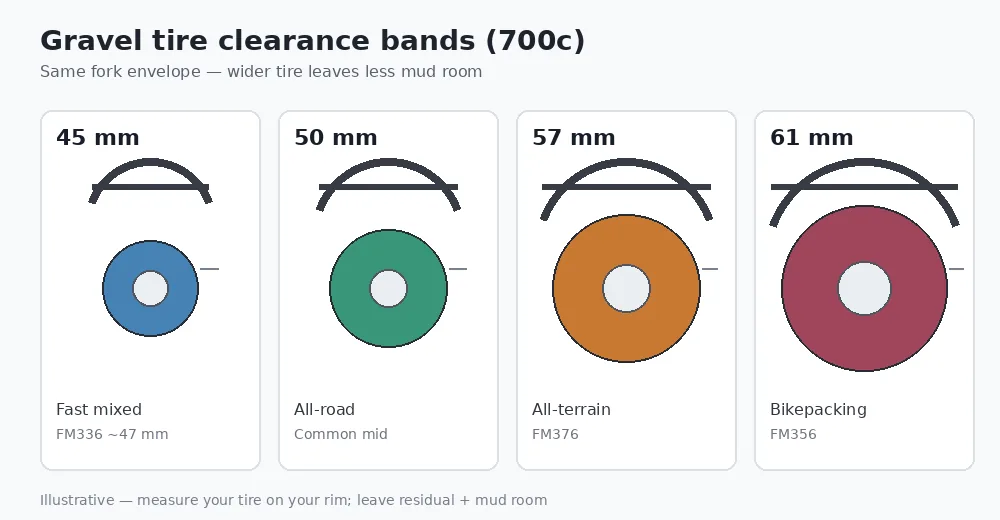
45 / 50 / 57 / 61 mm are different bikes in practice — wider tires leave less mud room.
If you are between two bands, take the larger one unless you already know the race tire. A 57 mm frame can still run a 45 mm tire. A 45 mm frame cannot grow into a 57 mm tire.
The European Tyre and Rim Technical Organisation (ETRTO) publishes tire-and-rim pairing recommendations; ISO 5775 covers bicycle tires and rims. Follow the more conservative of the tire label and the rim maker’s chart, especially on hookless rims, which add approved-tire lists and lower pressure caps. Nominal width is measured on a specified measuring rim, so the same tire changes shape when the rim changes. Continental’s published clincher guidance: actual width shifts by about 0.4 mm for every 1 mm your internal rim width differs from their measuring rim. Schwalbe notes that makers often work inside a ±3 mm tolerance, that a freshly fitted tire can grow another 1–2 mm, and that width should be measured at the widest point, including knobs.
Mount your intended tire on your intended rim, inflate it, and compare the measured width with the listed maximum plus the factory’s residual gap. Mondince lists 5 mm on the FM336 (700c × 47 mm) and 6 mm on the FM376 and FM356. Leave room for mud, casing growth, and fenders, and ask whether front and rear limits match. Do not assume 650B works because 700c is listed.
Wrong clearance is the usual build-killer. The tire rubs when it is dirty or flexed, or you spend two years wishing you had bought the wider band.
Bottom brackets: T47 for a reason, not as a creak slogan
T47 is an open threaded standard developed by Chris King and Argonaut Cycles. The shell uses an M47 × 1 thread and a 46 mm internal diameter — the same diameter family as PF30 — but the cups thread into the frame instead of being pressed in.
The folklore is that T47 “eliminates creaks.” Creaks also come from contaminated press-fit interfaces, poorly faced shells, loose crank preload, or a dry seatpost. Threaded cups make a noisy prep easier to service; they do not forgive skipped grease, facing, or torque.
Better reasons to specify T47: you can replace bearings with normal workshop tools; the large shell supports modern 30 mm spindles without locking you to one crank family, if the cups match; and a threaded interface is easier to inspect and document for warranty than a bonded-in bearing.
Shell width still matters. Many Mondince gravel platforms use a T47 85.5 mm shell, including the FM366 and FM376 — not the same as a 68 mm T47 road shell. Pair the cups to the crank, then confirm chainline and front-derailleur clearance if you run 2x. For both standards on one platform, see the T47 and UDH frameset guide; FM366 and FM376 are the examples.
UDH and drivetrain lock-in
SRAM introduced the Universal Derailleur Hanger in 2019 to replace a pile of brand-specific hangers with one licensed interface. Frame makers may use it under a free license if the dropout and hanger conform to the specification. It standardizes derailleur position, can rotate rearward in an impact, and is meant to be a spare SRAM dealers actually stock.
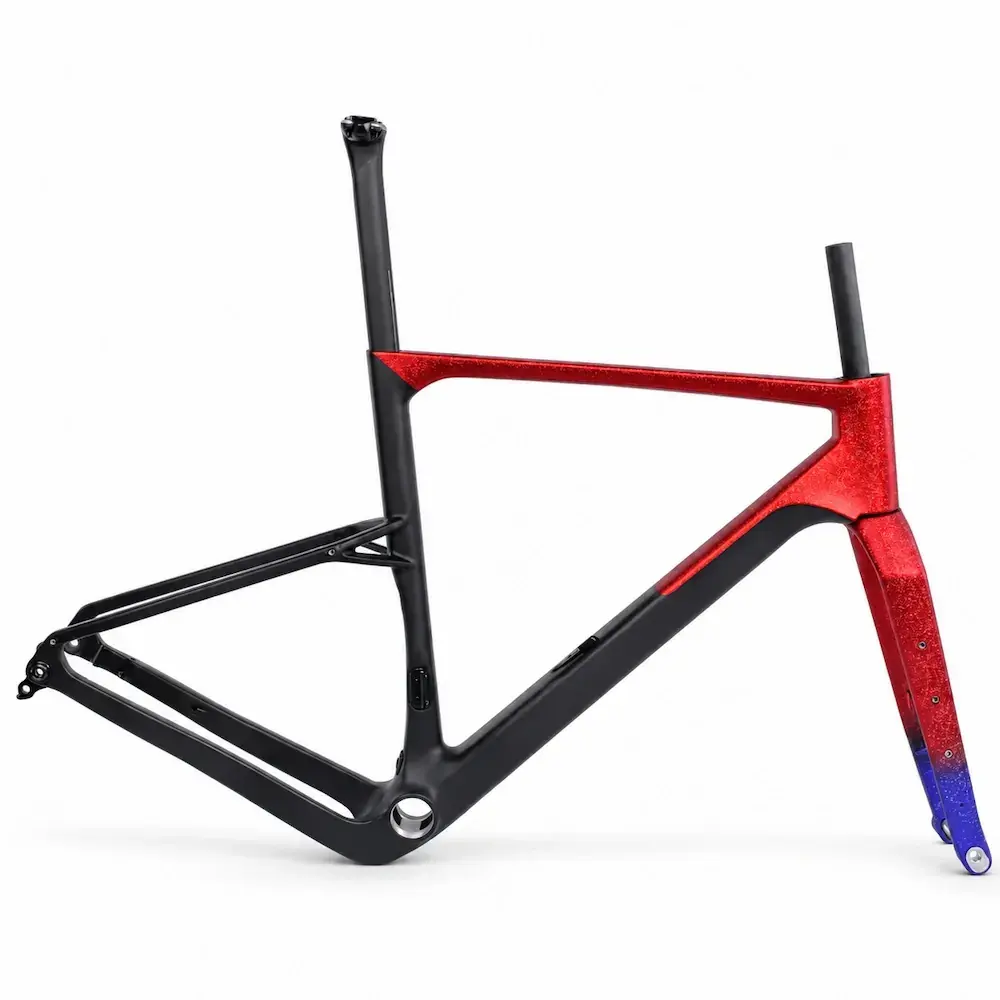
FM366 — aero-leaning gravel frameset with T47 and UDH called out together.
That last point is the failure mode: a proprietary hanger is cheap until it bends and the bike waits on a unique SKU.
UDH also opened the path to SRAM’s Full Mount derailleurs, which clamp around the dropout and reference the rear axle — Eagle Transmission and the drop-bar RED, Force, and Rival XPLR AXS groups. You do not have to buy those tomorrow. You do have to live with the dropout you choose today. A UDH frame still runs a conventional derailleur on the hanger; confirm 1x versus 2x, maximum chainring, and whether a front-derailleur mount or cover is included. More detail: what a UDH hanger is.
Storage and mounts: everyday kit is not the trip
Internal downtube storage is a hatch, not a closet. It is for the kit you want on every ride — multi-tool, tube, inflator, a couple of gels — kept low and centered. It does not replace a frame bag, seatpack, or fork cages on a two-night trip.
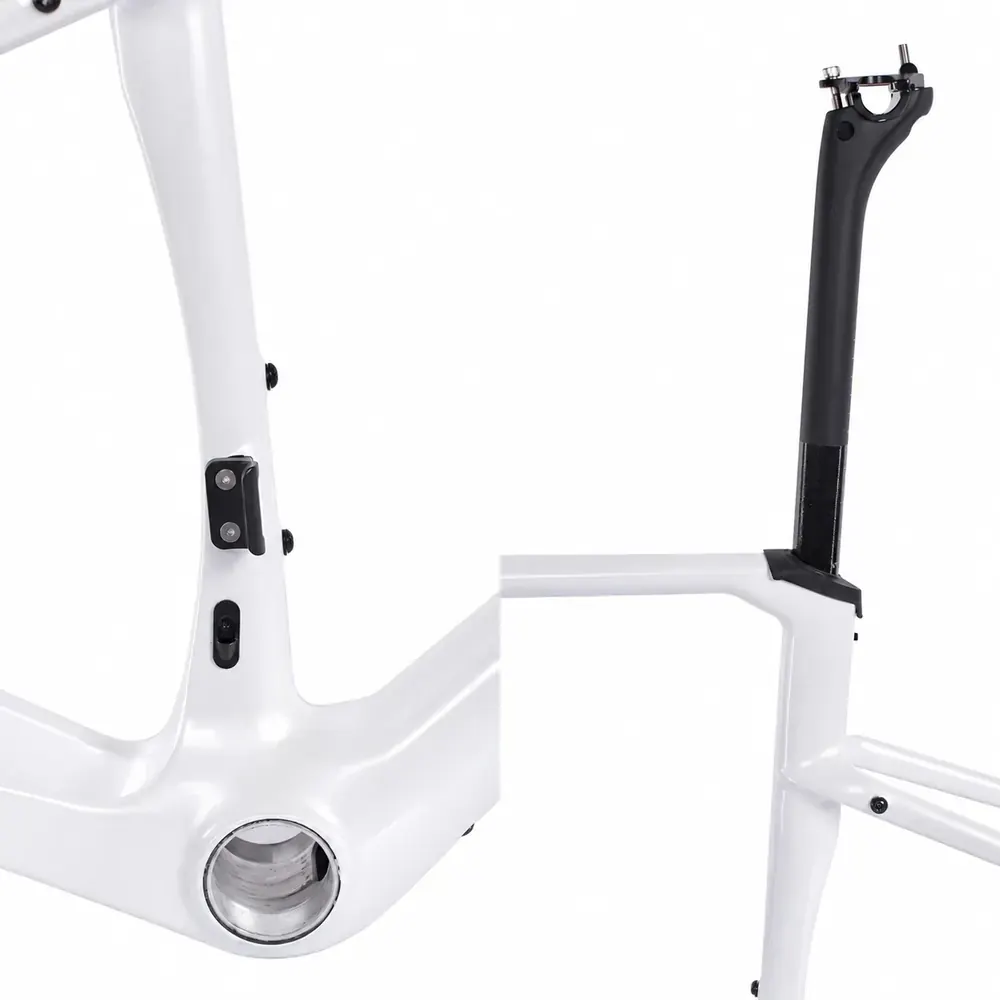
FM336 magnetic downtube hatch — everyday essentials, not overnight luggage.
Ask how the hatch closes, whether contents rattle, and whether you still want a small dry bag inside in heavy rain. The FM336’s magnetic downtube hatch is about 0.8 L in Mondince’s published comparison — a race-day kit, not a sleep system. See the downtube storage guide for how that compartment is used.
Then list mounts against the trip: bottles, top-tube bag, fork cages, rack or fender bosses only if you will use them. Missing mounts cannot be added later on a carbon frame. Study the FM356 when luggage and 61 mm tire room drive the choice; that platform also has a fork cargo slot.
Wheels, axles, and the small parts that stop a build
“12×100 front, 12×142 rear” describes hub spacing, not the axle in the box. Thru-axles differ by length, thread pitch, and head shape. The wrong one either fails to clamp the wheel or damages dropout threads.
On current Mondince sheets, the FM336 uses a 12×119 mm front axle with a 1.75 pitch, while the FM376 and FM356 use 12×124 mm front axles with a 1.5 pitch. Rear axles on those models are listed around 12×171 mm × 1.0 pitch; the FM366 lists a 12×123 mm front and a 12×169 mm rear. Match the frame drawing, not a generic gravel stereotype.
Check the rest of the small print: flat-mount disc and max rotor (many of these platforms list 160/180 mm); headset (several current Mondince gravel models use a 1-1/2" integrated upper and lower, not 1-1/8" / 1.5"); seatpost (27.2 mm round on the FM336, FM376, and FM356; D-shaped on the FM366); and whether internal routing dictates a specific bar and stem.
Paint, warranty, and what to ask the factory
This is the part a product photo cannot answer.
Bicycle safety standards do not have a “gravel” category. ISO 4210-2:2023 sets requirements for city/trekking, young adult, mountain, and racing bicycles; ISO 4210-6:2023 sets the frame and fork test methods. Older EN 14764, EN 14766, and EN 14781 reports describe withdrawn standards, superseded by the EN ISO 4210 series.
The manufacturer chooses which of the four categories to test against. Racing is the usual default for a drop-bar frame — defensible, and not the same test as mountain. In ISO 4210-6:2023, the mountain-category frame-impact drop is 360 mm versus 212 mm for racing, and horizontal fatigue loads also differ. A certificate that only says “ISO 4210 tested,” without edition, category, and clauses, is incomplete. A pass means a sample survived defined loads, not that every production frame was destroyed on the rig. Ask whether the report is in-house or third-party, and what can be shared with a compliance team.
Frames sold into the United States also have to satisfy 16 CFR 1512, the CPSC bicycle regulation. If a luggage carrier is fitted as original equipment, ISO 11243 applies to that carrier and the loads it puts into the frame.
If you are buying an open-mold frameset from China, separate a documented factory product from a counterfeit wearing someone else’s logos. Read how to choose a Chinese open-mold frameset before you wire a deposit.
Questions worth sending before you pay
- ISO 4210 edition, category, and report scope for this platform?
- Which tire, rim internal width, and wheel size sit behind the max clearance — and is it the same front and rear?
- Residual clearance around that max tire?
- T47 shell width, recommended cups and spindle, max chainring for 1x and 2x?
- Licensed UDH interface, and is a hanger included?
- Axle lengths, pitches, and what ships in the box?
- Headset, seatpost diameter and minimum insertion, max rotor?
- Storage volume, hatch type, and a mount map?
- Paint options, added weight versus raw, lead time, artwork approval?
- Warranty party, structural versus paint coverage, crash replacement, and what voids it?
- Serialization, QC photos, and packaging if you are branding the frame?
Budget the complete bike, not just the frameset
The frameset price is the visible number. The bicycle cost adds wheels, groupset, cockpit, saddle, tires, assembly, shipping, duties, and the time spent chasing a mismatched axle.
As a rule of thumb, the groupset and wheelset together often cost more than the frameset on a serious custom gravel build. Choose the tire and rim pairing first, then a frame that clears the measured width with mud room left over.
Read the packing list. A typical Mondince gravel package lists the frame, fork, seatpost, axles, headset, and a bag, not a groupset or wheels. A raw medium weight is not a painted bike in your size. One current sheet notes that a UD matt finish on the FM356 adds about 120 g versus the raw medium frame.
Small brands should also count paint minimums, extra inspection, branded packaging, warranty reserve, and staff time on fit questions. A factory quotation and a sellable complete bike are different businesses.
A shortlist workflow that actually works
- Write down the primary use and the tire you will run most often.
- Compare stack and reach to a bike that already fits.
- Choose a clearance band (45 / 50 / 57 / 61) and decide whether you need reserve for mud or fenders.
- Lock the service standards: bottom bracket, hanger, axles, brakes, headset, seatpost, routing.
- List storage and mounts against real trips.
- Cut the field to two platforms. Examples after the criteria: FM336 for a downtube hatch; FM376 for 57 mm all-terrain room; FM356 for 61 mm bikepacking clearance; FM366 or FM376 when you want T47 and UDH together.
- Send the factory-question list and read the replies against the spec sheet, not the hero image.
- Compare the two survivors side by side in the gravel category, then choose paint.
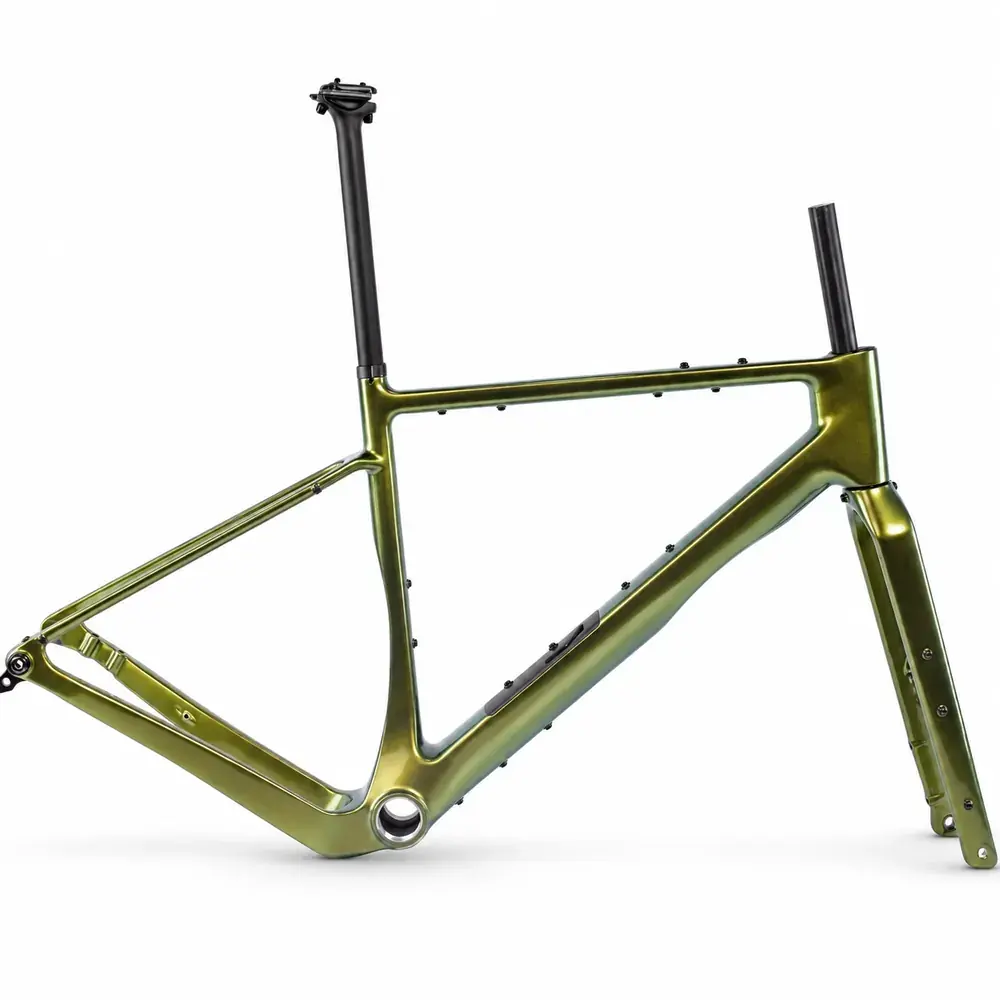
FM356 — when 61 mm clearance and packing drive the shortlist.
If a platform fails clearance, dropout, or fit, drop it.
Buyer checklist
| Check | Pass when |
|---|---|
| Use case | Primary and secondary jobs are written down |
| Fit | Stack and reach match a known-good bike |
| Clearance | Measured tire on your rim fits, with residual and mud room |
| Bottom bracket | Shell standard and width match the crank |
| Hanger | UDH if you want easy spares and a Full Mount path |
| Wheels / axles | Spacing, length, and pitch match the drawing |
| Brakes | Mount type and max rotor confirmed |
| Storage / mounts | Hatch and bosses cover the kit you carry |
| Compliance | Test category, edition, and report scope are named |
| Ownership | Warranty party, paint, and included parts are in writing |
| Budget | Complete-bike cost is tallied, not only the frameset |
FAQ
Do I need the widest tire clearance I can find?
No. Take the band that matches your terrain and leaves room for mud and casing growth. Too little width cannot be added later.
Is T47 required?
No. If two frames are equal otherwise, prefer the threaded shell you can service, and match the cups to your crank.
Should every gravel frame be UDH?
Not every rider needs a Full Mount groupset this year. If you crash hangers, travel, or may want SRAM’s axle-referenced derailleurs later, specify UDH now.
What does an ISO 4210 test actually tell me?
It tells you a sample survived the load cases for a named category, using ISO 4210-6 methods against ISO 4210-2 requirements. It does not make the frame gravel-specific — that category does not exist in the standard — and it is not a crash guarantee. Ask for the category and the edition.
Can I run 650B instead of 700c to get more volume?
Sometimes. 650B can fit a taller tire into the same frame space. Use it only if the manufacturer lists it and you have checked brake, drivetrain, and fender clearance with that wheel.
What should a small brand ask beyond the rider checklist?
Who stands behind the warranty in your market, whether third-party reports can be issued in your name, how paint and packaging are handled, and whether the mold is a documented open-mold or private project rather than a copy of someone else’s frame.
Choose the frame that survives the checklist
Pick the job, then the fit, then the clearance band, then the standards you are willing to service. A shortlist almost writes itself after that: FM336 when storage is the point, FM376 when you need 57 mm all-terrain room, FM356 when you need 61 mm bikepacking clearance, or FM366 or FM376 when you want T47 and UDH called out together.
Run the table once. Send the factory questions. Compare the two frames that still remain. The right choice clears the tire you will ride, fits the body you already know, and uses parts you can still buy when something bends on a wet Tuesday.