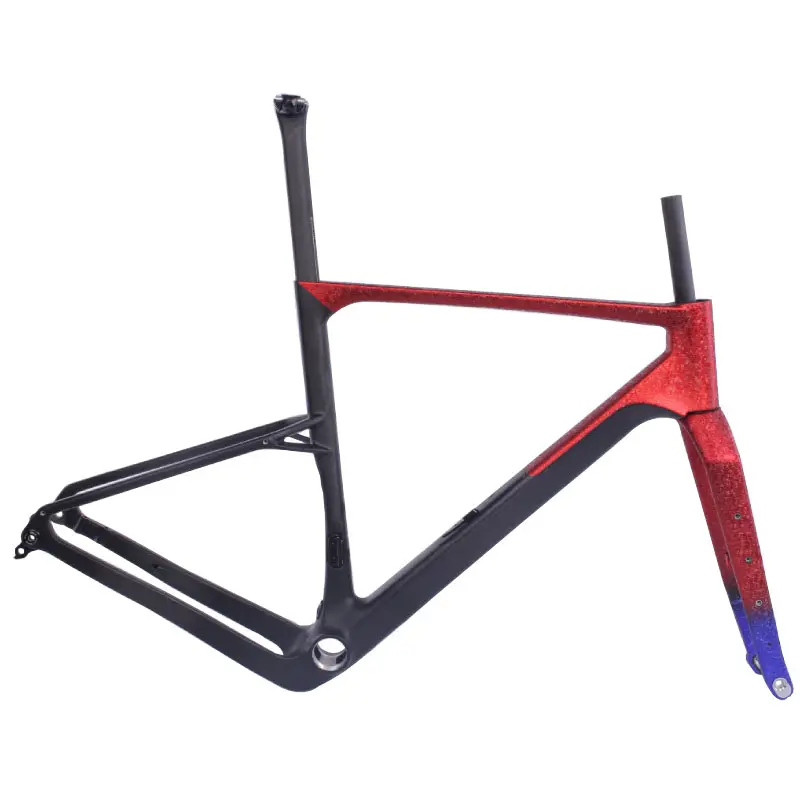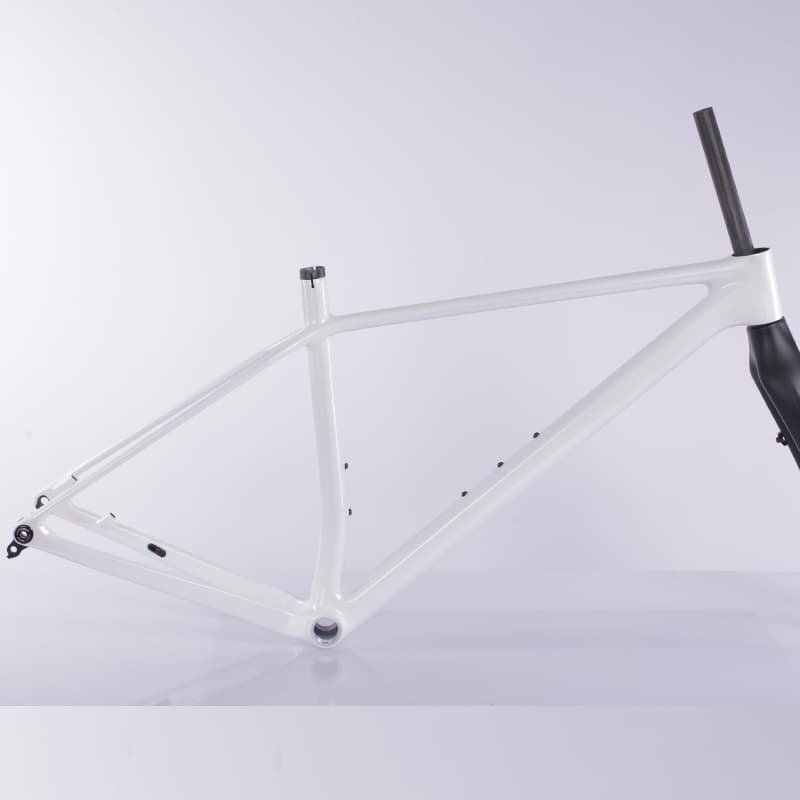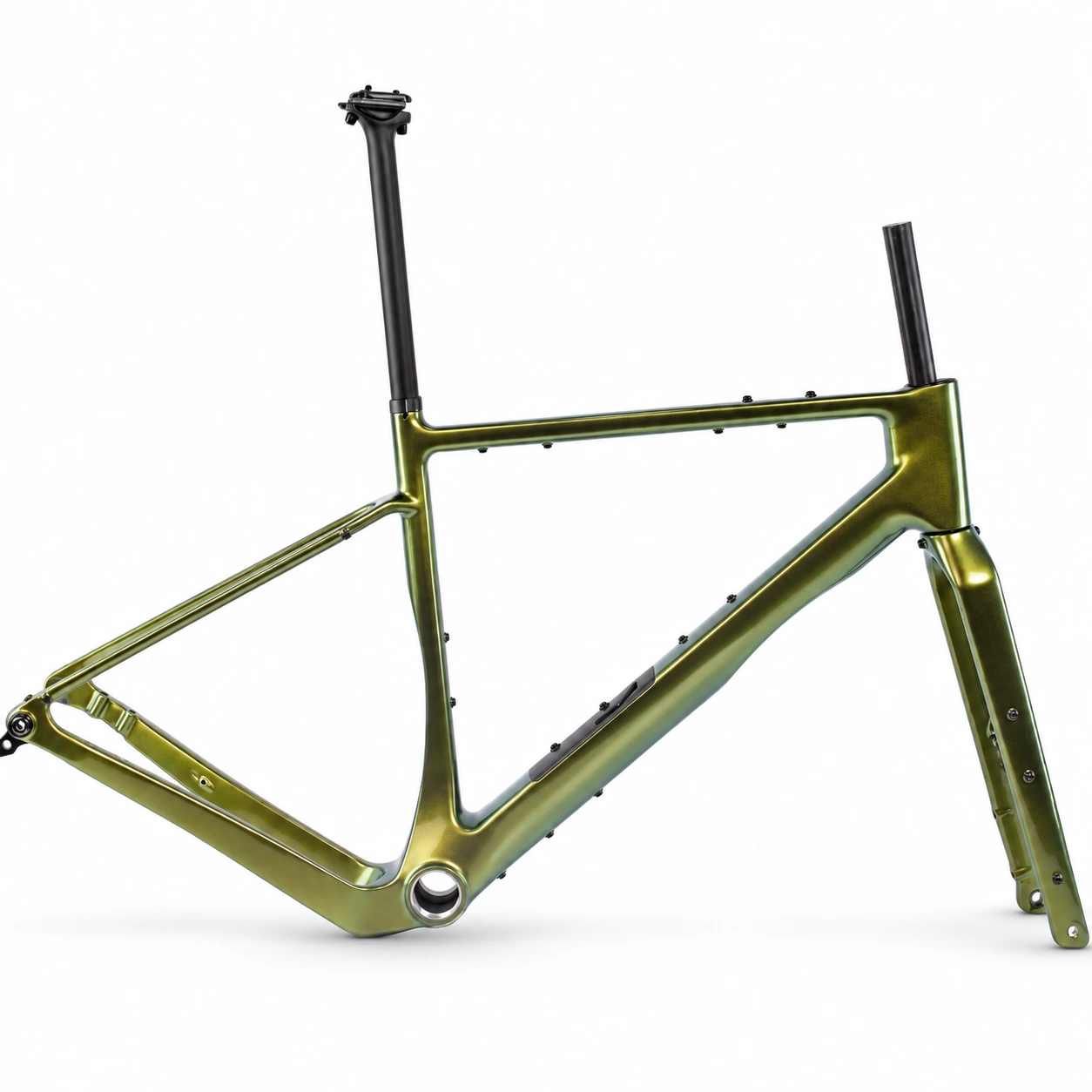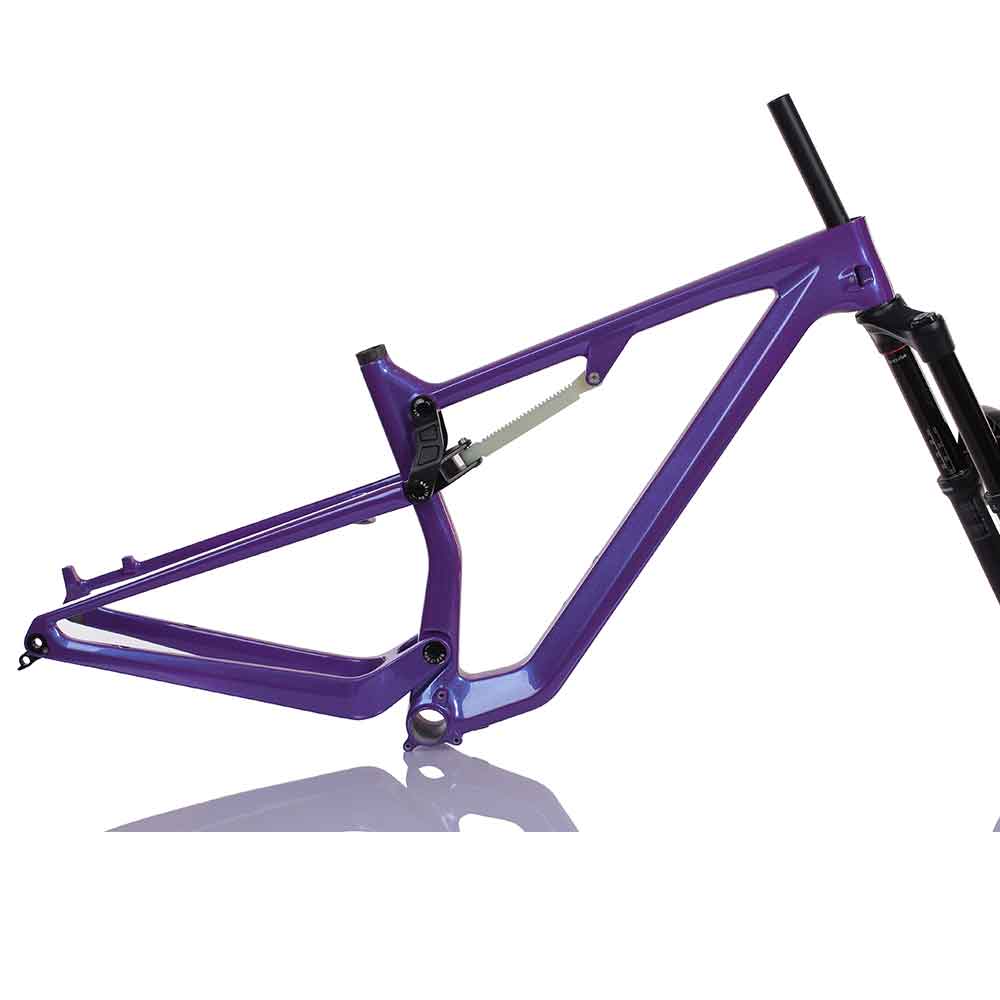

Gravel riding has moved from a dynamic discipline into one of the most mainstream segments in cycling. Riders no longer want one bike for smooth asphalt and another for rough trails; they want a single platform that handles pavement, hard-pack gravel, forest service roads, and multi-day bikepacking adventures with equal ease. That shift has placed the carbon gravel bike frame at the center of modern custom builds.
This guide analyzes the 2026 market from an industry perspective. It covers real market data, why carbon fiber is uniquely suited to mixed-terrain riding, industry-leading models, the growing role of advanced manufacturing in Asia, and a practical framework for choosing the right frameset.
By the Numbers: The 2026 Carbon Gravel Frame Market
Gravel riding is here to stay. According to research from Market Research Reports / Business Research Insights, the global gravel bikes market was valued at approximately USD 1.04 billion in 2026 and is projected to reach USD 1.418 billion by 2035, growing at a 3.5% CAGR. More importantly for frame builders and buyers, around 35% of overall demand is shifting toward lightweight carbon frames, proving that material performance is a primary purchase driver.
The broader carbon fiber bicycle market is expanding in parallel. Zion Market Research estimates the sector at roughly USD 3.35 billion in 2024, scaling to USD 6.30 billion by 2034 with an 8.2% CAGR. Within that, carbon fiber bicycle frames represent a high-growth segment valued at approximately USD 678 million in 2024 and forecast to hit USD 1,442 million by 2031, at an 11.5% CAGR.
Geographically, Europe and North America remain the core demand centers—Europe accounts for roughly 45% of gravel bike demand, while North America holds about 35%. On the supply side, the Asia-Pacific region anchors global manufacturing, representing about 50% of global carbon fiber bicycle frame production value.
These metrics point to a clear market trajectory: gravel riding continues to expand, carbon frames are capturing greater market share, and riders increasingly favor lightweight, versatile platforms.
Why Carbon Is the Premier Material for Gravel Frames
Carbon vs. Aluminum, Steel, and Titanium
| Material | Gravel Strengths | Trade-offs |
|---|---|---|
| Carbon fiber | Lightweight, tunable stiffness, superior vibration damping | Higher initial cost; major repairs require specialists |
| Aluminum | Durable, affordable, responsive | Heavier; transmits more high-frequency road chatter |
| Steel | Compliant ride quality, repairable, long-lasting | Heavier; less common in performance-oriented gravel builds |
| Titanium | Smooth ride feel, corrosion-resistant, premium aesthetic | Expensive; limited custom availability |
Why Carbon Fits Gravel Riding So Well
Carbon fiber allows frame engineers to precisely tune stiffness and compliance in different vectors. A high-performing gravel frame requires lateral stiffness for efficient power transfer during out-of-saddle climbs, yet it must deliver vertical compliance to absorb high-frequency chatter on rough surfaces.
Carbon’s composite layup naturally dampens micro-vibrations before they reach the rider’s hands and lower back. Over long-distance gravel grinders, this reduction in fatigue is invaluable. For endurance riders, bikepackers, and fast gravel racers, this balance of compliance and efficiency makes a carbon gravel bike frame the ultimate choice.
Industry Benchmarks: Popular Carbon Gravel Frames
Before looking at direct-to-consumer alternatives, it helps to examine what industry-leading brands are offering in the modern gravel ecosystem.
-
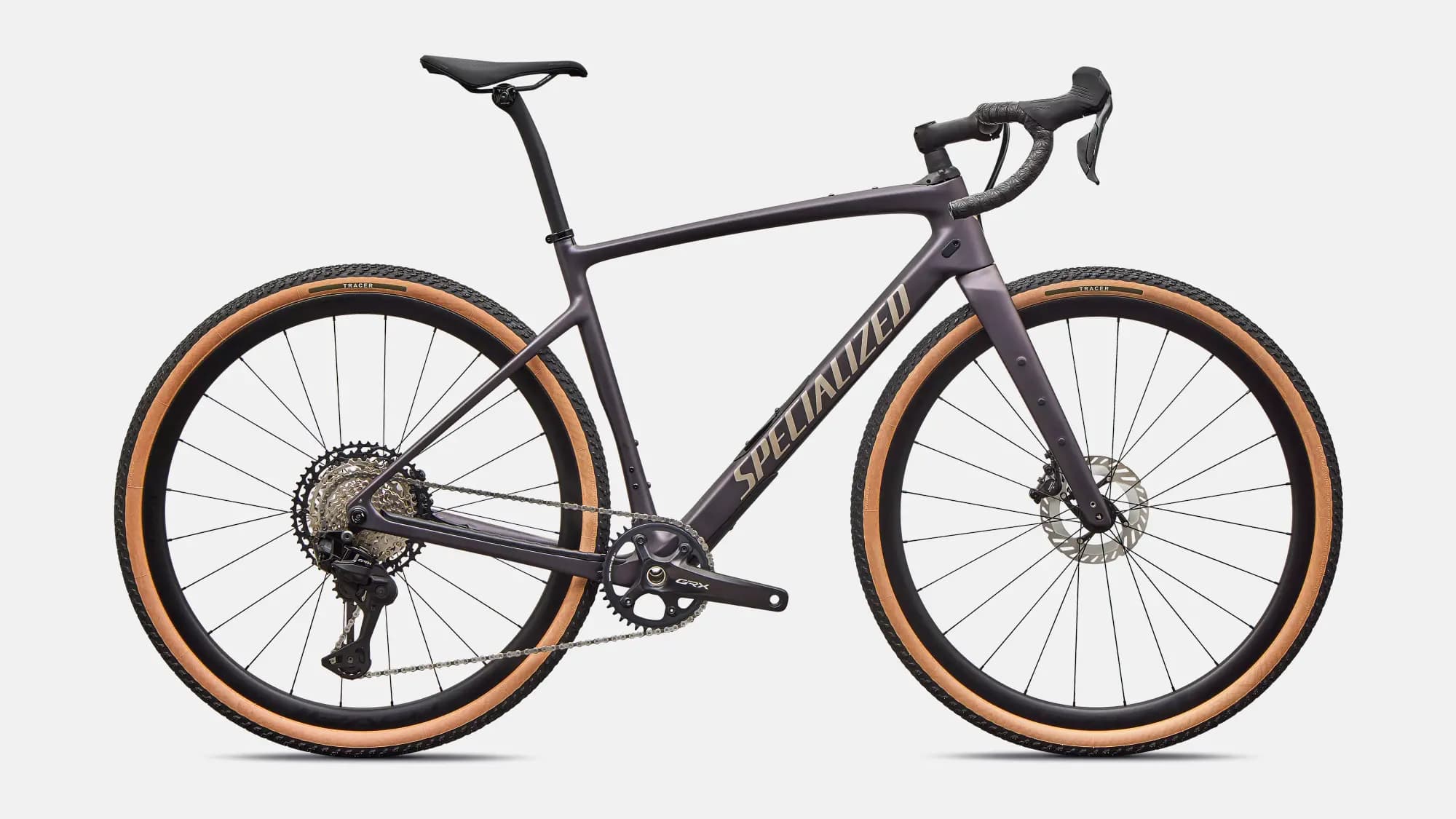 Specialized Diverge (S-Works / Expert): Built around FACT carbon and Future Shock 3.0 suspension (20mm head-tube travel), featuring generous tire clearance (up to 47mm on 700c) and internal SWAT storage. Ideal for ultra-endurance events like Unbound Gravel.
-
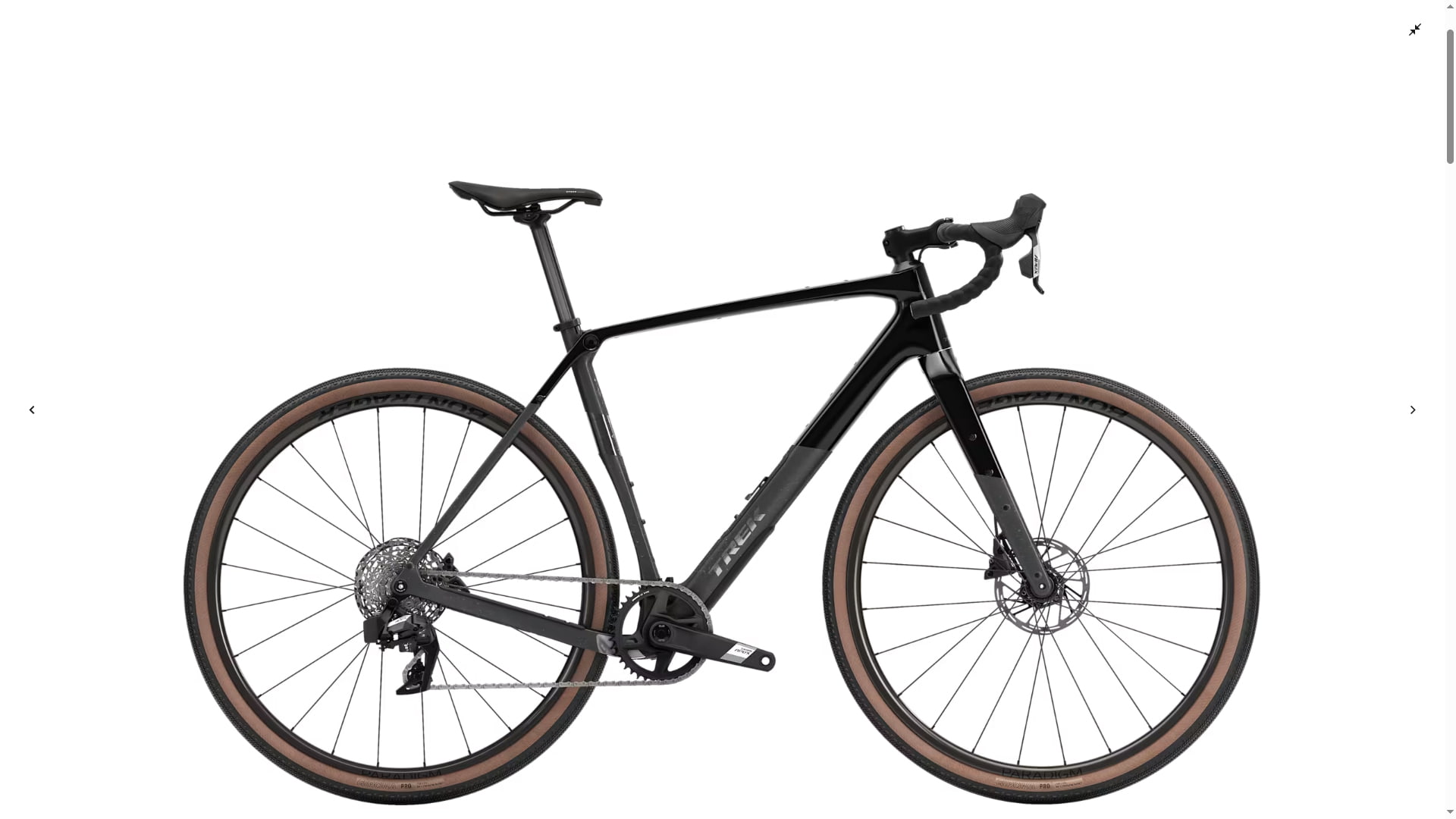 Trek Checkpoint (SLR Gen 3): Utilizes 800 Series OCLV carbon with IsoFlow frame technology for rear compliance, 50mm tire clearance, and extensive mounting points. Perfect for multi-day bikepacking and all-road versatility.
-
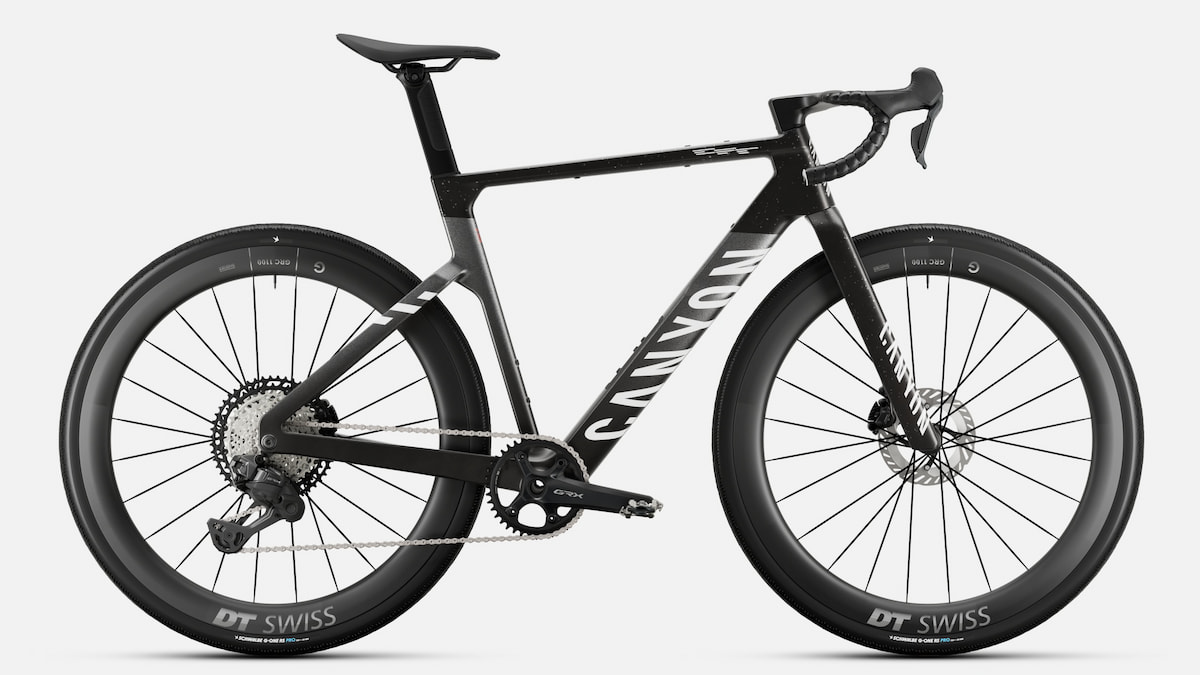 Canyon Grail (CFR / CF): Engineered for aerodynamic speed, featuring integrated cockpit designs and race-optimized geometry for gravel racers and fast group riders.
-
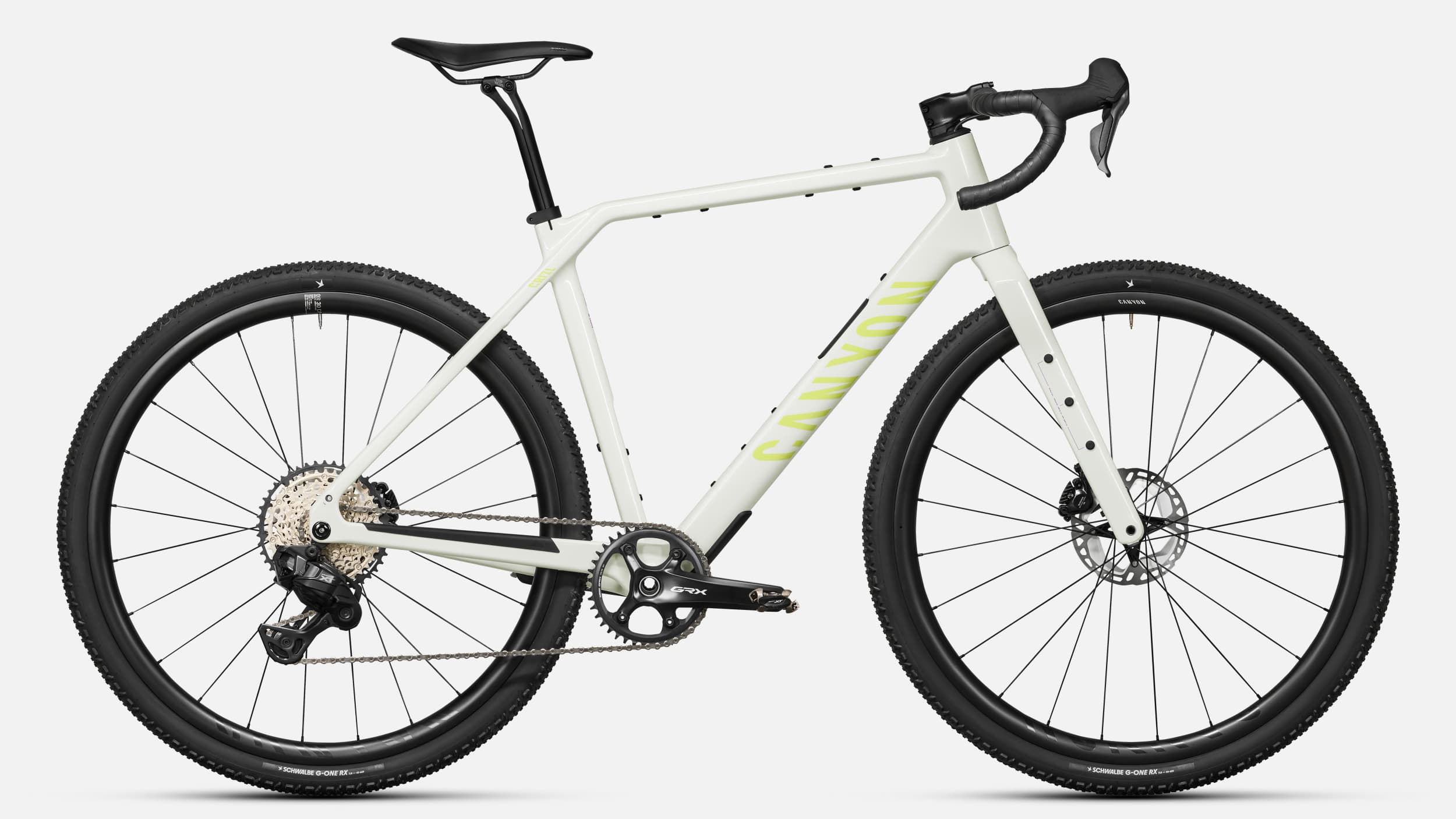 Canyon Grizl CF 8 (Di2): Positioned as a high-performance carbon exploration platform with relaxed adventure geometry, massive tire clearance (50mm+), premium electronic shifting, and triple-cargo fork mounts for heavy bikepacking and touring..
-
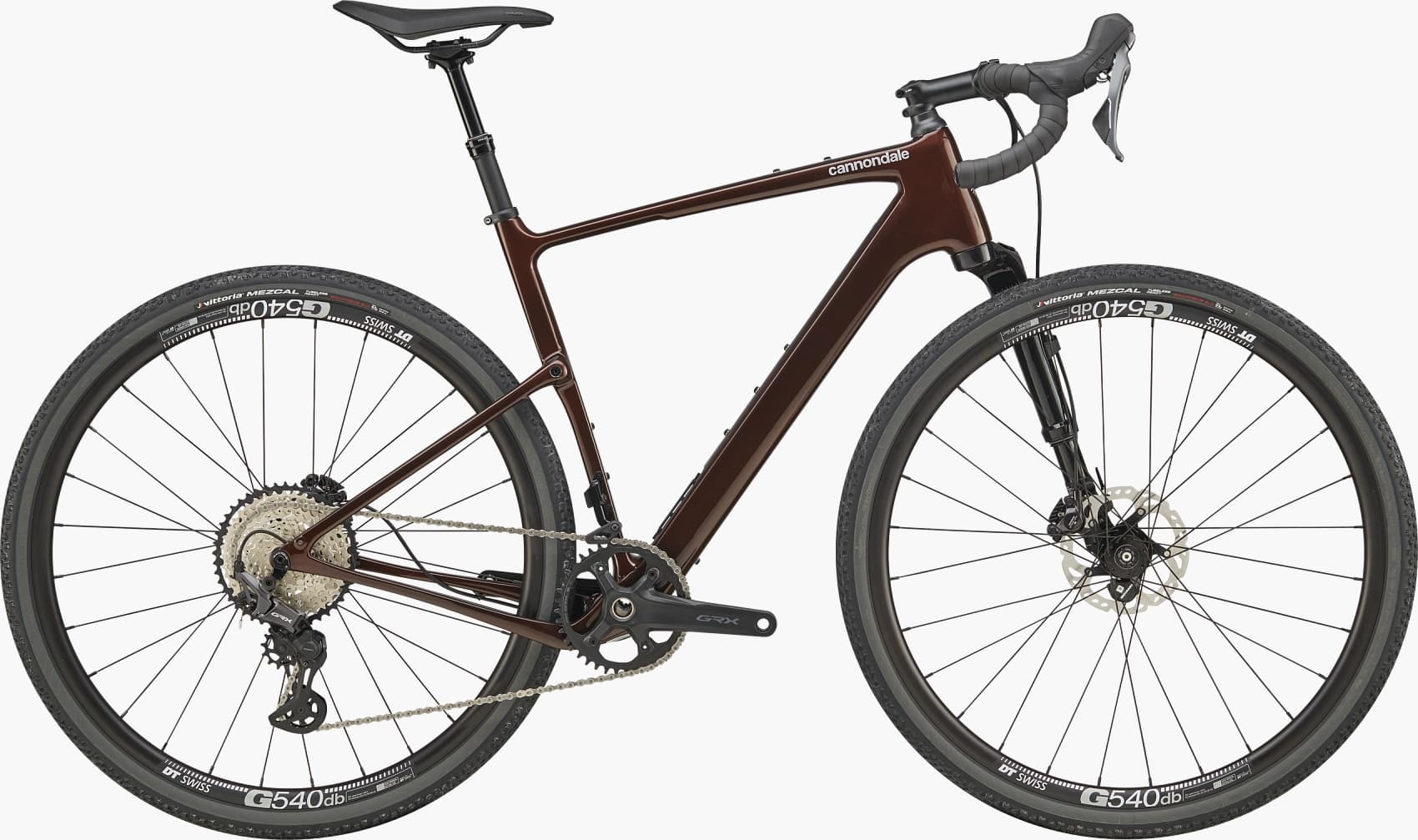 Cannondale Topstone Carbon Lefty: Combines a unique single-sided Lefty Oliver front suspension fork (30mm travel) with Kingpin rear suspension to soak up technical roots and rocks.
Product Spotlight: Mondince Cycle FM366 Carbon Gravel Frameset
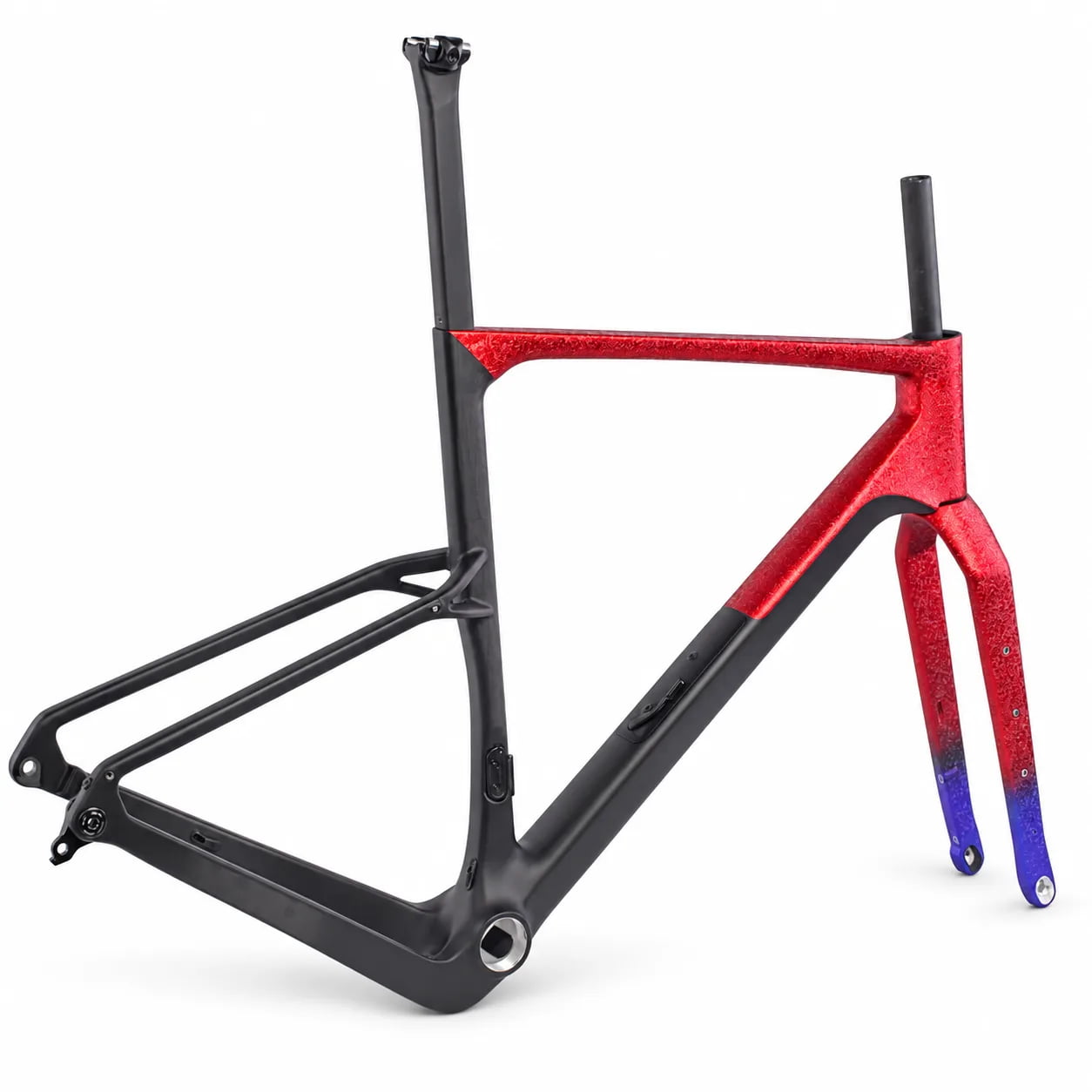
Overview
The FM366 is Mondince Cycle’s flagship all-round carbon gravel frameset, engineered for riders seeking a lightweight, responsive, and highly customizable platform. Whether you are building a fast endurance machine, a rugged bikepacker, or a versatile daily commuter, the FM366 delivers exceptional performance and modern standards at a competitive price point.
The FM366 has gained strong traction and positive community reviews across platforms like Chinertown and Reddit (r/gravelcycling).
Key Specifications
High-modulus carbon fiber (UD layup)
Frame WeightApprox. 1050g (Size M, unpainted)
Tire ClearanceUp to 700c x 47mm / 650b x 2.1”
Brake StandardFlat-mount disc (160mm rotor compatible)
Bottom BracketT47 threaded
Headset Standard1 1/8” - 1 1/2” tapered
Seatpost Diameter27.2mm (350mm length recommended)
Axle Spacing12mm x 100mm (Front) / 12mm x 142mm (Rear) thru-axle
Cable RoutingFull internal routing (compatible with integrated cockpits)
Sizes AvailableS / M / L / XL
FinishesMatte black, gloss white, custom paint options
Key Advantages
-
Optimized Carbon Layup: Balances weight (approx. 1050g) with stiffness for crisp acceleration and confident climbing.
-
Gravel-Tuned Geometry: A slightly slackened head tube angle and stable chainstays provide predictable handling on loose, technical descents.
-
Full Internal Routing: Keeps cables hidden from weather and debris while offering a sleek, pro-level aesthetic.
-
T47 Threaded Bottom Bracket: Eliminates creaking issues common with press-fit standards while offering robust durability and widespread crankset compatibility.
-
Direct-to-Consumer Value: Bypassing traditional retail markups allows riders to acquire an open-mold specification on par with major brands, backed by direct manufacturer communication and flexible custom paint options.
China’s Manufacturing Evolution in the Carbon Frame Supply Chain
Asia-Pacific accounts for roughly 50% of global carbon fiber bicycle frame production value. Over past years, Chinese manufacturing hubs have matured far beyond basic OEM production, mastering modern gravel-specific geometries, complex internal cable management, T47 shell tolerances, and custom carbon layups.
For modern builders, direct-to-consumer carbon framesets represent a transparent alternative to high-priced legacy brands. Brands like Mondince Cycle demonstrate how advanced engineering, strict quality control, and direct support can be combined into a high-performance carbon gravel bike frame designed for customized builds.
How to Choose the Right Carbon Gravel Bike Frame
-
Define Your Riding Discipline: Prioritize your terrain. Racers need aggressive stack-and-reach ratios; bikepackers need ample mounts, stability, and high load capacity.
-
Verify Technical Standards: Double-check bottom bracket types (T47/BSA), thru-axle dimensions, tire clearance limits (700c vs. 650b), and seatpost diameters.
-
Prioritize Fit Over Standover: Modern gravel geometry relies heavily on reach and stack measurements rather than seat tube length alone.
Frequently Asked Questions
-
Q1: Is a carbon gravel bike frame durable enough for rough off-road singletrack?
-
A: Yes. High-quality carbon frames handle gravel, roots, and light singletrack easily. Durability relies heavily on proper carbon compaction, resin quality, and impact management.
-
-
Q2: Does carbon genuinely feel more comfortable than aluminum?
-
A: Yes. Carbon’s anisotropic properties allow it to absorb high-frequency road chatter far more effectively than stiff aluminum alloys.
-
-
Q3: What are the main benefits of buying a direct-to-consumer carbon frameset?
-
A: You get modern industry specifications, custom paint flexibility, and high-modulus carbon performance without paying traditional retail distributor markups.
-
Conclusion: Build Your Ideal Setup for 2026
The gravel market continues to mature, and lightweight carbon frames are the gold standard for riders seeking performance, efficiency, and comfort. Selecting a robust, well-engineered foundation is the best way to elevate your riding experience this season.
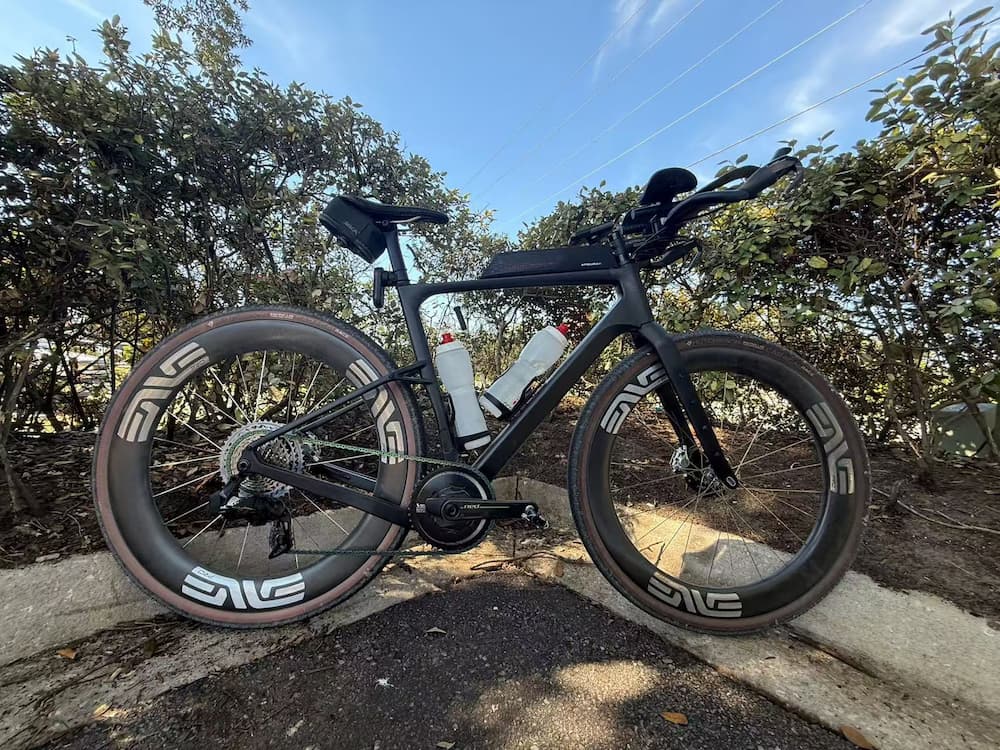
Real-world custom build: Mondince FM366 carbon gravel frame in action.
Ready to plan your next custom build? 👉 View All Carbon Gravel Framesets to compare geometries, specifications, and custom finish options.
Sources
* Market Research Reports / Business Research Insights, Global Gravel Bikes Market Overview and Forecast (2026–2035).
* Zion Market Research, Carbon Fiber Bike Market Size, Share and Forecast to 2034.
* Global Info Research, Global Carbon Fiber Bicycle Frame Market Report (2025–2031).