
Carbon Gravel Bike Frame Technology
A gravel frame is not a road frame with wider tyres. Clearance changes the tube layout, terrain changes the layup, and carrying luggage changes what the frame has to survive. This page covers what is specific to carbon gravel frame design, how it is applied across our range, and how to choose between the models.
Four things that define a gravel frame
Gravel sits between road and mountain bike, and so does the engineering. A frame that is excellent on tarmac can be fragile and nervous off it, and a frame that is comfortable on rough ground can feel sluggish on the road. The design work is in deciding which side of that line a given model should sit on.
| Factor | What it decides | How it is handled |
|---|---|---|
| Tyre and mud clearance | The terrain the frame can actually be ridden on, and whether it keeps working when conditions are wet. | Clearance is designed for the widest permitted tyre plus mud, not just for the tyre on the bench. On our range this runs from 42 mm on the cyclocross-derived FM166 up to 61 mm on the bikepacking FM356. |
| Geometry and stability | How the bike behaves when the surface is loose, when you are descending, and when the bike is loaded. | Stability comes from head angle, trail, chainstay length and bottom bracket drop working together. Our gravel platforms are designed as complete geometry sets rather than road geometry with a longer fork, so handling stays predictable once the bike is loaded or the surface turns loose. |
| Standards and interfaces | Whether the frame can be serviced, upgraded and kept running in five years' time. | Gravel bikes get ridden in the worst conditions, so the interfaces take more abuse than a road frame's. Threaded bottom brackets, UDH hangers, flat mount brakes and 12 mm thru axles are all chosen because they can be serviced rather than replaced. |
| Mounts and carrying capacity | Whether the frame can be used for bikepacking or commuting without aftermarket workarounds. | Rack, fender and bottle mounts, and on some models integrated downtube storage. Loaded use also changes the load case the frame is designed against, which is why a frame intended for luggage is specified differently from a race frame. |
Mondince carbon gravel frames, model by model
These specifications are read directly from our product data, so they match the product pages. Frame weights are raw, unpainted carbon — the figure printed on each model's product page — and are quoted for one reference size, M where the range runs XS–XL. Paint, decals and hardware such as axles, hanger and headset are not included, so a finished bike always weighs more than the figure below.
| Model | Carbon material | Frame weight (raw carbon) | Max tyre clearance | Product page |
|---|---|---|---|---|
| FM166 | Toray Grade T800+T1000 | 1020g | 42mm | View details |
| FM266 | Toray Grade T800+T1000 | 1150g | 45mm | View details |
| FM336 | Toray Grade T800+T1000 | 1050g | 47mm | View details |
| FM296 | Toray Grade T1000 | 1150g | 50mm | View details |
| FM306 | Toray Grade T1000 | 1010g | 50mm | View details |
| FM316 | Toray Grade T800+T1000 | 1150g | 50mm | View details |
| FM326 | Toray Grade T800+T1000 | 1100g | 50mm | View details |
| FM286 | Toray Grade T800+T1000 | 950g | 50mm | View details |
| FM346 | Toray Grade T800+T1000 | 1150g | 57mm | View details |
| FM366 | Toray Grade T1000 | 1050g | 57mm | View details |
| FM376 | Toray Grade T800+T1000 | 1080g | 57mm | View details |
| FM356 | Toray Grade T800+T1000 | 1100g | 61mm | View details |
Raw carbon weight, exactly as listed on the linked product page, for one stated reference size. FM166 and FM266 use numbered sizes rather than XS–XL; the size the figure refers to is given on their product pages.
Choosing between them: start from the tyre
The single most useful decision is the widest tyre you intend to run, because it sets the minimum clearance you need and narrows the range immediately.
| Intended use | Clearance band | Models in this band |
|---|---|---|
| Fast all-road and race gravel Road-biased riding on tarmac, hardpack and light gravel |
42–47 mm | FM166 (42 mm), FM266 (45 mm), FM336 (47 mm) |
| Versatile gravel Mixed surface riding with room for proper gravel tyres and mud |
50 mm | FM286, FM296, FM306, FM316, FM326 |
| Adventure and bikepacking Loaded riding, rough surfaces, long distance, wider tyres |
57–61 mm | FM346 (57 mm), FM366 (57 mm), FM376 (57 mm), FM356 (61 mm) |
Within a band, the choice comes down to weight, material and equipment details such as storage, tyre size and mounting points. Compare the full range, or see our FM336 vs FM326 vs FM316 comparison.
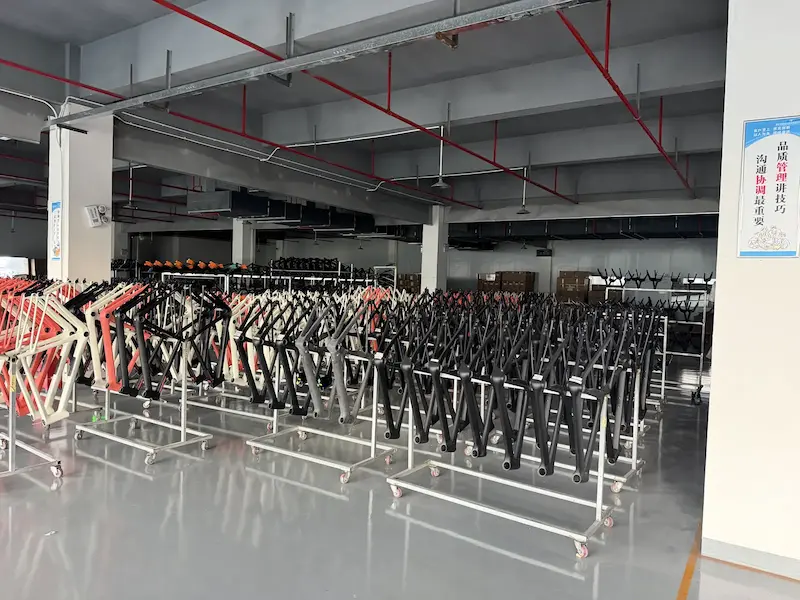
One platform, many specifications
The same gravel platform can be specified as a lightweight race build or as a heavier-duty adventure build. Layup, hardware and finish all change, but the geometry and the tooling do not. For brands, that means a range of products can be built from a smaller investment in tooling.
If you are building a range, this is worth planning deliberately: choose a platform that covers the middle of your range well, then cover the extremes with a second platform rather than trying to make one frame serve every rider.
See carbon layup design for how a platform can be tuned to a target weight or stiffness without new moulds.
Why T47 and UDH matter more on gravel than on road
T47 threaded bottom bracket
A threaded bottom bracket solves the two problems press-fit systems create on a gravel bike: creaking, and the need for specialist tools to service a bearing that wears out faster in wet, gritty conditions. T47 keeps the large shell diameter that gives the stiffness and bearing capacity, but the bearings thread in, so they can be removed and replaced with normal workshop tools.
The 85.5 mm shell width used across much of our range is sized for road and gravel crank standards including 30 mm spindles, so the frame is not locked to one groupset family.
UDH universal derailleur hanger
The Universal Derailleur Hanger is a single hanger standard that replaces the hundreds of frame-specific hangers in circulation. On a gravel bike that matters for a practical reason: hangers bend, and a bent hanger ruins shifting. With UDH, a replacement is available from virtually any shop instead of having to be shipped from the frame manufacturer.
It is also designed to give way before the frame does, which is exactly the behaviour you want from a sacrificial part on a bike that gets dropped on rocks.
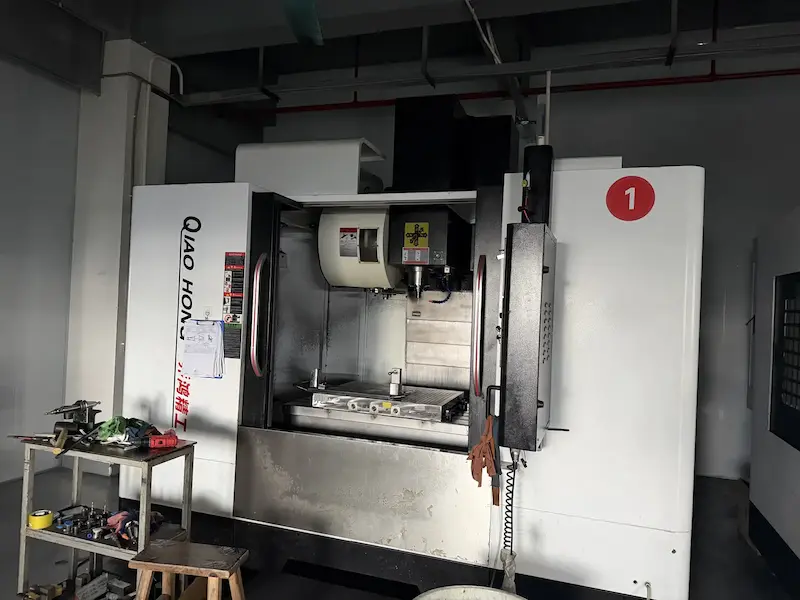
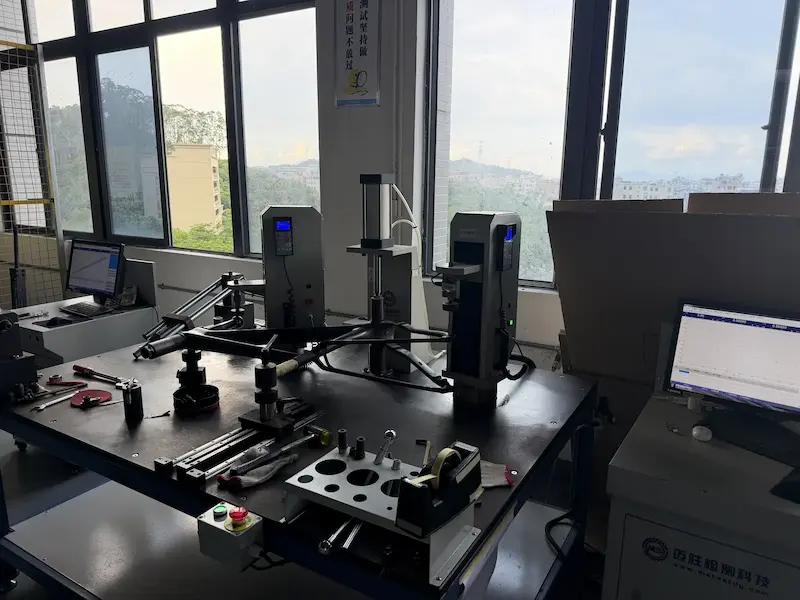
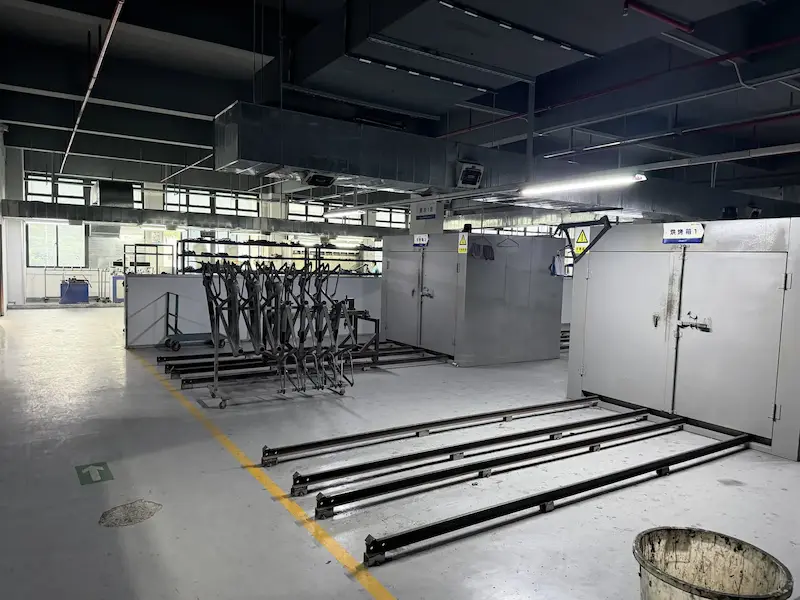
What gravel riding does to a frame that road riding does not
Gravel is harder on a frame than most riders expect, and it is harder in ways that are not obvious from a specification sheet.
- Repeated stone strike on the down tube and chainstays
- Continuous high-frequency vibration rather than isolated impacts
- Mud and water held against the frame by the tyres
- A loaded frame from bikepacking luggage or a full bottle setup
- Sudden high loads from hidden potholes and roots at speed
- Component interfaces exposed to grit all year round
These are the load cases our gravel platforms are specified and tested against, using the same protocol as the rest of our range: release testing at 1.3× the standard test forces. The test types and equipment are described on the testing and certifications page, and our own test results sit alongside the standard ones.
There is no ISO standard for gravel bikes. That changes what a test result means.
ISO 4210 recognises four bicycle categories: city and trekking, young adult, mountain, and racing. Gravel is not one of them. Every gravel frame on the market therefore has to be tested against one of those four, and which one is the manufacturer's choice — which means two frames can both be described as “ISO 4210 tested” and have been tested to very different loads.
| Load case | Clause | Racing | Mountain | Difference |
|---|---|---|---|---|
| Frame impact — drop height | 4.1 | 212 mm | 360 mm | +70% |
| Frame impact — energy absorbed | 4.1 | 56.1 J | 92.3 J | +65% |
| Horizontal fatigue, forward | 4.4 | 600 N | 1,200 N | +100% |
| Pedalling fatigue force | 4.3 | 1,100 N | 1,200 N | +9% |
| Falling frame — drop height | 4.2 | 200 mm | 300 mm | +50% |
| Vertical fatigue force | 4.5 | 1,200 N | 1,200 N | 0% |
Figures as they appear in an accredited third-party test report on our FM286 gravel platform, which sets out the requirement for all four categories side by side.
What we test our gravel frames to, and why
Our gravel platform is tested to the racing load cases. That is the industry default for a drop-bar frame, and it is the honest description of what an “ISO 4210 tested” gravel frame has usually been through.
It is worth being clear about the limit of that: a frame tested to the racing cases has not been shown to survive the mountain-category impact case, which is a 360 mm drop absorbing 92.3 J against 212 mm and 56.1 J. The gap is not decorative — it is the difference between a frame designed for gravel roads and one designed for rock strikes and loaded descents.
If your project needs that tier of impact performance on a gravel frame, tell us at the enquiry stage. We will scope it as a specific programme rather than assume the default is what you wanted.
What the standard does not cover, and what we add
ISO 4210 is a safety floor, not a quality ceiling. Three things it asks for nothing about, and which we do anyway on every platform:
- An X-ray inspection of moulded junctions, to catch voids and resin-rich areas that a visual check cannot see.
- A vibration test, because long-distance gravel and bikepacking use is a sustained low-amplitude load that a fatigue rig with a fixed load case does not reproduce.
- A 1.3× release margin on the standard forces before a platform is signed off for production.
See testing and certifications for the clause-by-clause results, and quality control for how the X-ray and dimensional checks work in production.
- Sources for this page
- ISO 4210-2:2023 and ISO 4210-6:2023 — Cycles: Safety requirements for bicycles, Parts 2 and 6.
- ASTM F2043-13 and EN 17406 — classification of bicycle usage conditions. Gravel riding falls under Condition 2: paved and unpaved surfaces, gravel roads, moderate slopes, wheels may leave the ground, drops up to 15 cm.
- EFBE Prüftechnik GmbH, TRI-TEST technical documentation, 2024. Source of the observation that ISO 4210 recognises only a single mountain bicycle type while the modern market has split into several.
- Accredited third-party test programme on the FM286 gravel platform, Taiwan, October–November 2025.
From this page to a decision
Carbon gravel frame technology FAQ
Decide the widest tyre you will genuinely run, then add mud clearance on top. A frame rated at 50 mm will take a 50 mm tyre on a clean surface, but in wet conditions the same tyre can rub once it is picking up grit. If you ride in wet conditions or on clay-rich soil, allow more clearance than the tyre size suggests. Our range spans 42 mm to 61 mm for exactly this reason.
No. Weight matters on a race gravel frame, but the lightest frames use thinner walls and are less tolerant of impacts, luggage and rough use. For an adventure or bikepacking build, a slightly heavier frame built with more impact resistance is the better engineering decision. Our lightest gravel platform, the FM286 at 950 g, and the 57–61 mm adventure platforms are specified for genuinely different jobs.
The FM166 is cyclocross-derived rather than gravel-specific: 42 mm clearance, a 27.2 mm seatpost and a BSA bottom bracket. That makes it a good fit for riders or brands who want a race-oriented cyclocross frame, while the rest of the range is designed around gravel riding with wider tyres and, in most cases, T47 bottom brackets.
Start with the 57–61 mm clearance group: the FM346, FM366, FM376 and the 61 mm FM356. The FM356 was designed around bikepacking clearance, and the FM336 adds integrated downtube storage within the 47 mm group if you want a tighter-handling bike with somewhere to put tools. Tell us the load you plan to carry and the terrain and we will narrow it down. Ask us which frame fits your route.
Most of the range supports 650b as well as 700c, which lets you fit a wider tyre within the same frame clearance. The exact compatibility, including the maximum 650b size, is listed in the specification table on each product page. Check the model you are interested in before committing to a wheelset.
Yes. OEM gravel projects usually start either from an existing platform that we adapt — a different layup, clearance or mounting setup — or from a new geometry that we engineer against. Adapting an existing platform keeps the tooling cost down; new geometry means new moulds. See OEM services or send us your geometry requirements.
Talk to us about your gravel frame project
Whether you are choosing a frame for your own brand or specifying a new platform, tell us the tyre size, the terrain and the load. We will tell you which platform fits and what it would take to adapt it.
- Twelve gravel platforms in production
- Tested to 1.3× ISO 4210 forces
- Reply within one working day