
Carbon Bike Frame Technology
What actually decides how a carbon frame performs is not one headline feature. It is the fibre grade, the ply schedule, the molding method, the process control in between, and the test protocol the frame has to survive. This is how we handle each of those five things in our own factory, across gravel, road, MTB and e-bike frames.
Seven things that decide whether a carbon frame is good
Each page below covers one part of the stack, explains why it matters to the finished frame, and shows the evidence from our own production line. Start with the material, or jump straight to the platform you are buying.
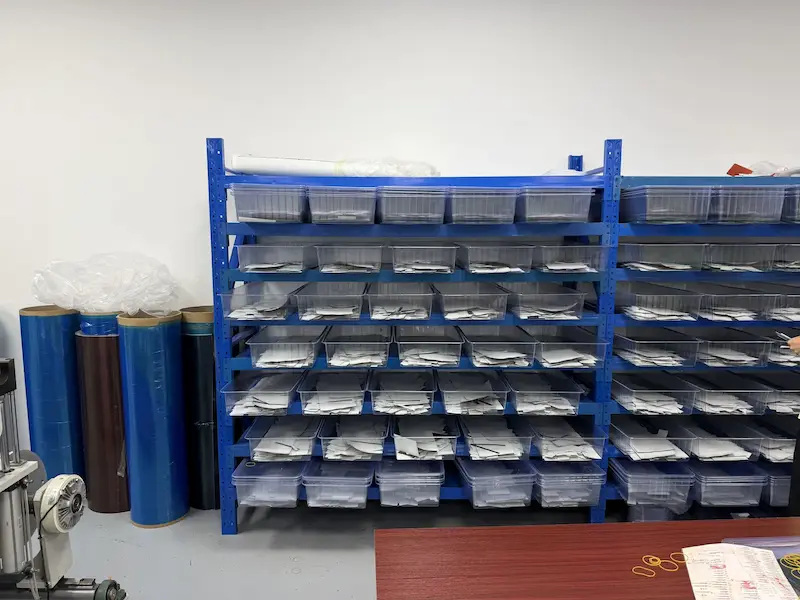
Carbon Fiber Technology
Which Toray carbon grades we use, and how the material is matched to each frame platform and riding load.
Read more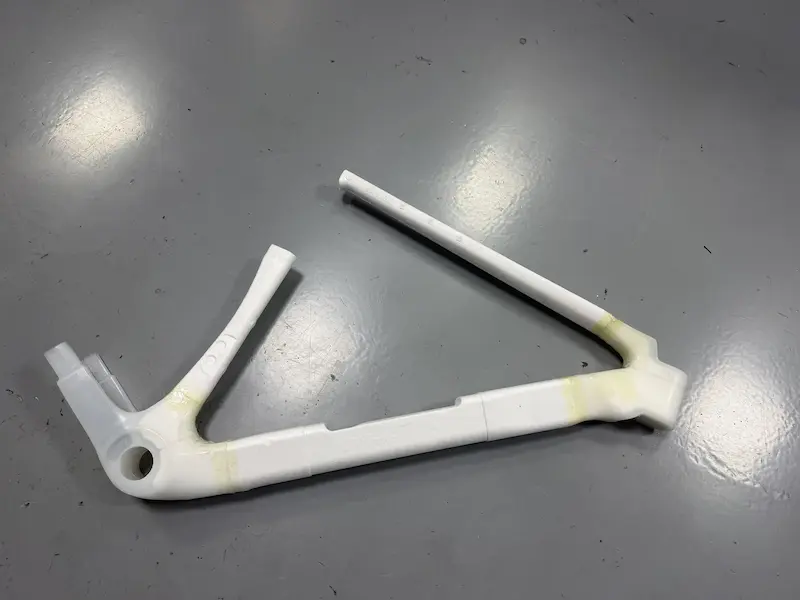
Carbon Layup Design
How ply orientation, wall thickness and reinforcement zones decide stiffness, comfort and impact survival.
Read more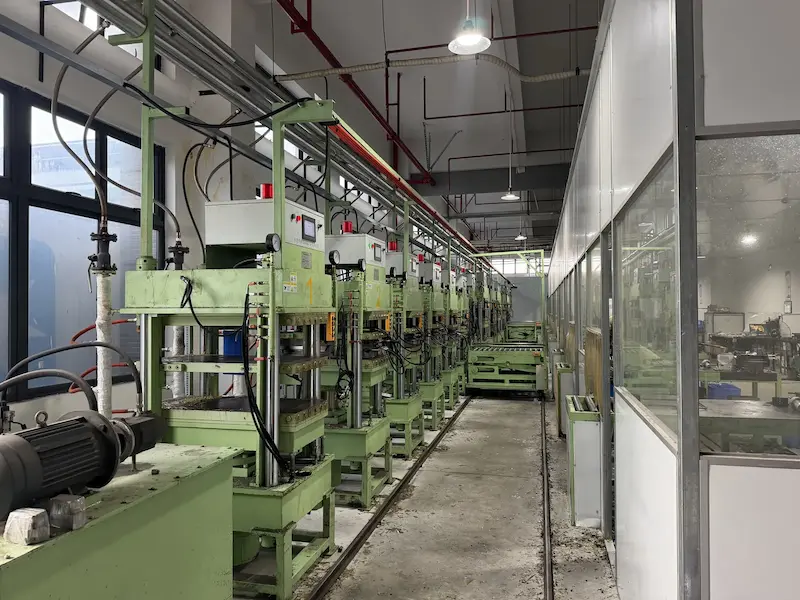
EPS Molding Technology
Lost-core EPS mandrels that keep the inner wall smooth and the wall thickness consistent.
Read more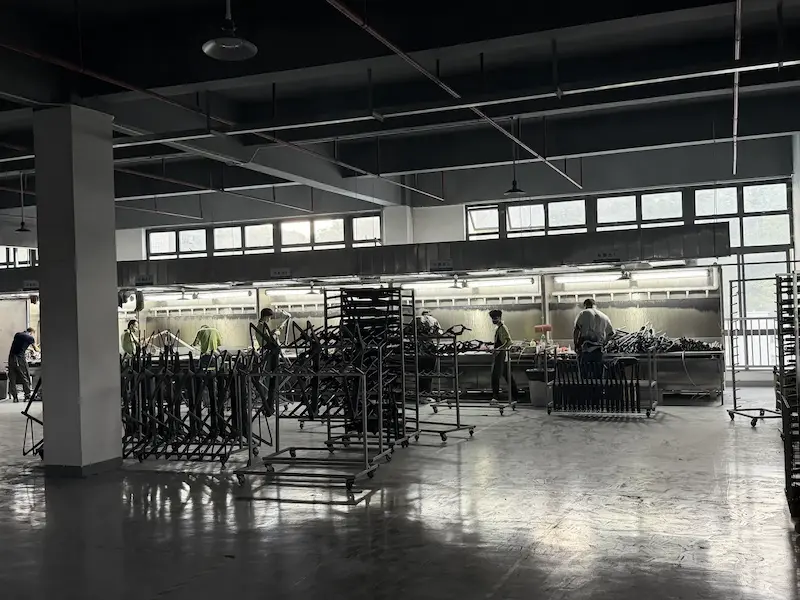
Manufacturing Process
Follow one frame through fabric cutting, layup, molding, bonding, painting, QC and packing.
Read more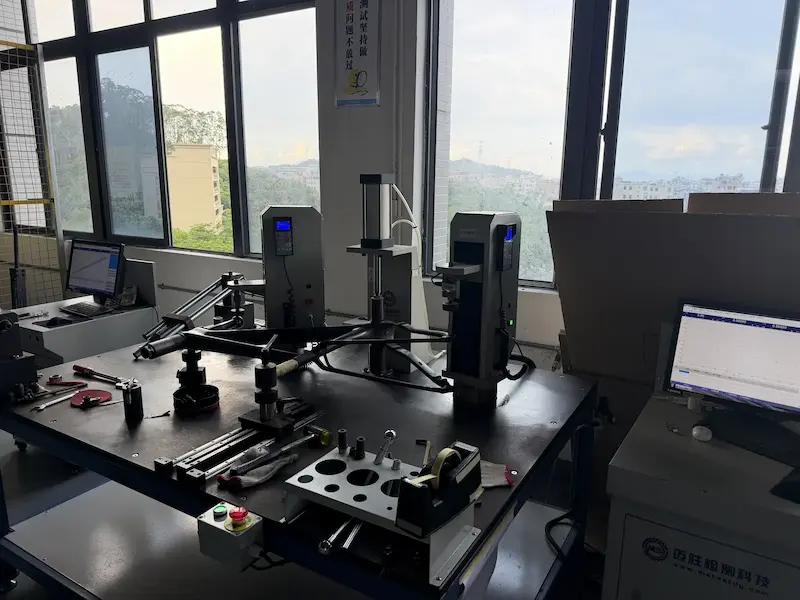
Quality Control
The dimensional, alignment and finish checks every frame batch has to pass before it can ship.
Read more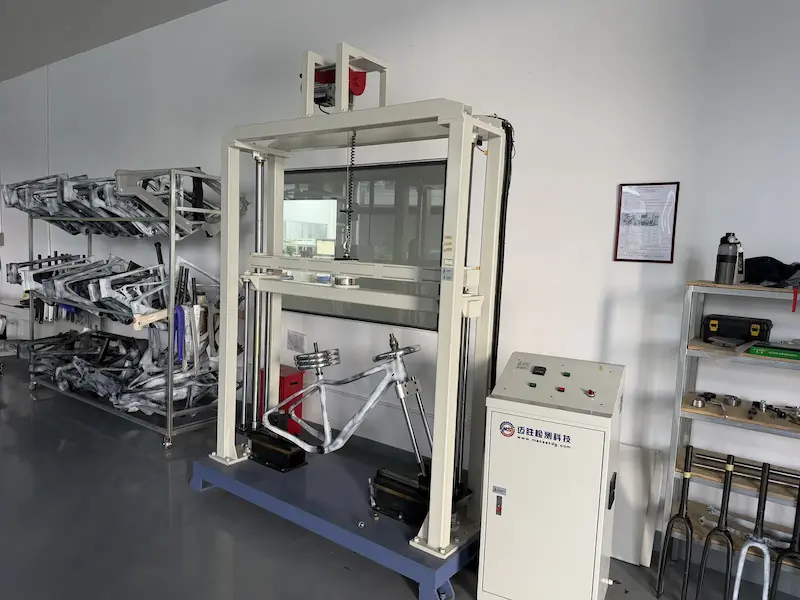
Testing & Certifications
EN and ISO 4210 fatigue, impact and load testing, run on our own rigs and verified by third-party labs.
Read more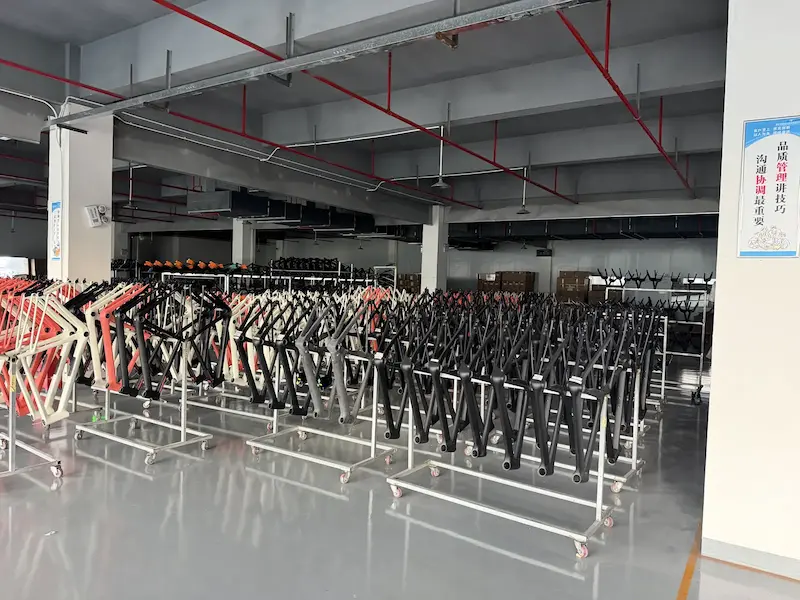
Gravel Frame Technology
The engineering that is specific to carbon gravel frames, model by model across the whole range.
Read moreTechnology pages are easy to write and hard to prove
Plenty of suppliers describe EPS molding, Toray carbon and ISO testing. Far fewer of them can show the machine, the fixture or the report behind the sentence. Everything on these pages comes from equipment we run ourselves, and every claim is tied to either a photograph of our line or a document we can send you.
Our factory covers the complete chain: a temperature-controlled material store, CNC ply cutting, layup and preforming stations, hydraulic molding presses and steel tooling, bonding and machining centres, spray booths with curing ovens, an on-site test laboratory, and the assembly and packing hall.
That vertical setup is what makes process control possible. When cutting, layup, molding, bonding and painting all happen on one site, a deviation is caught at the next station instead of being discovered by your customer.
See the full manufacturing process
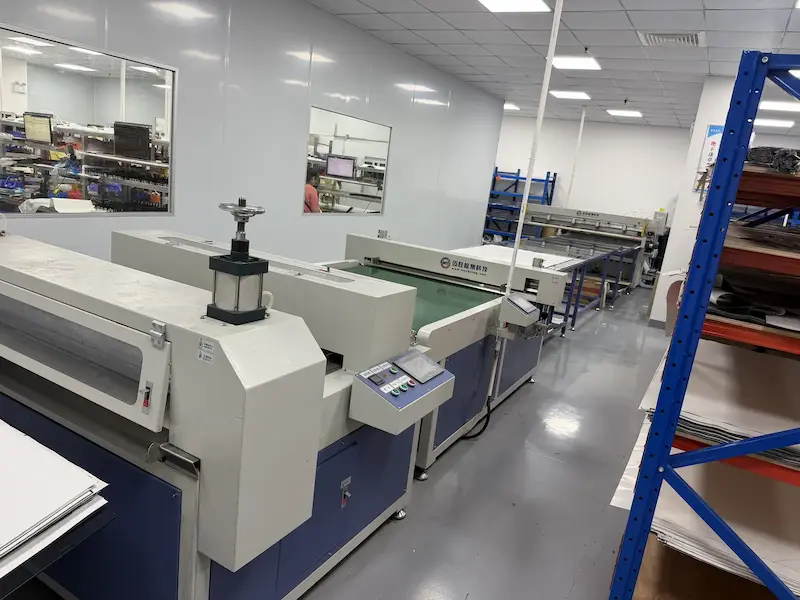
The eight stages every Mondince frame goes through
A carbon frame is a sequence, and every stage can undo the one before it. A perfect layup will still fail if the cure profile is wrong; a perfect cure will still be rejected if the bottom bracket face is not parallel. These are the stages, and the control point that matters at each one.
Material receiving & cold storage
Toray prepreg is received with batch records and stored in a temperature-controlled room so the resin never advances before it is used.
CNC fabric cutting
Rolls are cut on a CNC cutting table. Every ply is cut from a digital nest, which is what keeps ply shape and fibre orientation repeatable between batches.
Layup & preforming
Cut plies are laid up in the ordered schedule, then preformed and wrapped so the stack holds its shape before it goes into the tool.
Molding & curing
The layup goes into a heated steel mould and is cured under pressure. Cure profile, pressure and temperature are the three variables that decide the mechanical result.
Demolding, trimming & surface prep
Frames are demolded, trimmed, and the bonding surfaces are abraded and cleaned before assembly.
Bonding & machining
Sub-assemblies are bonded in fixtures, then bottom bracket shells, head tubes and dropouts are faced, reamed and machined on CNC centres.
Painting & finishing
Frames are sprayed in dedicated booths and cured in temperature-controlled ovens. Paint is also a corrosion and UV barrier, not only a finish.
Quality control & packing
Dimensional, alignment and finish checks are completed against the batch record, then frames are assembled, protected and packed for shipping.
Read the detailed manufacturing process, with photographs of each station →
Technology applied to gravel, road, MTB and e-bike frames
The same technology stack is tuned differently for each platform. A gravel frame has to survive impact and abrasion that a road frame never sees; an e-bike frame has to carry motor torque and a heavier system weight. These are the ranges we build.
| Platform | Models in range | What the design is tuned for | Range |
|---|---|---|---|
| Gravel | 12 models | Impact resistance, mud clearance, vibration damping and mounting points for bikepacking. | View carbon gravel bike frames |
| Road | 3 models | Low weight, aerodynamic tube shapes and torsional stiffness at the bottom bracket. | View carbon road bike frames |
| MTB | 5 models | High impact loads, long travel fork forces and reinforced head tube and down tube junctions. | View carbon mtb frames |
| E-Bike | 4 models | Motor torque, battery mass and higher system weight, tested against e-bike standards. | View carbon e-bike frames |
Carbon gravel frames, model by model
Gravel is the largest part of our range and the platform we are asked about most, so it gets its own page. The table below is the short version: what each gravel frame is built from and what it clears.
| Model | Carbon material | Frame weight (raw carbon) | Max tyre clearance | Product page |
|---|---|---|---|---|
| FM266 | Toray Grade T800+T1000 | 1150g | 45mm | Details |
| FM166 | Toray Grade T800+T1000 | 1020g | 42mm | Details |
| FM296 | Toray Grade T1000 | 1150g | 50mm | Details |
| FM306 | Toray Grade T1000 | 1010g | 50mm | Details |
| FM316 | Toray Grade T800+T1000 | 1150g | 50mm | Details |
| FM326 | Toray Grade T800+T1000 | 1100g | 50mm | Details |
| FM286 | Toray Grade T800+T1000 | 950g | 50mm | Details |
| FM336 | Toray Grade T800+T1000 | 1050g | 47mm | Details |
| FM346 | Toray Grade T800+T1000 | 1150g | 57mm | Details |
| FM366 | Toray Grade T1000 | 1050g | 57mm | Details |
| FM356 | Toray Grade T800+T1000 | 1100g | 61mm | Details |
| FM376 | Toray Grade T800+T1000 | 1080g | 57mm | Details |
Weight figures are the raw, unpainted carbon values listed on each product page, quoted for one reference size; paint, decals and hardware are additional. See gravel frame technology for how these frames are engineered.
Check the claims before you commit
Technical pages should lead somewhere you can verify. These are the three places to go next, depending on what you need to be sure about.
Carbon bike frame technology FAQ
We manufacture. Our plant is in Huizhou, Guangdong, and we have been producing carbon frames since 2007. Fabric cutting, layup, molding, bonding, machining, painting, testing and packing all take place on site, which is why we can show you photographs of the actual equipment rather than a stock catalogue.
Toray T700, T800, T1000 and T1100 grades, selected per frame and per zone. Most series platforms use a T800 and T1000 blend — T800 in impact-exposed zones, T1000 where stiffness per gram decides the result — FM296, FM306 and FM366 are built from T1000, our lightest road platform FM066 adds T1100, and T700 is used on OEM projects where toughness and unit cost matter more than stiffness per gram. The carbon fiber technology page lists which models use which grade.
Yes. Each platform is tested against ISO 4210 type requirements, and our own protocol runs the frame at 1.3 times the standard test forces before it is released. Third-party laboratory reports are available, and the documents are listed on the certification page. The test types and the equipment we use are described on the testing page.
Gravel is our largest range, but we also build road, mountain bike and e-bike frames on the same production line, using the same material store, presses and test lab. See all products for the current range.
Yes. OEM and ODM projects typically start from either an existing platform that we adapt, or a new geometry and layup target that we engineer against. Custom tooling, painting, decals and packaging are all handled in-house. Start on the OEM services page or send us your requirements.
Discuss your carbon frame project
Send us the platform, geometry or performance target you are working to. We will come back with the material and layup approach we would use, the test evidence behind it, and what the project needs to move forward.
- Material and layup recommendations
- Test reports on request
- Reply within one working day