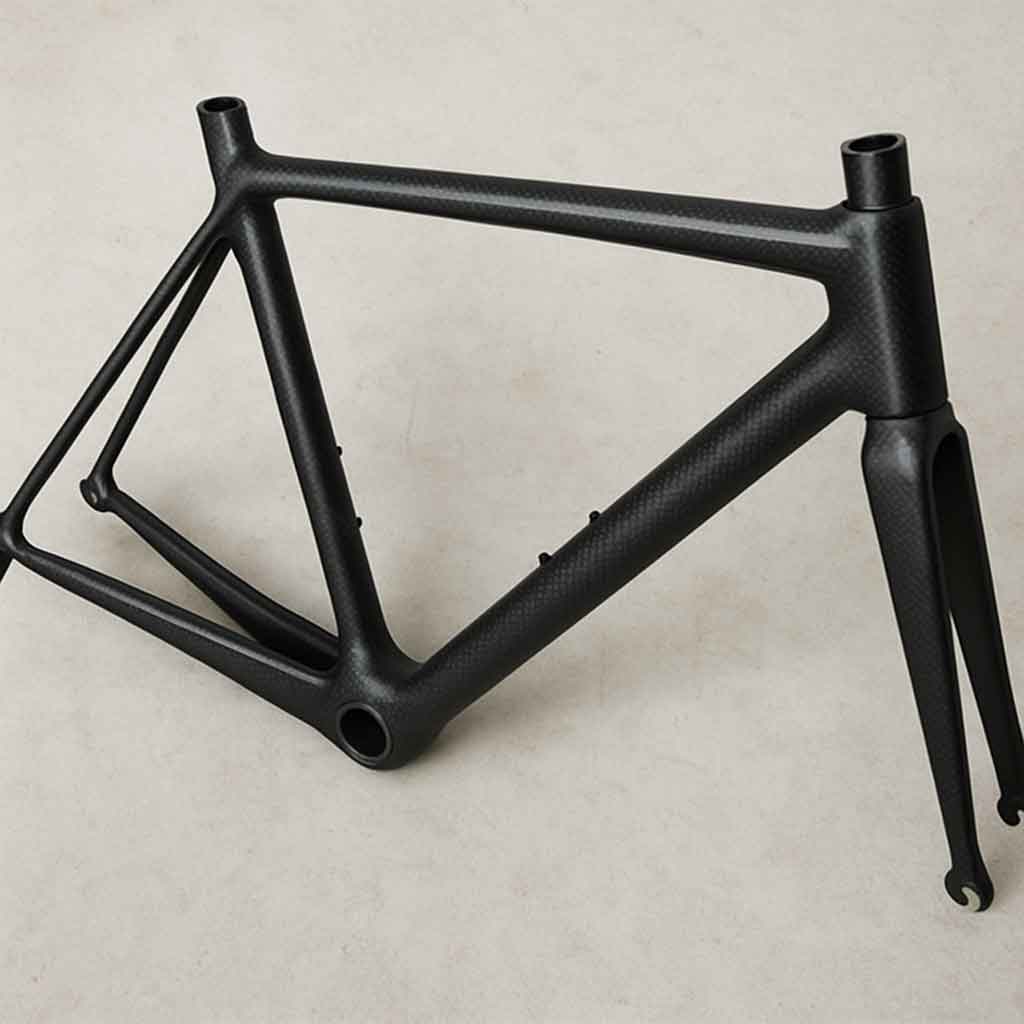

If you are comparing carbon materials before choosing a frameset, start with our carbon gravel bike frames. This guide explains how Toray T700, T800 and T1000 affect frame weight, stiffness, comfort and durability.
Understanding Toray Carbon Fiber Grades
Toray is the world's leading manufacturer of carbon fiber, supplying materials for aerospace, automotive, and premium carbon gravel bike frames. Their T-series grades (T700, T800, T1000) represent different levels of tensile strength and modulus — directly affecting frame performance, weight, and ride quality.
In this guide, we'll explain the differences between Toray carbon grades, why Mondince uses T800 and T1000, and how to choose the right carbon fiber for your gravel bike frame needs. 👉 Browse our EN certified carbon gravel frames →
Toray Carbon Fiber Grades Explained
| Grade | Tensile Strength | Tensile Modulus | Typical Application |
|---|---|---|---|
| T700 | 4.9 GPa | 230 GPa | Entry-level carbon frames, value-oriented builds |
| T800 | 5.8 GPa | 295 GPa | Mid-range to premium frames, excellent stiffness-to-weight |
| T1000 | 7.0 GPa | 315 GPa | Premium racing frames, high-stress areas, lightweight builds |
T700: Entry-Level Carbon
T700 is the industry standard for entry-level carbon frames. While reliable and affordable, it offers lower tensile strength and modulus compared to higher grades.
Characteristics:
- Lower cost — ideal for budget-conscious builds
- Good durability for everyday riding
- Higher weight for equivalent stiffness
- Common in department store and entry-level carbon bikes
Best For:
- Beginner gravel riders
- Commuter and recreational use
- Budget-friendly carbon builds
T800: Premium Performance Carbon
T800 is the sweet spot for premium gravel frames. With 5.8 GPa tensile strength and 295 GPa modulus, it provides excellent stiffness-to-weight ratio without the premium cost of T1000.
Characteristics:
- 18% stronger than T700
- Excellent stiffness for responsive handling
- Good impact resistance
- Balanced performance for mixed terrain
Best For:
- Serious gravel riders and racers
- Adventure and endurance riding
- Value-conscious performance seekers
T1000: Ultimate Performance Carbon
T1000 represents Toray's highest-strength carbon fiber, with 7.0 GPa tensile strength — 21% stronger than T800. Used in aerospace and Formula 1 applications, T1000 delivers unmatched stiffness-to-weight ratio.
Characteristics:
- Highest tensile strength in the T-series
- Ultra-lightweight frame construction possible
- Superior impact resistance
- Premium cost
Best For:
- Competitive gravel racing
- Lightweight builds (sub-7.5kg complete bike)
- High-stress areas (bottom bracket, head tube, dropouts)
How Mondince Uses Carbon Grades
Mondince doesn't use a single carbon grade throughout the frame. Instead, our engineers strategically place different grades where they're needed most:
- Main triangle (T800): Excellent balance of stiffness and weight for the frame's core structure
- Bottom bracket area (T1000): High-strength carbon for power transfer and impact resistance
- Head tube (T1000): Reinforcement for steering precision and front-end stiffness
- Dropouts (T1000): Durability for wheel attachment and crash protection
- Seat stays (T800): Compliance for comfort without sacrificing efficiency
This hybrid approach delivers the best of both worlds — T1000 strength where needed, T800 value everywhere else.
👉 Ready to experience Toray carbon performance? Explore Mondince's full range of carbon gravel bike frames — from T800+T1000 hybrid to full T1000 racing platforms.
Which Carbon Grade Is Best for a Gravel Frame?
For most gravel riders, a T800 main structure with T1000 reinforcement in high-stress areas offers the best balance. It keeps the frame light and responsive while improving strength around the bottom bracket, head tube and dropouts.
Pure T1000 construction is most useful for riders who prioritize racing weight and maximum stiffness. T700 can still be durable, but it usually requires more material to reach the same stiffness target, which can increase frame weight.
Frame Weight Comparison by Carbon Grade
| Frame Model | Carbon Grade | Weight (Size M) | Target Rider |
|---|---|---|---|
| FM296 | T800 + T1000 reinforcements | 1050g | Adventure / Endurance |
| FM306 | T800 + T1000 reinforcements | 1120g | All-road / Commuter |
| FM316 | T800 + T1000 reinforcements | 1150g | Bikepacking |
| FM396 | Full T1000 | 980g | Racing / Lightweight |
Carbon Layup Technology
Carbon grade is only one part of the frame. The final ride quality also depends on carbon layup design, EPS molding technology and the factory's quality control process. These factors determine whether the material strength can be translated into real frame performance.
Beyond the carbon grade, the layup design (how carbon sheets are arranged) dramatically affects frame performance. Mondince uses advanced engineering techniques:
EPS (Expanded Polystyrene) Molding:
EPS molding ensures consistent internal surfaces, eliminating wrinkles and voids that could weaken the frame. This technology allows for thinner, lighter walls without sacrificing strength.
Monocoque Construction:
Our frames use monocoque construction — the entire frame is molded as a single piece rather than bonded tubes. This eliminates bonding points, reducing weight and increasing strength.
Optimized Ply Orientation:
Each carbon sheet is oriented at specific angles to maximize strength in high-stress directions while minimizing weight. This directional strength is what makes carbon frames superior to metal alternatives.
Related Mondince Gravel Frames
- FM296: T800 + T1000 reinforced adventure gravel frame for endurance riding.
- FM316: Bikepacking-focused carbon gravel frame with stable handling and cargo capability.
- FM396: Lightweight full T1000 gravel frame for racing and performance builds.
Explore the full Mondince carbon gravel frame collection or contact our team for OEM material and layup recommendations.
Frequently Asked Questions
Is T1000 worth the extra cost?
For competitive racers and lightweight enthusiasts, yes. The weight savings and stiffness gains are noticeable. For recreational riders, T800 offers excellent performance at a better value.
How can I tell what carbon grade a frame uses?
Reputable manufacturers specify carbon grades. Mondince clearly labels T800 and T1000 usage in our specifications. Beware of brands that simply say "carbon fiber" without grade information.
Does higher carbon grade mean more fragile?
No. Higher-grade carbon (T1000) actually has higher tensile strength and better impact resistance than lower grades when properly engineered.
Can I repair a damaged carbon frame?
Minor damage can be professionally repaired. However, repairs are complex and should only be attempted by certified carbon repair specialists. Contact Mondince for repair guidance.
What testing standards apply to Mondince carbon frames?
All Mondince frames are tested to 130% of ISO 4210 standards. EFBE TRI-TEST® certification is available for EU market compliance. Test reports are available upon request.
Conclusion
Choosing the right carbon grade for your carbon gravel bike frame depends on your riding priorities and budget:
- T800 + T1000 hybrid (FM296, FM306, FM316): Best value — premium performance at accessible pricing
- Full T1000 (FM396): Ultimate performance — lightest weight, highest stiffness for racing
Mondince's strategic use of T800 and T1000 carbon delivers exceptional performance across our entire gravel bike frame lineup. Whether you're an adventure rider or competitive racer, there's a Mondince frame optimized for your needs.
Ready to experience premium Toray carbon? Shop our carbon gravel frame collection or contact our sales team for custom OEM orders.