
People often talk about sourcing a carbon frame from China as if the only advantage were a lower price. Price is part of it, but a lower price does not mean the testing, the parts fit, or the factory can be relied on.
A lower quote does not tell you which tests were done on the frame, or to what standard. It also does not tell you whether the parts you already own will fit. This page looks at the benefits that are real, and at the conditions that make them hold. If you are checking a specific frameset, start with What to Verify on a Chinese Carbon Frameset Before You Order. If you are still choosing a factory, use How to Choose a Carbon Frame Manufacturer in China.
The price difference is real, but a low price is not the whole point
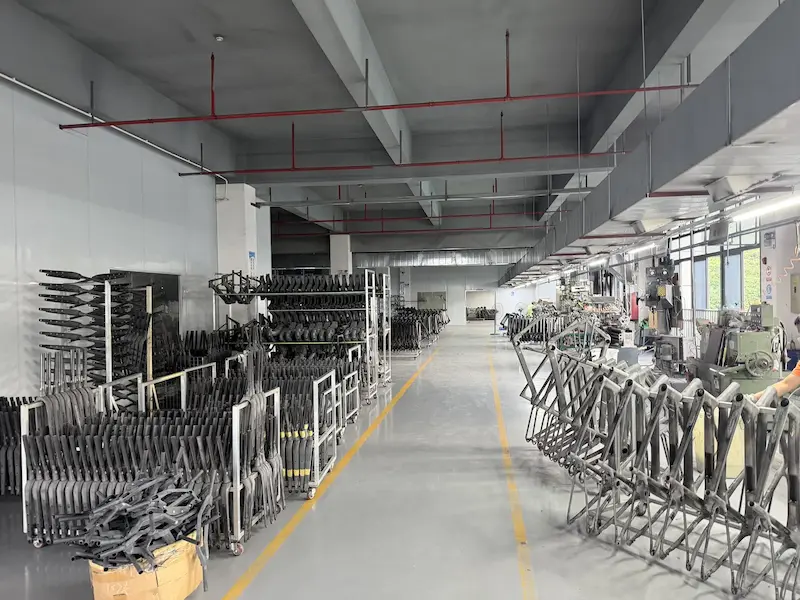
China is the world's largest exporter of bicycle frames, forks, and related parts. According to UN Comtrade data compiled by the World Bank WITS, those exports were about US$1.30 billion in 2024. That figure includes forks and parts, not only finished carbon framesets, so it only shows that this industry is large. It does not prove that the frameset you are buying is better.
Prices are often lower because molding, paint, and OEM work usually sit in the same supply chain. What you actually get is access to that capacity, not cheaper carbon fiber itself.
Carbon can be light and stiff, but only if the layup is done well
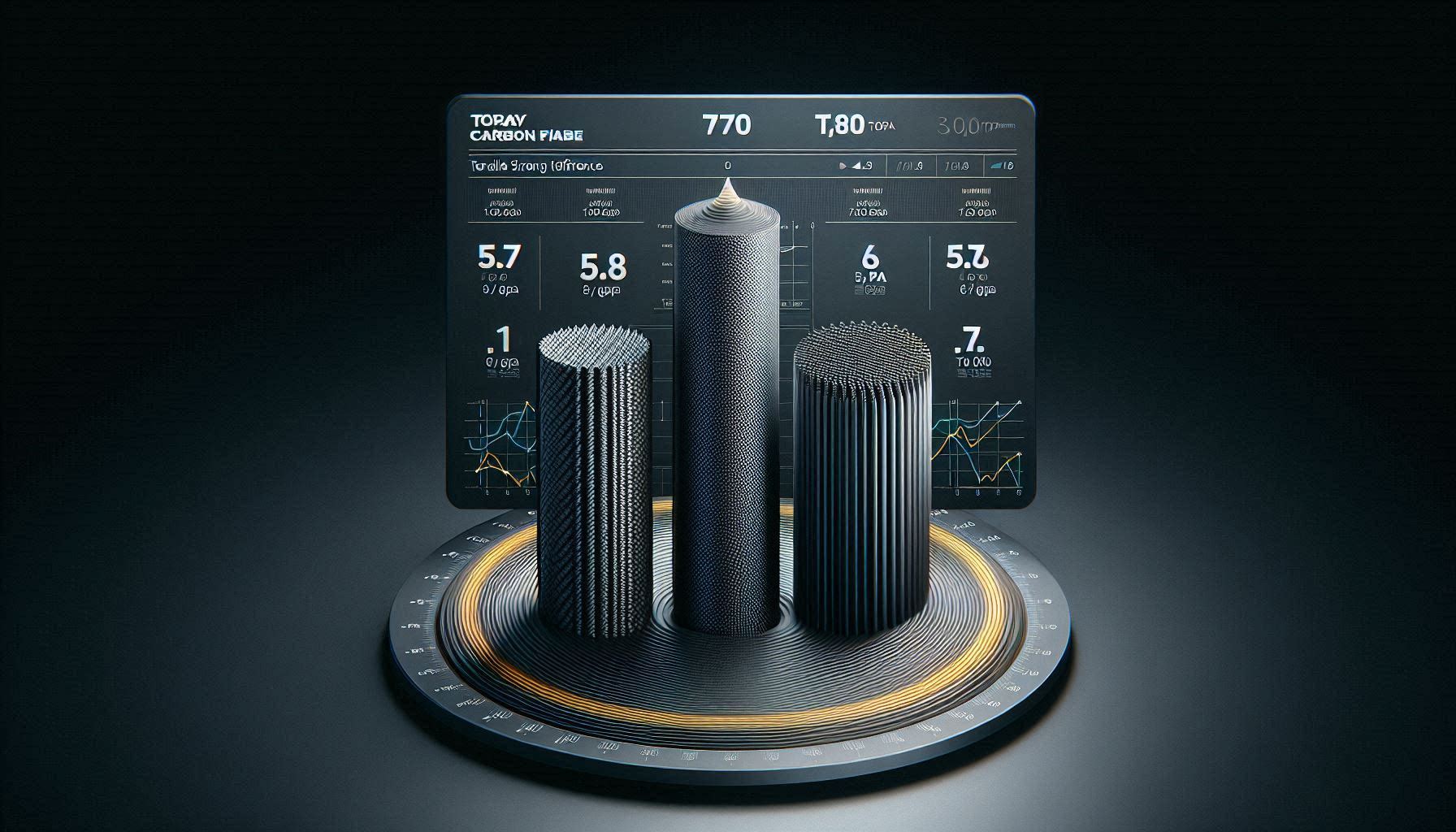
Carbon fiber is used in frames because it can be very strong and stiff for its weight. In an Open University comparison of frame materials, a carbon-fibre composite shows a specific strength of 454 kN·m/kg, against 125 for aluminium alloy and 88 for chromium-molybdenum steel.
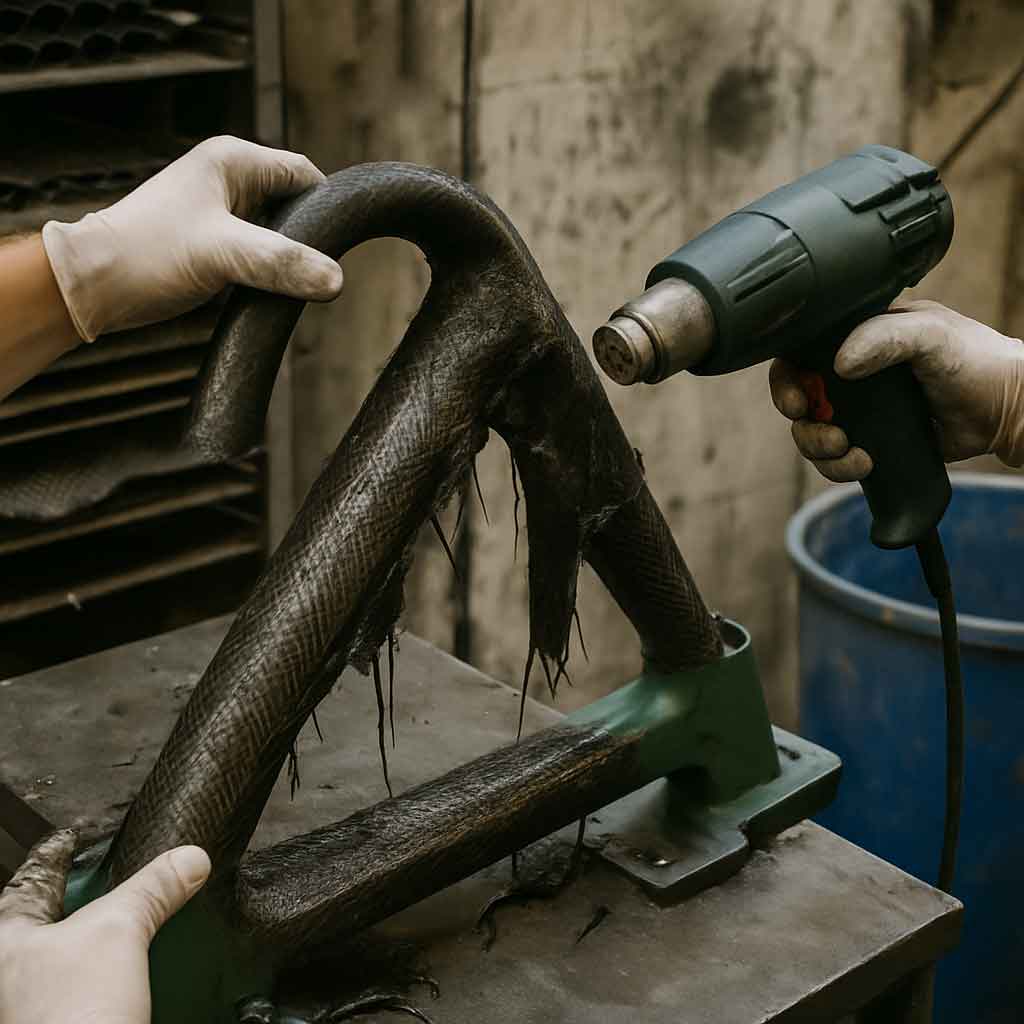
The same course also explains that these carbon figures are based on idealized production: the right amount of fiber, placed in the right direction. The metal figures are more typical of ordinary production. A real frame also sees bending and twisting, not just simple tension and compression.
So the material being carbon is not a benefit by itself. The lightness and stiffness only show up when the layup, the molding, and the inspection are under control.
What riders can actually get
For an individual build, the usual gains are:
- A carbon frame at a price closer to a factory quote than to a finished consumer-brand bike
- Custom paint and sizing options that a retail model may not offer
- Current component standards and geometry, if those are written down clearly before you order
These benefits are not guaranteed just because the product page says the frame comes from China. Compare the category that matches how you ride:
What brands and shops actually get
For OEM and private-label work, the more useful question is usually what the factory can do, not only how low the quote is:
- The same factory that makes the frame can often also do custom colors, logos, and packaging
- Sample orders before a larger run
- A written set of standards: bottom bracket, headset, axle, brake mount, routing, and tire clearance
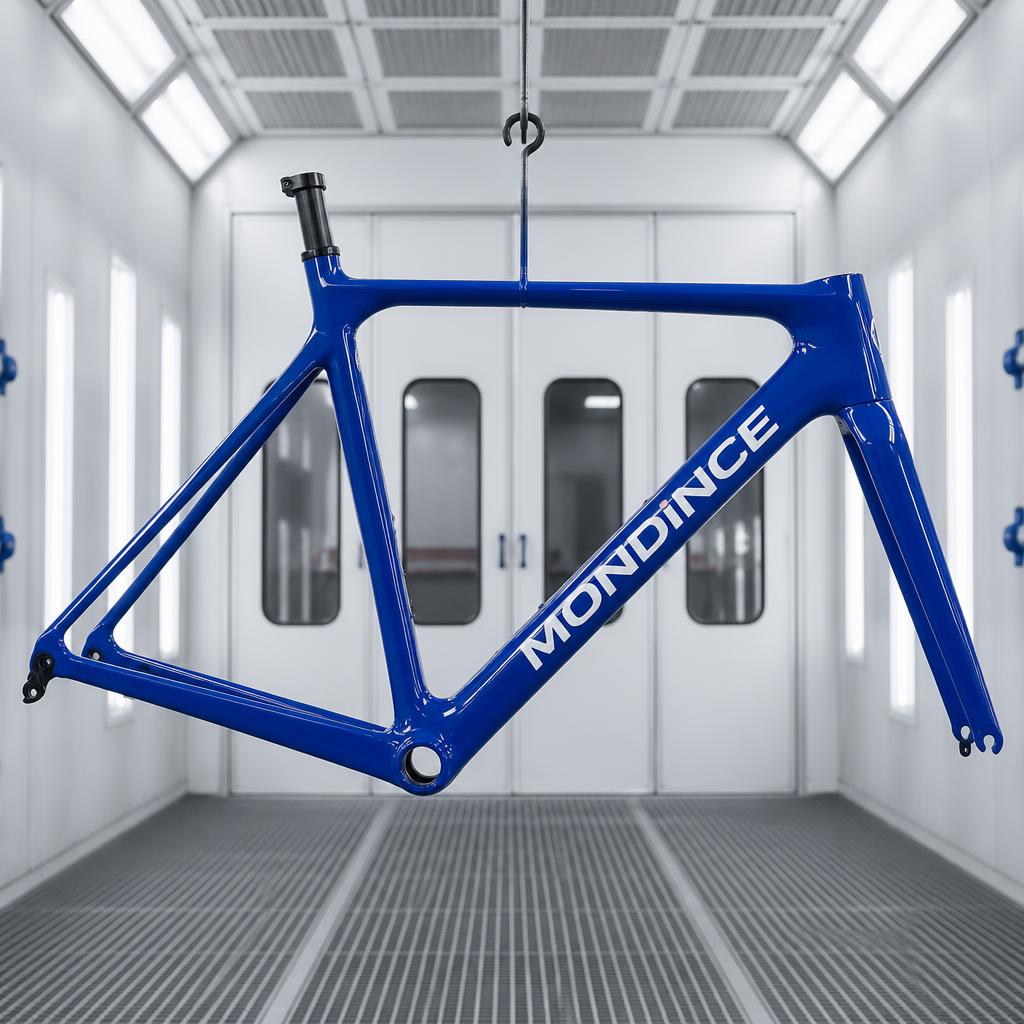
Paint is a large part of that work. For the finishing process, see How to Paint a Carbon Fiber Bike Frame.
A lower price does not include these things
A competitive quote cannot, on its own, prove any of the following:
- That the frame was tested to a named category in ISO 4210-2:2023, which sets safety and performance requirements for city, trekking, mountain, and racing bicycles
- That the factory used the frame and fork test methods in ISO 4210-6:2023
- That the documents you were shown belong to the frameset you will actually receive
- That the parts you plan to use will fit
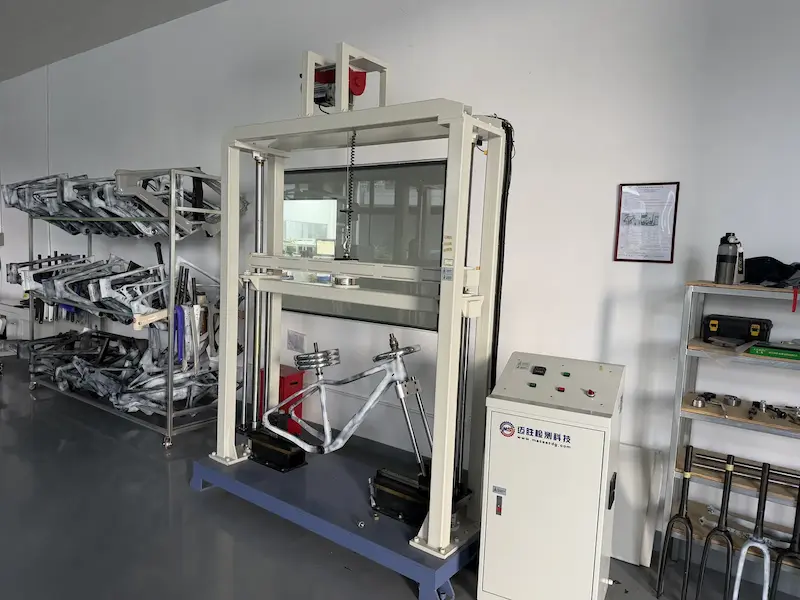
Those checks should be made on What to Verify on a Chinese Carbon Frameset Before You Order. They should not live only in a list of benefits.
How to keep the benefit
If the advantages above are why you are sourcing from China, keep them in place with a short list:
- Decide the category and the component standards before you compare price.
- Ask for the test standard, the version, and the category, in writing.
- Review geometry and component standards on the same document you will order against.
- Treat custom paint and logos as a specification, not as a last-minute request.
- If you are still comparing factories, go back to How to Choose a Carbon Frame Manufacturer in China.
Conclusion
Sourcing a carbon frame from China can be a strong option because the industry is large, the material can be light for its strength, and OEM work such as paint and private labeling can often be done in the same factory. Those are real advantages. But they are not a substitute for documents or a named test standard, and they are not a substitute for a factory you can actually work with.
To compare current Mondince models, start with carbon bike frames, or contact Mondince about paint and OEM options.