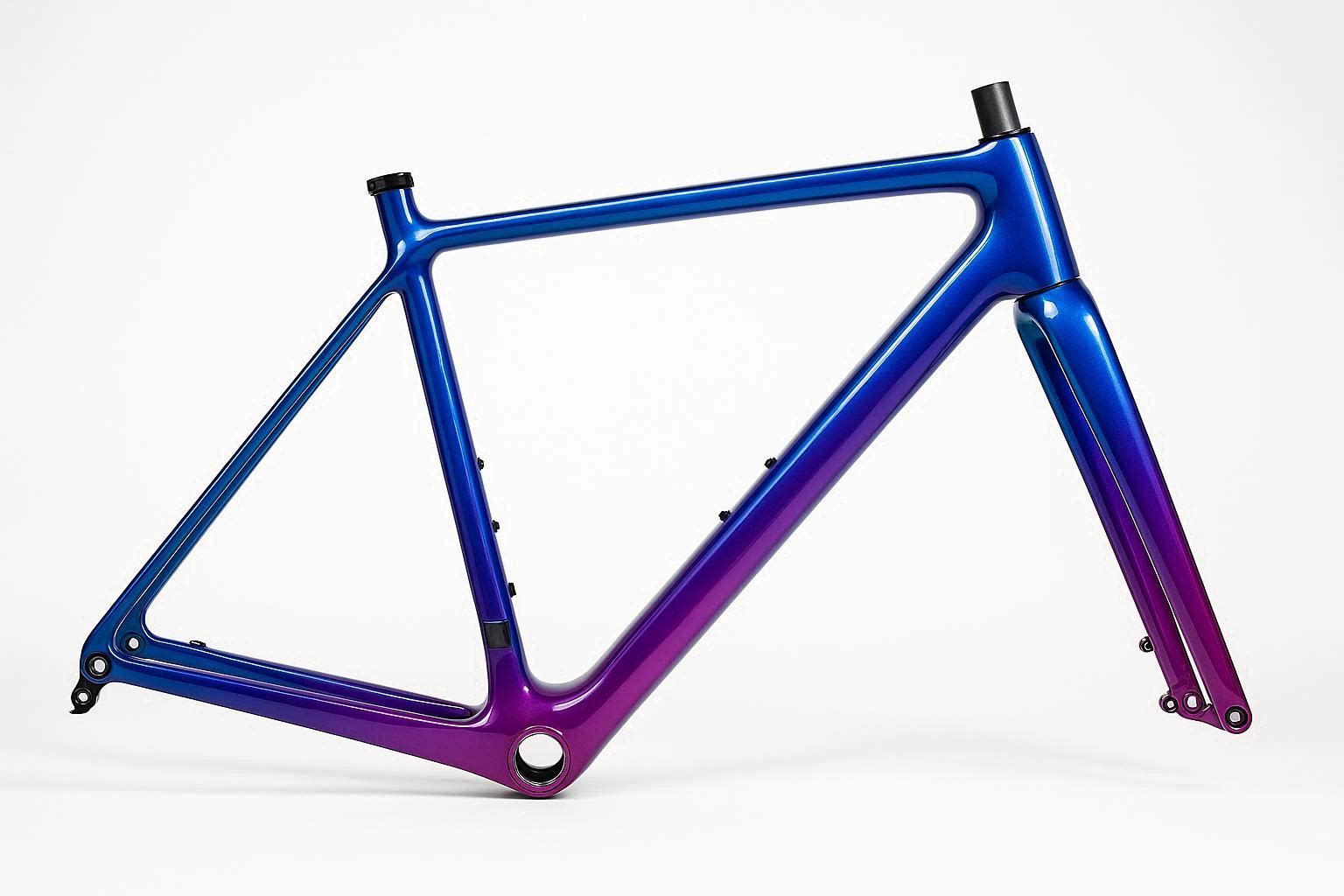

Carbon fiber bike frames can be painted, repainted, or finished with custom colors, but the process must protect the carbon structure and resin system. This guide explains how to paint a carbon frame safely and how professional OEM painting differs from a simple DIY repaint.
A custom paint job can completely change the look of a carbon bike frame. It can also help bike brands, distributors, and shops create a stronger product identity. However, carbon fiber is not the same as metal. The frame should not be overheated, over-sanded, or treated with aggressive chemicals that may damage the resin or carbon layers.
Can You Paint a Carbon Fiber Bike Frame?
Yes, a carbon fiber bike frame can be painted. The key is to prepare the surface carefully without damaging the carbon structure. In most cases, you only need to scuff the existing clear coat or paint surface enough for the new coating to bond. You should not sand deeply into the carbon fiber layers.
Unlike metal frames, carbon frames do not need metal etching primer. They need proper cleaning, light sanding, suitable primer or sealer, thin paint layers, and a protective clear coat. High-temperature baking should also be avoided unless the process is specifically approved for carbon composites.
For more material background, read our carbon fiber bike frame guide.
Before You Start: Check the Frame Condition
Before painting, inspect the frame carefully. Look for cracks, soft spots, delamination, deep scratches, loose inserts, or previous crash damage. A paint job should not hide structural problems. If the frame has visible damage, inspect or repair it before repainting.
If you are not sure whether a mark is only paint damage or a structural crack, see our guide on cracks in carbon bike frames.
Tools and Materials You May Need
- Clean microfiber cloths
- Isopropyl alcohol or suitable degreaser
- Fine sandpaper, usually 600 to 1000 grit for surface preparation
- Painter's tape and masking film
- Plastic-safe primer or sealer
- Color paint suitable for bicycle or automotive finishes
- Clear coat for protection
- Respirator, gloves, and eye protection
- Clean, dust-controlled workspace
Step 1: Disassemble and Clean the Frame
Remove all components from the frame, including the fork if needed. Take off the seatpost, headset parts, bottom bracket, cable guides, bottle cage bolts, derailleur hanger, and any rubber plugs or frame accessories.
Clean the frame thoroughly to remove grease, wax, chain oil, dust, and silicone residue. Paint problems often start with poor cleaning, so this step matters more than many riders expect.
Step 2: Light Sanding
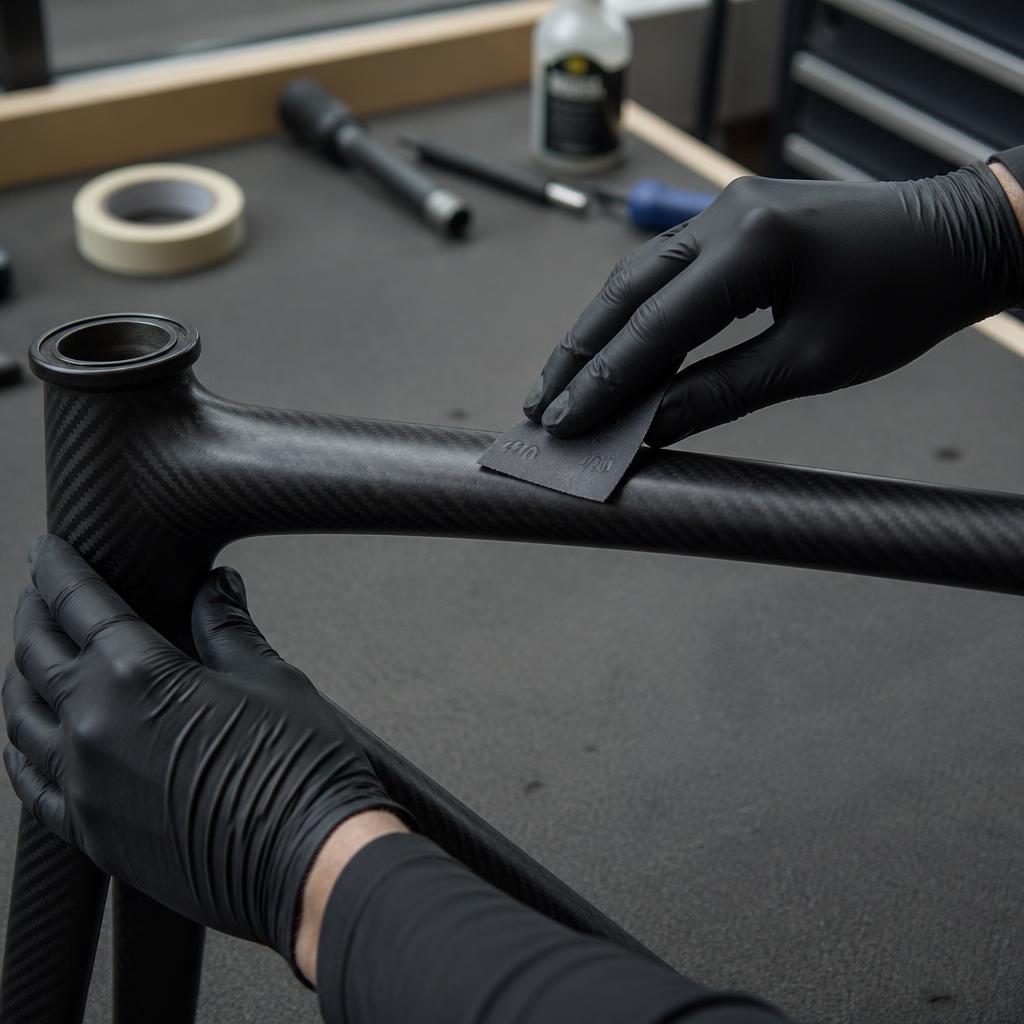
Sand the existing finish lightly so the new primer or paint can bond. The goal is to dull the surface, not remove carbon material. Avoid aggressive sanding around tube edges, joints, cable ports, bottom bracket areas, and thin frame sections.
If you reach visible carbon weave or raw carbon, stop and reassess the surface. Removing too much material can weaken the frame or void warranty coverage.
Step 3: Mask Critical Areas
Use painter's tape and masking film to cover all areas that should not receive paint. Important areas include the bottom bracket shell, head tube bearing seats, dropout faces, brake mounts, cable ports, threads, seatpost contact area, and derailleur hanger interface.
Good masking keeps the frame easier to assemble and prevents paint buildup in precision areas.
Step 4: Apply Primer or Sealer
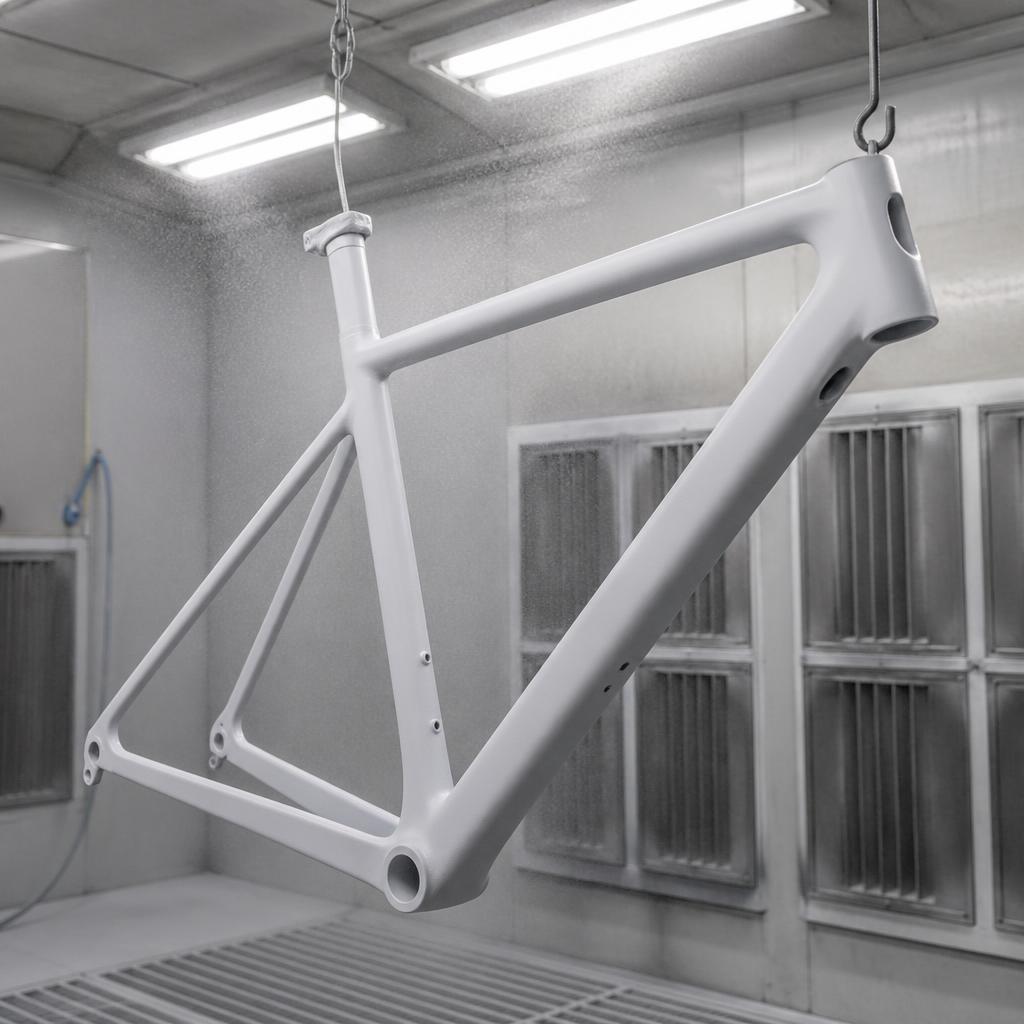
Apply light, even coats of primer or sealer if your paint system requires it. Do not spray heavy layers. Thin coats reduce runs, improve adhesion, and make sanding between layers easier.
Let each coat dry according to the paint manufacturer's instructions. Do not use high heat to force the drying process unless the coating system and carbon frame manufacturer allow it.
Step 5: Apply Color Coats
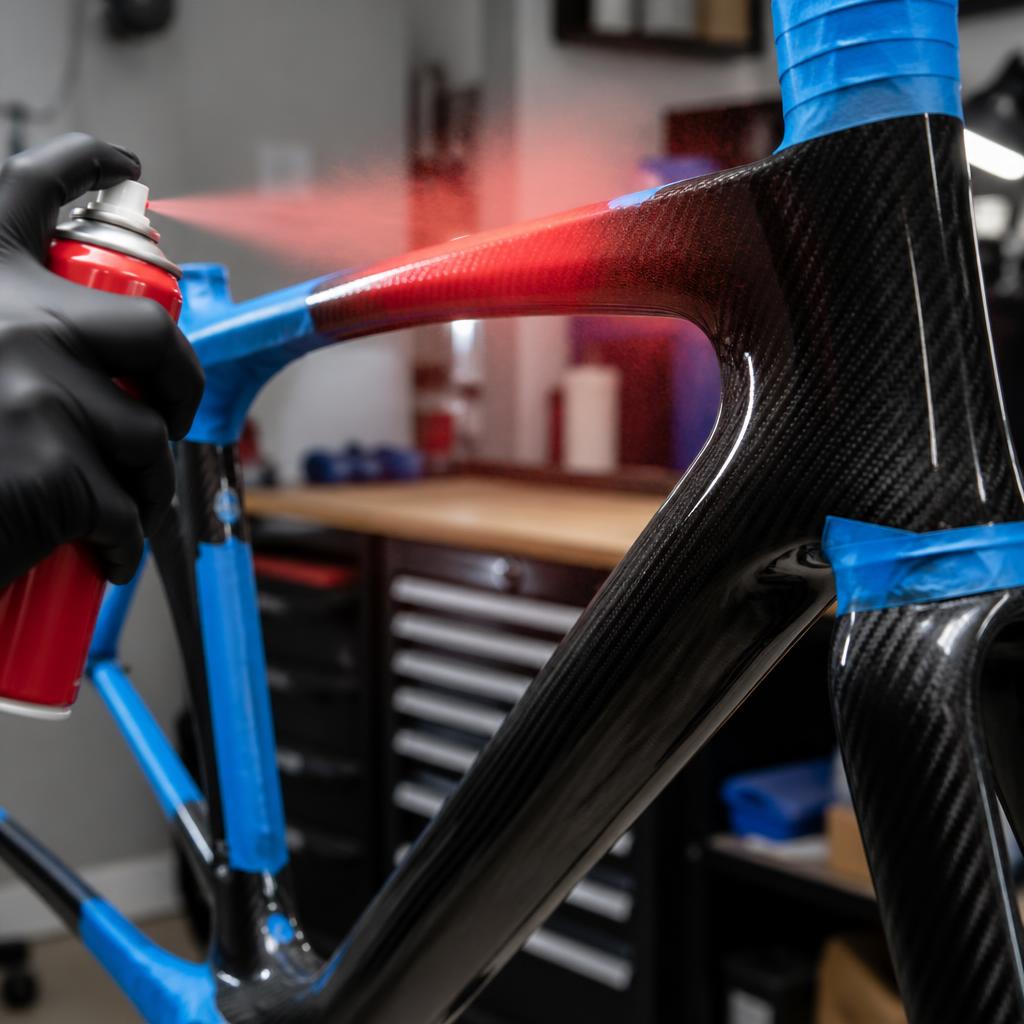
Apply 2 to 3 thin color coats instead of one heavy coat. Hold the spray gun or can at a consistent distance and move smoothly across the frame. Allow each coat to flash dry before applying the next one.
For custom colors, test the paint on a sample surface first. Metallic, pearl, fade, chameleon, and candy finishes often need more experience to apply evenly.
Step 6: Add Logos, Stencils, or Fade Effects
Custom logos and graphics require accurate masking and careful layer planning. If using stencils, make sure the base coat is dry enough before applying tape. Remove masking carefully to avoid lifting the paint edge.
Fade effects and multi-color transitions should be sprayed gradually. Practice on a test piece before applying the effect to the frame.
Step 7: Clear Coat Protection
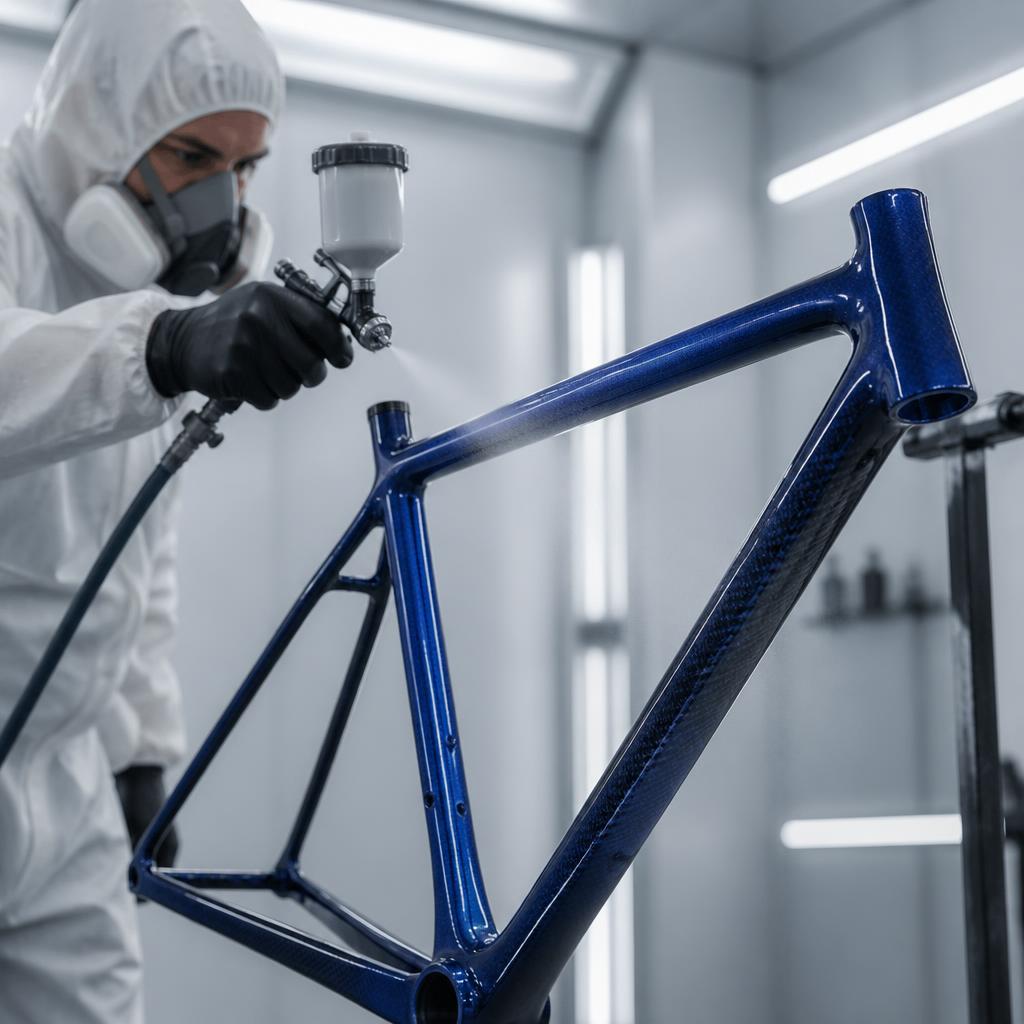
Clear coat protects the color layer from UV exposure, scratches, sweat, road debris, and cleaning products. Apply several thin coats according to the coating system. After curing, the surface can be lightly polished if needed.
Do not assemble the frame too early. Paint may feel dry on the surface before it has fully cured.
Common Mistakes to Avoid
- Over-sanding: Do not sand into the carbon layers.
- Too much heat: Avoid high-temperature baking unless the process is approved for carbon frames.
- Poor cleaning: Oil, wax, or silicone residue can cause paint defects.
- Heavy coats: Thick paint layers add weight and increase the risk of runs.
- Bad masking: Paint buildup around bearings, threads, and dropouts can cause assembly problems.
- Ignoring damage: Do not paint over cracks or suspected structural issues.
DIY Painting vs Professional OEM Painting
| Option | Best For | Main Advantage | Main Limitation |
|---|---|---|---|
| DIY Painting | Personal projects and simple color changes | Lower cost and creative freedom | Higher risk of uneven finish, poor adhesion, or frame damage |
| Professional Painting | Premium builds and difficult finishes | Better surface quality, masking, finish durability, and color control | Higher cost and longer lead time |
| OEM Custom Painting | Bike brands, distributors, shops, and batch orders | Brand consistency, Pantone/RAL colors, decals, repeatable production | Requires artwork confirmation and production planning |
Professional OEM Custom Painting at Mondince
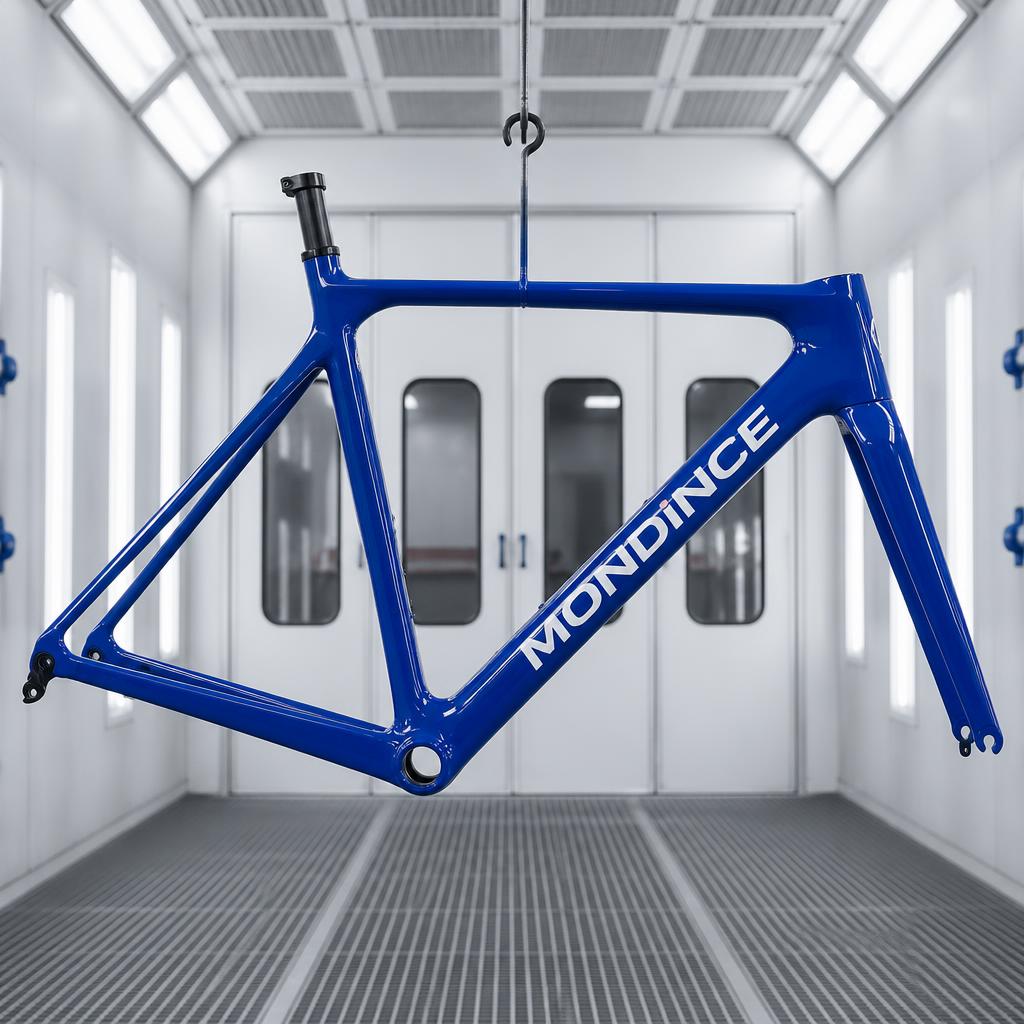
Mondince provides OEM custom painting for carbon road, gravel, MTB, and e-bike frames. This is useful for bike brands, distributors, shops, and custom build projects that need consistent color, decals, logos, and model identity.
Custom painting options can include:
- RAL or Pantone color matching
- Gloss, matte, metallic, pearl, chameleon, or fade finish
- Brand decals and logo placement
- Two-tone or multi-color paint schemes
- Clear coat protection
- Sample confirmation before batch production
Learn more about OEM carbon frame customization or visit our OEM service page.
How Much Weight Does Paint Add?
A typical paint finish can add weight depending on the number of layers, color type, graphics, and clear coat. Simple finishes are usually lighter, while complex multi-color or heavy clear coat finishes add more weight.
For performance builds, choose a paint scheme that balances appearance and weight. For OEM projects, define the target finish and weight expectation before production.
Frequently Asked Questions
Does painting a carbon frame void the warranty?
Professional painting by the frame supplier usually does not affect the structural warranty. DIY repainting may create warranty issues if the frame is damaged by sanding, overheating, chemical use, or incorrect assembly. For testing information, see the Mondince certification page.
Can I repaint a carbon frame at home?
Yes, simple repainting is possible if you prepare the surface carefully and avoid sanding into the carbon structure. For complex effects, logos, or premium finishes, professional painting is safer.
Can Mondince paint frames for OEM orders?
Yes. Mondince supports OEM custom painting for carbon frame orders, including brand colors, decals, custom finish plans, and batch production support. Contact Mondince to discuss your project.
Conclusion
Painting a carbon fiber bike frame can create a unique and professional-looking build, but the process must protect the carbon structure. Careful cleaning, light sanding, proper masking, suitable primer, thin paint layers, and clear coat protection are all important.
For personal projects, a simple DIY paint job can work if done carefully. For bike brands, shops, and OEM customers, professional custom painting is usually the better choice because it delivers stronger consistency, better finish quality, and repeatable branding.
Explore Mondince carbon bike frames, compare carbon gravel frames and carbon road frames, or contact Mondince for OEM custom painting support.