
Carbon bike frames are light, strong, and widely used in road, gravel, MTB, and e-bike builds. But after a crash, hard impact, or incorrect assembly, a carbon frame should be inspected carefully before riding again.
Not every mark on a carbon frame is a structural crack. Some are only paint scratches, clear coat marks, or cosmetic chips. However, because carbon damage can sometimes be hidden under the surface, riders should know how to check the frame and when to ask for professional help.
.jpg)
Are Cracks in Carbon Frames Dangerous?
A true structural crack in a carbon frame can be dangerous because it may reduce frame strength and create a failure risk under riding loads. If you suspect structural damage, stop riding the bike until the frame has been inspected.
Small paint cracks or surface scratches are not always serious, but they should still be checked carefully. The most important step is to identify whether the damage is only cosmetic or whether it may involve the carbon layers below the paint.
For basic carbon material background, read our carbon fiber bike frame guide.
Common Signs of Carbon Frame Damage
- Visible crack lines: Especially around joints, tube edges, dropouts, seatpost areas, and bottom bracket zones.
- Soft spots: A section that feels unusually soft or flexible when pressed gently.
- Paint lifting or bubbling: This can sometimes indicate damage below the paint.
- Unusual sounds: Clicking, creaking, or popping after a crash or heavy impact.
- Change in ride feel: Sudden flex, instability, or strange handling.
- Delamination signs: A dull or hollow sound in one area compared with nearby sections.
Where Carbon Frames Commonly Crack
| Frame Area | Common Cause | What to Check |
|---|---|---|
| Head tube and fork area | Crash impact, front-end load, headset problems | Cracks near headset, fork crown, steerer, and bearing seats |
| Bottom bracket shell | Pedaling load, poor bearing fit, impact, manufacturing defect | Cracks, creaking, movement, or visible separation around the shell |
| Seatpost and seat tube | Over-tightening, wrong seatpost size, insufficient insertion | Cracks near clamp area and seat tube opening |
| Chainstays and seatstays | Rock strikes, chain slap, crash impact, wheel rub | Surface cuts, crushed sections, or impact marks |
| Dropouts and hanger area | Rear derailleur impact, axle stress, crash damage | Cracks around dropout faces, hanger mount, and axle interface |
How to Inspect a Carbon Bike Frame
1. Clean the Frame First
Dirt, grease, and dust can hide small cracks. Clean the frame with mild soap and water, then dry it with a soft cloth. Avoid harsh solvents unless the frame manufacturer confirms they are safe.
2. Use Bright Light
Inspect the frame under strong light. Move the light angle slowly across the tube surface. Cracks, lifted clear coat, or unusual reflections are easier to see when light hits from different directions.
3. Check High-Stress Areas
Look carefully around the head tube, bottom bracket, seat tube clamp, dropouts, brake mounts, fork crown, chainstays, and any area that was hit during a crash.
4. Listen for Sound Changes
The tap test can sometimes help identify delamination. Gently tap nearby areas with a small coin or plastic tool and listen for sound changes. A sudden dull or hollow sound compared with surrounding areas may require professional inspection.
Paint Crack or Structural Crack?
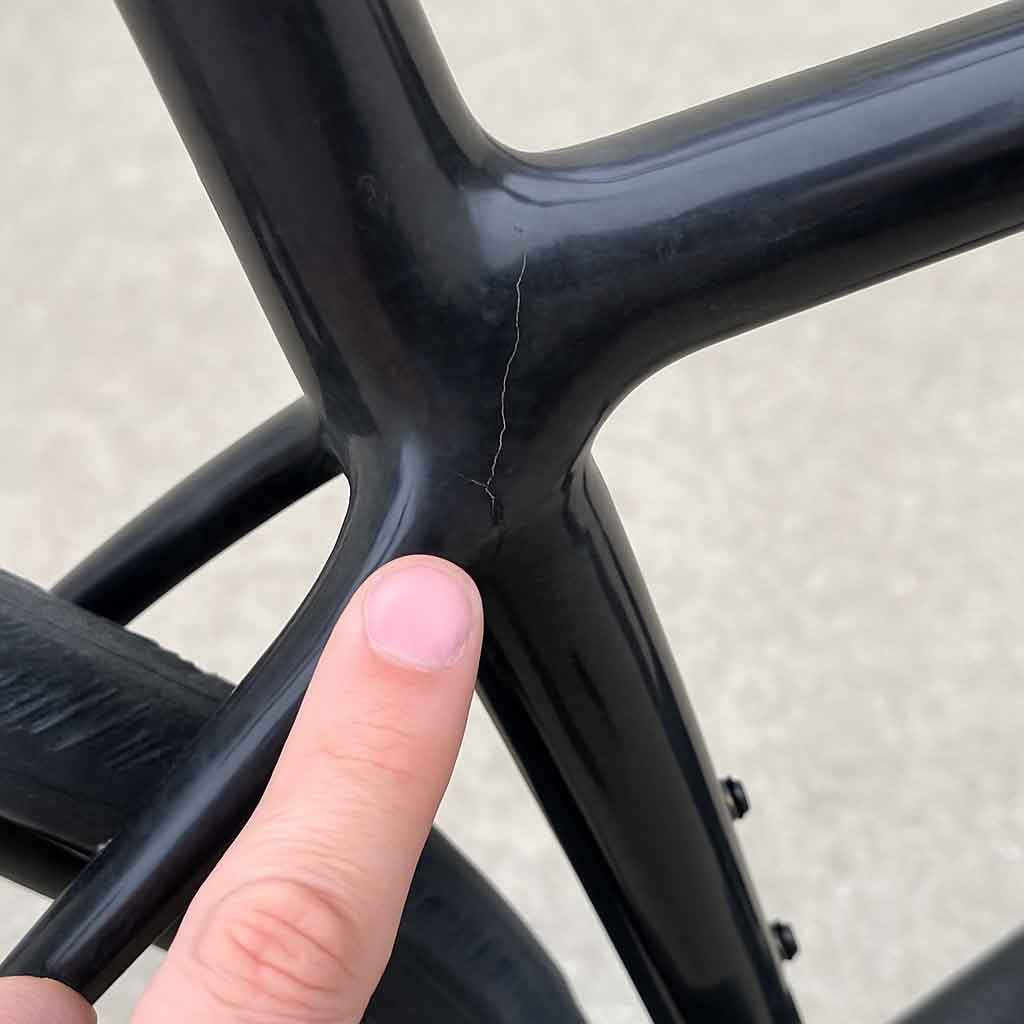
It is not always easy to tell the difference between a paint crack and a structural carbon crack. Paint or clear coat damage usually stays on the surface and does not change frame stiffness or sound. Structural damage may show deeper separation, soft spots, unusual sound, or movement under load.
| Damage Type | Typical Signs | Recommended Action |
|---|---|---|
| Paint scratch | Surface mark, no softness, no sound change | Monitor and protect the finish |
| Clear coat crack | Thin line in clear finish, usually near paint edge or impact mark | Inspect carefully and monitor; ask for support if unsure |
| Carbon crack | Deep line, soft spot, delamination sound, spreading damage, or post-crash issue | Stop riding and get professional inspection |
Common Causes of Carbon Frame Cracks
Impact Damage
Crashes, falling bikes, transport damage, rock strikes, and hard impacts can damage carbon frames. After any serious impact, inspect the bike before riding again.
Over-Tightening Components
Carbon frames are sensitive to clamp force. Seatposts, stems, handlebars, bottle cage bolts, and other components should be tightened with a torque wrench. Over-tightening can crush or crack carbon parts.
Wrong Component Fit
Using the wrong seatpost size, incorrect headset parts, poor bottom bracket fit, or incompatible axles can create stress. Always check compatibility before assembly.
Manufacturing or Bonding Defects
Manufacturing defects are less common, but they can happen. If a new frame shows unusual cracks, voids, alignment problems, or early failure signs, contact the seller or manufacturer.
Mondince carbon frames are developed with quality control and testing in mind. You can review related information on the certification page.
Can a Cracked Carbon Frame Be Repaired?
Some carbon frames can be repaired, but not every crack is repairable. The answer depends on the damage location, crack depth, frame structure, and whether the repaired area can safely handle future loads.
Minor cosmetic damage may only need finish repair. Structural cracks should be handled by a professional carbon repair specialist. Do not attempt structural carbon repair unless you have the correct materials, process knowledge, and safety testing method.
DIY Repair vs Professional Repair
| Repair Type | Suitable For | Risk Level |
|---|---|---|
| Cosmetic touch-up | Paint chips, clear coat scratches, small surface marks | Low if no carbon layer damage exists |
| DIY carbon patch | Not recommended for structural frame damage | High without proper tools, materials, and testing |
| Professional carbon repair | Repairable structural damage after expert assessment | Lower when performed by a qualified carbon repair specialist |
| Frame replacement | Severe damage, critical zones, unsafe repair locations | Safest option when repair confidence is low |
How to Prevent Carbon Frame Damage
- Use a torque wrench: Follow recommended torque values for seatposts, stems, bottle cages, and clamps.
- Use carbon assembly paste: It can reduce required clamping force on seatposts and handlebars.
- Inspect after crashes: Check the frame, fork, wheels, and cockpit after any hard impact.
- Protect high-risk areas: Use frame protection on chainstays, downtube, and bag contact points.
- Avoid hard clamping: Do not clamp thin carbon tubes directly in repair stands.
- Transport carefully: Prevent frame rub, crushing, or impact during shipping and travel.
- Clean regularly: Dirt can hide damage and accelerate wear around moving or contact areas.
Maintenance Tips for Carbon Bike Frames
Regular inspection is the best way to keep a carbon frame safe. Check the frame during cleaning, before long rides, after travel, and after any crash or heavy impact. Pay attention to new noises, visible marks, and changes in handling.
For gravel and MTB riders, check the downtube, chainstays, fork, and dropout areas more often because they are exposed to rocks, mud, and impacts. For road bikes, check the seatpost clamp, cockpit, bottom bracket, and fork area carefully.
You can compare Mondince carbon frames by category here:
When to Contact the Manufacturer
Contact the frame manufacturer or seller if the frame is new, the damage appeared without a crash, the crack is near a structural area, or you are unsure whether the damage is cosmetic. Send clear photos from multiple angles and include the frame model, purchase date, riding conditions, and damage history.
If you need help checking a Mondince frame, contact Mondince customer support with photos and frame details.
Conclusion
Carbon bike frames are strong and reliable when properly designed, assembled, and maintained. But any suspected crack should be taken seriously. Clean the frame, inspect high-stress areas, check for sound changes, and stop riding if the damage may be structural.
For riders, bike shops, and OEM customers, reliable frame design, controlled manufacturing, and proper testing are essential. Learn more about Mondince testing and certification, explore our carbon bike frame collection, or contact Mondince if you need help checking a carbon frame.