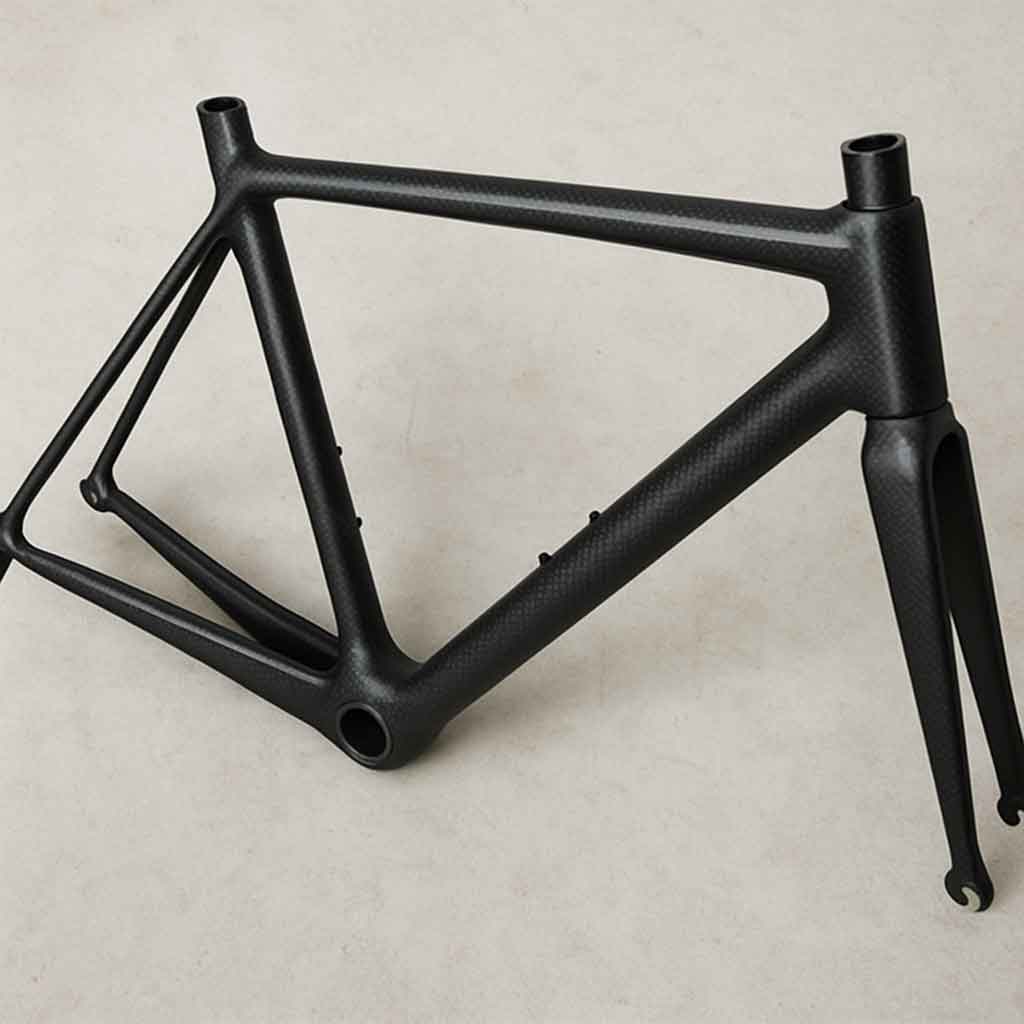

Carbon fiber is one of the most important materials used in modern high-performance bicycle frames. This guide explains what carbon fiber is, how it is used in bike frames, and why fiber grade, layup design, molding quality, and testing all matter.
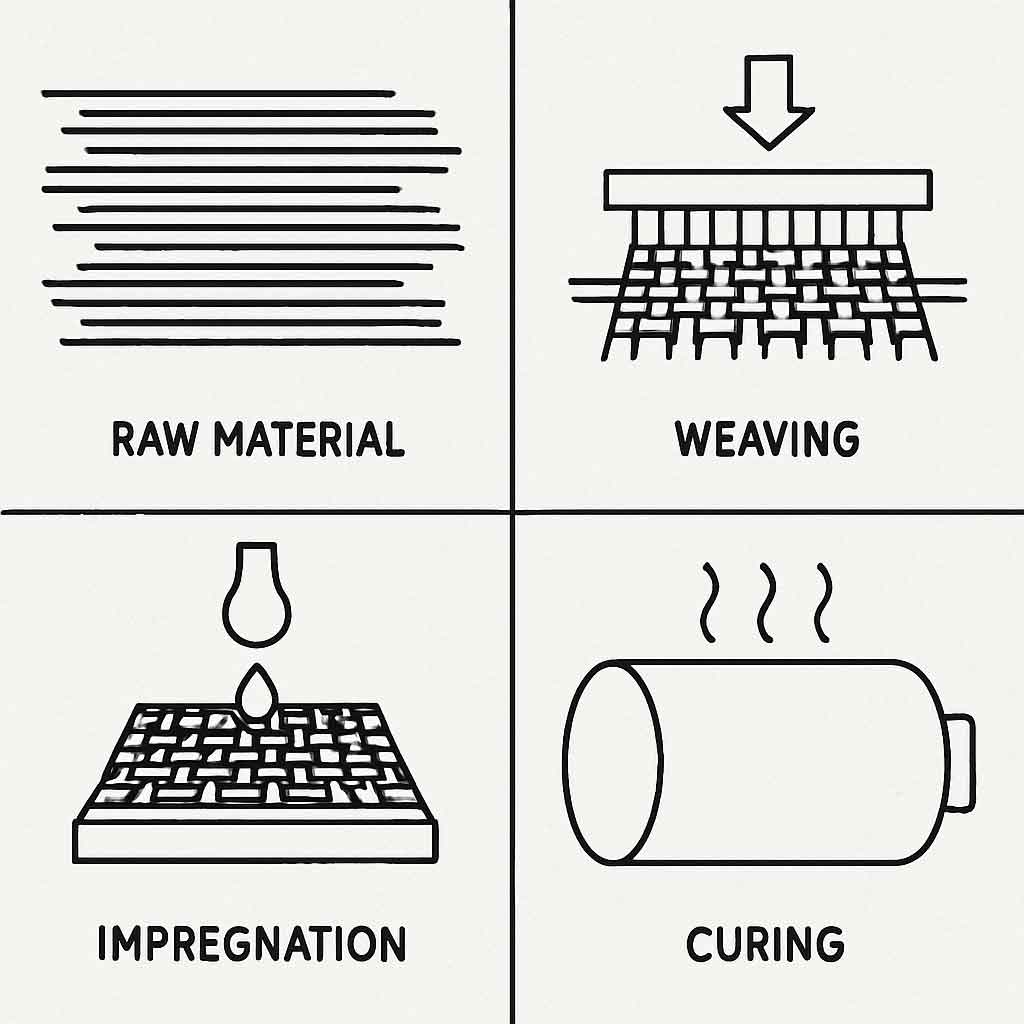
Carbon fiber is a lightweight composite material made from thousands of extremely thin carbon filaments. These filaments are bundled into tows, woven or arranged into sheets, combined with resin, and then cured into a rigid structure. In bicycle frame manufacturing, carbon fiber is valued because it can deliver a high strength-to-weight ratio, tunable stiffness, vibration damping, and aerodynamic tube shapes that are difficult to achieve with metal frames.
For riders, bike brands, and OEM customers, however, carbon fiber should not be judged by material grade alone. A good carbon bike frame depends on the complete system: fiber selection, layup design, EPS or internal molding control, resin quality, curing process, quality control, and final testing.
What Is Carbon Fiber?
Carbon fiber is produced by heating precursor fibers, usually polyacrylonitrile, under controlled conditions until most non-carbon elements are removed. The result is a very thin carbon filament with excellent tensile strength and low weight. Thousands of these filaments are grouped together into carbon fiber tow, such as 3K, 6K, 12K, or unidirectional carbon sheets.
In bicycle frames, carbon fiber is normally used as a composite material. The carbon fibers provide strength and stiffness, while the resin system holds the fibers in place and transfers load between them. This combination allows engineers to create a frame that is light, strong, and highly tunable.
Why Carbon Fiber Works Well for Bike Frames
Unlike aluminum, steel, or titanium, carbon fiber is directional. This means it is strongest along the direction of the fibers. Frame engineers can place carbon sheets in specific directions to control stiffness, comfort, impact resistance, and weight in different areas of the frame.
For example, the bottom bracket area can be reinforced for pedaling stiffness, the head tube can be strengthened for steering precision, and the seat stays can be designed with more compliance for comfort. This is why two frames made from similar carbon grades can ride very differently.
Carbon Fiber vs Metal Frame Materials
| Material | Typical Density | Main Advantage | Common Use |
|---|---|---|---|
| Carbon Fiber | Low | Lightweight, tunable stiffness, aerodynamic shaping | Road, gravel, MTB, e-bike performance frames |
| Aluminum | Medium | Affordable and easy to manufacture | Entry-level and mid-range frames |
| Steel | High | Durability and classic ride feel | Touring, city, custom frames |
| Titanium | Medium-high | Corrosion resistance and long service life | Premium endurance and adventure frames |
Common Carbon Fiber Grades: T700, T800 and T1000
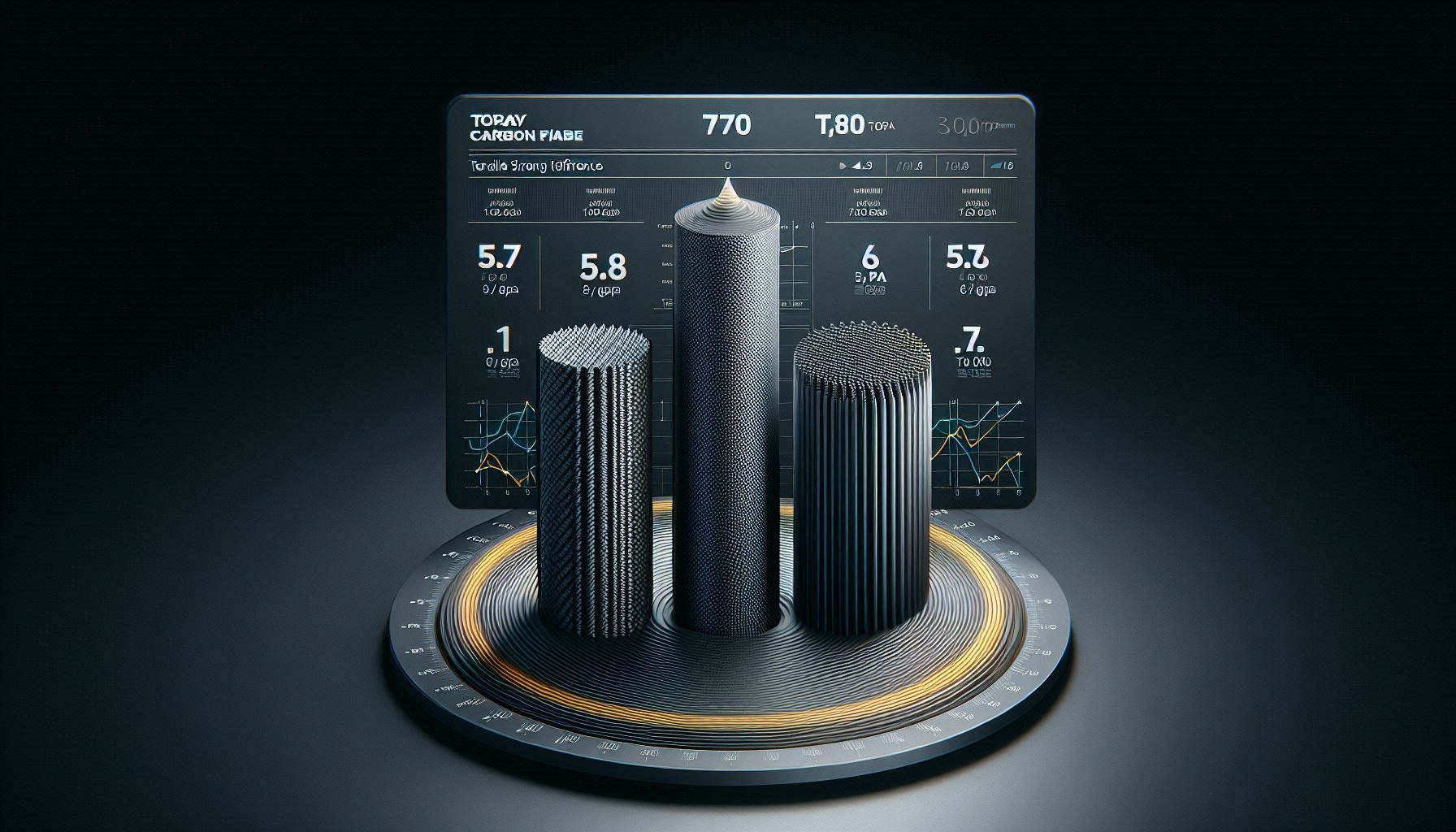
Bike frame descriptions often mention carbon grades such as T700, T800, or T1000. These grades generally refer to the strength and modulus characteristics of the carbon fiber. Higher-grade fibers can help reduce weight or increase stiffness, but the final frame quality still depends heavily on engineering and manufacturing.
A frame made with well-designed T700 or T800 layup can perform better than a poorly designed frame that simply advertises a higher carbon grade. For a deeper comparison, read our T800 vs T1000 carbon fiber bike frame guide and the Toray carbon gravel frame material guide.
How Carbon Bike Frames Are Made
Most high-quality carbon bike frames are made through a controlled molding process. Prepreg carbon sheets are cut into specific shapes, arranged according to the layup schedule, placed into the mold, and cured under heat and pressure. The layup schedule determines how many layers are used, where they are placed, and in which fiber directions.
At Mondince, carbon frame development focuses on material selection, layup structure, molding precision, and final testing. For OEM projects, this process can also include custom geometry, custom paint, frame reinforcement, and model-specific product positioning. You can learn more from our OEM carbon bike frame manufacturing service.
Why Layup Design Matters More Than Marketing Words
Carbon fiber itself is only the starting point. The real performance of a carbon bicycle frame comes from how the fibers are arranged. A good layup design balances stiffness, strength, comfort, weight, impact resistance, and production consistency.
This is especially important for gravel frames, mountain bike frames, and e-bike frames because these products face different loads. A carbon gravel bike frame needs tire clearance, vibration control, and mounting strength. A carbon MTB frame needs impact resistance and suspension-related reinforcement. A carbon e-bike frame must also handle motor and battery integration.
Quality Control and Testing
Because carbon fiber performance depends on both material and process, quality control is essential. Important checks include mold accuracy, wall thickness consistency, bonding quality, visual inspection, alignment, fatigue testing, impact testing, and load testing.
For brands and distributors, certification and testing records are important because they reduce product risk and support long-term customer confidence. Mondince frames are developed with safety and durability in mind, and related compliance information can be reviewed on our certification page.
Is Carbon Fiber Easy to Damage?
Carbon fiber is strong when properly designed and used within its intended load conditions. However, like any frame material, it can be damaged by crashes, severe impacts, improper assembly, or over-tightened components. The key is to inspect the frame carefully after heavy impact and use proper torque values during installation.
If you are concerned about visible damage, cracks, or unusual sounds, see our guide on cracks in carbon bike frames.
Which Carbon Frame Type Should You Choose?
The right carbon frame depends on the riding style and product positioning. Road frames focus on weight, stiffness, and aerodynamics. Gravel frames need tire clearance, stability, and mounting options. MTB frames require impact resistance and suspension compatibility. E-bike frames must consider motor systems, battery space, and reinforced structure.
You can compare Mondince carbon frame categories here:
Conclusion
Carbon fiber is not just a lightweight material. In bicycle frame design, it is a complete engineering system involving fiber grade, resin, layup direction, molding process, quality control, and testing. This is why two carbon frames can have very different performance even if they use similar material names.
For bike brands, distributors, and OEM customers, the best approach is to evaluate the complete frame platform instead of looking only at the carbon grade. If you need help choosing or developing a carbon frame model, contact Mondince to discuss road, gravel, MTB, and e-bike frame options.