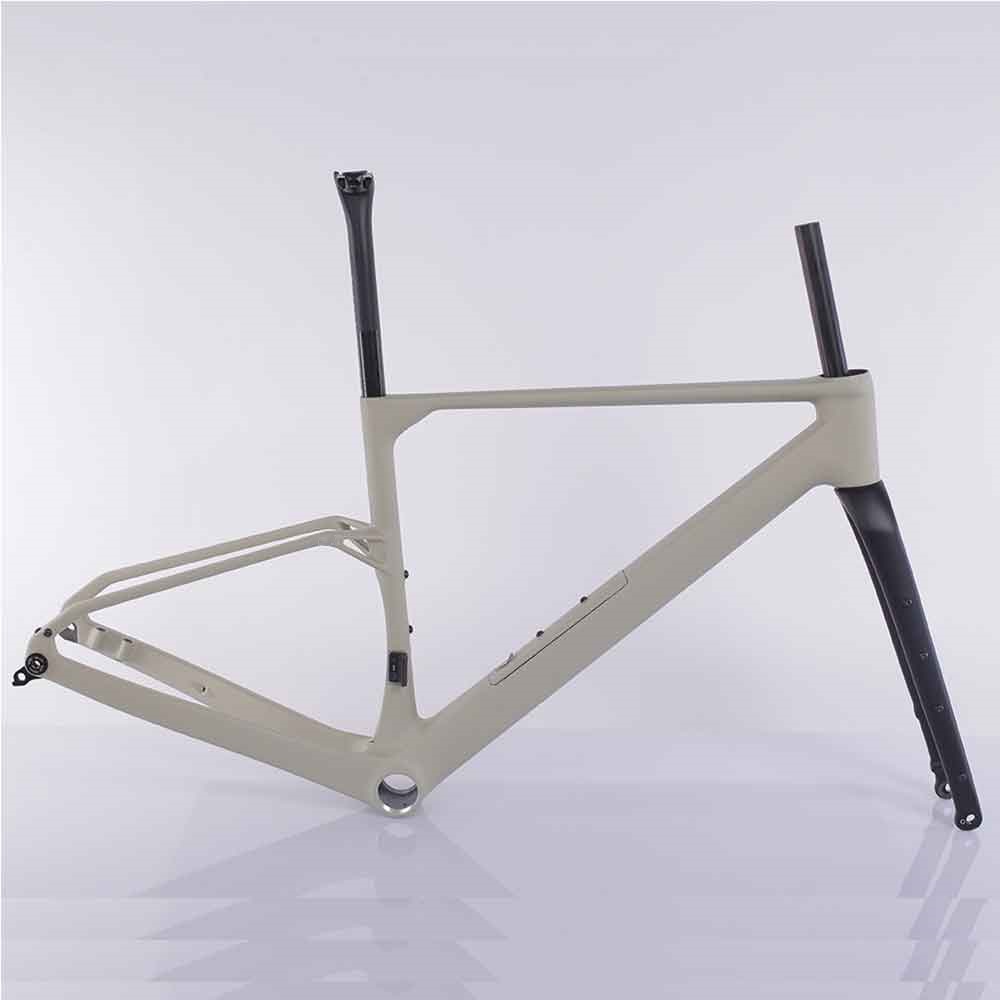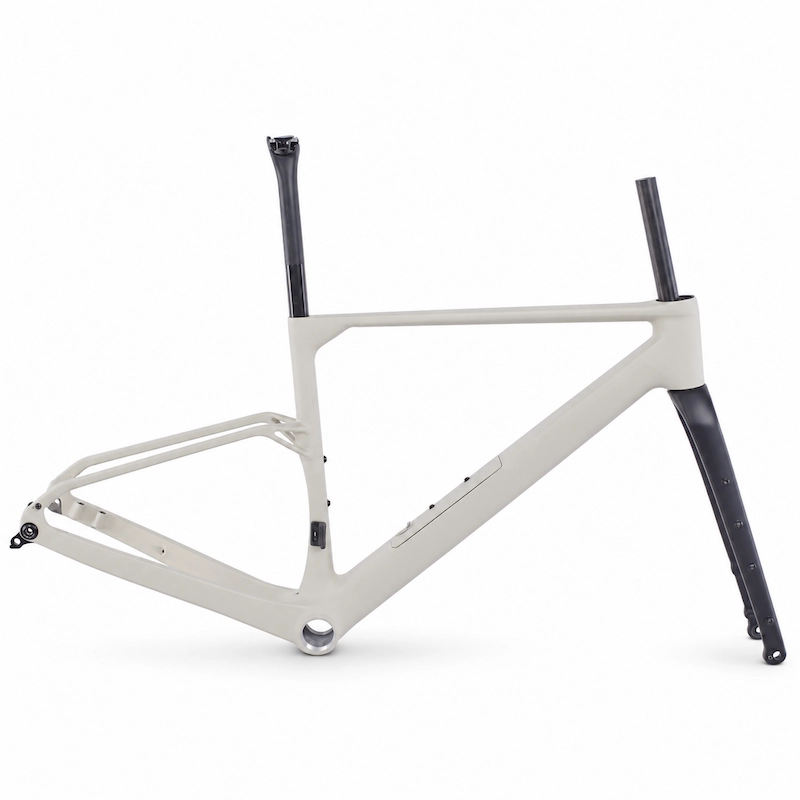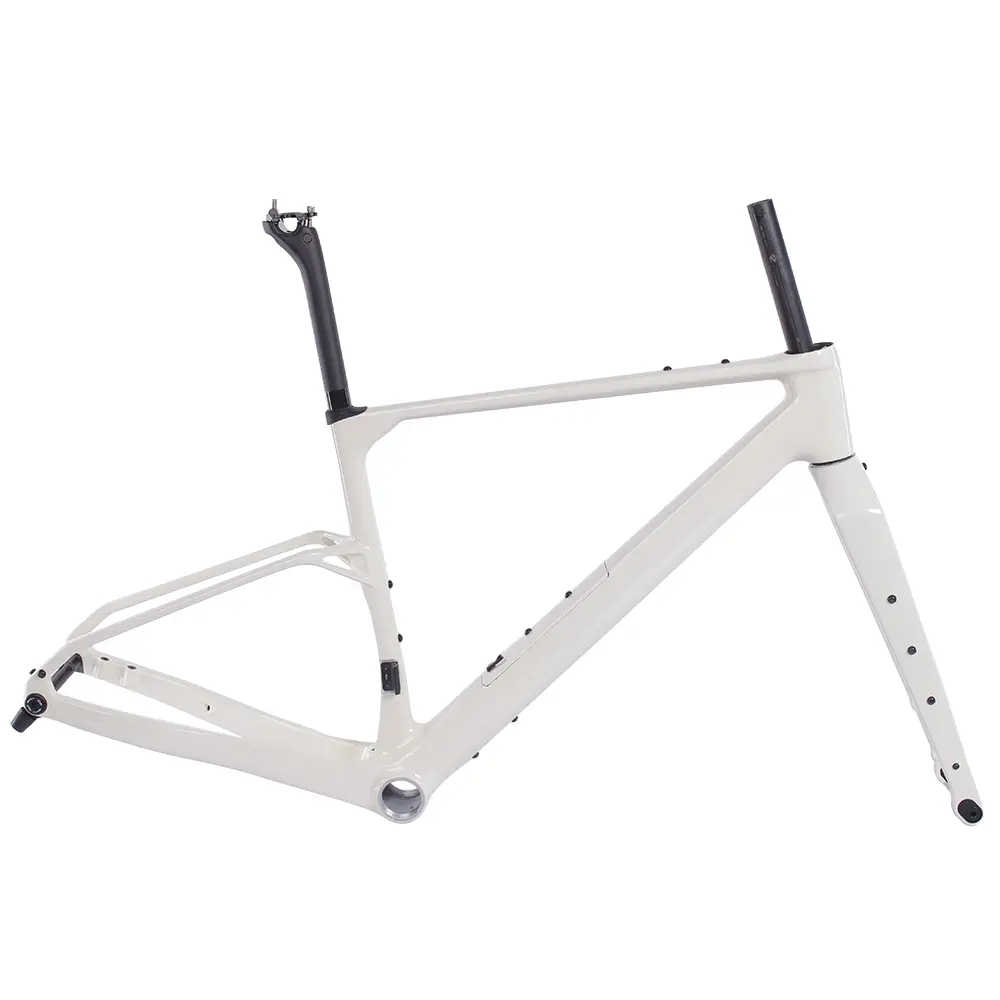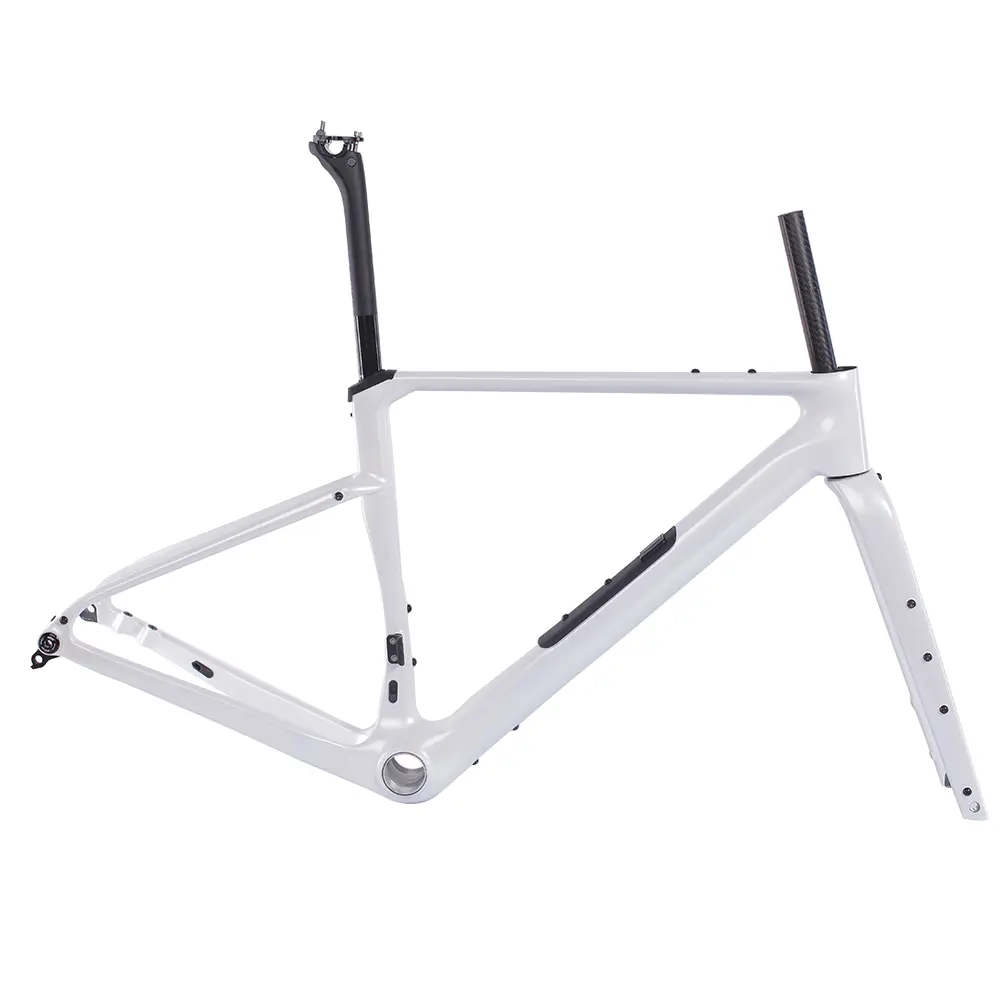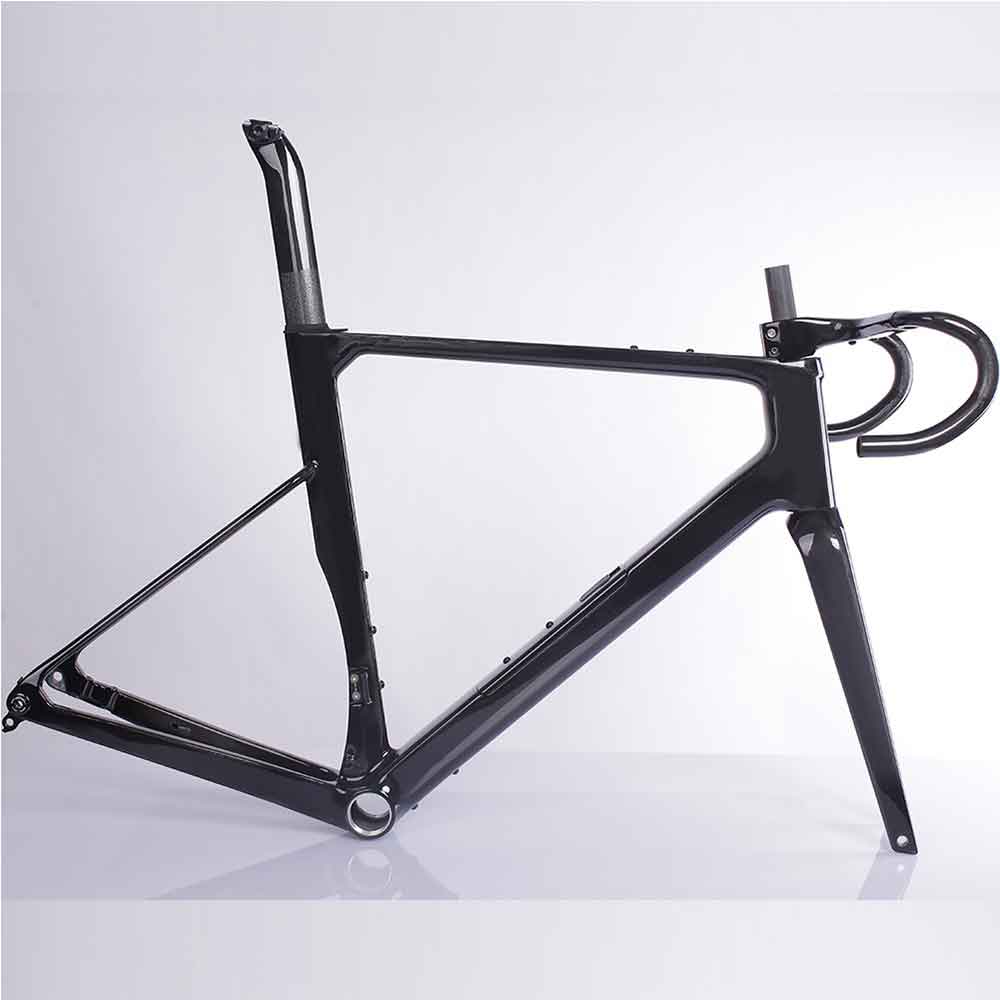

The most common trade-off on gravel is this: you have to carry a multi-tool and a spare tube, but the front triangle is already full of bottles, gels, and a packed frame bag. Add another tool roll, and it starts to rub your legs, bounce, and catch the bottles.
So a lot of riders end up choosing one of two options:
- squeeze on another bag
- or leave the repair kit at home
A downtube storage hatch is meant to fix that. It puts the repair kit you carry on every ride, plus a little food, inside a compartment in the downtube, without adding another bag to a front triangle that is already full.
The split is simple:
- clothes, a sleeping pad, and bulky food still belong in bags
- the hatch is for low, always-on kit that does not swing around
This page stays on the hatch itself — what fits, how it shares the job with bags, and how to choose among Mondince's three frames with storage. For geometry, paint, and the full model list, compare frames on the carbon gravel bike frame category page.
How this page cites figures:
- Tire clearance, weight, bottom bracket, dropout, hatch type, plus Aero Seatstay and Flip Chip, are taken from each model's current English product page. Weights are the listed medium raw-frame figures.
- Approximate volumes come from Mondince comparison articles, not from a lab calibration, and the source is named in the text.
- Industry examples link to the original pages at Canyon, ROSE, GRAN FONDO, BMC, and BikeRadar.
What downtube storage is
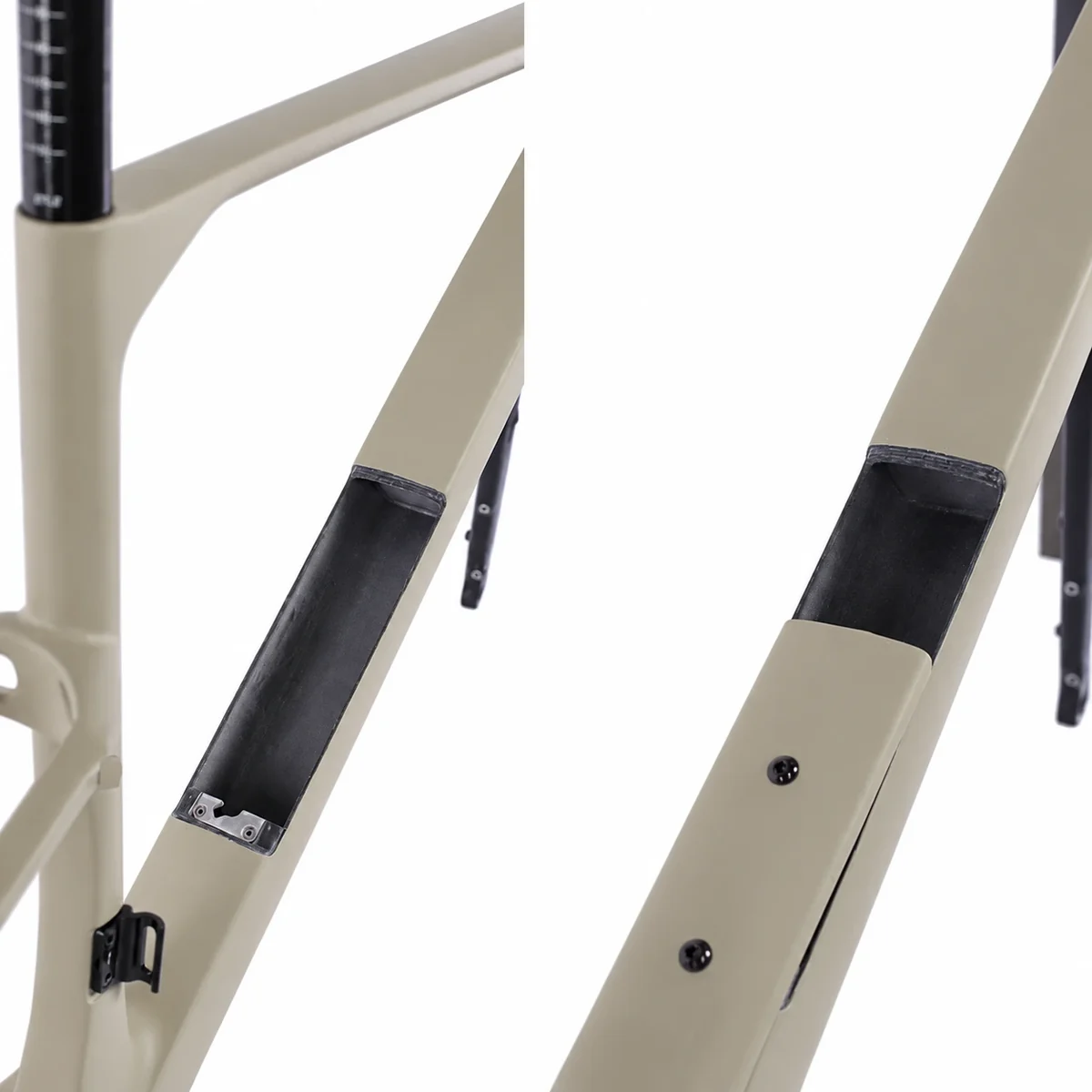
FM316 downtube hatch, open and closed — official product photo. About 0.8 L, from article 519.
Downtube storage is a compartment molded into the downtube wall and opened with a hatch — a magnetic cover, a latch, or a flap under the bottle cage. The volume is usually modest, enough for:
- a multi-tool
- a spare tube or a TPU tube
- a CO₂ inflator or a pump head
- a few energy gels
It is only for these everyday small items. It will not hold a change of clothes or overnight gear.
The industry already treats the hatch this way. You can read it in the original copy:
- On the Grizl and Grail, Canyon calls this LOAD downtube storage. The official LOAD Gravel Tool Pack says the pack fits in the downtube of a new Grail or Grizl, and can hold tyre levers, a CO₂ inflator and cartridge, and a spare tube.
- ROSE's latest Backroad lists integrated frame storage as a feature: the official page says the compartment can hold a power bank and the included Tool Bag, and that the Tool Bag can take a multi-tool, CO₂, a tyre lever, and a TPU tube.
- GRAN FONDO's 2025 test of the ROSE Backroad calls this a Staufach in the downtube, and describes integrated frame storage as a highlight shared across the versions. The aluminum version is also described as the first aluminum gravel bike with this kind of hatch.
- BMC's current URS platform page says there is integrated storage in the downtube, below the bottle cage, and that a purpose-designed pouch is included. BikeRadar's report also mentions downtube storage and a proprietary storage bag.
The shared idea is simple: the hatch holds the small items you want on every ride; bulky gear still goes on the mounts and in bags.
On Mondince, the current English product pages say:
- FM336: magnetic-cover storage (the page writes magnetic downtube storage / MAGNET COVER STORAGE SPACE); 47 mm tire clearance; 1050 g (medium, raw frame); T47 85.5 mm bottom bracket; UDH dropout
- FM316: integrated downtube storage; 50 mm tire clearance; 1150 g (medium, raw frame); T47 85.5 mm bottom bracket; UDH dropout
- FM326: integrated downtube storage (the page writes INDEPENDENT STORAGE SPACE); 50 mm tire clearance; 1100 g (medium, raw frame); T47 85.5 mm bottom bracket; UDH dropout
The liter figures are published approximations, not lab-calibrated volumes:
- FM336 / FM316: about 0.8 L, from the comparison table in FM336 vs FM326 vs FM316. The FM316 product page also lists 0.8L.
- FM326: about 1.2 L, from the same 519 comparison table. The FM326 product page confirms independent storage, but does not list a liter figure, so 1.2 L is cited only from that comparison article.
Confirm tire clearance, weight, and mounts on each product page before you build.
On water resistance:
- The hatch can shed spray and light rain; that is not the same as waterproof under an IP rating
- In a wash, a heavy storm, or a stream crossing, keep electronics and anything that hates moisture in a small dry bag
- This page does not invent an IPX rating or a seal test, and it does not describe the hatch as fully waterproof
How the hatch and the bags share the job
| Item | Better place |
|---|---|
| Multi-tool, tire levers, spare tube, CO₂ or a pump head, patch kit | Downtube hatch (on the bike every ride) |
| Energy gels, small snacks, a thin wind vest rolled tight | The hatch or a top-tube bag, depending on volume |
| A change of clothes, a sleeping bag or pad, cookware, bulky food | Frame bag / rack bag / fork cages |
| Electronics or documents that cannot get wet | A dry bag, then the hatch or a top-tube bag |
The value of the hatch is not “one more magic liter.” It is:
- keeping everyday kit low and close to the frame's center of mass
- cutting one layer of bags off the front triangle, so fewer straps bounce against your legs
Bags still carry the bulk, and they are easier to open on the move. A sleeping bag or a change of clothes should not share a small hatch with a spare tube. The hatch and the bags complement each other; one does not replace the other.
FM336 / FM316 / FM326: three hatches, three jobs
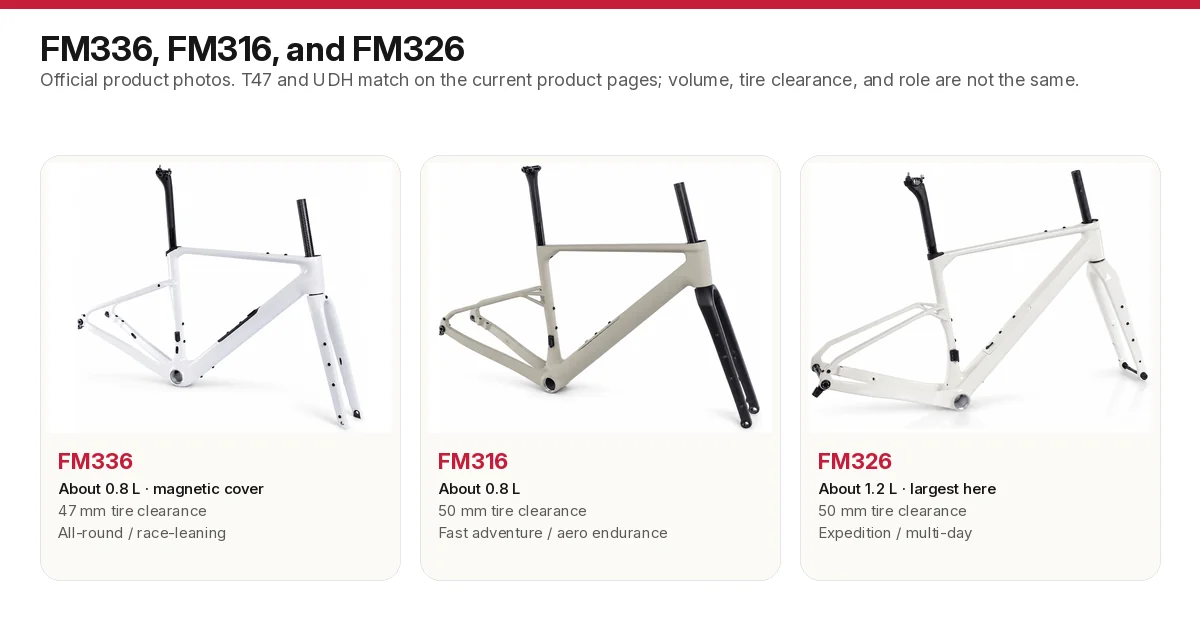
Official product photos of FM336, FM316, and FM326. Volumes from article 519; tire clearance from each product page.
All three have integrated downtube storage, but they are not the same bike. T47 and UDH match on the current English product pages; the differences are mainly volume, listed tire clearance, and intended use.
| FM336 | FM316 | FM326 | |
|---|---|---|---|
| Downtube storage | About 0.8 L, magnetic cover | About 0.8 L | About 1.2 L (largest in this group) |
| Role | All-round / race-leaning with storage | Fast adventure / aero endurance | Expedition / multi-day |
| Tire clearance (product page) | 47 mm | 50 mm | 50 mm |
| Bottom bracket (product page) | T47 85.5 mm | T47 85.5 mm | T47 85.5 mm |
| Dropout (product page) | UDH | UDH | UDH |
| Frame weight (product page, medium, raw) | 1050 g | 1150 g | 1100 g |
| Best for | Weekend events / clean mixed roads + light touring | Longer days / weekend overnights, with the everyday kit in the hatch | Multi-day trips, when the hatch needs more tools, first aid, or a backup battery |
Tire clearance, bottom bracket, dropout, and weight in the table come from each model's current English product page. Approximate volumes come from the 519 comparison table. They are published approximations, not lab-calibrated figures. A soft bag usually packs more than a hard case. Confirm the matching product page and your parts list before you build.
What about 0.8 L and about 1.2 L actually hold
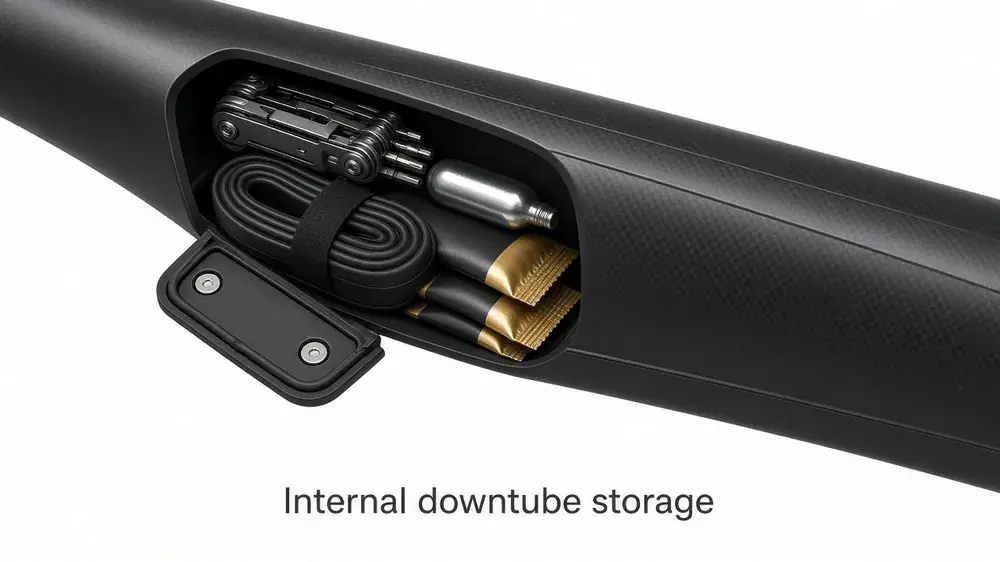
A typical load: multi-tool, spare tube, CO₂, gels — everyday kit, not overnight gear.
| Volume | Models | A realistic pack (soft bag / rolled tight) | Usually will not fit |
|---|---|---|---|
| About 0.8 L | FM336, FM316 | A multi-tool and tire levers, one spare tube (or a TPU tube), one or two CO₂ cartridges or a pump head, two to four gels, and a patch kit. A thin wind vest only if the repair kit is already slim. | A rain jacket and a full tool roll at the same time; a first-aid kit, a power bank, and a tube all at once; any overnight-size load |
| About 1.2 L | FM326 | A more complete repair kit, a small first-aid pack, and a compact power bank, with a little room left for snacks — or a thin rain jacket rolled tight plus a slimmer tool kit. The role is still “always on the bike,” just with more margin on a multi-day trip. | A sleeping bag, a change of clothes, or cookware — those still belong in a frame bag, a rack bag, or fork cages |
A few more points:
- The liter figures above are still published approximations, from article 519. A hard case cuts the usable volume noticeably.
- Besides the hatch, check tire clearance. See the 57 mm gravel tire clearance guide.
- Frames with storage can still list different tire clearance: FM336 lists 47 mm; FM316 and FM326 list 50 mm, so they do not take the same tires. The width of a tire on the rim is not always the same as the size printed on the sidewall; check it against the frame's clearance and your wheels.
Why a storage-first search starts with FM336
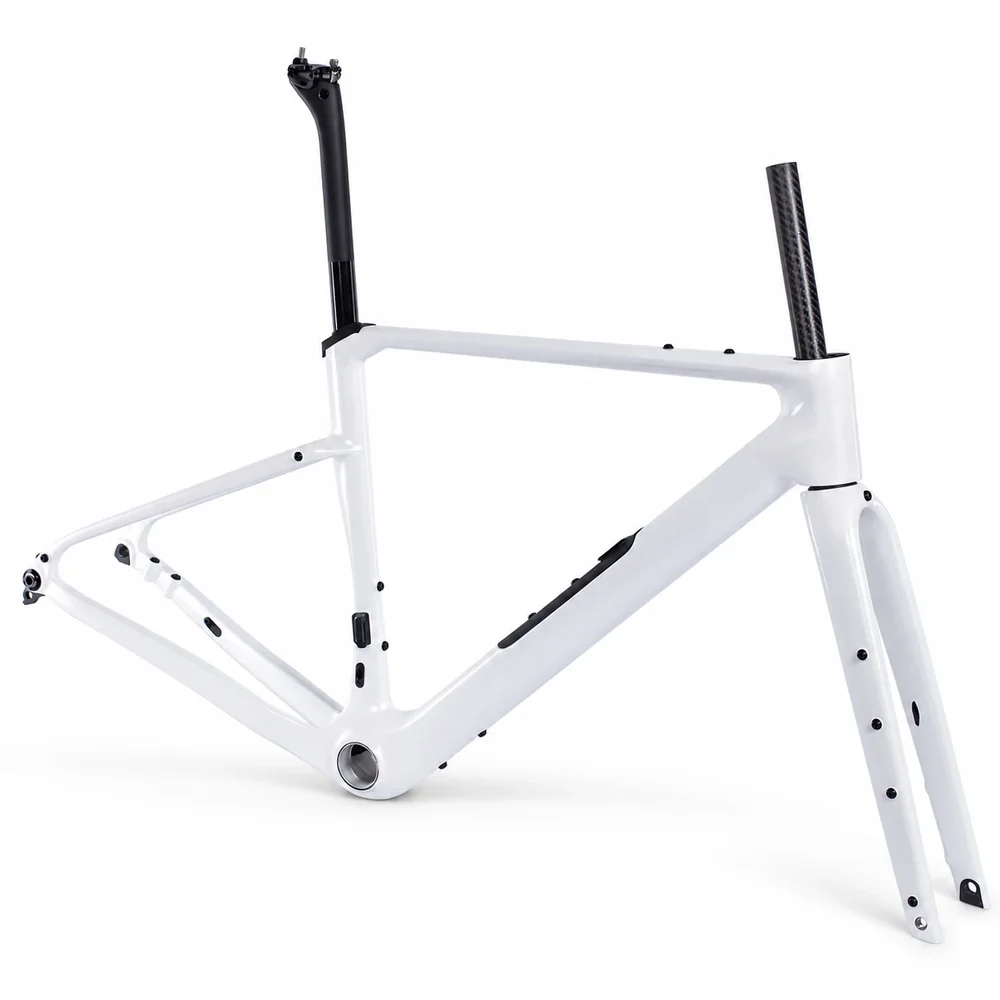
FM336 — integrated downtube storage with a magnetic cover. T47 and UDH are listed on the product page.
If you want a gravel frameset with downtube storage, and you still want a fairly quick all-round feel, the clearer Mondince starting point is FM336:
- about 0.8 L with a magnetic cover (volume from article 519; magnetic cover from the product page)
- T47 and UDH (from the product page)
- listed tire clearance 47 mm
- listed weight 1050 g (medium, raw frame)
It suits everyday gravel, weekend events, and light overnight trips where bags carry the bulk and the hatch only holds the always-on kit.
The logic is straightforward:
- If you want a clean all-rounder with storage, not an expedition-size compartment in the downtube: start with FM336
- If the hatch also needs to hold a larger tool kit, a first-aid pack, or a backup battery: look at FM326 and its about 1.2 L (volume from article 519)
- If you care more about long-day comfort and a slightly wider listed tire, and about 0.8 L is still enough: look at FM316
For a closer geometry comparison, see FM336 vs FM326 vs FM316. This page stays on the storage intent. If the bottom bracket and dropout also matter in the decision, those specs are separate from the hatch; use each product page as the source.
When FM316 or FM326 is the better pick
Choose FM316 when you want:
- about 0.8 L, the same class of hatch (from article 519; the FM316 product page also lists 0.8L)
- the 50 mm tire clearance listed on the product page
- a more aero or endurance stance, with geometry suited to longer days (the product page also lists Aero Seatstay and a Flip Chip at 45/50 mm rake)
That fits a bike used for mixed-road commuting and light weekend trips, with a repair kit in the hatch rather than half a camping load.
Choose FM326 when you want:
- the largest hatch in this group, about 1.2 L (volume from article 519; the product page does not list a liter figure)
- a more expedition-oriented layout (the product page lists a Flip-Chip fork at 50/55 mm rake, and compatibility with a RockShox Rudy suspension fork at 30–50 mm of travel; confirm on the product page)
On a multi-day trip where you have to carry your own kit, and the hatch needs to hold a fuller tool kit, first aid, or a backup battery, volume itself is a decision point. Sticking with about 0.8 L just because it looks lighter often saves the wrong thing.
In short, match hatch volume to the job, not to a favorite model name.
- FM336 solves “storage, but keep the bike clean and sharp”
- FM326 solves “the hatch needs to be larger”
- FM316 sits at “storage, a slightly wider tire, and a bike suited to longer days”
How to pack the hatch: less rattle, stay drier, open it only when the bike is stopped
- Wrap the metal. Don't let a multi-tool, a CO₂ cartridge, or a chain box knock against the carbon wall; use the stock pouch, an elastic net, or thin foam so it doesn't rattle or wear a spot over time.
- Keep food and tools apart. Don't stack energy gels in the same layer as sharp tools; cleaning leaked gel out of the compartment is more work than it sounds.
- Put anything that fears water in a dry bag. The hatch sheds spray; in heavy rain or a bike wash, a small waterproof bag is still a good idea. That is a packing tip, not an IP-rating claim.
- Pack only what should always be on the bike. A phone or a map you keep grabbing mid-ride is happier in a top-tube bag or a pocket.
- Stop the bike before you open the hatch. Opening it while you ride is unsafe, and small parts can bounce into the chain or the wheel. Get the bike stable first.
- Check the cover before a wet ride. Make sure the magnetic cover or the latch is seated, so you don't discover halfway out that the hatch was only half shut.
On stiffness:
- Any opening changes the downtube's cross-section
- A sound design reinforces the layup around the opening, so strength and ride feel stay in the range a gravel bike should have
- That is not the same as “zero effect,” and it is not the same as “a hatch makes the frame soft” — neither extreme has public test data behind it
- Choose the bike by its overall intent and your routes; you don't need to worry excessively that the hatch will compromise strength
Mounts and bags still matter
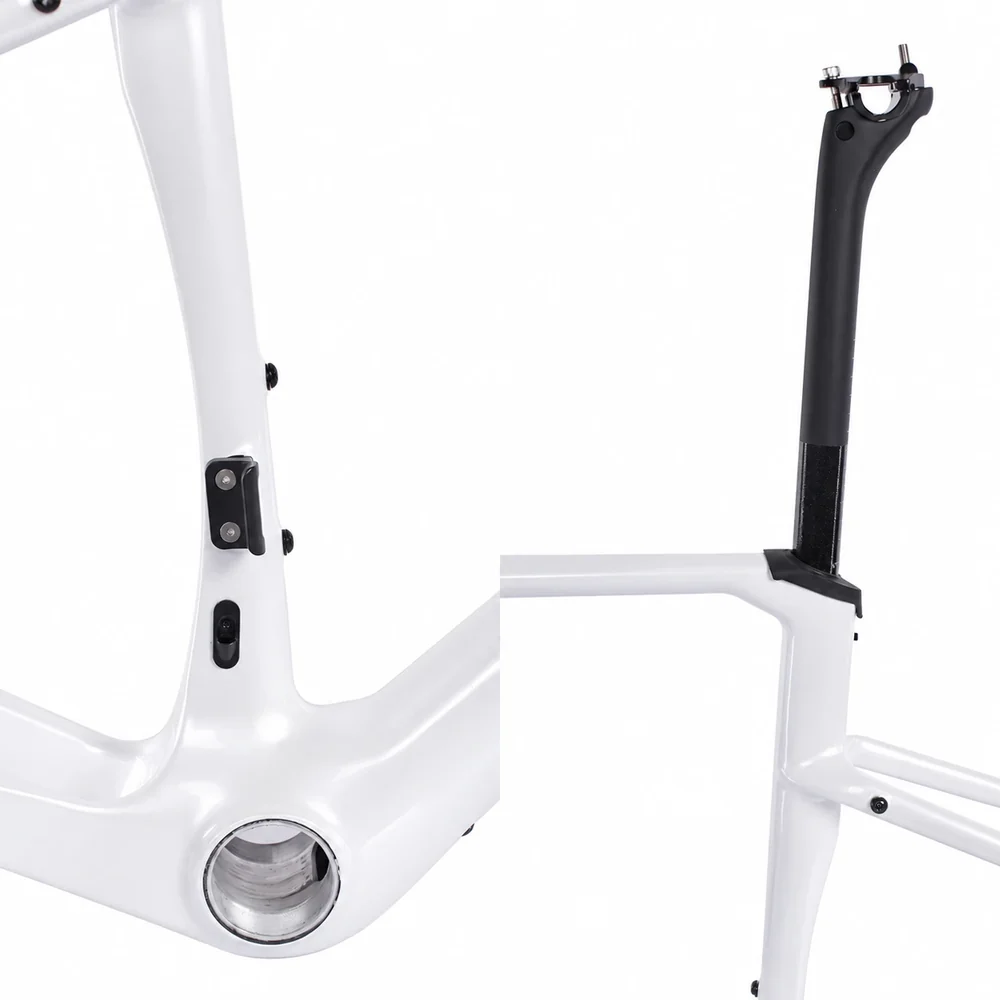
Bottle bosses and bag mounts are separate from the hatch — check the product-page mount list before a multi-day trip.
Integrated storage does not replace a bikepacking setup. It only moves the everyday repair kit off the outside of the bike, so the frame bag can stay cleaner. Before a multi-day trip, check whether the mounts will actually be enough:
- Can the downtube or top tube take a bottle cage?
- Are there bosses for a top-tube bag?
- Does the fork have a triple-boss mount?
- Is there a mount for a fender or a rack?
Those details live in each model's product-page mount list, not in the “has storage” line.
| Trip | Look at first | Inside the hatch |
|---|---|---|
| Long gravel days | FM336 or FM316 | Tube, tools, CO₂, snacks |
| Weekend overnight | Any of the three | Repair kit + a small electronics pouch |
| Multi-day expedition | FM326 first | A fuller tool kit, first aid, or a backup battery |
Before you choose:
- If the mounts aren't enough, overnight gear still has to ride in bags and on a rack; a larger downtube hatch will not make up for that
- Even a large hatch won't make the bike comfortable if a packed frame bag leaves no room for bottles in the front triangle
- Decide first where water, tools, and clothes will go, then check the mounts and hatch volume on the product page
Six questions before you order
- Is the volume enough? For a repair kit only, about 0.8 L (FM336 / FM316) is usually enough; if a multi-day trip means first aid and a backup battery should go in the hatch too, look at about 1.2 L (FM326). Volumes are from article 519.
- Are you happy with the hatch type? A magnetic cover is quick to open; you also have to get used to opening it only when the bike is stopped, and checking that it is seated before you leave. The FM336 product page lists a magnetic cover.
- Is the frame's tire clearance enough for the tires you plan to run? The FM336 product page lists 47 mm; if you want the official 50 mm listing, look at FM316 / FM326. The width of a tire on the rim is not always the same as the size printed on the sidewall; check it against the frame's clearance and your wheels.
- Do the bottom bracket and dropout match your build? All three current product pages list a T47 85.5 mm bottom bracket and a UDH dropout. If those are what you need, the three frames do not differ on this point, and you can choose by storage alone.
- Do the mounts cover the trip? A larger hatch still cannot replace fork cages and a rack; for a multi-day trip, check that the product page lists the mounts you need.
- What is most of your riding? Everyday gravel or weekend events: look at FM336. Longer days and a slightly wider tire: look at FM316. Multi-day trips where you want more hatch volume: look at FM326.
When you order, say clearly:
- what the hatch is for (repair kit only, or a backup battery as well)
- the tire model and its measured width
- the crank and rear derailleur you plan to use
That makes it easier to confirm the build in one go than writing only “I want a frameset with storage.”
Is the hatch waterproof?
The cover sheds water and is designed with a seal in mind; in heavy rain, a wash, or a stream crossing, still use a dry bag. This page does not claim a specific IPX rating.
Can you open it while you ride?
No. Stop the bike first.
Will the opening make the frame soft?
An opening changes the cross-section; reinforcement around the hatch is what keeps strength and ride feel in the range a gravel bike should have. Don't expect a “zero effect” story, and don't assume a hatch ruins the frame. Neither claim has public test data you can cite.
For bikepacking, FM336 or FM326?
If the bulky gear lives in bags and the hatch is only for the everyday repair kit and snacks, choose FM336. If you also want the hatch to hold more tools, a first-aid pack, or a backup battery, choose FM326.
Can you turn a small hatch into a larger one later?
No. Storage is part of the frame structure; if you want about 1.2 L, choose FM326 instead of modifying an 0.8 L platform later.
Can you order a custom paint?
Custom or OEM paint is something we can discuss. Confirm the hatch or hatch-color options when you order.
Wrap-up
A downtube storage hatch answers “where does the everyday repair kit go,” not “how do I move bikepacking into the downtube.” Canyon LOAD, the frame storage on the ROSE Backroad, and downtube storage on the BMC URS all describe the same split: small items in the hatch, bulky gear in bags. The sources are linked above.
At Mondince:
- The clear starting point when storage is the intent is FM336 (about 0.8 L with a magnetic cover; volume from article 519, magnetic cover from the product page)
- When you need a larger hatch, look at FM326 (about 1.2 L, same source; the product page does not list a liter figure)
- When about 0.8 L is enough, you want a slightly wider tire, and the bike should suit longer days, look at FM316
Decide what belongs in the hatch and how much volume you need, then compare geometry and complete builds on the carbon gravel bike frame category page.
If you already have a use case, or early thoughts on storage, tires, and drivetrain, you can contact Mondince for a quote.