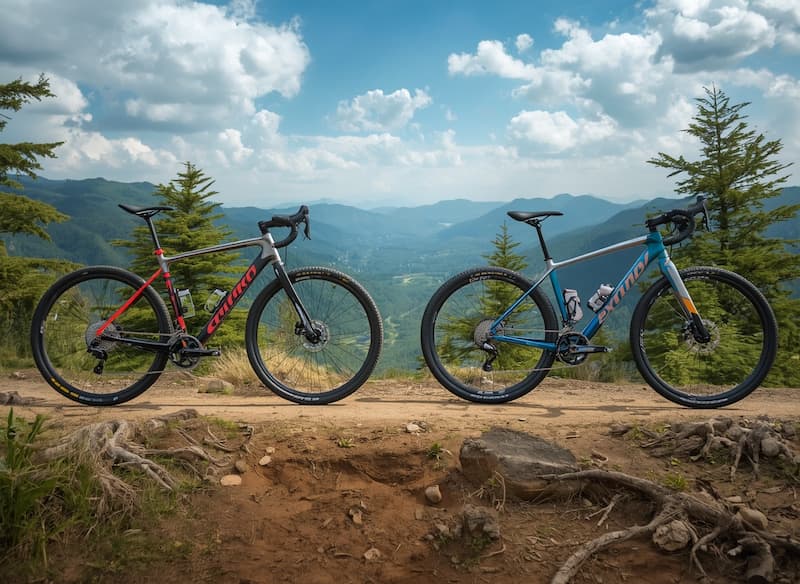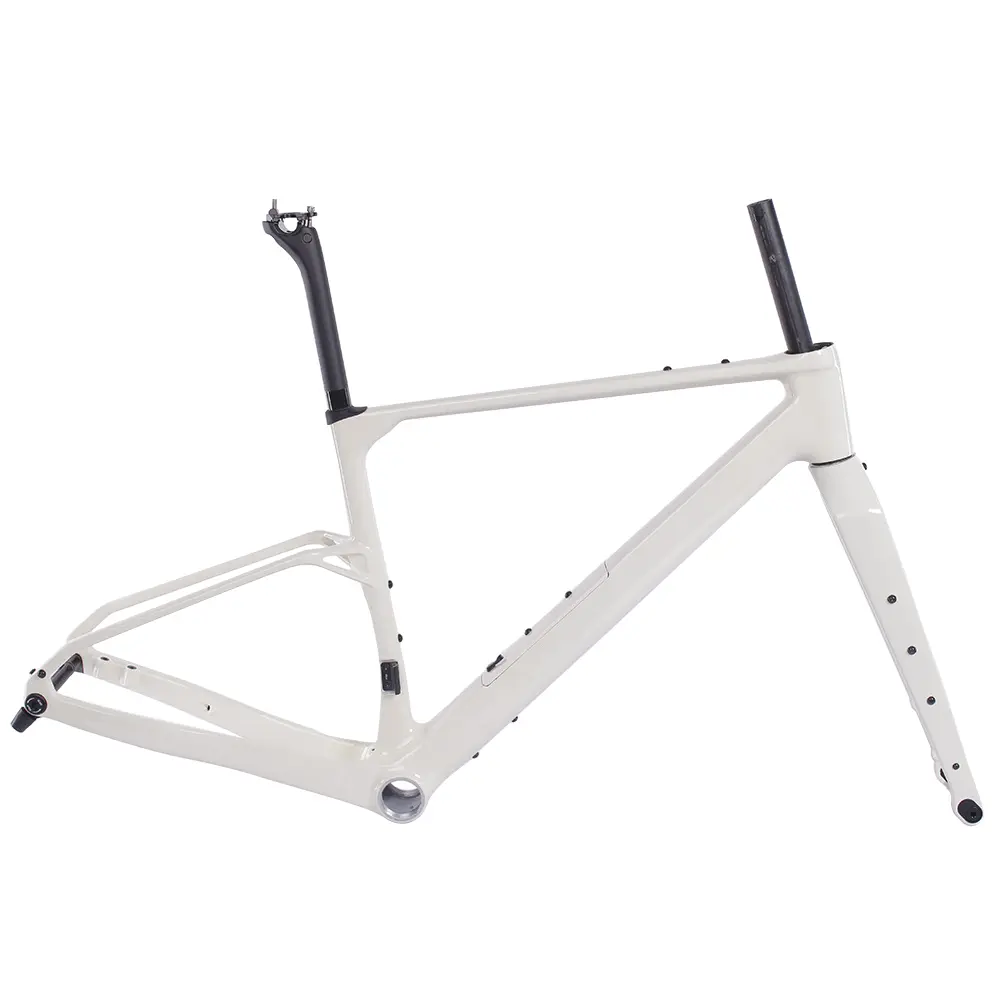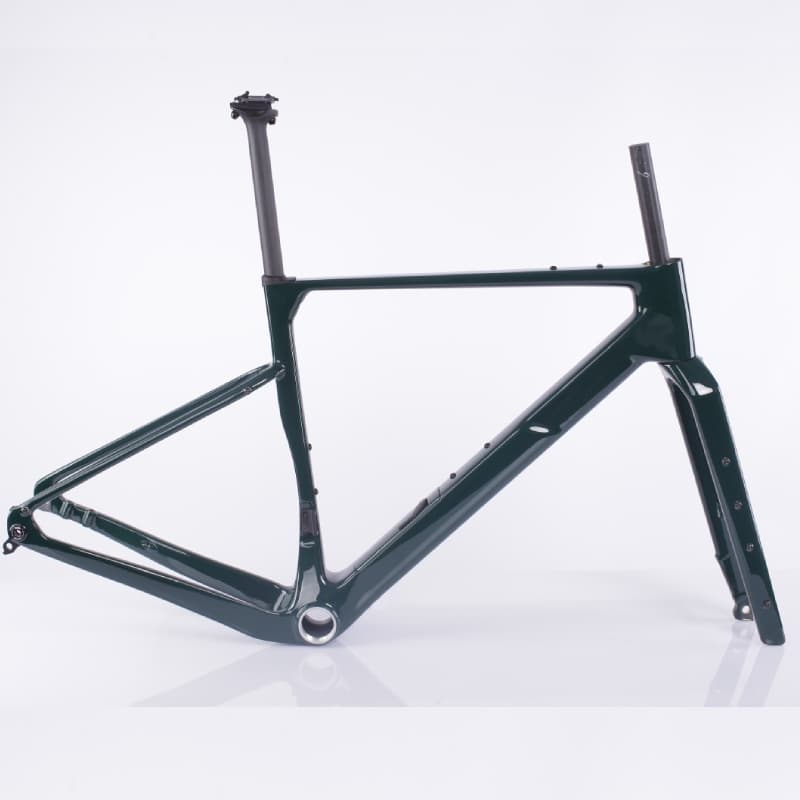

Shimano GRX is Shimano's gravel-specific component family, designed for mixed-terrain riding, rough roads, wider tires, and more stable chain control than traditional road groupsets. For riders building a new gravel bike or upgrading an existing frame, GRX is often one of the most practical drivetrain choices.
This guide explains the main Shimano GRX levels, mechanical vs Di2 options, 1x and 2x setups, and the key frame features to check before choosing a carbon gravel bike frame for a GRX build.
What Is Shimano GRX?
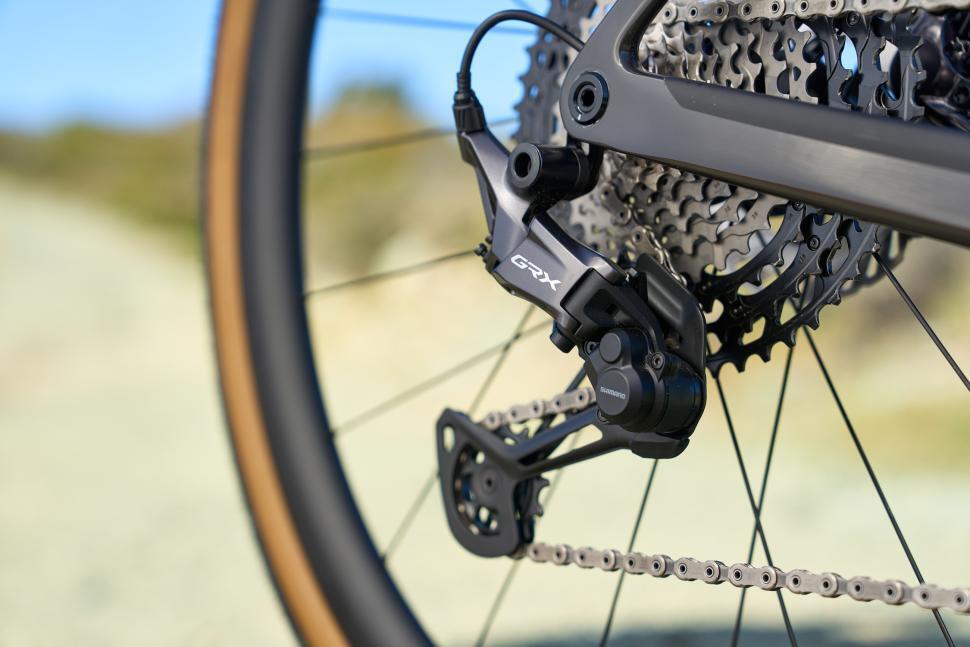
Shimano GRX is a gravel-focused groupset family created for riders who need better control on rough surfaces. Compared with a pure road groupset, GRX focuses more on chain stability, braking control, lower gearing options, and compatibility with wider gravel tires.
GRX is commonly used on gravel bikes, all-road bikes, bikepacking builds, and endurance mixed-surface bikes. It works especially well with modern carbon gravel frames that use flat-mount disc brakes, internal cable routing, thru-axles, and generous tire clearance.
Shimano GRX Levels: RX800, RX600 and RX400
Shimano GRX is divided into several levels. The right choice depends on budget, drivetrain speed, shifting preference, and whether the bike is built for racing, adventure riding, or everyday gravel use.
GRX RX800 / RX820 / RX825 Series
The higher-level GRX series is closest to Shimano's Ultegra-level performance. It is commonly used on premium gravel builds and is available in modern 12-speed configurations. Mechanical and Di2 electronic options are available depending on the specific series and setup.
- Best for: Performance gravel, racing, high-end custom builds, and riders who want lighter components.
- Common options: 1x and 2x drivetrain setups, depending on terrain and cassette choice.
- Key advantage: More refined shifting and stronger long-term upgrade potential.
GRX RX600 Series
GRX RX600 is a strong mid-range choice for most gravel riders. It offers reliable mechanical shifting and practical gearing at a more accessible price than the top-level GRX series.
- Best for: Everyday gravel riding, long-distance routes, training, and value-focused builds.
- Common options: Often used with RX800/RX820 rear derailleurs in mixed GRX builds.
- Key advantage: Good balance of price, durability, and performance.
GRX RX400 Series
GRX RX400 is the entry-level GRX option, usually associated with 10-speed mechanical drivetrains. It is heavier and less refined than higher-level GRX groupsets, but it remains a practical option for budget gravel bikes and dependable everyday builds.
- Best for: Budget gravel builds and simple mechanical drivetrains.
- Common options: 10-speed mechanical setups.
- Key advantage: Lower cost and easy serviceability.
Mechanical GRX vs GRX Di2
Shimano GRX is available in both mechanical and Di2 electronic options. Mechanical GRX is simple, durable, easier to service in remote areas, and usually more affordable. GRX Di2 offers faster electronic shifting, cleaner shift feel, and better customization for riders who want a premium setup.
For OEM brands, shops, and custom builders, the choice often depends on the target customer. Mechanical GRX is usually better for value-focused complete bikes, while GRX Di2 is more suitable for premium gravel builds and riders who want the most refined shifting experience.
1x or 2x GRX: Which Setup Is Better?
A 1x GRX drivetrain uses a single chainring in the front and a wider-range cassette in the rear. It is simple, clean, and popular for rough gravel, bikepacking, and riders who want fewer moving parts.
A 2x GRX drivetrain uses two front chainrings and provides smaller gear steps. It is often better for riders who spend more time on pavement, fast gravel, rolling terrain, or long rides where cadence control matters.
- Choose 1x GRX if you want simplicity, easy maintenance, and strong chain retention.
- Choose 2x GRX if you want wider total range and smoother gear steps for mixed road and gravel riding.
What to Check on a GRX-Compatible Gravel Frame
Before choosing a frame for Shimano GRX, make sure the frame supports the right brake, routing, axle, and tire standards. A good GRX-compatible carbon gravel frame should include these features:
- Flat-mount disc brakes: GRX hydraulic brake calipers are designed around modern disc brake standards.
- Internal cable routing: Clean routing helps both mechanical and Di2 builds look better and stay protected.
- Thru-axle dropout design: Helps improve brake alignment, wheel stiffness, and handling stability.
- Enough tire clearance: Many gravel riders use tires from around 40mm to 50mm or wider, depending on frame design.
- Bottom bracket compatibility: GRX cranks use Shimano's 24mm spindle, which can work with common BSA or T47 bottom bracket setups when the correct bottom bracket is used.
- UDH or replaceable hanger: A modern hanger system improves serviceability and drivetrain compatibility.
Mondince Gravel Frames for GRX Builds
Mondince offers several carbon gravel frames that can be built with Shimano GRX groupsets. The right model depends on tire clearance, frame geometry, storage needs, and the target riding style.
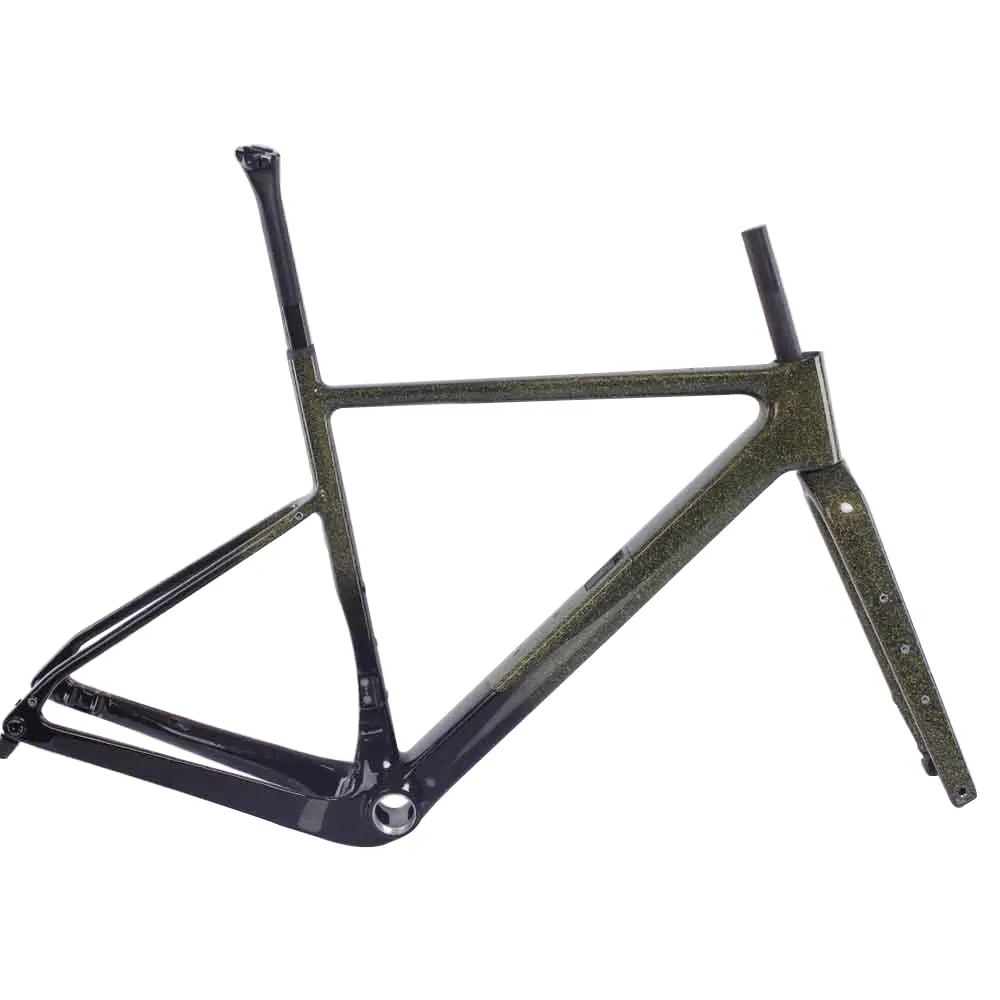
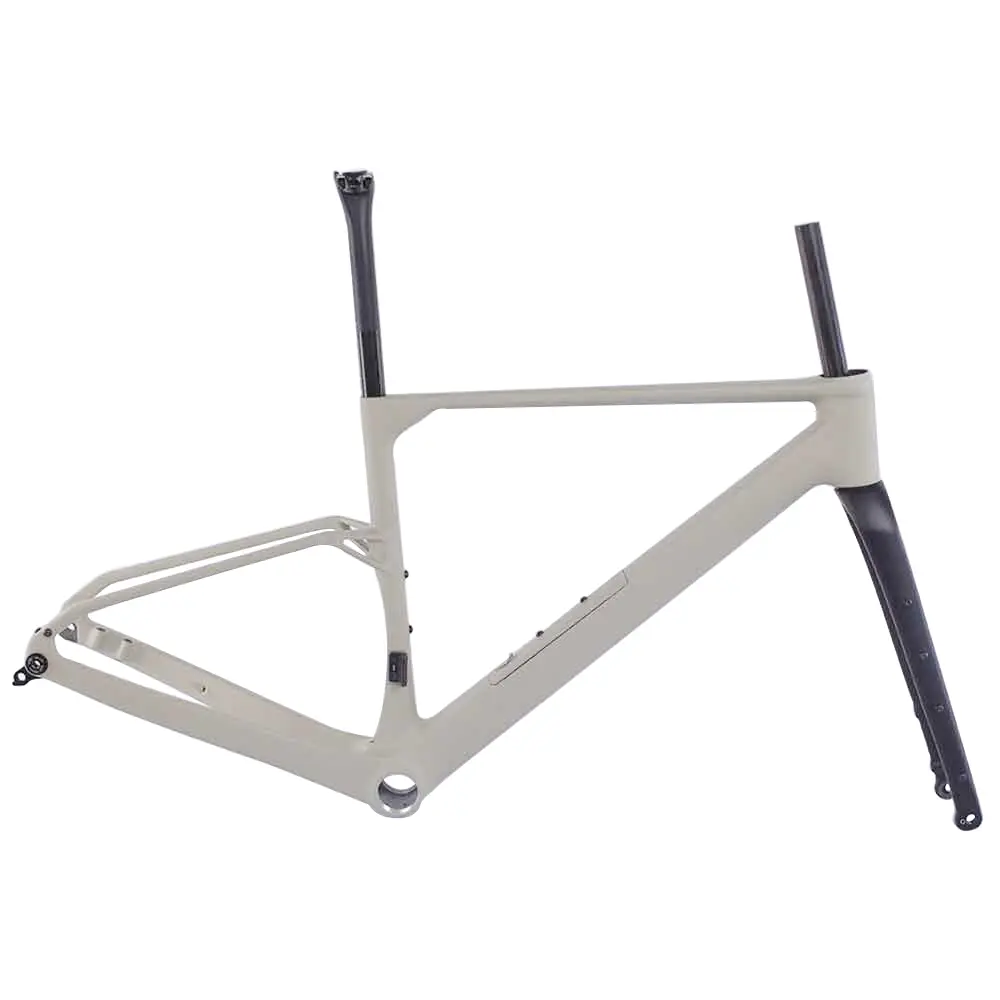
The FM296 UDH carbon gravel frame is suitable for riders who want a modern gravel frame with UDH compatibility. The FM326 carbon gravel frame is a practical choice for riders who want a T47 bottom bracket and adventure-ready features. The FM376 all-terrain carbon gravel frame is designed for riders who need larger tire clearance and a more aggressive gravel setup.
To compare the full range, visit the Mondince carbon gravel bike frame collection. If you are also checking derailleur hanger standards, read our UDH hanger guide.
Final Thoughts
Shimano GRX remains one of the most practical groupset families for gravel bikes. It gives riders better braking control, gravel-specific ergonomics, stable chain management, and gearing options for both fast mixed-terrain riding and long adventure routes.
For most riders, a mechanical GRX setup offers the best balance of cost, serviceability, and reliability. For premium builds, GRX Di2 adds faster electronic shifting and a cleaner high-end experience. The most important step is choosing a carbon gravel frame that supports the right brake, routing, tire clearance, axle, and bottom bracket standards.
Planning a Shimano GRX gravel build? Browse Mondince carbon gravel bike frames or contact Mondince for OEM frame recommendations, custom paint, geometry options, and drivetrain compatibility advice.