
An aero gravel bike should be judged first by whether the frameset is made for fast gravel races and mixed surfaces, not by the complete-bike brand, and not by being led along by a road-aero shape.
- An aero gravel bike is first of all a bike that can be used in gravel races and on faster mixed surfaces, not a road aero bike with slightly wider tires.
- So start with the use of the frameset: whether the tubes have an aero design, whether the seatpost is an aero D-type, and whether tire clearance is enough to run wider tires in race stages and on mixed surfaces.
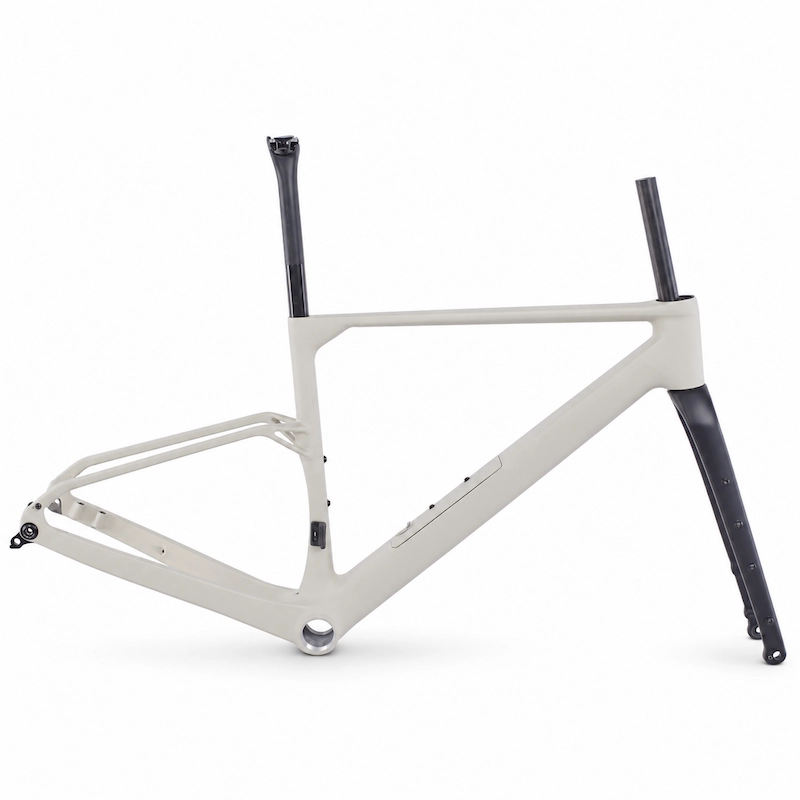
- Taking FM366 as an example, the product page positions this frameset as an aero gravel racing frameset, suited to fast gravel races, endurance events and fast all-road riding.
- The product page states aero tube shaping, an aero D-type seatpost, and 700c × 57 mm tire clearance. Treat these as written on the product page at the time. Do not treat the word “aero” as proof that it will automatically ride faster.
- A frameset is not yet a complete bike. For the kit, interfaces and listed price, see the product page. For size and the build, go back to the already published Gravel Bike Size Chart and Build a Gravel Bike from a Carbon Frameset.
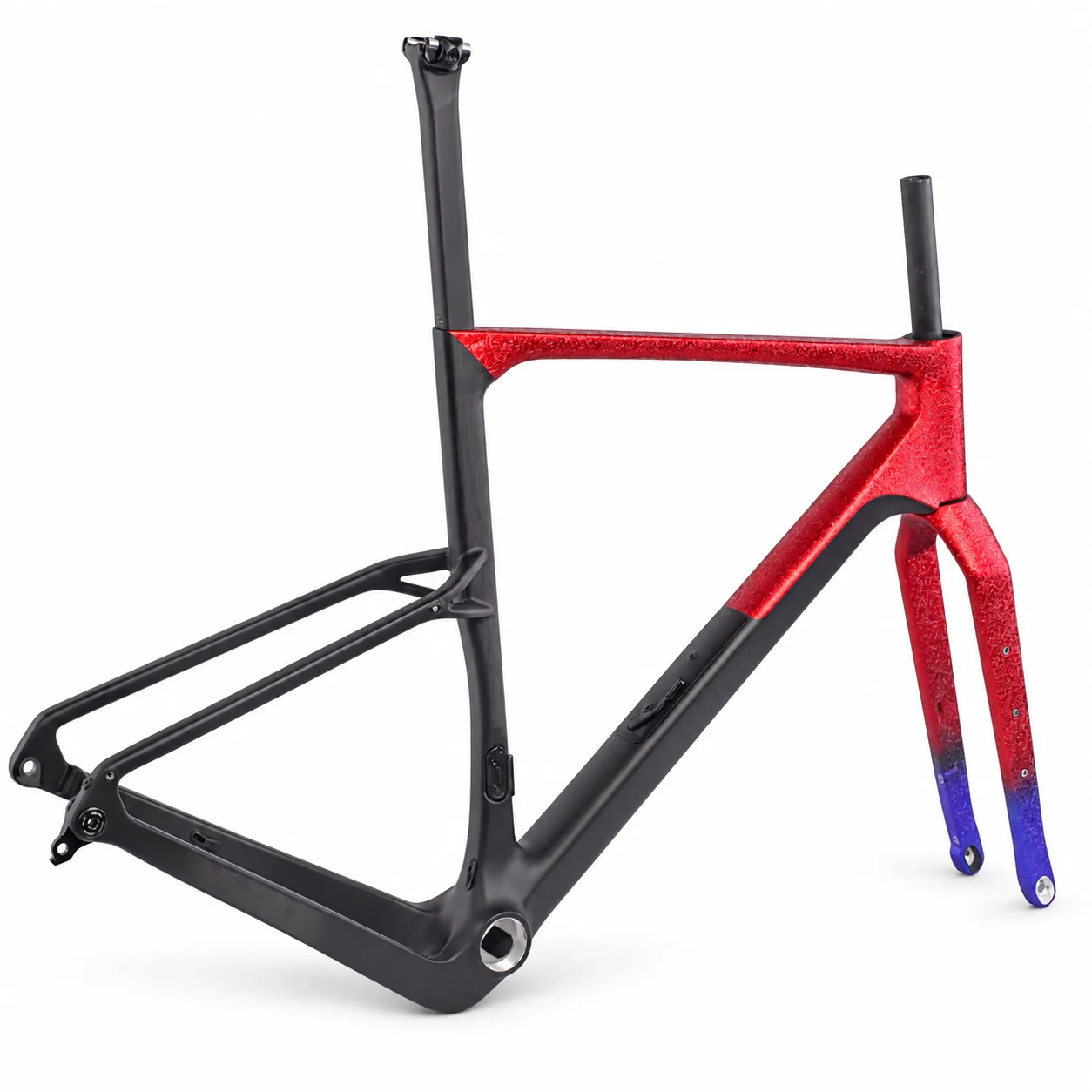
The FM366 frameset, showing aero tube shaping and the aero D-type seatpost. The photo shows the frame, fork and seatpost; the kit follows the product page.
Look at tube shape and tire clearance together
A gravel frameset suited to aero racing should be judged on tube shape and tire clearance together, not on the aero look alone.
- Many gravel bikes suited to racing keep tire clearance tight, so they can go faster; but race stages and mixed surfaces often need wider tires.
- The FM366 product page puts aero tube shaping, an aero D-type seatpost and 700c × 57 mm tire clearance together. That is how this frameset is meant to be used: for fast gravel races and faster all-road riding, while still leaving room for wider tires.
- 57 mm is the maximum written on the product page, not a recommendation to run that width every time. Once the tire is mounted, also look at the internal width of the rim and the actual space around the frame, and do not force a tire in just because of that limit.
- The product page also describes downtube storage with 1.2 L capacity; the storage cover is not included in custom painting. This is on-bike storage space, and it does not change the positioning of the frameset as suited to aero racing.
- Geometry, sizes and interfaces still follow what the product page states at the time. To compare sizes, open the Gravel Bike Size Chart; for the bottom bracket and hanger, open T47 and UDH Gravel Frameset.
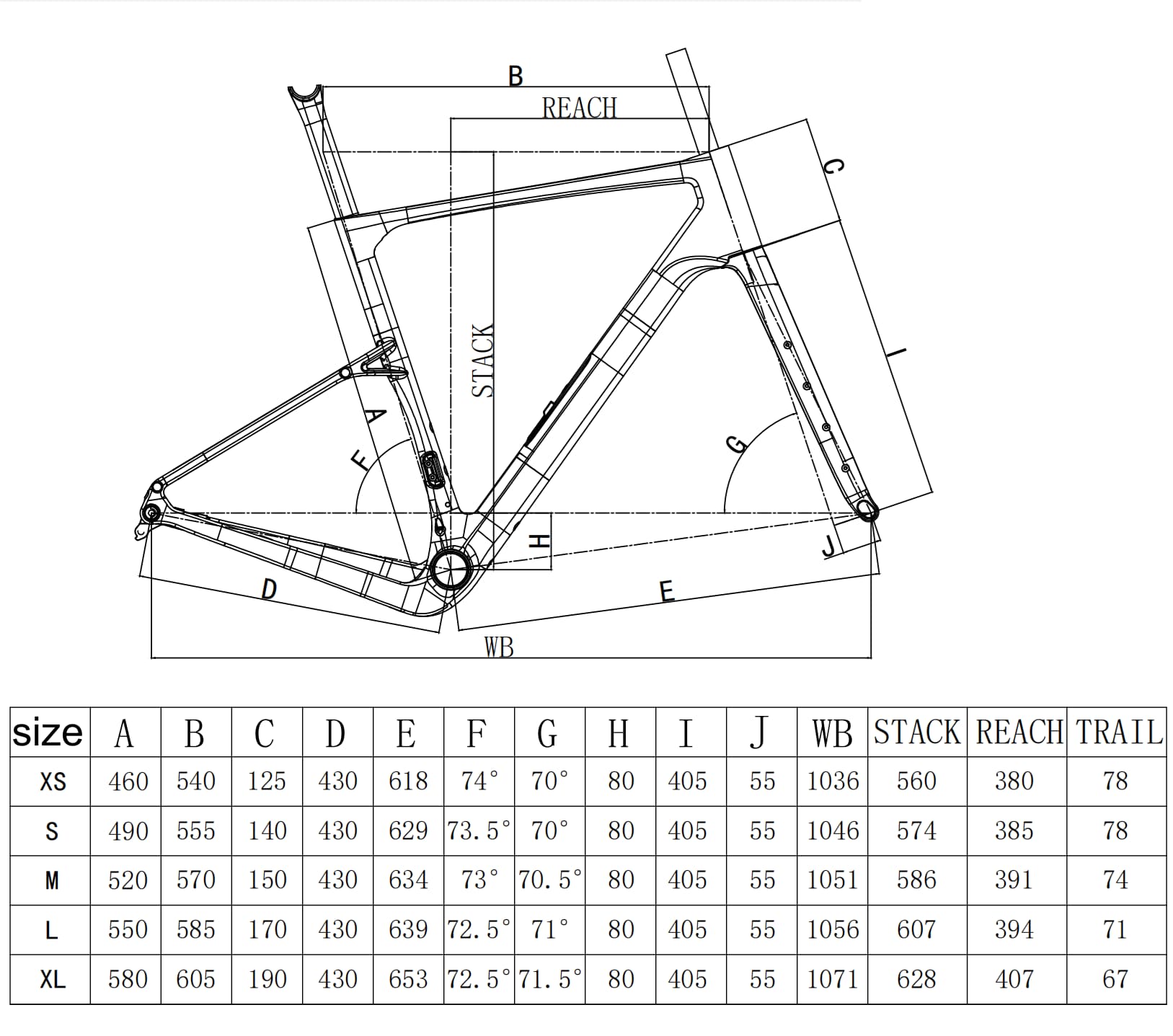
The FM366 geometry table. Start with stack and reach on this table, and use the figures written on the product page at the time.
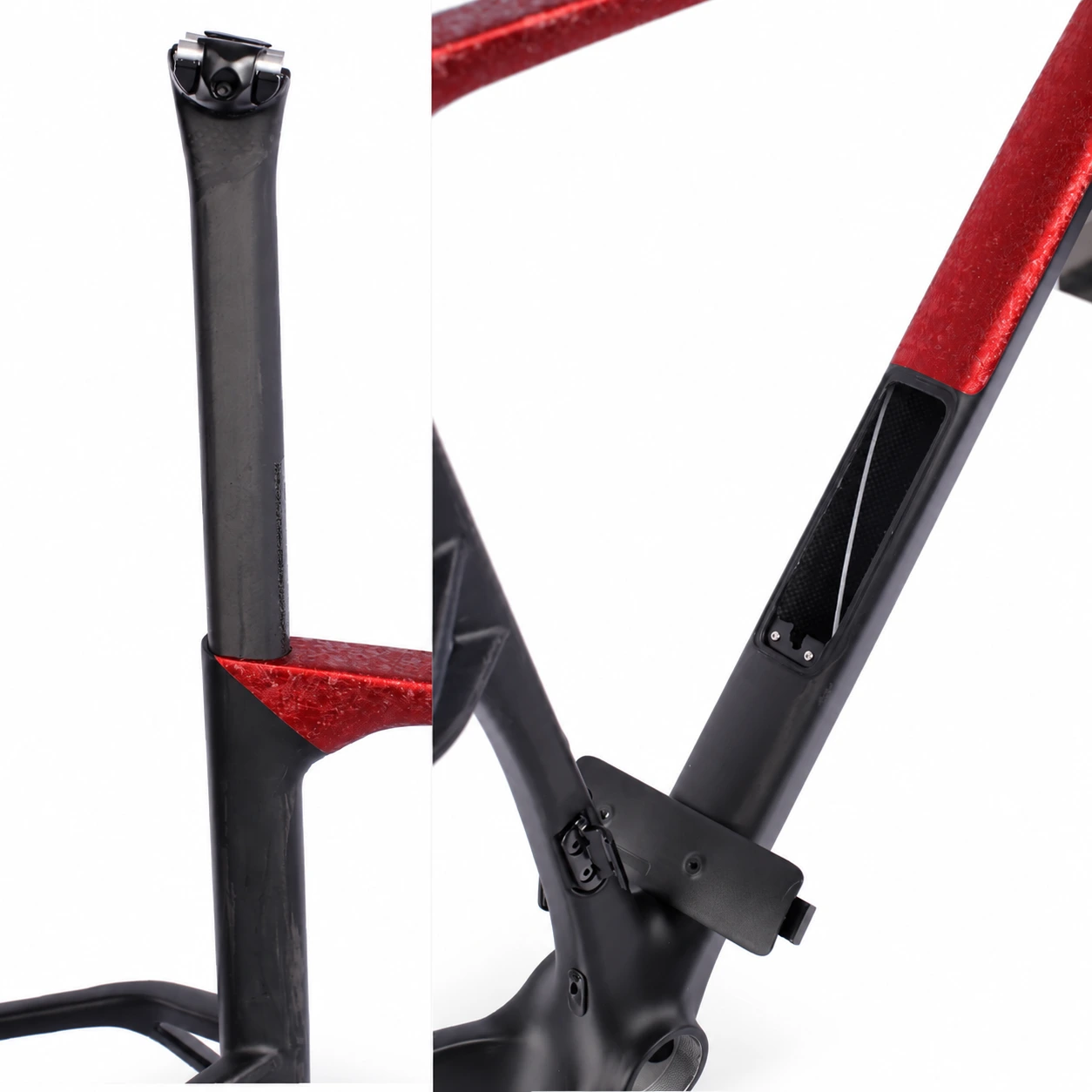
On the left is the aero D-type seatpost; on the right is the downtube storage with the cover open. The product page states a capacity of 1.2 L, and the cover is not included in custom painting.
Who it is for, and who it is not for
A gravel frameset suited to aero racing is not suited to every gravel riding style.
- FM366 is for people who want to ride in fast gravel races, endurance events and faster all-road, and who also want wider tire clearance.
- If you care more about in-frame storage and light touring, FM336 is a better fit. Its product page positions it for all-round gravel and light touring, and states tire clearance of 700c × 47 mm.
- If you care more about long-distance loads and greater tire clearance, FM356 is a better fit. Its product page positions it for bikepacking, and states tire clearance of 700c × 61 mm.
- All three are on the Carbon Gravel Bike Frames and Framesets category page. Choose the model by riding use first, then open the matching product page to check size, interfaces and the kit.
- After you have chosen FM366, open Build a Gravel Bike from a Carbon Frameset when you assemble it, and check the interfaces and parts against that article.
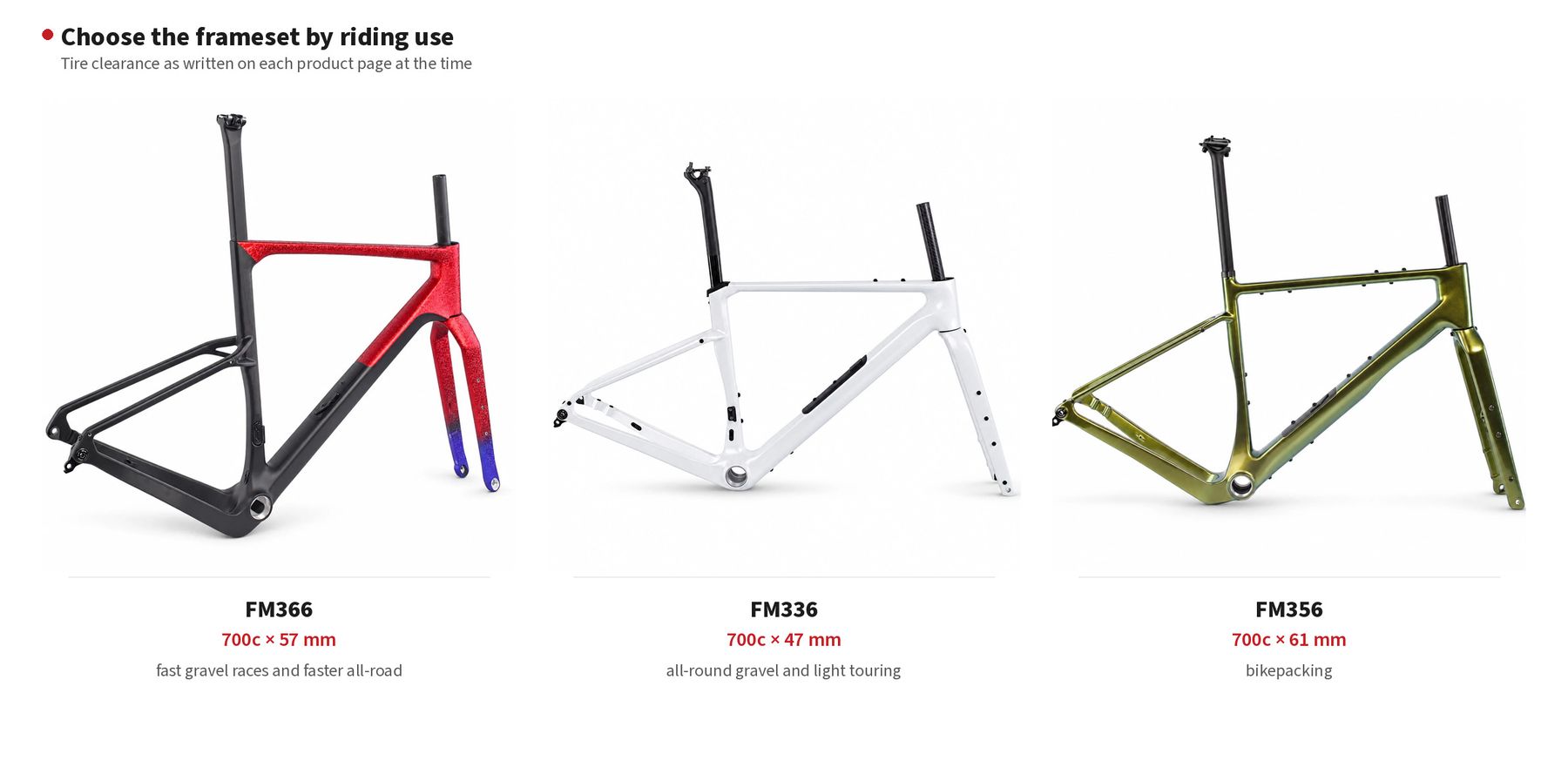
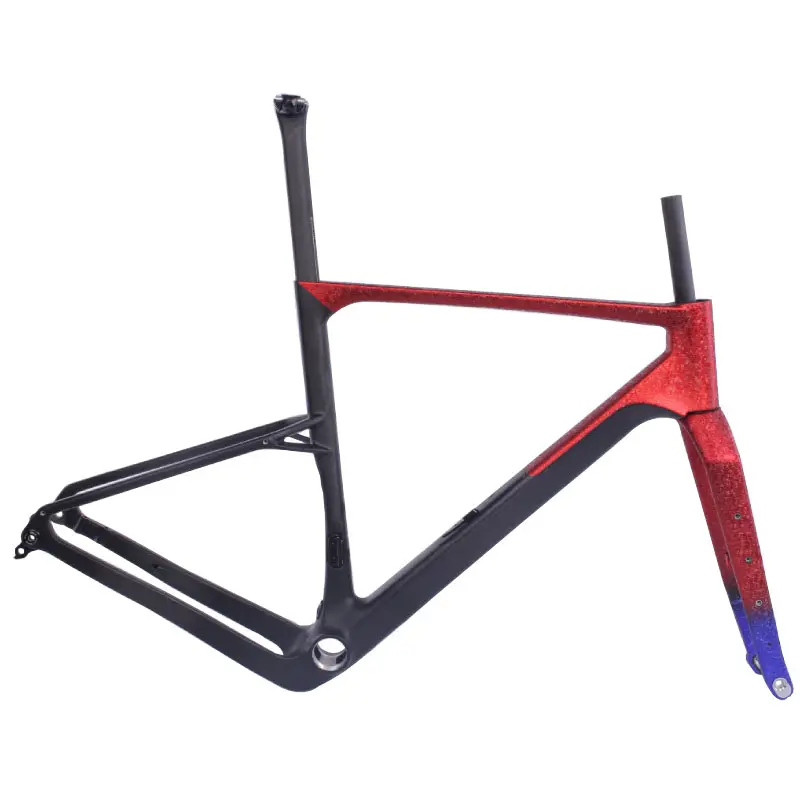
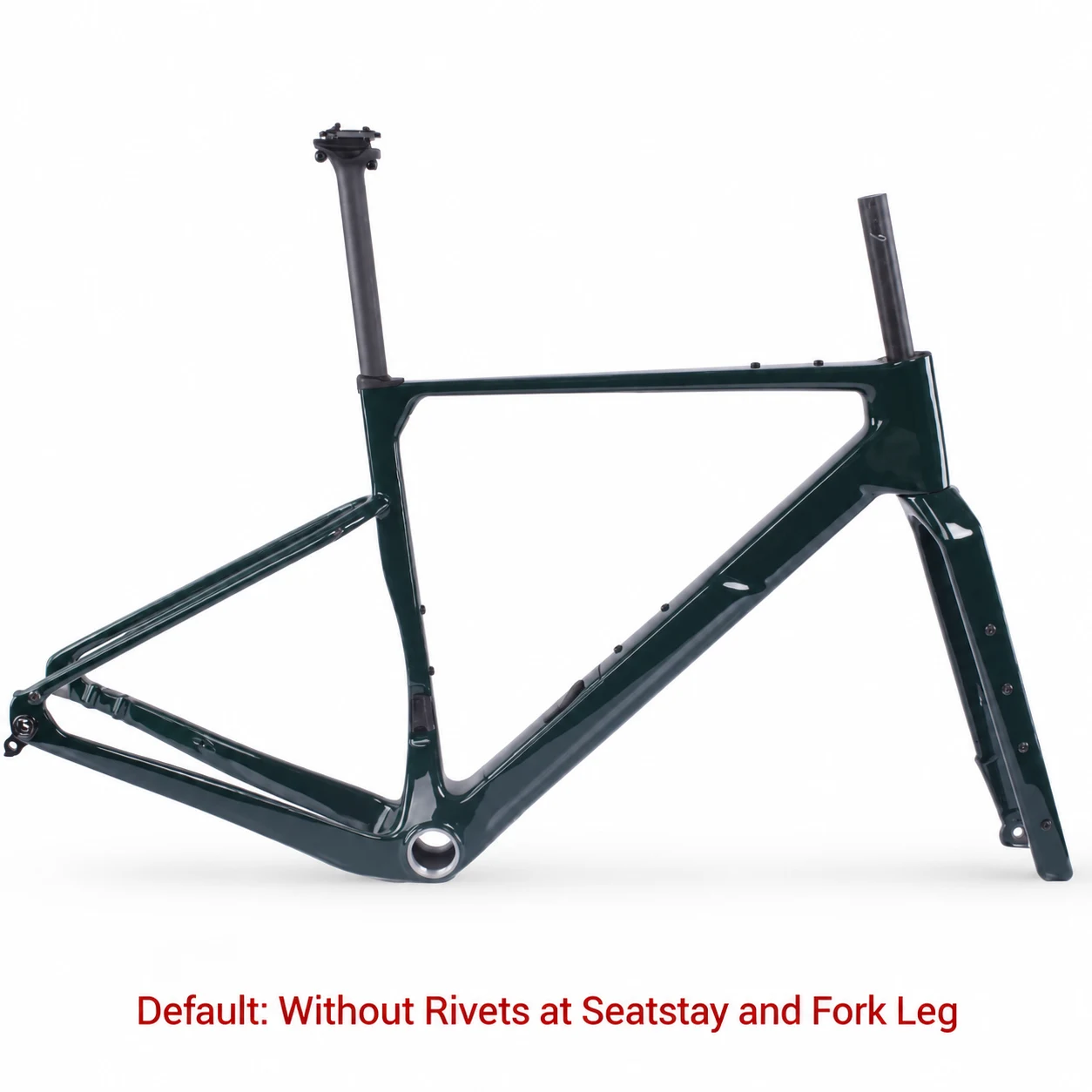
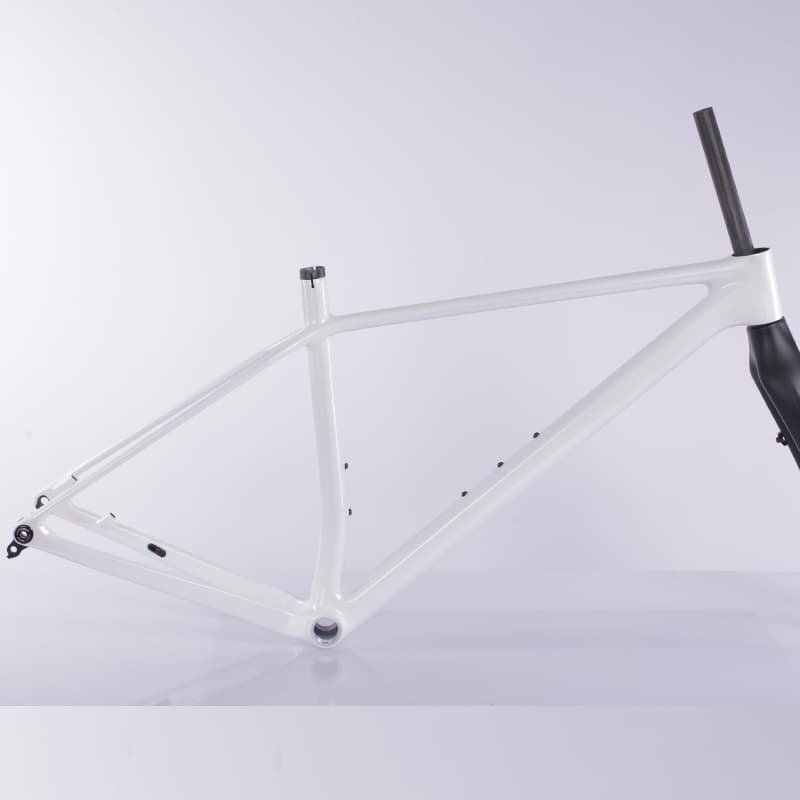
All three are product photos. Tire clearance and use are taken from each product page: FM366 is 700c × 57 mm, for fast gravel races and faster all-road riding; FM336 is 700c × 47 mm, for all-round gravel and light touring; FM356 is 700c × 61 mm, for bikepacking. The paint colors in the photos are examples only.
Go back to the product page to check
Once the use of the frameset is settled, go back to the matching product page to check.
- If you have chosen FM366, open the product page and check size, interfaces and the kit against the specifications written there.
- If you are still comparing these framesets, start with the Carbon Gravel Bike Frames and Framesets category page.
- For size, go back to the Gravel Bike Size Chart and the Bike Frame Size Calculator. Before you order, check item by item with Match parts to the live interface list.