
A carbon frame does not have a service life that can be written into every manual. What you can check is which kind of load the tests prove, what the warranty covers, and whether day-to-day inspection and installation have been done properly.
- Do not treat circulating claims such as “ten years” or “twenty years” as verifiable service-life figures. This page does not invent numbers like that.
- A warranty term is not a service life. The product-page FAQ states a 2-year warranty against manufacturing defects, not that the frame must be replaced after two years.
- Passing a test only shows that the frame did not fail under the specified loads and cycle counts. That does not mean it will still be safe to ride after a crash, and it is not a basis for writing down a service-life figure.
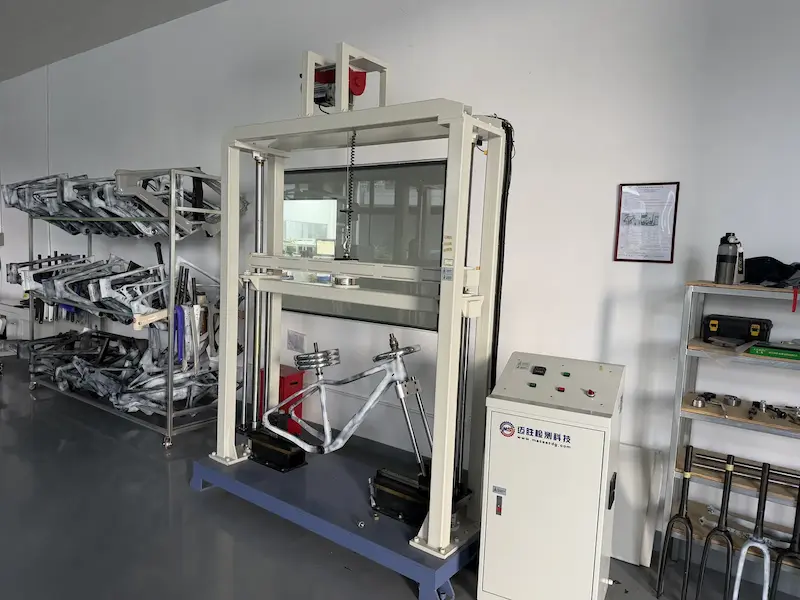
A fatigue test is not a substitute for a service life
An ISO 4210 fatigue test applies a load of a specified direction and magnitude, repeats it a specified number of times, and checks whether the frame develops cracks or excessive permanent deformation.
- Mondince’s Carbon Bike Frame Testing to ISO 4210 page is clear: passing a fatigue test only proves that the frame survived that set of load cycles.
- The same page also states: this does not prove the frame is indestructible, and it does not prove it can survive a crash or impacts outside its design envelope.
- The testing page explains fatigue testing as a stand-in for repeated loads of the “years of riding” kind, but that is still a laboratory duty cycle, not a calendar life table.
- Gravel frames have no separate category in ISO 4210. Which edition and which bicycle category were tested must be taken from the test documents; do not rely on the words “ISO tested” alone. The details are on the testing page; this page does not rewrite them.
In normal riding, a carbon structure does not “fatigue out” year by year the way metal often does
On whether a carbon structure can develop fatigue damage simply because it has been used for longer, this page uses only published, open-to-check engineer statements and does not estimate a service life of its own.
- Cervélo composites engineer Richard Matthews, in a piece published by British Cycling, states that carbon-fibre composites are generally less prone to time-based fatigue damage than many metals (aluminium, for example).
- He writes that, when correctly designed for the intended loads, they have seen many frame designs that essentially have an “infinite fatigue life.”
- That is a Cervélo engineer’s statement about their designs, not a Mondince service-life promise for every frame, and it should not be read as meaning a frame cannot fail no matter how it is used.
- The same article also states that very light designs have less margin for unexpected loads (hitting a curb or crashing, for example); road-race bikes often leave service because of impact damage before they are “worn out.”
Damage after an impact is not always visible to the naked eye
Carbon parts often do not bend first and then break, the way metal often does. After an impact, a normal-looking surface does not mean the part is still safe to ride.
- Trek states in its Carbon Care guidance that a damaged carbon part may fail outright, or it may hide the damage where the eye cannot see it.
- The situations they list include hitting a curb, a barrier, or a pothole, or making a sudden stop while riding; a front wheel jamming on a foreign object; being struck by a motor vehicle; a ride feel or sound that is wrong after a crash; and hitting the frame when riding a roof rack into a garage.
- The handling principle can be shared: if you suspect the frame, fork, or a carbon part may be damaged, stop riding first and have it inspected by an experienced mechanic or a carbon-repair specialist. Trek’s later replacement programme is their own after-sales scheme, not a Mondince warranty term.
- How to tell paint cracks from structural cracks, and which locations to inspect, is already covered in How to Inspect Cracks in Carbon Bike Frames; this page does not repeat those steps.
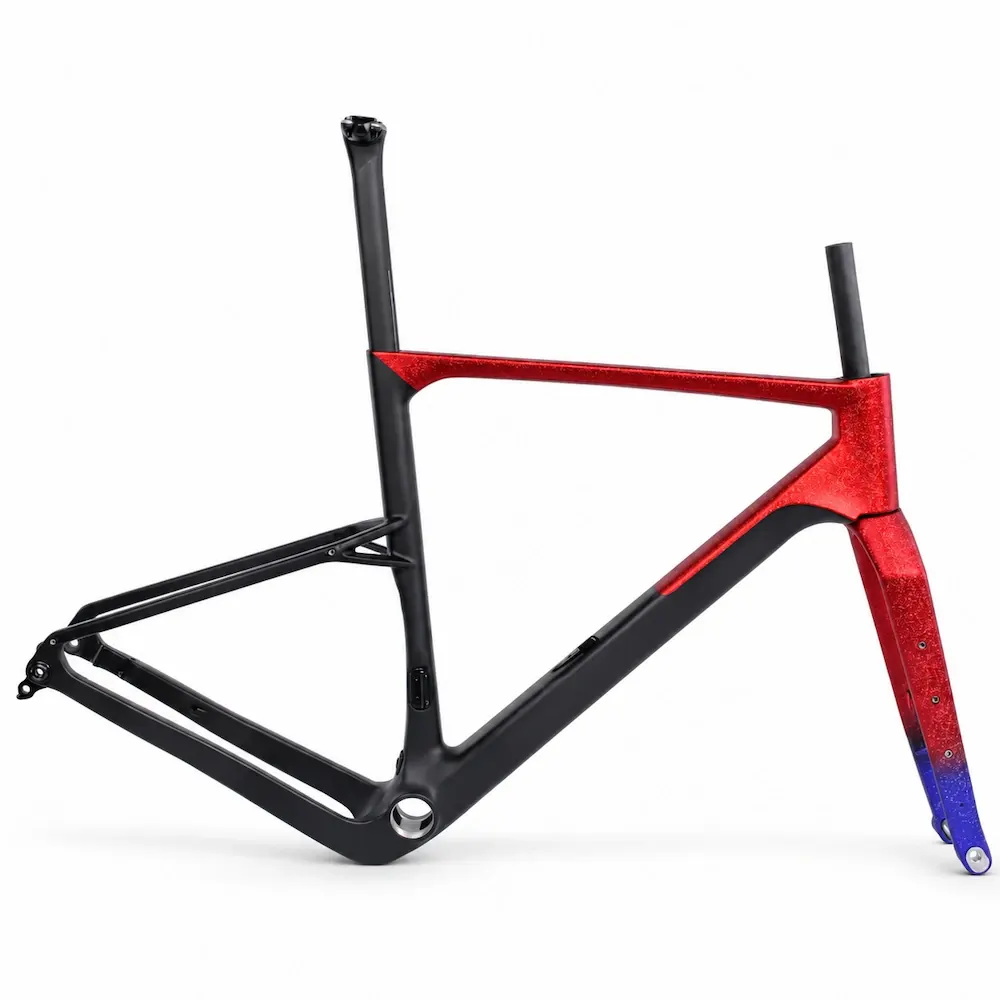
When installing, torque and carbon friction paste matter more than “just tightening it a bit more”
A carbon clamping area can be crushed if it is tightened too far, or it can slip if it is not tightened enough. Do not add force by feel.
- Use a torque wrench, and use the torque values written by the frame and component makers. Park Tool’s torque chart is a reference only, and it states that the maker’s latest specifications take precedence.
- A seatpost clamp only needs enough torque to prevent sinking or rotation. Park Tool specifically warns against over-tightening the seatpost clamp.
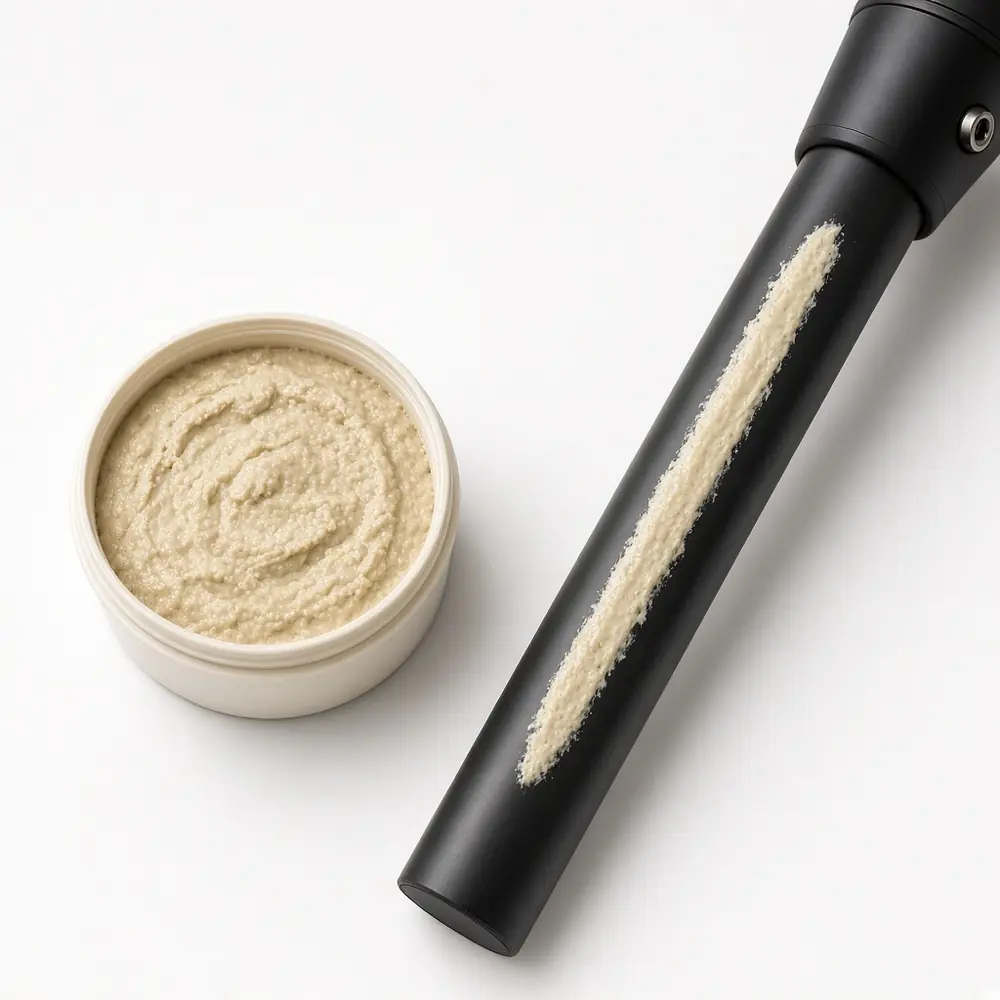
- A Cervélo engineer recommends using carbon friction paste on interfaces such as the seatpost to increase friction. Manuals sometimes also call it assembly compound or friction paste; it looks like butter but does the opposite, and lubricating butter must not be used as a substitute.
- Park Tool’s seatpost installation notes are more specific: follow the frame and component makers first. If the post still slips at the specified torque, then use carbon friction paste. For carbon-on-carbon joints, some makers allow the joint to stay dry; where aluminium and carbon are mixed, they mention grease as a corrosion barrier. This page does not prescribe a single formula; follow the manuals for your frame and seatpost.
- The seatpost must be inserted past the minimum-insertion mark. If the product page does not publish an insertion range, do not assume you can raise or lower it further.
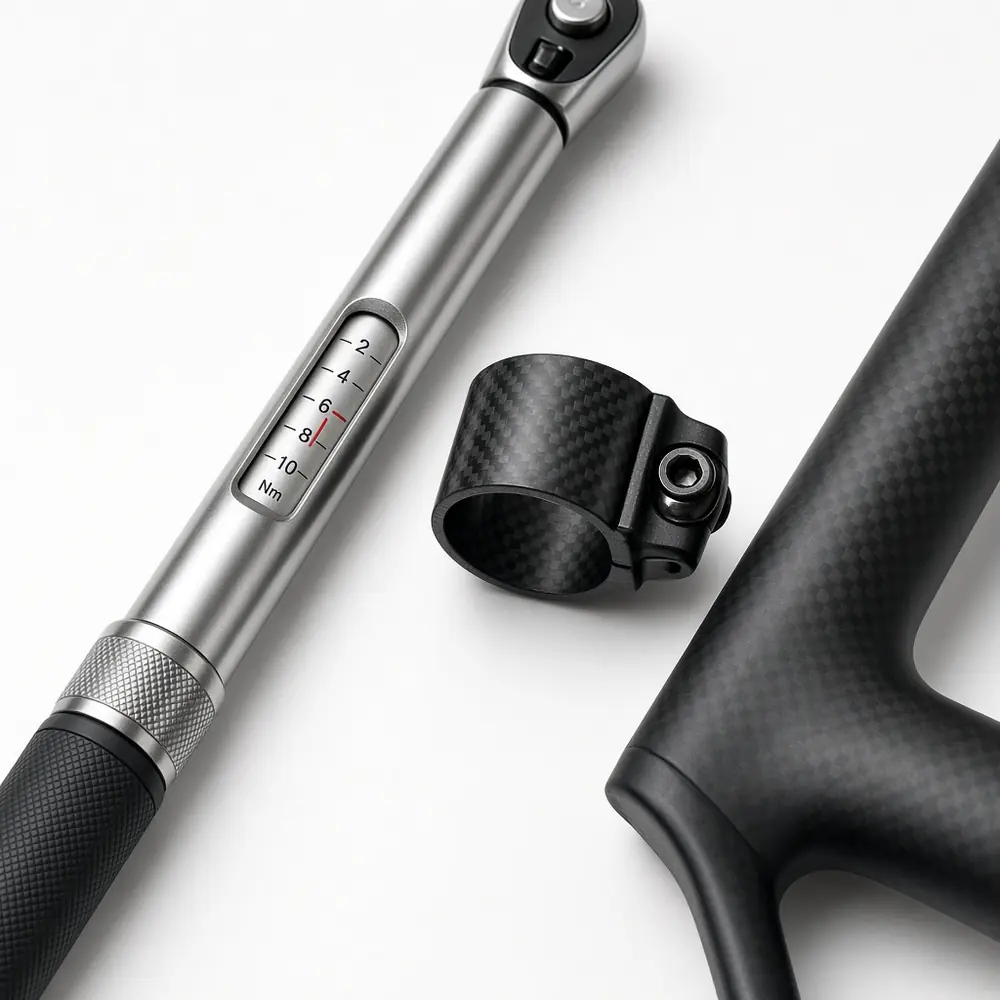
Neutral soap and water are enough for cleaning; do not “maintain” the frame with strong solvents
The point of routine care is to reveal damage and protect the finish, not to add “service-life years” to the frame.
- Cervélo’s guidance: the best way to clean a carbon frame is with mild soap and water; do not use strong solvents, which can damage the finish and sometimes the material itself.
- A pressure washer will not usually destroy carbon fibre directly, but it can force water into bearings, the drivetrain, and other places that should stay dry, so use it with care.
- Inspect after washing and drying, so cracks and paint blisters are less likely to be hidden by mud.
- For the inspection steps, see How to Inspect Cracks in Carbon Bike Frames.
The warranty covers manufacturing defects, not “how many years it has been used”
Keep the warranty terms and the service-life question separate.
- The FAQ on the Mondince official FM228 product page states that all Mondince frames have a 2-year warranty against manufacturing defects.
- That is after-sales wording for manufacturing defects, not “the frame expires after two years,” and not an automatic replacement programme for impact damage.
- Coverage, how to apply, and the documents required follow the written terms at the time of order. This page does not extend commitments that are not written on that page.
Questions worth including in an enquiry
If you are comparing frames, or already riding one and want to confirm the care limits, make the questions specific.
- The ISO 4210 edition and bicycle category that apply to that model’s tests, and which documents can be provided.
- Torque values for the seatpost, stem, and seatpost clamp, and whether carbon friction paste is required.
- If damage is suspected, which photos or locations we should receive to assess it.
- Do not only ask “how many years will this carbon frame last.” There is no single number that can be answered responsibly.
For testing and documents, see Carbon Bike Frame Testing to ISO 4210. For inspection steps, see How to Inspect Cracks in Carbon Bike Frames. To check sources and ISO editions before you order, see What to Verify on a Chinese Carbon Frameset Before You Order.
Sources
- Mondince official website: Carbon Bike Frame Testing to ISO 4210; How to Inspect Cracks in Carbon Bike Frames; Essential Maintenance Tips for Carbon Fibre Bikes (this page does not adopt unsourced service-life or care claims from that article); FM228 product page; What to Verify on a Chinese Carbon Frameset Before You Order
- Cervélo Carbon Mythbuster, published by British Cycling, Cervélo composites engineer Richard Matthews
- Trek Carbon Care (cited only for the point that damage may be invisible, and that you should stop riding after an impact; Trek’s replacement programme is not presented as a Mondince term)
- Park Tool: Torque Specifications and Concepts; How to Remove and Install a Seatpost; SAC-2 SuperGrip Carbon and Alloy Assembly Compound
Huizhou, Guangdong, China · info@mondincecycle.com