
Carbon fiber wrap and real carbon fiber are often confused because they can look similar from a distance. However, they are completely different materials. Carbon fiber wrap is usually a vinyl film with a carbon-style pattern, while real carbon fiber is a structural composite material made from carbon fiber layers and resin.
For bike buyers, this difference matters. A carbon-style surface does not mean the frame is made from real carbon fiber, and a decorative wrap cannot improve frame stiffness, strength, weight or ride quality. This guide explains the difference between carbon fiber wrap and real carbon fiber bike frames, so you can make a more informed decision before buying.
What Is Carbon Fiber Wrap?
Carbon fiber wrap is a decorative vinyl film designed to imitate the appearance of woven carbon fiber. It is commonly used on cars, motorcycles, accessories and sometimes bike parts for visual styling or light surface protection. The wrap may have a glossy, matte or textured finish, but it is still only a surface layer.
Because carbon fiber wrap is flexible and adhesive-backed, it can be applied over many materials, including plastic, aluminum, steel or painted surfaces. It does not change the underlying structure. If the part under the wrap is metal or plastic, it remains metal or plastic after wrapping.
What Is Real Carbon Fiber?
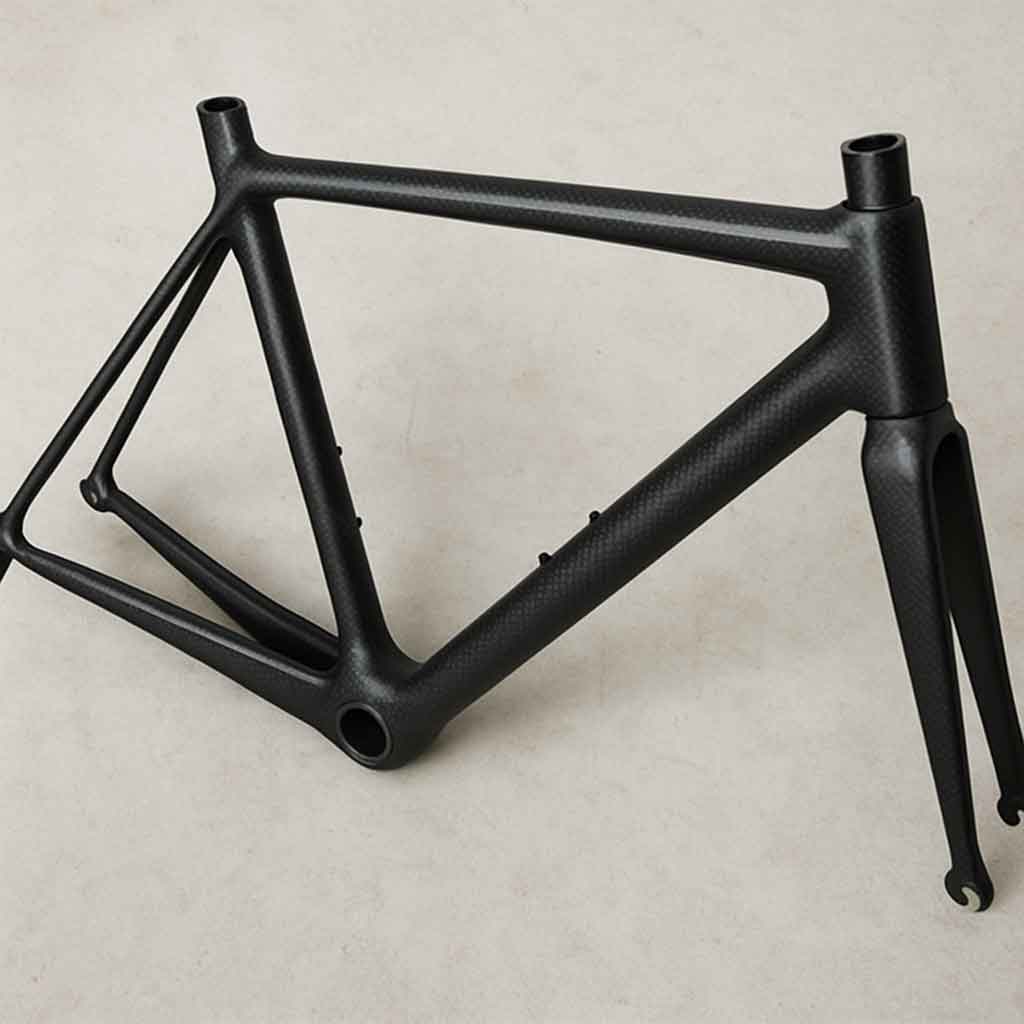
Real carbon fiber is a composite material made from carbon fiber sheets, resin and a controlled layup process. In bicycle frames, the carbon layers are arranged in specific directions to manage stiffness, strength, impact resistance, comfort and weight. This is why carbon fiber is used for high-performance road, gravel and MTB frames.
A real carbon fiber bike frame is not just about appearance. The frame structure, layup schedule, molding process and quality control all affect how the bike rides and how it handles load. For more background on frame material, read our carbon fiber bike frame material guide.
Carbon Fiber Wrap vs Real Carbon Fiber
| Factor | Carbon Fiber Wrap | Real Carbon Fiber Bike Frame |
|---|---|---|
| Purpose | Cosmetic appearance | Structural frame material |
| Material | Vinyl film with carbon-style pattern | Layered carbon fiber sheets and resin |
| Strength | Does not add structural strength | Designed for stiffness, impact resistance and load bearing |
| Weight Benefit | No real performance benefit | Can reduce frame weight while maintaining strength |
| Bike Frame Use | Decoration or surface protection only | Used to build road, gravel and MTB frames |
Can Carbon Fiber Wrap Improve Bike Frame Performance?
No. Carbon fiber wrap cannot improve the performance of a bike frame. It does not make a frame lighter, stronger or stiffer. It also does not change the way the frame absorbs vibration or transfers power. At most, it can change the appearance of a surface or provide a thin protective layer against minor scratches.
This is especially important when evaluating low-cost products that use carbon-style patterns. A carbon look is not proof of carbon construction. Bike buyers should confirm the actual frame material, manufacturing process and testing standards before making a decision.
How to Tell If a Carbon Bike Frame Is Real Carbon Fiber
Real carbon fiber bike frames usually have documentation, material descriptions and manufacturing details. Reputable suppliers should be able to explain the carbon grade, layup design, molding process and testing standards used for the frame. If a product only says "carbon look" or "carbon style," it may not be a real carbon fiber structure.
You can also check whether the seller provides information about weight, frame testing, internal structure, warranty and certification. For a deeper checklist, read our real vs fake carbon fiber guide.
Why Manufacturing Process Matters
The performance of a real carbon fiber frame depends on more than the raw carbon material. Carbon layup direction, resin control, molding pressure, curing quality and inspection all affect final frame strength and ride feel. Two frames may both be described as carbon fiber, but their real-world quality can be very different.
This is why buyers should look for more than a carbon appearance. A reliable carbon bike frame supplier should provide consistent production standards, quality control and testing. Mondince carbon frames are developed with attention to material selection, layup control and frame testing. You can also review our certification and testing information.
When Carbon Fiber Appearance Can Be Misleading
Carbon-style patterns can be useful for design, decoration or surface protection, but they can also create confusion. Some parts may look like carbon fiber while being made from plastic, aluminum or steel underneath. In bicycle frames, this can be a serious misunderstanding because frame material affects safety, weight and long-term durability.
If you are comparing carbon bike frames, do not judge only by the surface pattern. Ask what material is used, how the frame is molded, what tests it passes and whether the supplier can support warranty or OEM requirements.
Conclusion
Carbon fiber wrap and real carbon fiber are not the same. Carbon fiber wrap is a cosmetic vinyl film, while real carbon fiber is a structural composite material used to build high-performance bike frames. A carbon-style appearance does not prove that a bike frame is made from real carbon fiber.
Need help verifying carbon bike frame quality? Read our real vs fake carbon fiber guide, compare T800 and T1000 carbon fiber bike frame materials, learn about Toray carbon gravel frame materials, or contact Mondince for carbon frame manufacturing and OEM support.