

Choosing the right fixed gear components is the key to building a fixie bike that feels simple, efficient, and enjoyable to ride. A fixed gear bike has fewer moving parts than a multi-speed road bike, but every component matters because the drivetrain, frame, wheels, cockpit, and brakes all directly affect control and ride feel.
This fixed gear components guide explains how to choose the frame, fork, wheels, crankset, chainring, cog, brakes, handlebar, saddle, and fit setup for a custom fixie bike. If you are planning a frame-first build, use this guide as a practical checklist before choosing parts.
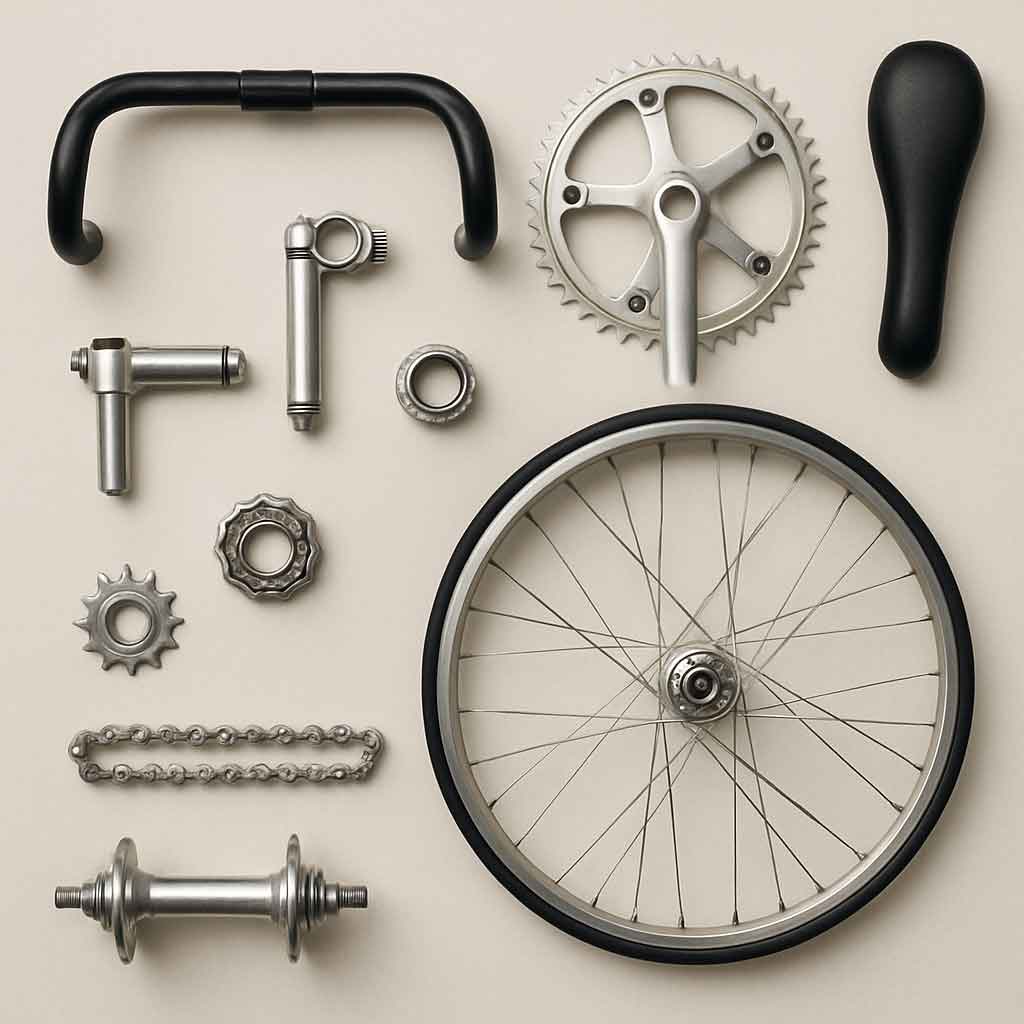
What Makes a Fixed Gear Bike Different?
A fixed gear bike, often called a fixie, uses a drivetrain where the rear cog is directly connected to the rear wheel. When the bike moves, the pedals move with it. This gives the rider a very direct connection to the bike, but it also means component choice and bike fit are especially important.
Compared with a geared road bike, a fixie usually has a simpler layout:
- Single chainring and rear cog
- No derailleur or multi-speed shifting system
- Cleaner frame appearance
- Lower maintenance requirements
- More direct pedaling feedback
That simplicity is why many riders like fixed gear bikes for city riding, training, commuting, and custom bike builds.
Fixed Gear Component Checklist
| Component | What to Check | Why It Matters |
|---|---|---|
| Frame | Material, geometry, rear dropout type, tire clearance | Defines fit, handling, durability, and upgrade potential |
| Fork | Steerer type, rake, brake compatibility, tire clearance | Affects steering feel and front-end comfort |
| Wheels | Hub type, rim depth, spoke count, axle standard | Affects acceleration, strength, and riding efficiency |
| Crankset | Crank length, chainring size, bottom bracket compatibility | Controls pedaling feel and gear ratio setup |
| Cog & Chain | Cog size, chainline, chain tension | Critical for smooth and safe fixed gear riding |
| Brakes | Front brake, rear brake option, lever compatibility | Improves safety, especially for street and commuting use |
Frame and Fork: The Foundation of a Fixie Build
The frame and fork are the foundation of any fixed gear build. A good fixie frame should have stable geometry, proper rear dropouts for chain tension, enough tire clearance for your riding environment, and a comfortable fit for your body measurements.
Frame Material
Fixed gear frames are commonly made from steel, aluminum, carbon fiber, or titanium. Each material changes the ride feel and long-term value of the bike.
- Steel: Comfortable, durable, classic, and often affordable.
- Aluminum: Lightweight and stiff, usually good for budget-friendly city builds.
- Carbon fiber: Lightweight and efficient, best for riders who want performance and a refined ride feel.
- Titanium: Durable, corrosion resistant, and premium, but usually more expensive.
If you are building a performance-oriented bike rather than a pure city fixie, you may also want to compare modern carbon road bike frames. Road frames are not the same as fixed gear frames, but the same principles of frame material, geometry, and fit still apply.
Fork Compatibility
The fork affects steering feel, comfort, and tire clearance. Before buying a fork, check steerer size, brake compatibility, axle type, and whether the fork is designed for your frame geometry.
Wheels, Hubs, and Tires
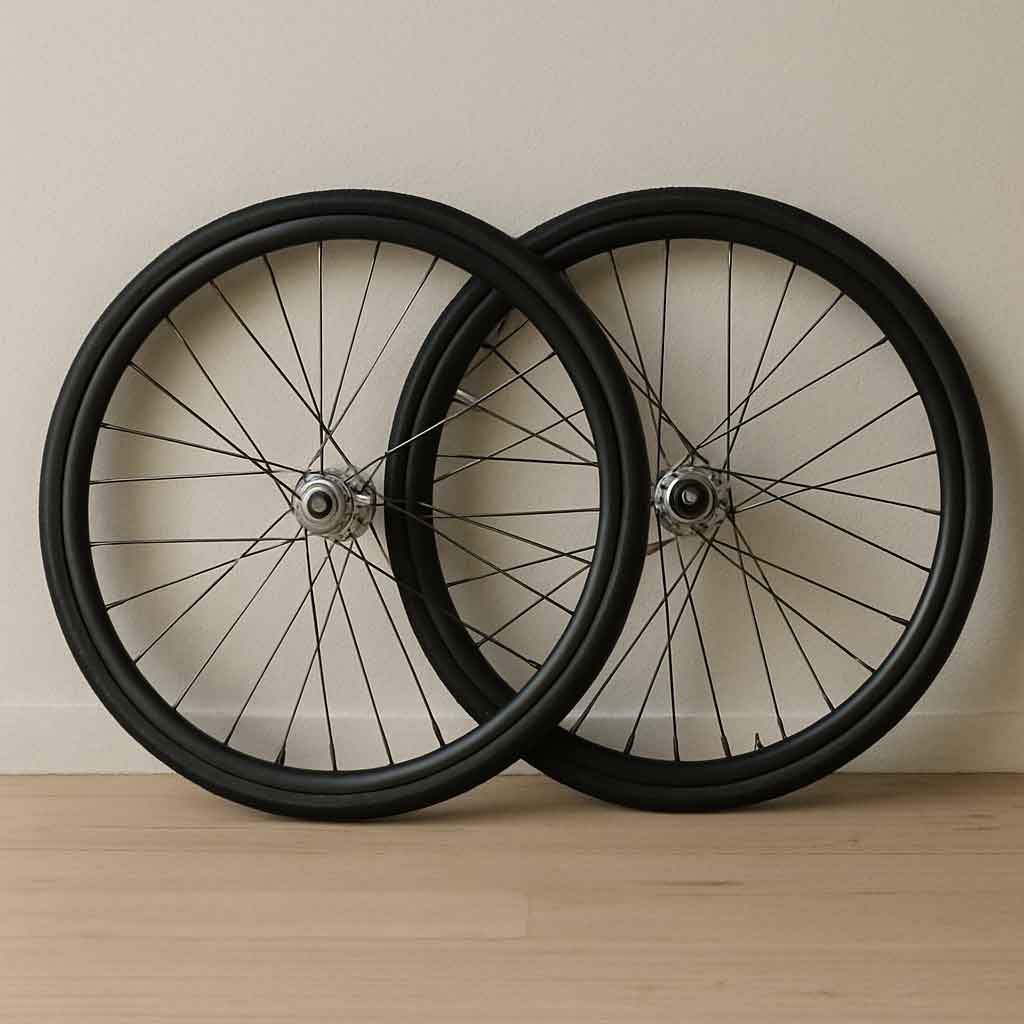
Fixed gear wheels need to be strong, reliable, and compatible with a fixed cog. Many fixie bikes use flip-flop hubs, which allow one side to run fixed gear and the other side to run single-speed freewheel.
When choosing wheels, check:
- Hub type: Fixed hub or flip-flop hub
- Rim depth: Deeper rims look aggressive, while shallower rims can be lighter and more comfortable
- Spoke count: Higher spoke counts can improve durability for city riding
- Tire width: Wider tires improve comfort and grip on rough streets
- Axle and spacing: Must match the frame dropout spacing
Crankset, Chainring, and Gear Ratio
The crankset and rear cog determine how hard or easy the bike feels to pedal. A higher gear ratio feels faster on flat roads but harder to start and climb. A lower gear ratio is easier for city riding, stop-and-go traffic, and beginner fixed gear riders.
| Setup | Typical Use | Ride Feel |
|---|---|---|
| Lower gear ratio | City riding, hills, beginner fixie riders | Easier starts and better control |
| Medium gear ratio | Daily riding and balanced use | Good mix of speed and comfort |
| Higher gear ratio | Flat roads, faster training, experienced riders | Faster once moving, harder to accelerate |
Brakes and Safety
Even though some fixed gear riders prefer a minimalist setup, a front brake is strongly recommended for street riding, commuting, and general use. Brakes improve control in traffic, wet conditions, and emergency situations.
If your frame and fork support brakes, check brake mount type, lever compatibility, and tire clearance before choosing the final setup.
Cockpit, Saddle, and Fit
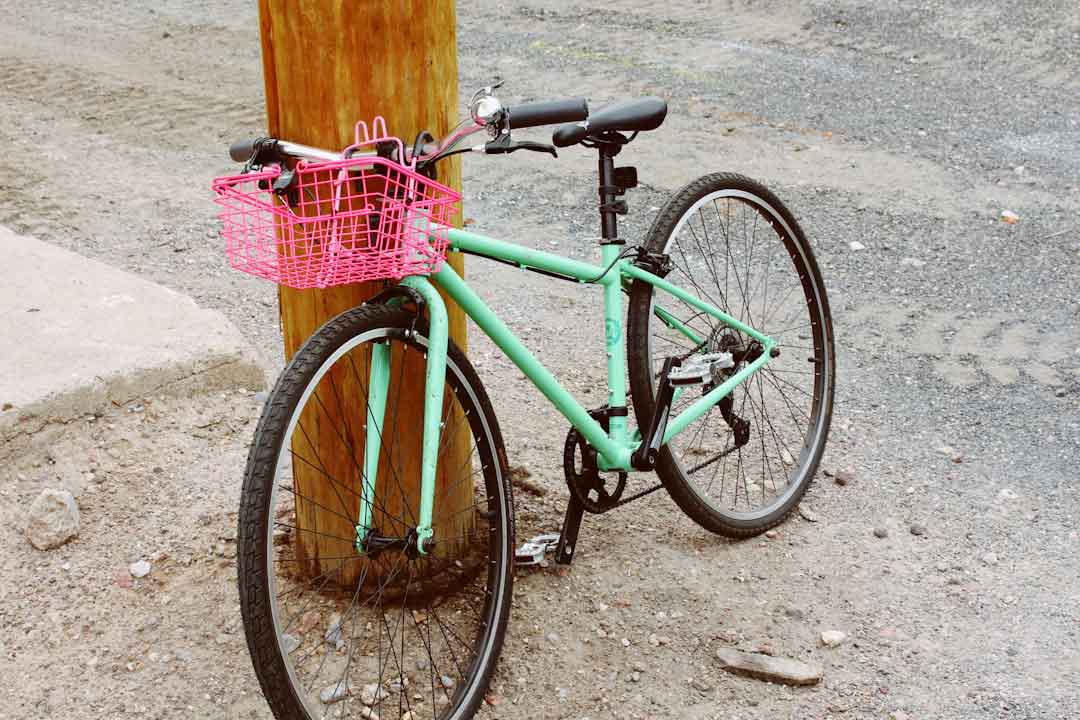
The cockpit includes the handlebar, stem, grips or tape, and brake levers. This area strongly affects comfort and control.
- Flat bars: Good for city control and upright riding.
- Drop bars: Better for speed and longer road-style riding.
- Riser bars: Comfortable for casual urban riding.
- Stem length: Fine-tunes reach and steering feel.
- Saddle position: Affects pedaling comfort and knee alignment.
If you are unsure about sizing, compare your rider height and inseam with a general bike frame sizing guide. Correct fit matters whether you ride a fixie, road bike, gravel bike, or MTB.
Fixed Gear vs Road Bike Components
Fixed gear bikes are simple, while road bikes are designed for a wider speed range and longer performance riding. The table below summarizes the difference.
| Area | Fixed Gear Bike | Road Bike |
|---|---|---|
| Drivetrain | Single fixed cog | Multi-speed groupset |
| Best Use | City riding, simple training, style-focused builds | Road racing, endurance riding, climbing, long-distance routes |
| Maintenance | Lower complexity | More components to tune and service |
| Frame Choice | Needs fixed/single-speed compatible dropouts | Designed for derailleurs, brakes, and wider component options |
When a Road Bike Frame Makes More Sense
A fixed gear build is a good choice for simplicity and urban riding. However, if your goal is speed, long-distance comfort, climbing, or performance road riding, a modern road bike frame may be a better foundation.
Mondince focuses on carbon bike frame manufacturing, including carbon road bike frames, carbon gravel bike frames, carbon MTB frames, and e-bike frames. If you are building a performance road bike or planning an OEM frame project, a dedicated road frame will usually be more suitable than a fixed gear frame.
Related Guides
- Best Road Bikes for Sale: How to Choose the Right Road Bike Frame
- Road Bike Frame Size Guide
- Road Bike Frame Materials: Carbon vs Aluminum vs Steel vs Titanium
Frequently Asked Questions
What are the most important fixed gear components?
The most important fixed gear components are the frame, fork, wheels, crankset, chainring, rear cog, chain, brakes, handlebar, stem, saddle, and tires. The frame and drivetrain should be checked first because they define compatibility and ride feel.
Can I use a road bike frame for a fixed gear build?
Most modern road bike frames are not ideal for fixed gear builds because they are designed for derailleurs and may not allow proper chain tension. A fixed gear frame usually needs horizontal dropouts or track-style dropouts.
Do fixed gear bikes need brakes?
For street riding and commuting, a front brake is strongly recommended. Brakes improve safety and control, especially in traffic, wet conditions, and emergency stops.
What gear ratio is best for a fixie?
The best gear ratio depends on terrain, strength, and riding style. City riders often prefer a lower or medium gear ratio for easier starts, while experienced riders on flat roads may prefer a higher ratio.
Is a fixed gear bike good for long rides?
A fixed gear bike can be used for longer rides, but it is less flexible than a multi-speed road bike. For long-distance road riding, climbing, and varied terrain, a road bike or custom road frame build is usually more comfortable and efficient.
Conclusion
Choosing fixed gear components is about balancing simplicity, control, durability, and fit. Start with the frame and fork, then confirm wheel compatibility, drivetrain setup, brakes, cockpit fit, and tire choice.
If your goal is a simple city bike, a fixed gear build can be a clean and enjoyable option. If your goal is performance road riding or a custom carbon bike project, explore Mondince carbon road bike frames or contact Mondince for frame selection and OEM support.

.jpg)