
Your first road bike frame should fit your body, match your riding goals, and leave room for future upgrades. This guide explains the key factors beginners should check before choosing a road bike frame.
Choosing a first road bike frame can feel confusing because there are many frame materials, geometry styles, component standards, and price levels. Instead of starting with the most expensive model, start with the basics: fit, riding style, comfort, compatibility, and long-term upgrade potential.
If you choose the right frame, you can upgrade wheels, drivetrain, cockpit, and other parts later. If the frame is the wrong size or uses outdated standards, future upgrades become harder.
1. Frame Material: Carbon vs Aluminum
For beginners, aluminum frames are often affordable and practical. They can be a good starting point for riders with a limited budget. However, if your budget allows, a carbon fiber frame can offer lower weight, better vibration damping, and more controlled stiffness.
A carbon road bike frame can feel more responsive when climbing and accelerating. It can also be shaped for aerodynamics and tuned for comfort on longer rides. For more material background, read our carbon fiber bike frame guide and carbon fiber bike frame benefits guide.
If you are comparing current options, browse the Mondince carbon road bike frame collection.
2. Frame Geometry: Endurance vs Race
Geometry decides how the bike fits and handles. For a first road bike, many riders are more comfortable on an endurance-style frame because it usually has a higher stack, shorter reach, and more relaxed riding position.
Race geometry is lower, longer, and more aggressive. It can be faster for trained riders, but it may feel uncomfortable for beginners on long rides. Before choosing a size, compare reach, stack, top tube length, head tube length, and wheelbase.
You can use the bike frame size calculator as a starting point before checking the actual frame geometry chart.
3. Tire Clearance
Modern road bike frames often allow wider tires than older frames. A frame that supports 28mm to 32mm tires can improve comfort, grip, and control on rough pavement without losing the road bike feel.
For beginners, wider tire clearance is useful because it makes the bike more forgiving. If you plan to ride a lot of mixed roads, broken pavement, or light gravel, check clearance carefully. For dedicated gravel riding, a carbon gravel bike frame may be a better choice.
4. Bottom Bracket Standard
The bottom bracket affects crank compatibility, stiffness, noise, and maintenance. Threaded systems such as BSA and T47 are popular because they are easier to service and often less prone to creaking than some press-fit designs.
For a first build, serviceability matters. A frame that uses a common bottom bracket standard will be easier to maintain and easier to upgrade later.
5. Brake Type: Rim Brake vs Disc Brake
Most modern road bike frames use disc brakes, especially flat-mount disc brakes. Disc brakes offer stronger braking control, better wet-weather performance, and better compatibility with wider tires.
Rim brakes can be lighter and simpler, but they are becoming less common on new performance road frames. For a first modern build, a disc-brake road frame is usually the safer long-term choice.
6. Axle Standard: Quick Release vs Thru-Axle
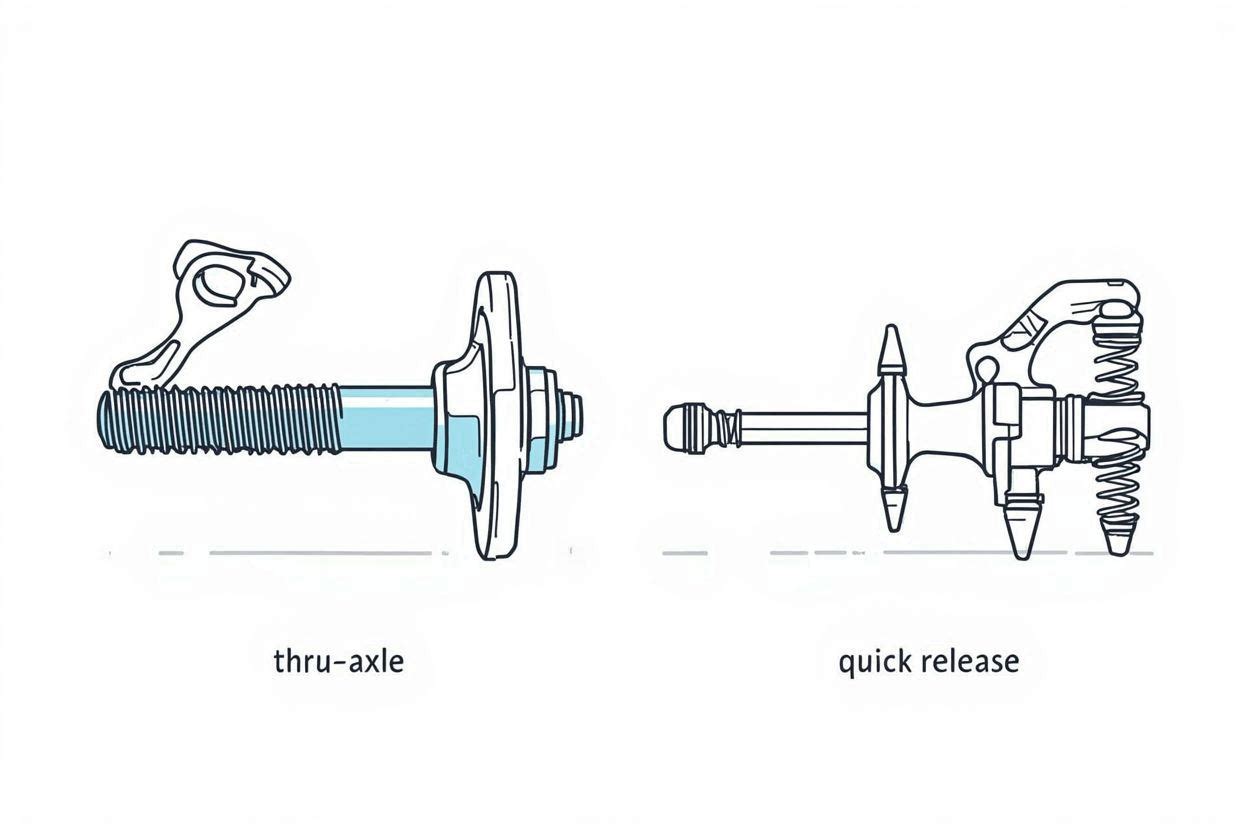
Older road bikes often used quick release skewers. Modern disc-brake road frames usually use thru-axles because they improve wheel alignment, braking consistency, and front-end stiffness.
For a new road bike build, a 12mm thru-axle system is the better long-term standard. It also gives you more options when choosing modern road wheelsets.
7. Seatpost Size and Type
Seatpost design affects comfort, serviceability, and replacement options. A standard round 27.2mm seatpost gives the widest aftermarket choice and can provide more comfort. Aero or proprietary seatposts may look cleaner and faster, but replacement options are more limited.
For beginners, a frame with an easy-to-source seatpost can make future maintenance simpler. For performance or aero builds, proprietary posts can still make sense if the frame design is worth it.
8. Derailleur Hanger and Drivetrain Compatibility
The derailleur hanger protects the frame if the rear derailleur is hit. A replaceable hanger is important because it is easier and cheaper to replace a hanger than repair a frame.
Also check whether the frame supports your planned drivetrain, such as mechanical shifting, electronic shifting, 11-speed, 12-speed, or future upgrades. If UDH is available on a frame, it can improve replacement convenience and future drivetrain compatibility.
9. Internal Cable Routing
Internal cable routing gives a cleaner look and can improve aerodynamic appearance. Fully internal routing through the headset is common on modern carbon road frames, but it can make maintenance more complex.
For a first build, think about your maintenance comfort level. If you want a clean modern bike and plan to use professional assembly, full internal routing is fine. If you want the easiest home maintenance, simpler routing may be more beginner-friendly.
10. Budget and Upgrade Path
The frame is the foundation of the bike. Wheels, drivetrain, saddle, cockpit, and tires can be upgraded later, but frame size, geometry, and major standards are harder to change.
For many beginners, the best strategy is to buy a good frame with modern standards, then choose practical components first and upgrade over time.
| Budget Priority | What to Focus On | Why It Matters |
|---|---|---|
| Frame | Correct size, modern geometry, disc brake, thru-axle, reliable carbon layup | Hardest part to change later |
| Wheels and Tires | Comfort, grip, rolling speed, tire clearance | Big effect on ride feel and speed |
| Groupset | Reliable shifting and suitable gear range | Can be upgraded gradually |
| Cockpit and Saddle | Fit, comfort, reach, riding position | Important for beginner comfort |
Recommended Frame Direction for Beginners
For a first road bike frame, choose a model that is not too aggressive, supports modern components, and gives enough tire clearance for real-world roads. A lightweight carbon frame can be a strong long-term platform if the geometry fits you.
The Mondince FM126 carbon road frame is a lightweight option for riders who want a performance-focused build. Before choosing, compare its geometry with your fit needs and riding style.
Beginner Road Frame Checklist
| Check Item | Recommended Direction |
|---|---|
| Frame size | Choose by height, inseam, reach, stack, and geometry chart |
| Geometry | Endurance or balanced geometry is usually easier for beginners |
| Brake type | Disc brake frame for modern road builds |
| Axle | 12mm thru-axle for better modern wheel compatibility |
| Tire clearance | 28-32mm is useful for comfort and rough pavement |
| Bottom bracket | Common serviceable standard such as BSA or T47 |
| Cable routing | Choose based on appearance vs maintenance preference |
Frequently Asked Questions
Should I buy a complete bike or build from a frame?
A complete bike is easier for beginners because it is ready to ride. Building from a frame gives more control over components, fit, wheels, and budget, but it requires more planning. If you want a long-term upgrade platform, starting from a good frame can make sense.
What size road bike frame should I choose?
Start with height and inseam, then compare reach and stack. Do not choose only by seat tube length. Use the bike frame size calculator as a starting point and check the specific frame geometry before ordering.
Is carbon fiber too advanced for a beginner?
No. Carbon fiber can be a good choice for beginners if the frame fits well and matches the riding style. The main thing is to avoid choosing a frame that is too aggressive or difficult to maintain for your needs.
Conclusion
Choosing your first road bike frame does not need to be overwhelming. Focus on frame size, geometry, material, tire clearance, brake type, axle standard, bottom bracket, and future upgrade path.
A good frame gives you a reliable foundation for years of riding and upgrades. Start by comparing Mondince carbon road bike frames, check sizing with the frame size calculator, or contact Mondince for help choosing the right frame.