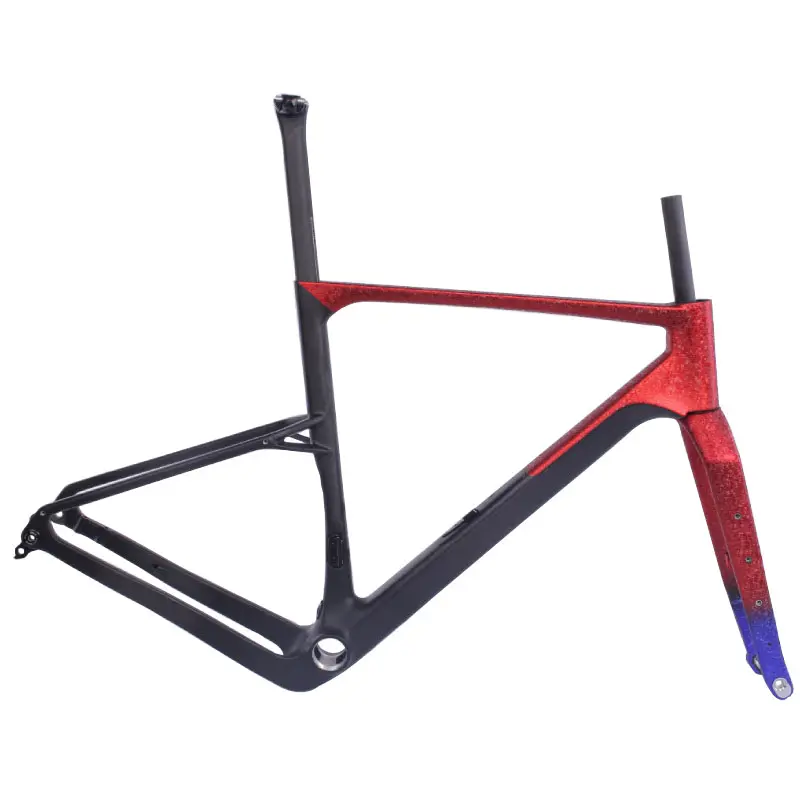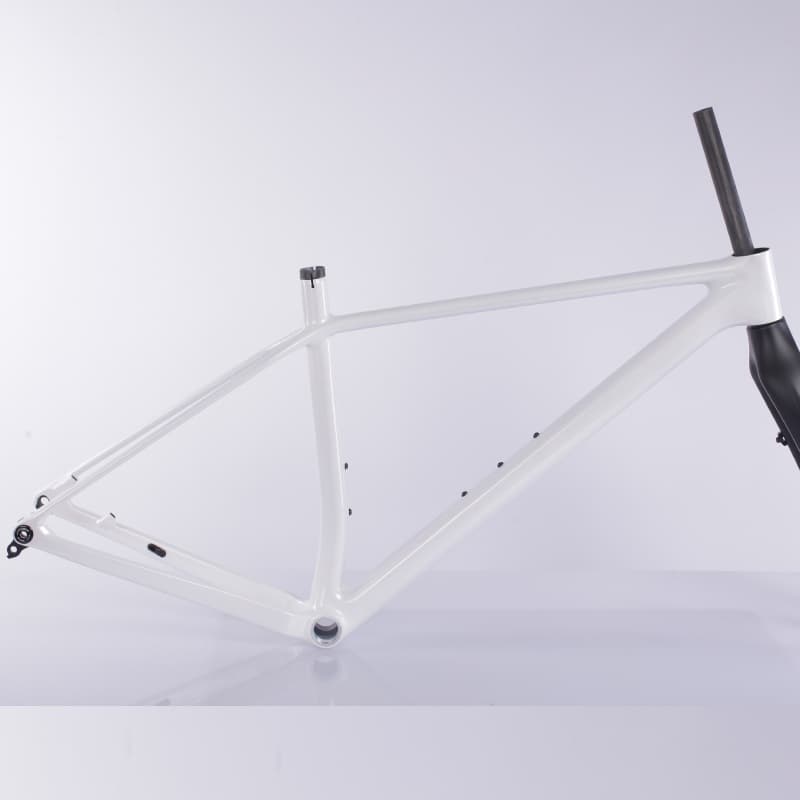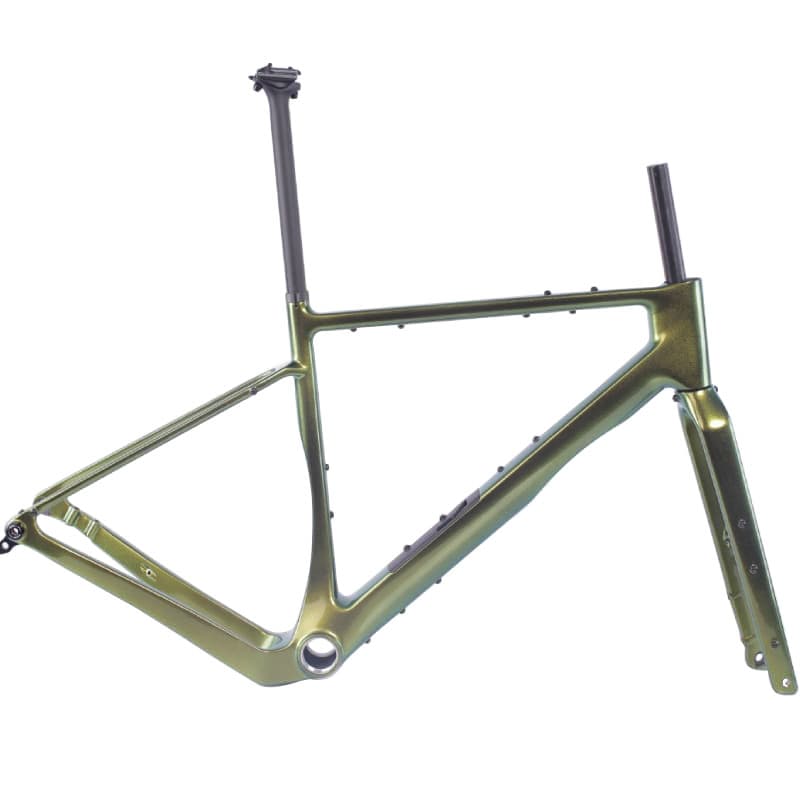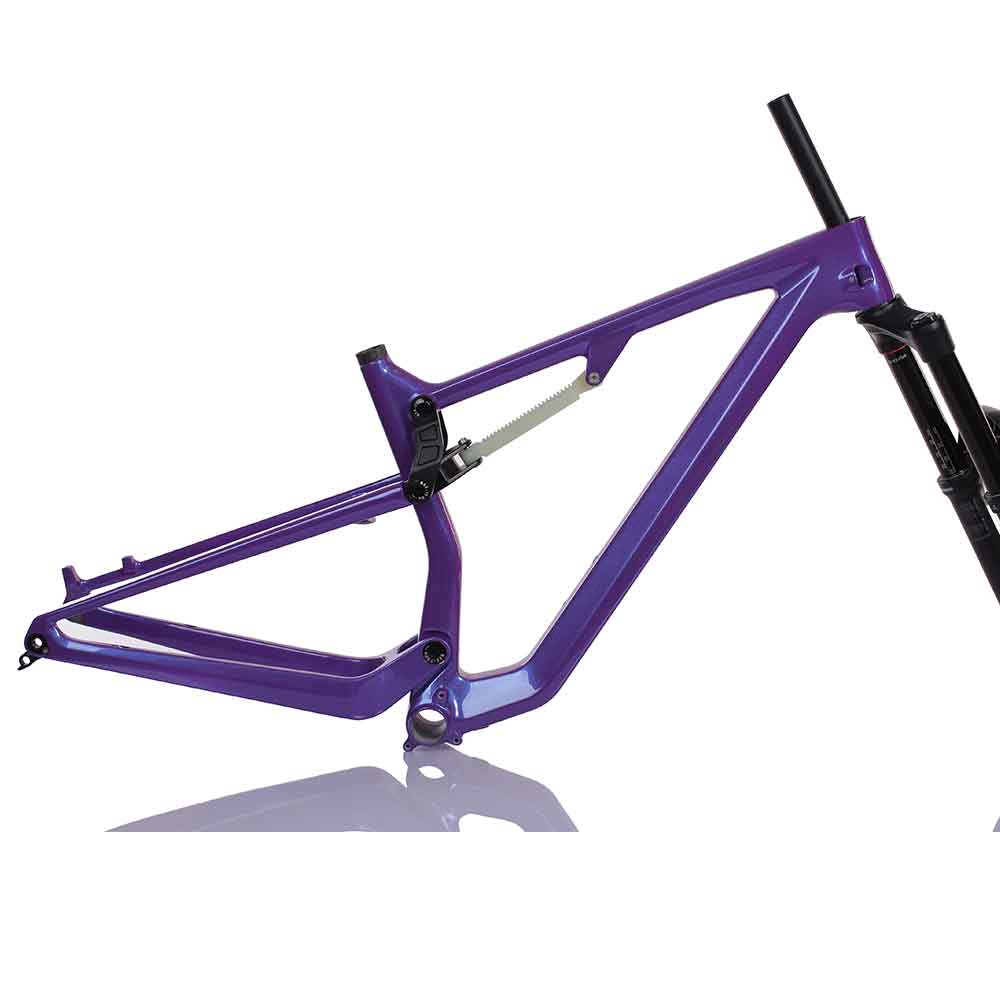

Wet carbon and dry carbon are two common terms used when people compare carbon fiber parts. For carbon bike frames, the difference is not only about appearance. It affects resin control, frame weight, strength consistency, surface finish, production cost and long-term durability.
In this guide, we explain wet carbon vs dry carbon from a bike frame manufacturing perspective, so you can better understand what matters when choosing a carbon gravel bike frame, road bike frame or OEM carbon frame project.
What Is Wet Carbon?
Wet carbon, also called wet layup carbon, is made by placing dry carbon fiber fabric into a mold and then applying resin manually. The resin wets the carbon layers, bonds the fibers together and cures into a solid composite structure.
This process is flexible and relatively cost-effective. It can be useful for simple shapes, cosmetic carbon parts, prototypes or lower-stress components. However, wet layup depends heavily on operator skill. If too much resin is applied, the part becomes heavier. If the resin is not distributed evenly, the final strength and surface quality may vary from part to part.
What Is Dry Carbon?
Dry carbon usually refers to prepreg carbon fiber. In this process, the carbon fiber fabric is pre-impregnated with a controlled amount of resin before it is placed into the mold. The material is then cured under controlled heat and pressure.
For high-performance carbon bike frames, this process is generally preferred because the resin content, fiber direction and curing process can be controlled more accurately. Better control helps reduce unnecessary resin, improve strength-to-weight ratio and create a more consistent frame structure.
Wet Carbon vs Dry Carbon: Key Differences
| Factor | Wet Carbon | Dry Carbon / Prepreg Carbon |
|---|---|---|
| Resin Control | Resin is applied manually, so consistency depends on operator skill. | Resin content is pre-controlled for more consistent layup quality. |
| Weight | Often heavier because excess resin is easier to add during layup. | Usually lighter because the fiber-to-resin ratio is better controlled. |
| Strength Consistency | Can vary if resin distribution, pressure or curing conditions are inconsistent. | More predictable when cured under controlled heat and pressure. |
| Surface Finish | May have a less uniform finish depending on mold quality and hand layup. | Usually delivers a cleaner and more consistent finish. |
| Production Cost | Lower process cost and easier setup for simple parts. | Higher material and process cost, but better performance control. |
| Bike Frame Use | More suitable for cosmetic parts, simple components or low-stress applications. | Better suited for performance carbon bike frames where weight, stiffness and durability matter. |
Which Is Better for Carbon Bike Frames?
For performance carbon bike frames, dry carbon or controlled prepreg carbon layup is usually the better choice. A bike frame is not only a decorative carbon part. It must handle pedaling forces, braking loads, road vibration, impact stress and long-term fatigue.
This is especially important for carbon gravel bike frames and carbon road bike frames. Gravel frames need impact resistance, tire clearance, vibration damping and stable handling over rough terrain. Road frames need low weight, stiffness and efficient power transfer. In both cases, consistent carbon layup matters more than simply using the word “carbon.”
For material grade comparison, read our T800 vs T1000 carbon fiber bike frame guide. If you want to avoid low-quality or cosmetic carbon products, see our real vs fake carbon fiber guide.
How Wet and Dry Carbon Affect Frame Weight and Strength
In carbon frame manufacturing, resin is necessary because it bonds the carbon fiber layers together. But too much resin adds weight without adding the same level of strength as carbon fiber. This is why resin control is so important.
A well-made carbon bike frame depends on the right balance of fiber direction, resin content, mold pressure and curing control. When these factors are managed correctly, the frame can be light, stiff and durable at the same time.
How Mondince Controls Carbon Frame Quality
Mondince focuses on controlled carbon layup, mold consistency, curing control and post-production inspection for carbon bike frames. Each frame design is built around its intended riding use, including tire clearance, stiffness target, impact resistance and long-term fatigue performance.
For example, a carbon gravel bike frame needs enough clearance for wider tires, stable geometry for mixed terrain and reliable strength around the bottom bracket, head tube, chainstays and mounting points. A carbon road bike frame focuses more on low weight, aerodynamic shaping and efficient power transfer.
Explore our carbon gravel bike frames and carbon road bike frames, or check our certification and testing information.
Final Thoughts
Wet carbon and dry carbon can both be useful depending on the product, cost target and performance requirements. But for high-performance carbon bike frames, dry carbon or controlled prepreg carbon layup gives better control over weight, strength consistency and finish quality.
If you are comparing materials, frame weight, tire clearance or OEM customization options, contact Mondince for a frame recommendation based on your riding style or brand project.