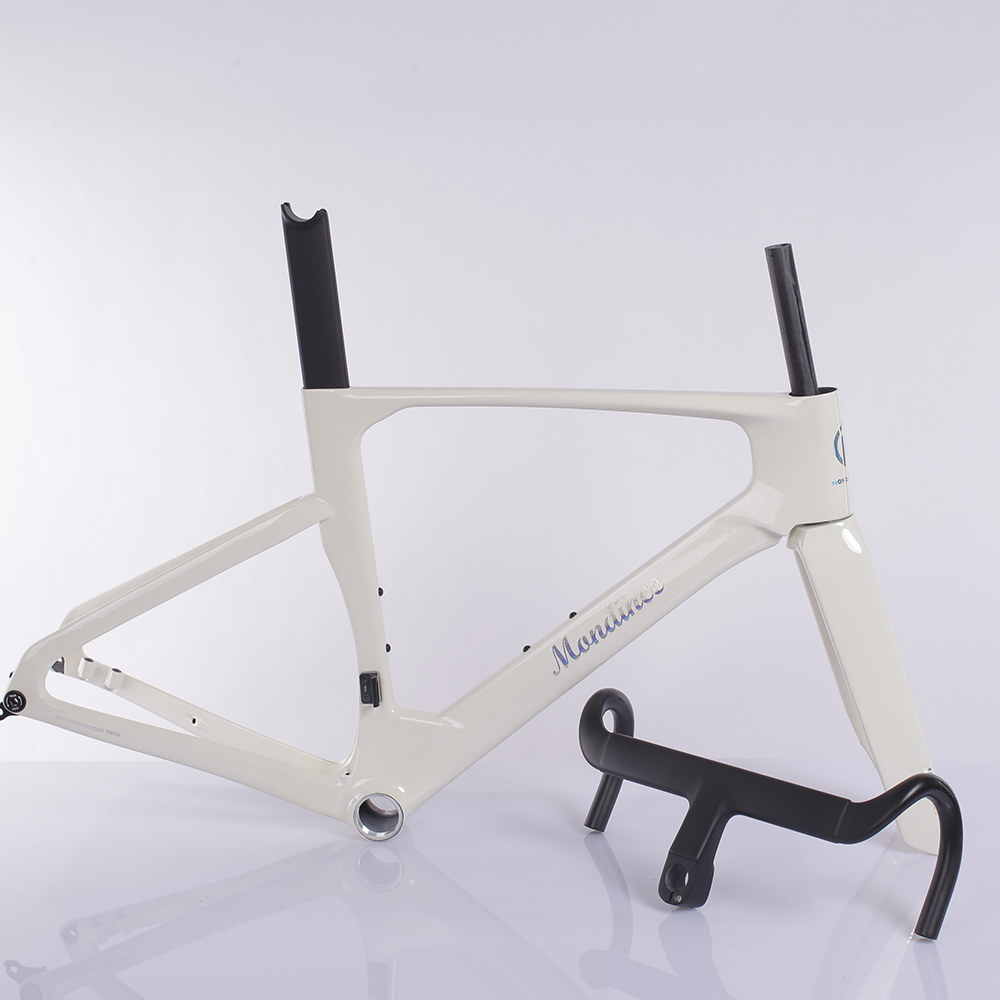
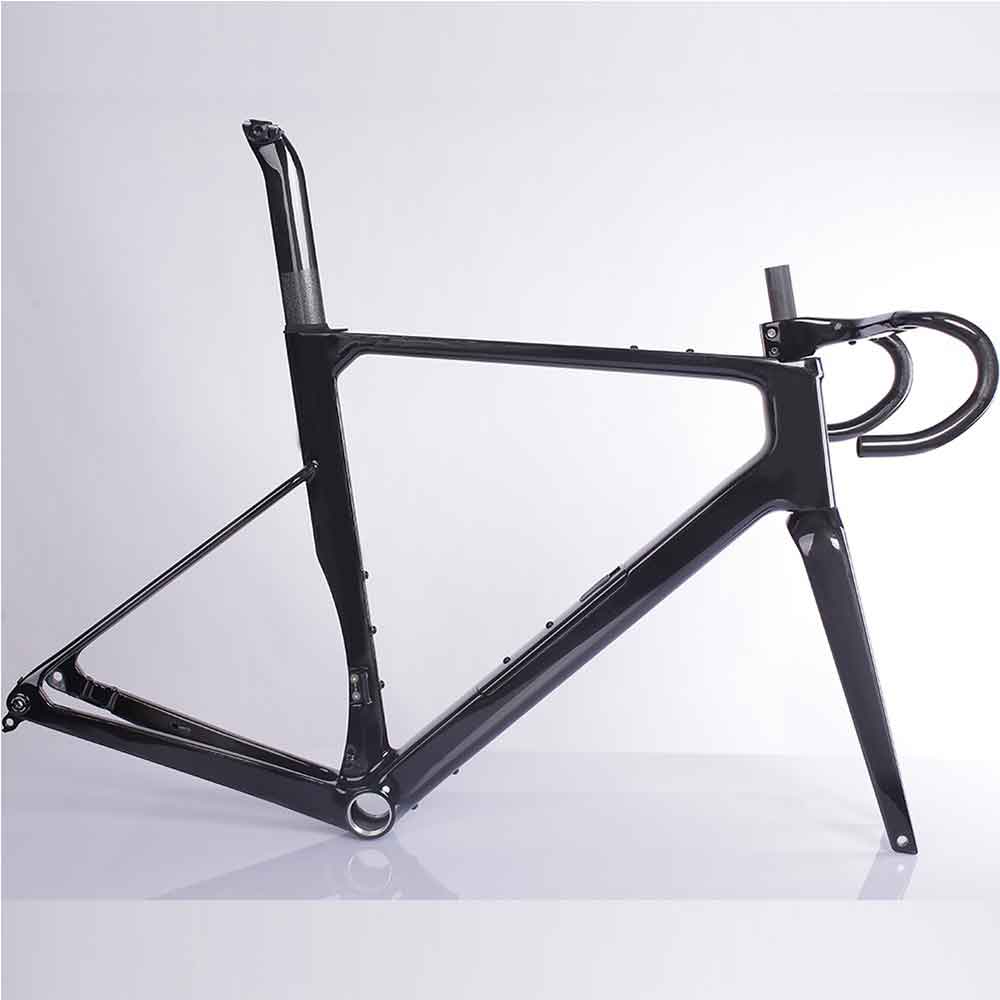
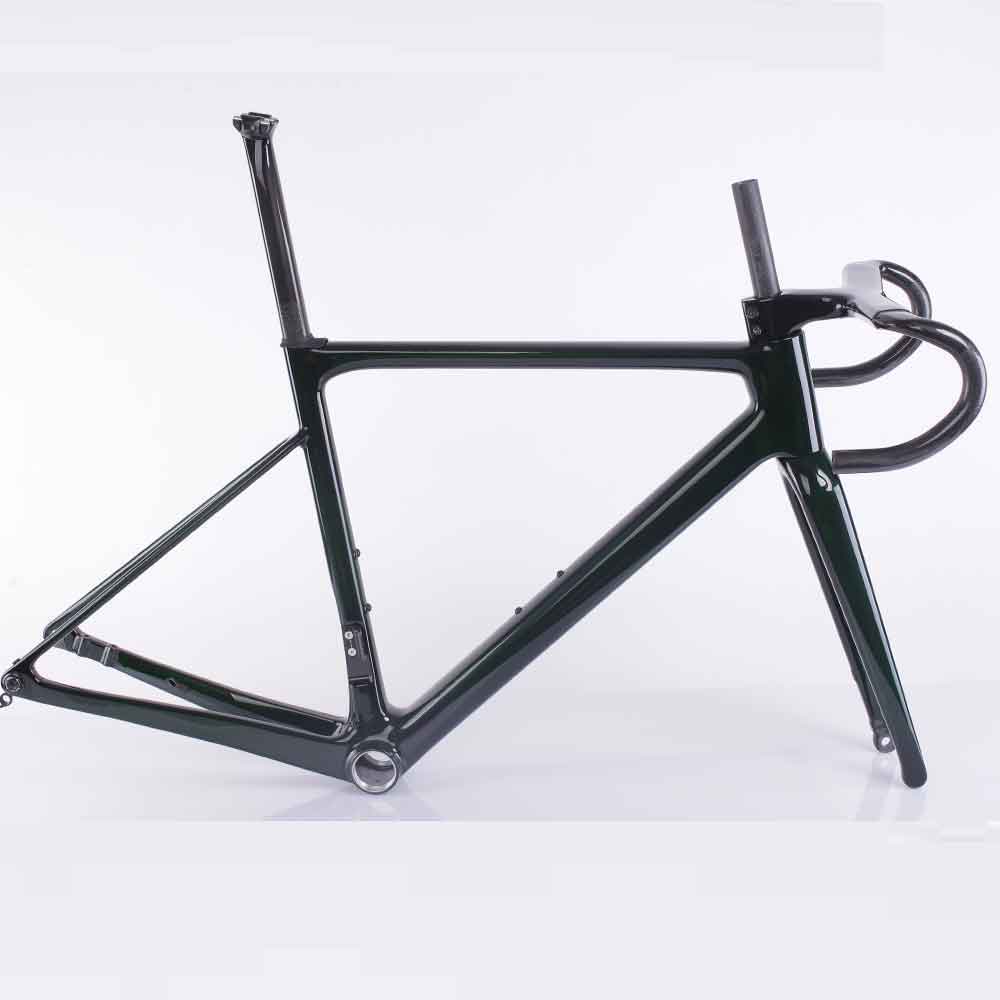
Road Bike Frames – The Complete Guide to Choosing Your Perfect Frame

A well-chosen road bike frameset is the foundation of every great ride. Whether you are chasing race podiums, tackling long-distance gran fondos, or building a custom bike that perfectly matches your style, the frame you choose determines your speed, comfort, and riding experience. This guide covers everything you need to know about carbon fiber road bike frames—from materials and geometry to tire clearance and custom options——so you can make an informed decision.

Why Choose a Carbon Fiber Road Bike Frame?

Carbon fiber road bike frames are the gold standard for performance—light enough for climbing, stiff enough for sprinting, and comfortable enough for long days in the saddle. While aluminum, steel, and titanium have their merits, the engineering possibilities of carbon have made it the top choice for road cyclists at every level.

The key advantages of a high-quality carbon bike frame include:

  • Weight savings: A premium carbon frame weighs 720–950 g (size medium). By comparison, aluminum frames weigh 1,100–1,500 g – saving 200–500 g reduces total bike weight by roughly 5–10%. That difference is especially noticeable when accelerating or climbing out of the saddle.
  • Vibration damping: Carbon naturally absorbs road chatter, reducing fatigue on long rides. Unlike aluminum, which transmits high‑frequency vibrations directly to the rider, carbon can be engineered to flex in specific areas (seat stays, fork) while remaining stiff elsewhere.
  • Aerodynamic shaping: Carbon fiber can be molded into complex airfoil tube shapes (truncated Kamm tail, NACA profiles) that reduce wind resistance. An aero frame can save you 15–20 watts at 30 km/h compared to a traditional round‑tube frame – enough to maintain the same speed with significantly less effort.
  • Stiffness customization: Engineers can lay carbon fibers in specific orientations–longitudinal fibers for stiffness under pedaling, offset fibers for compliance, and hooped layers for impact resistance. The result is a bottom bracket that stays rigid when you sprint, while the rear triangle and fork flex just enough to keep you comfortable.
  • Infinite fatigue life: Unlike aluminum, which has a finite fatigue life (typically 10–15 years), carbon has no fatigue limit when properly designed and kept free from severe impacts. It can last indefinitely.

Every Mondince carbon frame is independently tested to 1.3 Times ISO 4210 standards. Third‑party test reports are available upon request – a level of transparency that frames many times more expensive do not provide.

Road Frame Geometry – Aggressive vs Endurance Explained

Road frame geometry determines how a bike handles, how aggressive your riding position is, and how comfortable you‘ll be over long distances. Two primary categories dominate the road cycling world:

  • Race/Aero Geometry – Characterized by a lower stack (shorter head tube) and longer reach, positioning the rider in a forward‑leaning, aerodynamic posture. This maximizes power transfer and reduces drag, ideal for competitive racing, fast group rides, and time trials.
  • Endurance Geometry – Offers a taller stack and shorter reach, creating a more upright and relaxed riding position. This reduces strain on the lower back and neck, perfect for gran fondos, sportives, and long‑distance touring where comfort matters more than absolute speed.

Why does “stack” and “reach” matter more than seat tube length? Two frames marked “54 cm” can feel completely different because of stack and reach. Stack is the vertical distance from bottom bracket to head tube top; reach is the horizontal distance. A frame with high stack and short reach feels upright and stable. A frame with low stack and long reach feels aggressive and race‑oriented. This is why most modern size charts use stack and reach as the primary metrics.

Mondince offers both race and endurance platforms (see product series below), giving you the flexibility to choose based on your riding style – not a one‑size‑fits‑all approach.

Road Bike Size Chart – How to Find Your Perfect Fit

Proper sizing is critical for comfort and injury prevention. Use this general size chart as a starting point. For the most accurate fit, measure your inseam (see step‑by‑step instructions below), then fine‑tune with stem length and handlebar reach.

Rider Height Inseam (cm) Frame Size (cm) Typical Label
152–160 cm (5'0"–5'3") 66–71 cm 44–48 cm XXS–XS
160–168 cm (5'3"–5'6") 71–76 cm 48–52 cm XS–S
168–175 cm (5'6"–5'9") 76–81 cm 52–55 cm S–M
175–183 cm (5'9"–6'0") 81–86 cm 55–58 cm M–L
183–190 cm (6'0"–6'3") 86–91 cm 58–61 cm L–XL
190+ cm (6'3"+) 91+ cm 61+ cm XL–XXL

How to Measure Your Inseam Properly: Stand barefoot against a wall. Place a hardcover book between your legs, spine upward, pressing it firmly against your crotch as if sitting on a saddle. Mark the wall at the top of the book’s spine, then measure from the floor to that mark. Repeat twice and take the average. For deeper insights into bike sizing, refer to our complete bike size guide for road frames.

If you are between sizes: Choose the smaller size for a more agile, responsive feel (race fit). Choose the larger size for more stability and a relaxed riding position (endurance fit). A shorter or longer stem can fine‑tune the fit once you have chosen your frame size.

Mondince Road Frames – Compare the Range

Mondince offers a complete lineup of premium carbon road bike frames, each optimized for different riding styles and budgets. All frames feature premium Toray carbon, T47 threaded bottom brackets (silent, creak‑free, easy to service), fully internal cable routing (clean cockpit, aero benefit), Universal Derailleur Hangers (UDH) for future‑proof drivetrain compatibility, disc brake mounts, and are 1.3 Times ISO 4210 tested.

Below is a detailed comparison of our most popular road frames, designed to help you quickly identify the frame that best matches your riding style and goals.

Model Type Weight (Size S) Tire Clearance Key Feature Best For
FM126 Aero Race ~760 g 32 mm Toray T1100, EPS mold, full aero Racing, climbing, fast group rides
FM106 Aggressive Aero ~950 g 30 mm Compact wheelbase, instant response Crit racing, aggressive fit, fast rolling
FM096 Race Aero ~840 g 32 mm T1100/T800 blend, UDH & T47 High‑performance road, value race build
FM086 All‑Race ~840 g 32 mm T47, UDH, 27.2 seatpost, full internal cable Versatile road, responsive handling
FM076 Aero Road ~920 g 32 mm Full aero shaping, all‑internal routing Aero‑focused, budget race performance

🚀 FM126 – Ultralight Aero Race Frame (Toray T1100)

The FM126 is Mondince’s flagship carbon aero road bike frame. Weighing just 760 g (size S) – significantly lighter than many competitors’ aero frames – it uses Toray T800/T1100 carbon with advanced EPS monocoque molding. The result is a frame that is exceptionally stiff where power is applied (bottom bracket and head tube) but compliant enough for all‑day comfort.

  • Weight: 760 g (S) / 840 g (M) / 920 g (L) – painted frame with hardware
  • Material: Toray T800 + T1100 high‑modulus carbon
  • BB Type: T47 threaded (creak‑free, serviceable)
  • Tire clearance: 32 mm – light gravel capable
  • Best for: Racing, climbing, aggressive group rides, fast rolling

👉 Explore FM126 →

🏁 FM106 – Aggressive All‑Round Aero Road Frame

The FM106 takes a more aggressive geometry than the FM126, with a lower stack, more compact wheelbase, and quicker steering response. Forum reviews have described it as “the most aggressive road bike in Mondince’s lineup.”

  • Weight: Approx. 950 g (size M)
  • Material: Toray T800 + T1000 carbon
  • BB Type: T47
  • Tire clearance: 30 mm
  • Best for: Fast group rides, crit racing, aggressive fit

👉 Explore FM106 →

⚡ FM096 – Lightweight Race Aero Frame

The FM096 is a race‑focused aero frame that balances weight (<840 g size S), stiffness, and advanced features at a competitive price. The T47 bottom bracket makes internal cable routing straightforward and creak‑free, while the UDH hanger future‑proofs your drivetrain.

  • Weight: Approx. 840 g (size S)
  • Material: Toray T1100/T800 blend
  • BB Type: T47
  • Tire clearance: 32 mm
  • Best for: High‑performance road, budget race builds, value chasing

👉 Explore FM096 →

🚴 FM086 – All‑Race Versatile Road Frame

The FM086 is designed for riders who want a responsive, well‑balanced road frame without the extreme aero specialization. The 27.2 mm round seatpost adds a layer of compliance not found in thicker‑post designs, and the T47 BB keeps the build clean and silent.

  • Weight: Approx. 840 g (size S)
  • Material: Toray T800/T1100 carbon
  • BB Type: T47
  • Tire clearance: 32 mm
  • Best for: Versatile road, responsive handling, all‑race performance

👉 Explore FM086 →

🏁 FM076 – Entry Aero Road Frame

The FM076 introduces aero road performance at a budget‑conscious price. Fully internal cable routing, T47 bottom bracket, and disc brake mounts offer a modern race experience without the flagship price tag.

  • Weight: Approx. 920 g (size S)
  • Material: Toray T800/T1000 carbon
  • BB Type: T47
  • Tire clearance: 32 mm
  • Best for: Aero‑focused builds, budget‑conscious racers, entry race performance

👉 Explore FM076 →

Aero vs All‑Round vs Endurance – Which Is Right for You?

The type of road frame you choose should match your primary riding style and goals. Here is a simple decision framework to help you decide:

  • Aero Frame (FM126, FM076, FM096): Designed for speed on flat and rolling terrain. The aerodynamic tube shapes (truncated NACA profiles) cut wind resistance significantly, helping you maintain higher speeds with less effort. On a typical 80‑km group ride, an aero frame saves roughly 15–20 watts compared to a traditional round‑tube frame – enough to either go faster or feel noticeably less tired at the end. Aero frames are heavier than pure climbing bikes but offer the biggest advantage when speed matters more than weight.
  • All‑Round Race Frame (FM106, FM086): A balanced approach. These frames offer moderate aero features, low weight, and responsive handling. They are versatile enough for climbing, sprinting, and group riding – making them the best choice for riders who want one bike to handle everything.
  • Endurance Frame (custom geometry available): Emphasizes comfort over outright speed. Featuring a taller stack and shorter reach, endurance frames reduce strain on the back and neck during long days. They also offer wider tire clearance (32–35 mm) for mixed‑surface riding. Perfect for sportives, gran fondos, and long‑distance touring.

How to Build a Quality Road Bike for Under $3,000 (Start with the FM126 Frame)

Building your own bike is one of the best ways to get exceptional performance without spending a fortune. The secret is not buying a cheap complete bike – it‘s investing in a quality carbon frame and carefully selecting components to stay on budget. For detailed budget breakdowns and sample builds, check our dedicated step‑by‑step guide: How to Build a Quality Road Bike for Under $3000. As a quick summary, for a 7.7 kg build with hydraulic disc brakes and carbon wheels, you can expect a component budget around $1,600–$2,100, leaving plenty of room for the frameset.

Custom Paint & Geometry – Make It Your Own

Customization is where Mondince stands apart. For OEM partners, bike brands, and individual builders, we offer full flexibility:

  • Any Pantone/RAL color – Choose from matte, gloss, satin, metallic, or chameleon (color‑shift) finishes. Custom logos can be applied via water‑transfer decals under the clear coat for a seamless, durable finish – no peeling or scratching.
  • Full custom geometry – For brand partners and riders with unique proportions, we can build a frame tailored precisely to your body and riding style.
  • Low MOQ from 1 set – Sample frames available for private customers. Custom paint MOQ: 30 sets. OEM wholesale pricing available for bulk orders.

👉 Request custom geometry or a quote →

Frequently Asked Questions About Road Bike Frames

What is the difference between an aero road frame and a lightweight climbing frame?

Aero frames prioritize aerodynamics (tube shapes that reduce drag) and often weigh slightly more (850–950 g for a complete frameset). Lightweight climbing frames prioritize low weight (sub‑800 g) and can be slightly less aerodynamic. Many riders choose aero frames for flat/rolling terrain and lightweight frames for hilly/mountainous routes. Modern aero frames have become much lighter – the FM126 balances both worlds. For a detailed guide on choosing the right aero frame, refer to Choosing the Best Aero Road Bike Frame.

What tire clearance do I really need on a road bike frame?

For pure road riding, 28–30 mm tires offer the ideal balance of speed, comfort, and puncture resistance. A frame that clears 32 mm gives you the flexibility to run slightly wider tires for light gravel or rough pavement – many riders find this versatility valuable without sacrificing race performance. All Mondince road frames offer a minimum of 32 mm clearance.

Are carbon frames safe and durable for daily use?

Yes. Properly manufactured carbon frames are incredibly durable. Mondince tests every frame to 1.3 Times ISO 4210 loads, providing a significant safety margin above industry standards. Third‑party impact and fatigue test reports are available. As with any frame material, avoid sharp, high‑force impacts – but for normal road riding, carbon is both safe and long‑lasting.

Is disc brake compatibility necessary on road frames?

Disc brakes offer better stopping power, especially in wet conditions, more consistent modulation, and no rim wear. All current Mondince road frames are disc‑brake compatible. Rim brake frames are no longer in production due to the industry‑wide shift toward disc standards.

Does Mondince offer OEM or custom frame production for brands?

Yes. As a trusted OEM/ODM partner since 2007, Mondince offers complete customization services including any Pantone/YS color matching, custom geometry development, logo application, and packaging solutions. Low MOQs start at 20 sets, with a stable monthly production capacity. Contact our OEM sales team for detailed quotes and to discuss your brand‘s specific requirements.

Ready to Build Your Dream Road Bike?

Whether you are a racer chasing podiums, a sportive rider seeking comfort, or a brand looking for a reliable OEM partner, Mondince Cycle has a carbon road bike frame that fits your needs. Every frame is crafted from premium Toray carbon, tested to 1.3 Times ISO 4210 standards, and fully customizable – from paint color to custom geometry.

👉 Explore all carbon road frames →
👉 Request a quote or custom geometry →

Related Articles

Road Bike Frame Materials: Carbon vs Aluminum vs Steel vs Titanium
Best Upgrades for Your Road Bike: Where to Spend Money First
How to Build a Custom Road Bike on a Budget (Frame First Strategy)
Road Bike Maintenance Basics: A Checklist for Beginners
Why Is Carbon Fiber Used for High-Performance Road Bikes?
2026 Carbon Road Frame Buying Guide: Aero vs. Lightweight vs. Endurance
How to Choose a Road Bike: A 2026 Beginner's Guide
Road Bike Frame Size Guide: How to Pick the Correct Size for Your Height and Inseam
How to Build a High‑Performance Road Bike Under $3000 (Frame‑First Approach)
How to Measure Bike Frame Size: A Step‑by‑Step Guide for Road, Gravel & MTB
Choosing the Best Lightweight Road Bike Frame
Choosing the Best Carbon Aero Road Bike

Send Inquiry