
Not sure which carbon road frame fits your riding? We break down the three main categories.
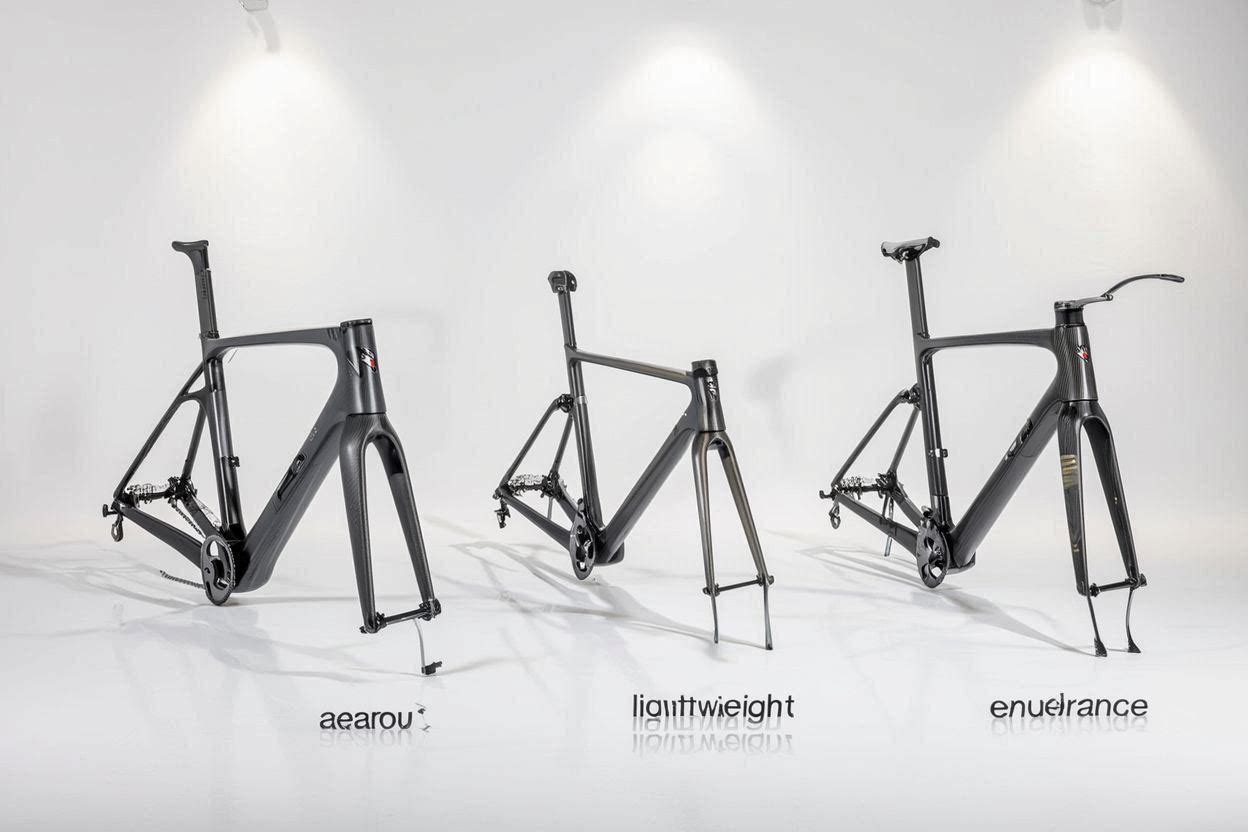
So you’ve decided on a carbon road bike frame. Great choice. But now you face another question: should you buy an aero frame, a lightweight climbing frame, or an endurance frame? Each category has distinct characteristics. In this guide, we’ll explain the pros, cons, and ideal use cases, and show you which Mondince models belong to each family. By the end, you’ll know exactly what to look for.
1. Aero Road Frames – Built for Speed on Flat Terrain
Aero frames feature deep, airfoil‑shaped tubes (down tube, seat tube, fork) that reduce drag. They are slightly heavier (typically 850‑950g) but save you watts at higher speeds. If you ride fast group rides, race crits, or do time trials, an aero frame is your weapon.
- Pros: Fastest on flat roads; stiff for sprinting; modern aggressive looks.
- Cons: Heavier; can feel less responsive on steep climbs; crosswind sensitivity.
- Best for: Races, flat routes, strong riders.
- Mondince model: FM126 Aero Race Frame – 760g (ultra‑light for aero), T1100 carbon, fully internal routing.
2. Lightweight (Climbing) Frames – Up the Hills Faster
Lightweight frames prioritize low weight and stiffness. They have thinner, rounder tubes. Weights can drop below 700g for pro‑level frames. These frames excel on climbs and accelerations.
- Pros: Best climbing performance; quick acceleration; lively feel.
- Cons: Less aerodynamic; can feel “noodly” for heavy sprinters.
- Best for: Mountainous routes, weight‑weenies, climbers.
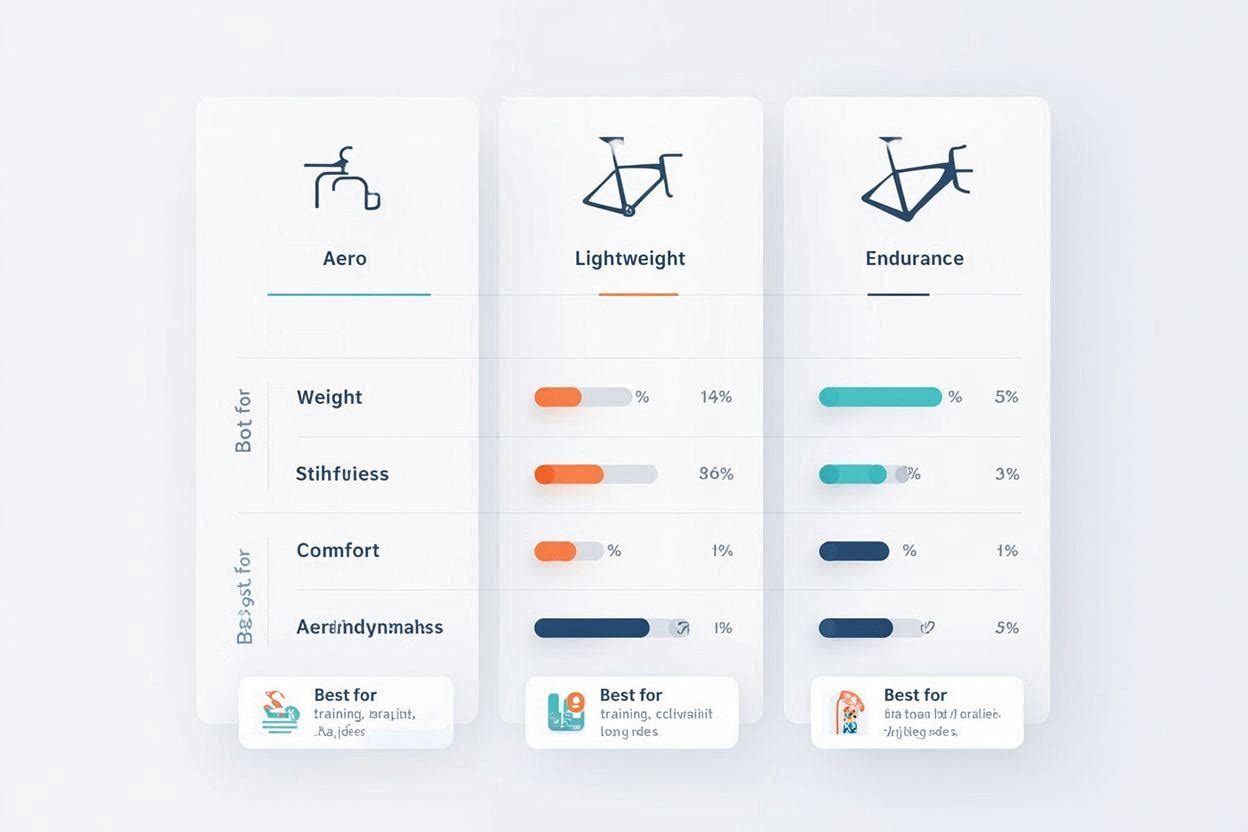
3. Endurance Frames – Comfort for Long Days
Endurance frames have taller head tubes, longer wheelbases, and more relaxed geometry. They often feature vibration‑damping technologies (e.g., thinner seat stays, 27.2mm round seatposts). They’re not slow, but comfort is the priority.
- Pros: Very comfortable; stable handling; wide tire clearance (32‑35mm).
- Cons: Heavier; less aero; less “racey” feel.
- Best for: Gran fondos, sportives, all‑day touring, older riders.
Comparison at a Glance
| Feature | Aero (FM126) | Lightweight | Endurance |
|---|---|---|---|
| Weight (M) | 760g | 840g | ~900‑1000g (custom) |
| Stiffness | Very high | High | Moderate |
| Aerodynamics | Excellent | Good | Average |
| Comfort | Moderate | Good | Excellent |
| Tire clearance | 32mm | 32mm | 32‑35mm |
| Best for | Racing, flats | Climbing, all‑round | Long rides, rough roads |
Which One Should You Choose?
- Choose aero (FM126) if you race or ride fast group rides and want the best straight‑line speed.
- Choose lightweight if you’re an all‑around rider who climbs often and wants a responsive, fun bike.
- Choose endurance if you prioritise comfort over outright speed and ride 6+ hours frequently.
Many riders are best served by a “lightweight all‑rounder”
Can You Have Two in One?
Yes. Modern carbon frames blur the lines. The FM126 is an aero frame that weighs only 760g – almost as light as dedicated climbers. So you don’t have to sacrifice too much.
Conclusion
Whether you need aero wheels, lightweight, or endurance, Mondince has a carbon road bike frame for you. Start with your typical riding terrain, then choose the category that matches. And remember: the frame is a long‑term investment – choose wisely.
Ready to upgrade? Browse all carbon road frames or request custom geometry. For more help, read our first road bike frame guide.