
Carbon vs Aluminum Bike Frames – Which One Is Right for You?
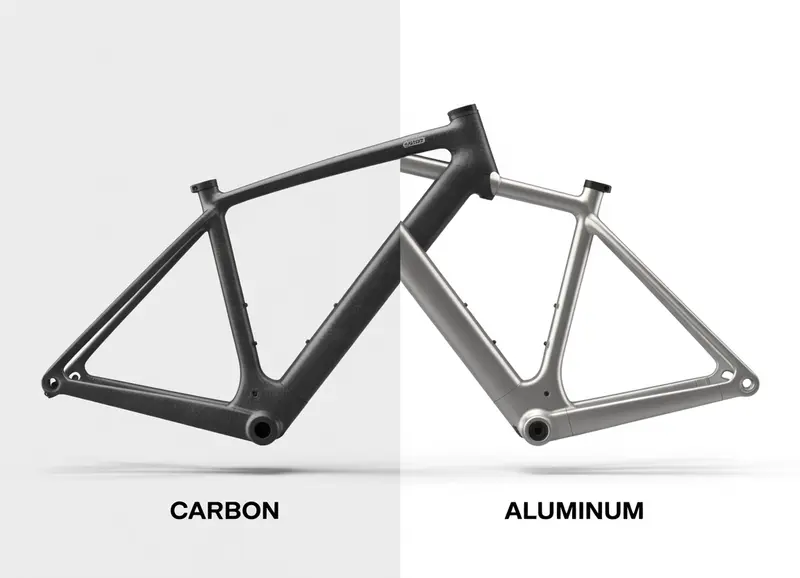
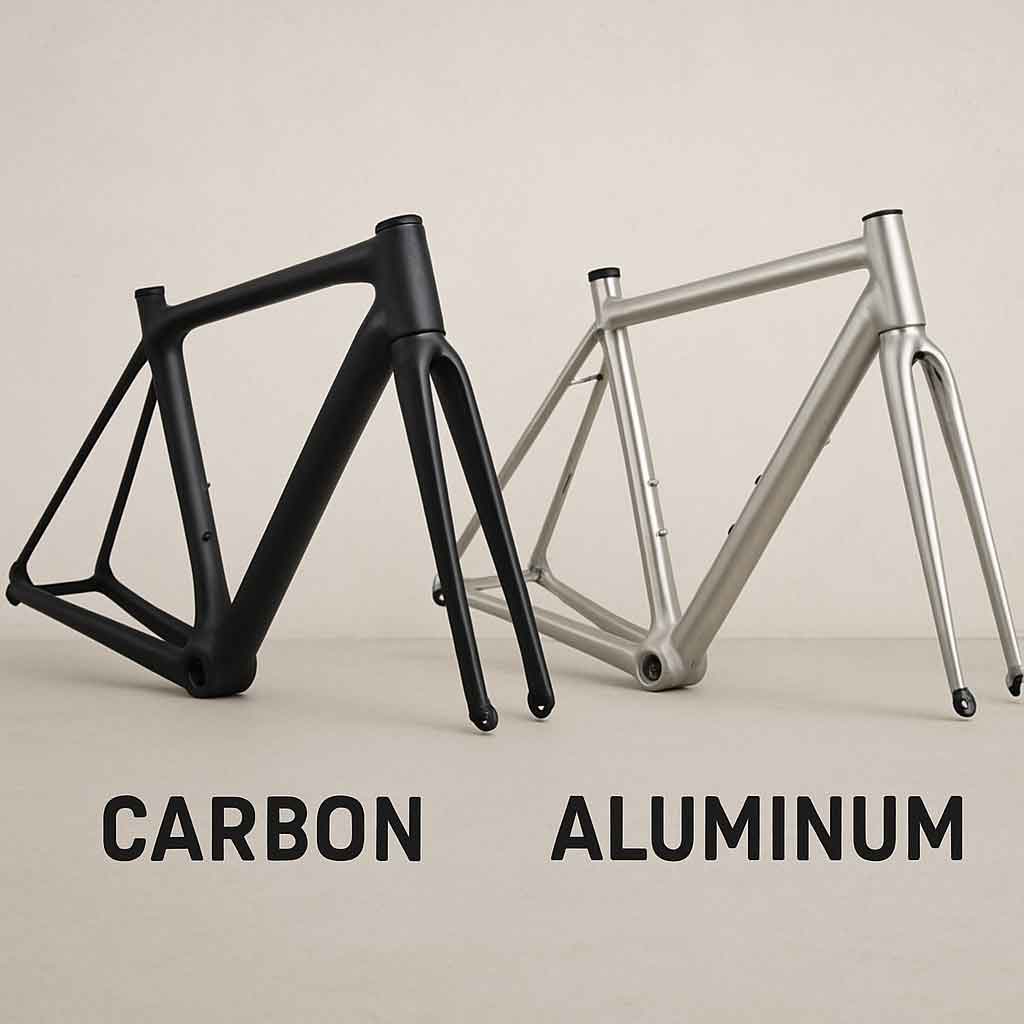
Choosing between a carbon vs aluminum bike frame is one of the most important decisions you'll make when buying a bicycle. Carbon fiber offers class‑leading weight savings, vibration damping, and tunable ride characteristics – making it the top choice for performance riders. Aluminum delivers excellent value, stiffness, and durability at a more accessible price point – ideal for budget‑conscious cyclists and commuters. This guide compares both materials across every relevant metric: weight, ride comfort, stiffness, durability, repairability, safety certification, and total cost of ownership. By the end, you'll know exactly which frame material fits your riding style, budget, and long‑term goals.
⚡ Quick Navigation
➡️ Quick Comparison Table | Carbon Advantages
➡️ Aluminum Advantages | Performance & Riding Feel
➡️ Durability & Fatigue Life | Repairability
➡️ Safety Standards & Testing | Toray Carbon vs Aluminum Alloys
➡️ How They're Made | Budget & Total Cost of Ownership
➡️ Which Frame for Your Cycling Needs? | FAQ
Quick Comparison: Carbon vs Aluminum at a Glance
The table below summarizes the key differences between carbon and aluminum frames. Use it as a starting point, then dive into the detailed sections for deeper insights.
| Feature | Carbon Fiber Frame | Aluminum Frame |
|---|---|---|
| Weight | Very light – 700–950 g (typical road frame) | Light – 1,100–1,500 g (20–30% heavier) |
| Ride Comfort | Excellent – natural vibration damping, custom‑tunable | Moderate – can transmit road chatter |
| Stiffness | Very high – directionally tunable | High – uniform but less refined |
| Durability | Excellent under designed loads; no fatigue limit | Good; finite fatigue life (10‑15 years) |
| Impact Resistance | Brittle – sharp impacts may crack the frame | Better – tends to dent rather than crack |
| Repairability | Specialist repair only – $300‑$700+ | Easier and less expensive – weldable |
| Corrosion | None – corrosion‑resistant | Minimal – oxide layer protects |
| Price Range | $800 – $10,000+ | $300 – $2,000 |
| Best For | Performance road, racing, gravel, MTB, bikepacking | Budget builds, commuting, recreational cycling |
Advantages of Carbon Fiber Frames
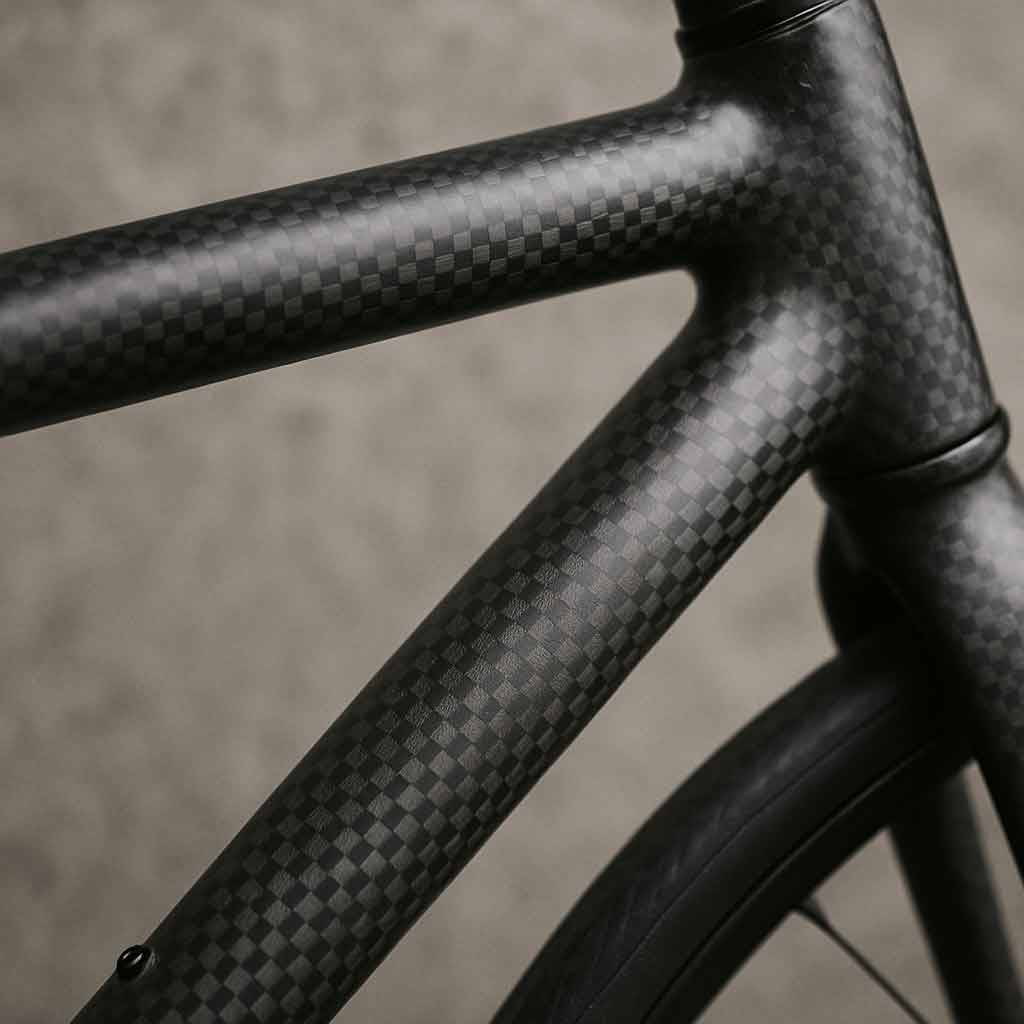
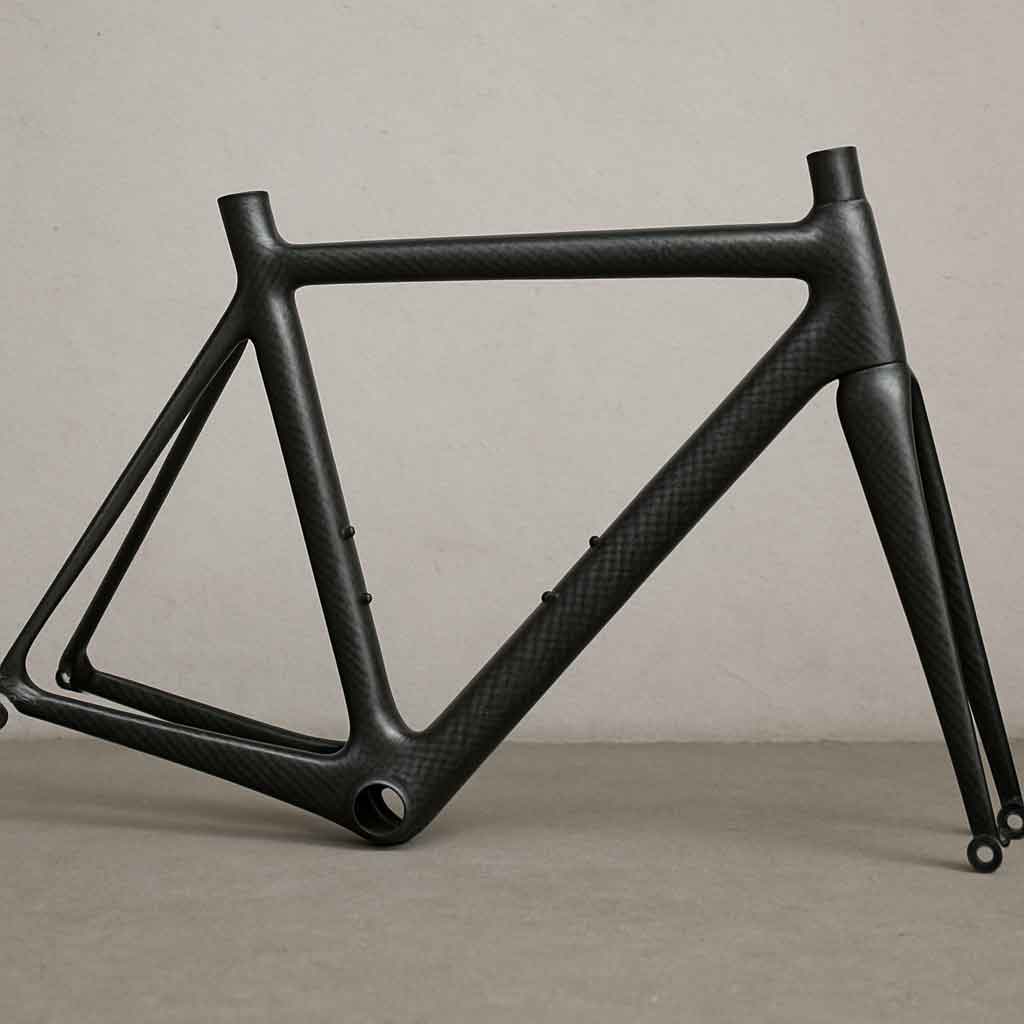
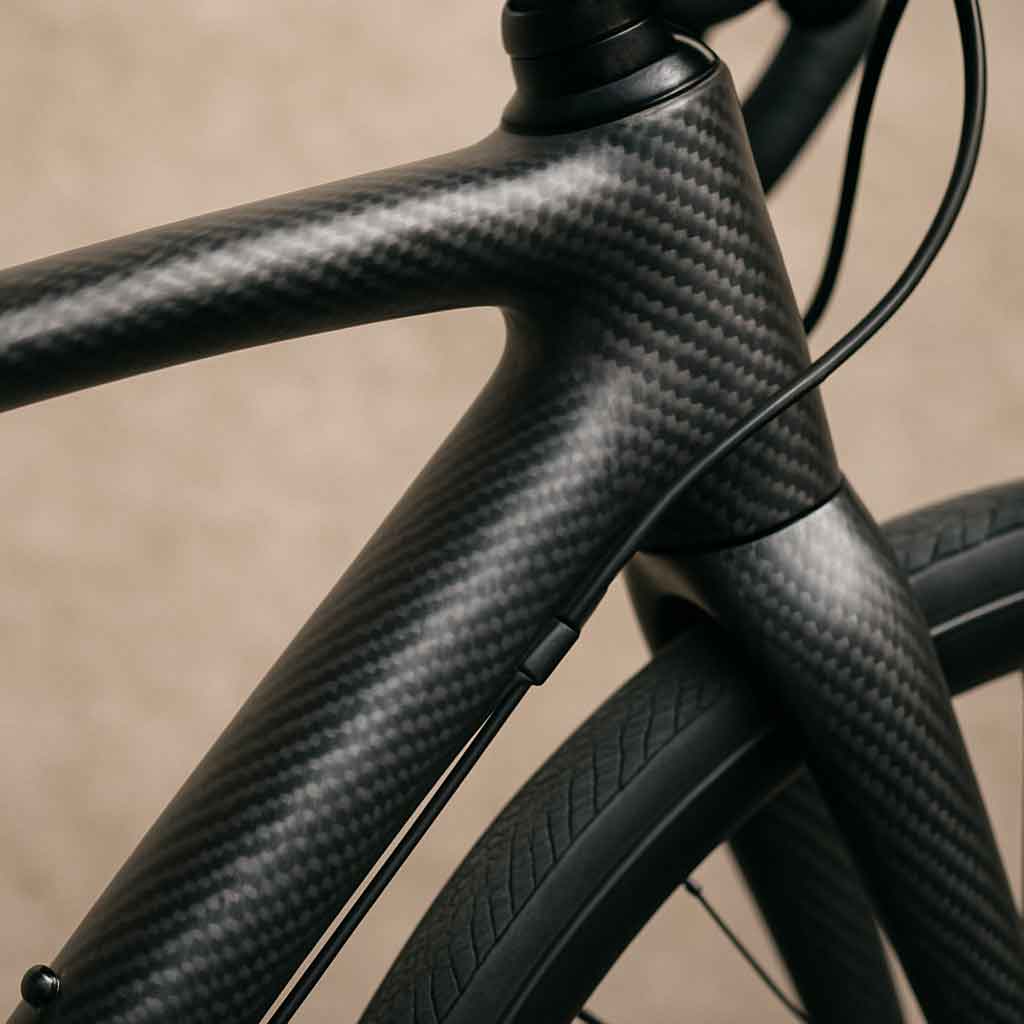
Carbon fiber (CFRP – carbon fiber reinforced polymer) is the material of choice for performance cycling. Its primary advantage is that it can be laid up in nearly any shape, and the stiffness/compliance profile can be tuned in different directions simply by changing the orientation of the fibers. A well‑designed carbon frame can be simultaneously stiff laterally (for efficient power transfer) and compliant vertically (to absorb road vibration). [14†L40-L45]
Unlike metal frames, which have uniform stiffness in all directions, carbon allows engineers to create frames where each tube section has tailored stiffness and compliance. This tunability, combined with carbon's superior vibration damping, creates a ride experience that metal frames simply cannot replicate.
At Mondince Cycle, we craft our frames using premium Toray T800 and T1000 carbon fiber. Our engineers create custom unidirectional (UD) layup schedules for each frame model, strategically aligning fibers to optimize stiffness, compliance, and weight for the frame's intended use. [11†L33-L35]
Carbon Weight Savings
A high‑end carbon fiber road bike frame weighs between 700 and 950 g. For example, Mondince FM126 weighs just 760 g (size S) – significantly lighter than any aluminum frame currently available. Even entry‑level carbon frames weigh between 900 g and 1,100 g – still typically lighter than comparable aluminum. [13†L46-L48] This weight difference is most noticeable when climbing, accelerating, or riding long distances, where conserving energy matters. A carbon frame can save you 200‑500 g compared to an equivalent aluminum frame – reducing total bike weight by roughly 5‑10%.
Vibration Damping
Carbon naturally absorbs high‑frequency vibrations, smoothing out the ride and reducing hand, arm, and upper‑body fatigue on long routes. This natural vibration damping is why so many endurance riders and gravel cyclists prefer carbon over aluminum. [11†L11-L12] Unline aluminum gravel frames that can transmit too much vibration, or steel frames that may be heavier, carbon offers the ideal balance of comfort and performance. [10†L28-L30]
Design Flexibility
Carbon fiber can be molded into complex aerodynamic tube shapes (Kamm tail, truncated airfoils) that are impossible to achieve with metal extrusions. Additionally, carbon allows engineers to tune stiffness and compliance within the same frame – stiff in the bottom bracket for efficient power transfer, compliant in the seat stays for comfort.
Advantages of Aluminum Frames
Aluminum is the most common bike frame material today, offering an excellent weight‑to‑cost ratio. It is significantly lighter than steel, can be formed into complex tube shapes using hydroforming, and is inexpensive to manufacture. Most bikes in the $400‑$1,500 range use aluminum frames. [12†L19-L21]
The two most common aluminum alloys used in bicycle frames are 6061 and 7005. These numbers refer to the additives (chiefly silicon and magnesium) mixed with aluminum to create each alloy, with slightly different properties for each "recipe." [12†L26-L29] For frames where strength is key, 7005 or 6061 is chosen, and the type of heat treatment – designated by suffixes such as T4 (solution heat‑treated, half‑hard) and T6 (higher yield strength after aging) – has a major impact on final physical properties. [6†L8-L10][6†L42-L45]
An aluminum frame that has been properly engineered is light, stiff, and efficient. The ride quality tradeoff is that aluminum is stiffer than steel (and inherently less compliant than carbon), which means it transmits more road vibration to the rider. This is noticeable on long rides or rough roads. Frame makers compensate with tapered tube profiles, butting (varying wall thickness), and geometry adjustments – but aluminum always transmits more vibration than steel or titanium. [13†L29-L32]
Value for Money
Entry‑level aluminum bikes start around $600–$1,000, with mid‑range models reaching $2,000. Comparable carbon fiber bikes begin at $2,000 and can exceed $10,000 for top‑tier race machines. [2†L15-L18] For riders on a budget, aluminum offers the best performance‑to‑dollar ratio.
Impact Resistance
A key advantage of aluminum is how it fails under impact. Aluminum frames tend to dent rather than crack, which means a moderate crash may leave an aluminum frame rideable while a carbon frame might suffer structural damage. This makes aluminum a popular choice for commuter bikes, entry‑level mountain bikes, and bikes that will see daily urban use where crashes or knocks are more likely.
Performance & Riding Feel
Performance should be the most important factor guiding your carbon vs aluminum decision. Here is how the two materials compare on key performance metrics.
Ride feel is the most subjective but also the most important daily factor. A well‑engineered carbon frame can be both stiff in the bottom bracket (efficient power transfer) and compliant in the seat stays (vibration damping). This "tunable" characteristic is carbon's superpower. Aluminum frames are stiffer overall, which translates to efficient power transfer but also more road vibration reaching the rider. On rough pavement or long distances, the difference in comfort is immediately noticeable.
Stiffness works differently in each material. Carbon's stiffness is directional – the frame can be designed to be extremely stiff in the bottom bracket and head tube (where power is applied) while being more compliant in the seat stays and fork (where comfort matters). Aluminum has uniform stiffness in all directions – stiffer than steel but less tunable than carbon.
Acceleration and climbing favor carbon. The lighter weight of a carbon frame translates directly to faster acceleration and easier climbing. Losing 200‑500 g from the frame means you are pushing less mass up every climb. For riders who prioritize climbing performance, carbon is the clear choice.
Handling and cornering come down to frame geometry and stiffness, not material alone. However, carbon's ability to have precisely tuned stiffness zones can contribute to more predictable cornering – stiff in the head tube for steering precision, compliant in the rear for tracking over bumps.
Durability & Fatigue Life
One of the most important differences between carbon and aluminum is how they respond to long‑term stress cycles. This distinction is often misunderstood but critical for long‑term ownership.
Carbon fiber durability: Carbon fiber has no fatigue limit. When properly designed and free from impacts, a carbon frame can theoretically last indefinitely – just as strong at the start of a lap as it is at the end. [1†L11-L14] This contrasts sharply with aluminum frames, which work‑harden and become weaker over time. Carbon's structure stabilizes after its initial use and is more resistant to fatigue failure than earlier experts believed. [1†L6-L9]
Aluminum fatigue life: Aluminum has a finite fatigue life. Every time you ride an aluminum bike, microscopic stress cycles accumulate. Over many years of use, aluminum can develop micro‑cracks that propagate. For most cyclists, aluminum frames last 10‑15 years before fatigue becomes a practical concern – well within typical ownership periods. But for heavy riders, frequent off‑road use, or long‑term ownership, the fatigue limit is a genuine consideration. [1†L27-L29][13†L33-L36]
Fatigue test data confirms: Carbon fiber retains 60% of its strength after millions of stress cycles, compared to 30% for aluminum. This makes carbon the superior choice for performance applications where the frame will see heavy, repeated loads. [1†L46-L47]
Impact resistance: This is where aluminum has an advantage. Aluminum frames tend to dent rather than crack when impacted. A carbon frame, while extremely strong under designed loads, can crack or suffer internal delamination from sharp impacts (a rock strike to the downtube, crash impact). Impact vulnerability is the primary durability concern with carbon frames – though modern carbon layups have improved dramatically in this area.
Repairability
When damage occurs, repair options differ significantly between materials.
Aluminum repair: Aluminum frames are repairable but require specialized equipment and skills. A basic aluminum weld cannot be performed in a home garage – the entire frame must be heat‑treated again after welding to restore strength. However, professional aluminum repair is generally less expensive and more widely available than carbon repair. Unlike steel, aluminum cannot be repaired with a basic weld; frame repair requires specialized heat treatment equipment. [13†L36-L38]
Carbon repair: Carbon fiber repair is a specialized skill that requires knowledge of composite materials, resin systems, and curing processes. The process involves local sanding, fiber layup, resin infusion, and curing – often followed by repainting. Basic carbon repair typically costs between $300 and $500, while custom repairs or those with multiple damages can exceed $700. Sector terminology calls it "repair vs replace" – replacing a premium carbon frame can cost $1,500 to $6,000, so repair is usually cost‑effective if the damage is localized. [2†L10-L13]
If repairability is a high priority for you, aluminum offers easier and less expensive repair options compared to carbon, which often requires specialized skills and materials. [2†L32-L36]
Safety Standards & Testing – 1.3 Times ISO 4210
ISO 4210 is the global safety standard for bicycles, covering everything from frame strength and fork integrity to brake performance and steering components. The standard was introduced in 2014 and replaced the older EN standards: EN 14764 (city/touring), EN 14766 (mountain bikes), and EN 14781 (racing bikes). [0†L14-L16] On January 31, 2015, EN ISO 4210 became the new mandatory safety standard for bicycles sold in regulated markets. [7†L6-L10]
ISO 4210 is divided into 14 parts, specifying test methods and safety requirements for impact resistance, fatigue (100,000+ cycles), rigidness, brake performance, steering stability, and more. Baseline compliance is required for any bicycle sold in regulated markets.
How Mondince exceeds the standard – At Mondince Cycle, we don't just meet ISO 4210 requirements – we deliberately exceed them. Every frame we manufacture is independently tested to 1.3 Times ISO 4210 load requirements. This includes rigorous impact tests, fatigue tests (100,000+ cycles at loads 30% higher than required), and rigidness tests.
What does 1.3 Times mean for you? If you weigh 80 kg, you are riding a frame validated to handle stresses equivalent to a 104 kg rider under extreme conditions. If you occasionally ride with a loaded bikepacking setup, exceed the bike manufacturer's weight limit, or simply want peace of mind that your frame is built to last, that extra safety margin matters.
Beyond certification, Mondince subjects every frame to continuous batch sampling during mass production – 1‑2% of frames from each production run are randomly selected and retested to the same 1.3 Times ISO 4210 standard. This ensures that quality does not decline as production scales. Third‑party test reports are available upon request for wholesale customers and OEM partners.
Toray Carbon Fiber vs Aluminum Alloys – The Science
Understanding the raw material science helps explain the performance differences between carbon and aluminum frames.
Toray Carbon Fiber Grades (T800, T1000, T1100)
Toray is the world's largest and most respected carbon fiber manufacturer. Their T‑series grades (T for tensile strength) offer progressive performance levels:
- T700S: Tensile strength 4,900 MPa, modulus 230 GPa – entry‑level performance carbon.
- T800S: Tensile strength 5,800 MPa, modulus 294 GPa – premium frame standard, offers 28% higher strength than T700. [3†L9-L10]
- T1000G: Tensile strength 6,370 MPa, modulus 294 GPa – ultra‑high strength. [3†L9-L10]
- T1100G: Tensile strength 7,000 MPa, modulus 324 GPa – aerospace grade, currently the highest commercially available. [3†L9-L10]
No bicycle frame uses a single carbon grade. Skilled engineering teams blend T800 for primary structural layers, strategically overlay T1000 or T1100 in critical stress zones, and use specific weaves for impact resistance. Mondince uses Toray T800 and T1000 carbon fiber. Our engineers create custom unidirectional (UD) layup schedules for each frame model, strategically aligning fibers to optimize stiffness, compliance, and weight for the frame's intended use. [11†L33-L35]
Aluminum Alloys (6061 vs 7005)
The two most common aluminum alloys used in bicycle frames are 6061 and 7005:
- 6061 Aluminum: Good weldability, excellent corrosion resistance. Requires heat treatment after welding to restore strength. Commonly used in mid‑range frames where cost‑effective manufacturing is key.
- 7005 Aluminum: Higher strength than 6061, better fatigue resistance. More expensive but allows manufacturers to use less material, resulting in a lighter frame at the same strength.
Aluminum frames are often heat‑treated to T4 (solution heat‑treated, half‑hard) or T6 (full heat‑treated and artificially aged) condition. The T6 treatment produces a harder, higher‑strength frame ideal for performance applications but is less formable than T4 condition. [6†L42-L45][6†L33-L37]
How They're Made – Manufacturing Processes
The manufacturing process for carbon and aluminum frames differs significantly, affecting both cost and performance.
Carbon Fiber Frame Manufacturing
Carbon frame manufacturing begins with pre‑preg carbon sheets – carbon fiber fabric pre‑impregnated with epoxy resin. These sheets are cut according to a layup schedule – essentially a 3D map that details exactly which piece of shaped carbon goes in which layer. The frame is divided into zones (seat stays, chainstays, bottom bracket, seat tube, top tube, head tube, down tube), and the layup schedule specifies the orientation of fibers in each zone. [5†L17-L20]
Engineers choose fiber orientation based on the loads each part of the frame will experience – zero‑degree fibers (aligned with the tube) for stiffness, offset fibers for compliance, and hooped fibers for impact resistance. The pre‑preg sheets are then placed into a mold, which is heated under pressure to cure the resin. The result is a one‑piece monocoque structure with continuous fibers from tube to tube, offering advantages in weight, stiffness, and strength. [14†L29-L32]
At Mondince, every frame undergoes ultrasonic testing to detect internal voids or inconsistencies in the carbon structure, precision alignment checks to ensure perfect frame symmetry and geometry, and real‑world stress testing beyond standard limits. [11†L38-L41] Quality control is integrated into every step of the process.
Aluminum Frame Manufacturing
Aluminum frames start as tubes that are butted – varying wall thickness to save weight where strength is less critical. Single‑butted tubes are thicker at one end, double‑butted tubes are thicker at both ends, and triple‑butted tubes further reduce thickness in the middle of the tube. [12†L36-L42] Premium aluminum frames use hydroforming – high‑pressure fluid to form tubes into complex shapes that optimize strength and stiffness. [12†L43-L48] Tubes are then welded together (TIG welding is the standard) to create the complete frame. Raw welds are often smoothed down for a cleaner appearance. After welding, aluminum frames must be heat‑treated to restore strength lost during welding – heat treatment to T4 or T6 temper is critical for achieving the intended physical properties of the alloy.
Budget & Total Cost of Ownership
Upfront cost is the most obvious difference between carbon and aluminum frames, but total cost of ownership over the life of the bike also matters.
Upfront Cost Comparison
| Tier | Aluminum Frames | Carbon Fiber Frames |
|---|---|---|
| Entry Level | $300 – $600 | $800 – $1,500 |
| Mid‑Range | $600 – $1,200 | $1,500 – $3,000 |
| High‑End | $1,200 – $2,000 | $3,000 – $6,000+ |
| Premium Race | Limited availability | $6,000 – $10,000+ |
An entry‑level aluminum frameset is often less than half the price of an entry‑level carbon frameset. However, the price gap closes as you move up the performance ladder – high‑end aluminum frames approach the cost of entry‑level carbon frames. [2†L15-L18]
Long‑Term Value
When evaluating value, consider the cost per year of ownership. An $800 aluminum frame that lasts 8‑10 years costs $80‑$100 per year. A $2,000 carbon frame that lasts 15+ years costs $130‑$150 per year – only moderately more expensive on an annualized basis, while delivering significantly better performance throughout ownership. [2†L5-L8]
If you ride frequently and value performance, the extra upfront cost of carbon is justified by the superior ride quality, weight savings, and lack of fatigue life limit. If you ride occasionally or are on a tight budget, aluminum offers excellent value.
Which Frame for Your Cycling Needs?
The following recommendations match frame material to specific riding styles and user types:
- Competitive road racing / crit racing / gran fondos – Choose carbon. The combination of low weight, high stiffness, and superior vibration damping makes carbon the clear choice for race day performance.
- Endurance road / sportives – Choose carbon. The vibration damping properties of carbon reduce fatigue over long distances, while the lightweight nature improves climbing efficiency. Mondince FM066 (720 g) is an ideal endurance platform.
- Gravel riding / bikepacking – Choose carbon. The tunable compliance zones of carbon smooth out rough gravel sections, and multiple mounting points for bikepacking bags come standard on frames like Mondince FM326 (with 1.2 L downtube storage).
- Mountain biking (XC / trail) – Choose carbon. The exceptional strength‑to‑weight ratio and lack of fatigue limit are major advantages for off‑road use. However, riders who frequently crash or ride sharp rocky terrain may prefer aluminum for its dent‑rather‑crack failure mode.
- Daily commuting / urban riding – Choose aluminum. The lower upfront cost, better resistance to crash damage, and easier repairability make aluminum the practical choice for commuter bikes.
- First road bike / budget‑conscious beginner – Choose aluminum. An aluminum frameset paired with quality components (wheels, groupset) offers excellent performance at a price point accessible to most beginners.
- OEM partners / custom builds for resale – Choose carbon. The superior performance characteristics, custom paint options, and premium appeal of carbon frames offer better margins and customer satisfaction for bike brands.
The Mondince Approach – Premium Carbon at Accessible Pricing
Mondince Cycle has been a leading carbon bike frame manufacturer since 2007, specializing in premium carbon fiber frames for gravel, road, mountain, and e‑bike platforms. Our in‑house factory utilizes advanced Toray T800 and T1000 carbon fiber and precise manufacturing processes to deliver frames that excel in lightweight performance, responsive stiffness, and durable reliability. We are the trusted OEM partner for global brands, teams, and serious cyclists. [11†L2-L9]
Our quality commitment includes:
- Ultrasonic Testing – To detect internal voids or inconsistencies in the carbon structure before frames ever leave the factory. [11†L38-L39]
- Precision Alignment Check – Ensuring perfect frame symmetry and geometry tolerances. [11†L39-L40]
- Real‑World Stress Testing – Prototypes are tested beyond standard limits to guarantee durability. [11†L40-L41]
All Mondince frames are built with modern design standards: T47 threaded bottom brackets (creak‑free, serviceable), Universal Derailleur Hanger (UDH) for easy replacement, fully internal cable routing, and tapered head tubes for steering precision. [11†L42-L45]
Whether you are a brand looking for a reliable OEM partner, a team seeking custom bikes, or a builder working on a new model, we provide comprehensive OEM and ODM services. [11†L46-L49]
Frequently Asked Questions (FAQ)
Is a carbon bike frame worth the extra cost?
How long do carbon bike frames last compared to aluminum?
Can carbon frames be repaired if cracked?
What does 1.3 Times ISO 4210 mean for carbon frame safety?
Is carbon fiber stronger than aluminum?
Ready to Choose Your Next Frame?
Now that you understand the key differences between carbon vs aluminum bike frames, you can make a confident decision based on your riding style, budget, and performance goals. For performance‑oriented road, gravel, mountain, or e‑bike builds, Mondince carbon frames offer the best combination of weight, stiffness, comfort, and durability – all backed by 1.3 Times ISO 4210 independent testing.
👉 Explore all Mondince carbon frames →
👉 Request custom geometry or a quote →
Related Articles
Carbon vs Aluminum Ebike Frame – Which One Should You Choose?
One of the most common questions we hear from e‑bike brands and custom builders is: “Should I choose a carbon ebike frame or an aluminum ebike f...
Carbon vs. Aluminum Gravel Bikes: Which to Choose?
When it comes to gravel bikes, one of the biggest decisions you'll need to make is choosing between a carbon or aluminum frame. Both materials have th...
Carbon vs Aluminum: Choosing Your Gravel Bike
When it comes to selecting the ideal gravel bike, one of the most critical decisions you'll face is choosing between a carbon or aluminum frame. Both ...
Comparing Carbon Fiber Frames: What to Know
Choosing the right bike frame can make all the difference in your cycling experience. With various materials available, you might find yourself ponder...
Carbon vs. Aluminum: Which is Better?
When it comes to choosing the perfect road bike frame, cyclists often find themselves at a crossroads: carbon or aluminum? Both materials have their p...
Comparing Carbon and Aluminum Bike Performance
Bike frames significantly influence the ride quality, weight, and cost of your bicycle.&...
Aluminum vs Carbon: Best Bike Material?
Choosing the right bike material can significantly impact your cycling experience, whether ...
Carbon Bikes vs Aluminum: Pros and Cons
Before we dive into the specifics, it's essential to understand what makes carbon a...
Choosing Between Carbon and Aluminum Bikes
Bike frame materials are critical to the overall performance and feel of a bike. They affect how a bike handles, its weight, and even its longevity. W...
Carbon vs Aluminum: Which Bike Wins?
Understanding the fundamentals of bike frames is essential for making a smart choice ...

Comparing Carbon Fibre and Aluminum Mountain Bikes
When it comes to choosing the perfect mountain bike, one of the most significant decisions you'll make is the frame material. The two most popular opt...
is carbon fiber lighter than aluminum
When it comes to choosing materials for various applications, particularly in industries like automotive, aerospace, and sporting goods, the debate be...