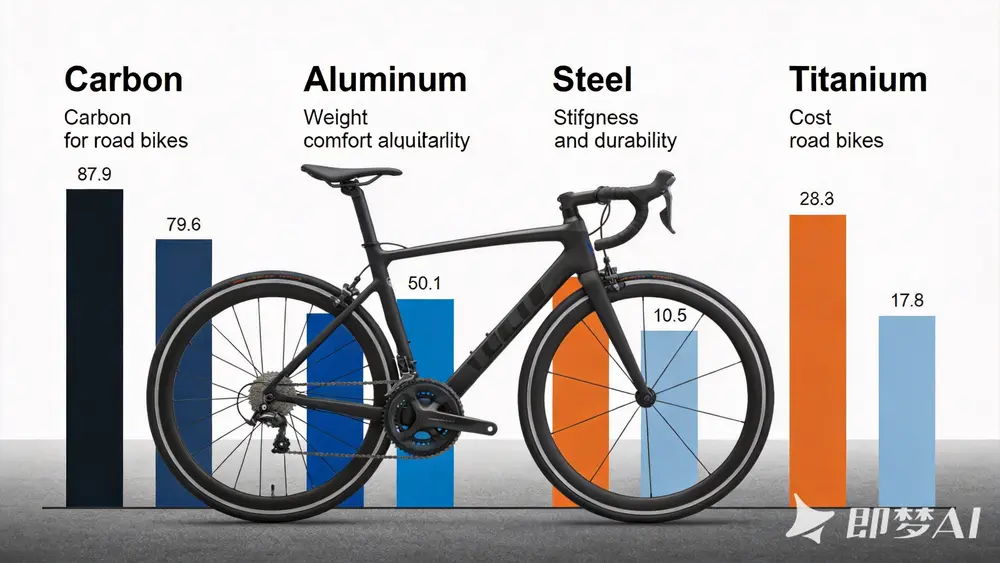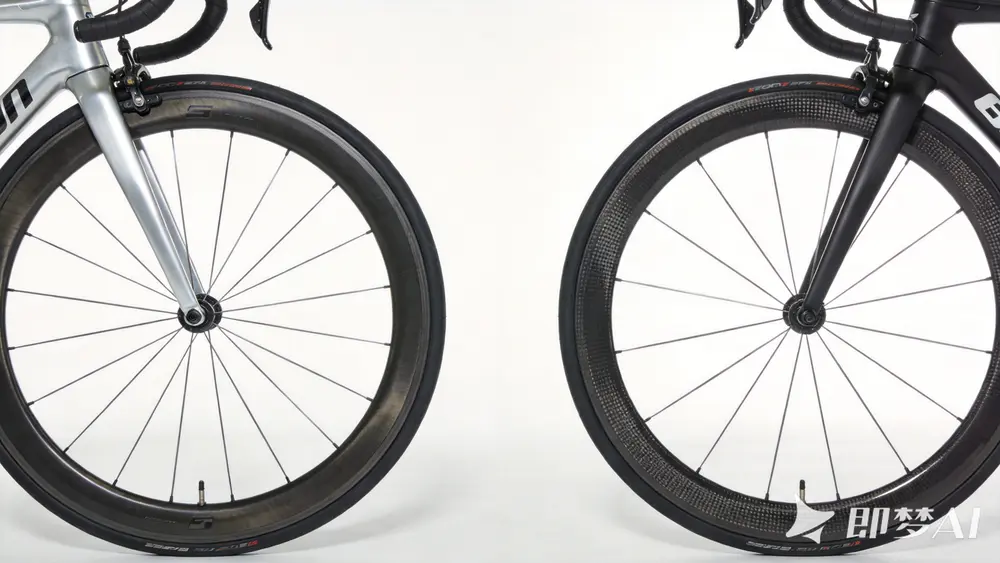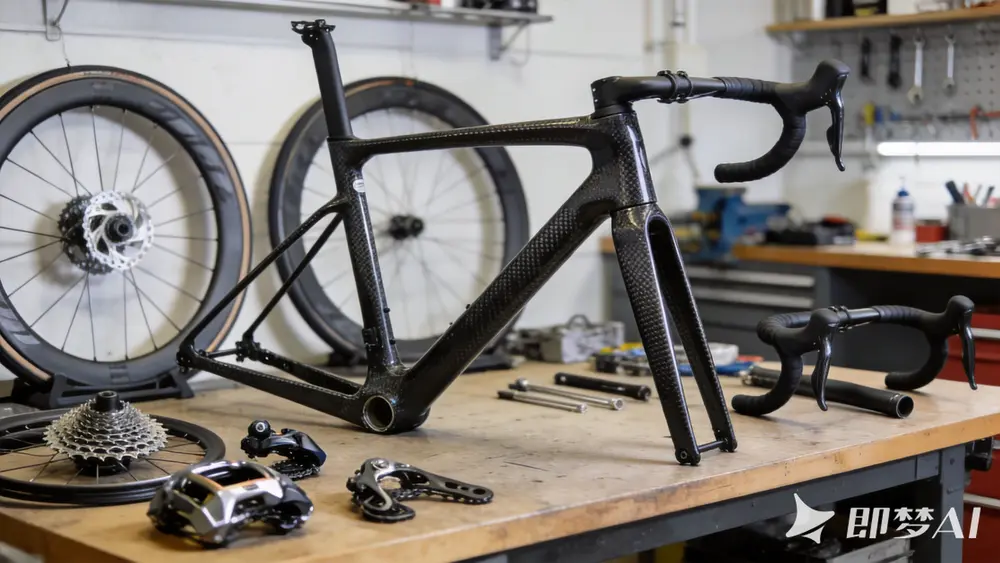

From carbon grade and geometry to tire clearance, bottom bracket standard, and budget, this guide explains what to check before choosing a road frame for racing, endurance riding, custom builds, or OEM projects.
A carbon road frame can make a bike lighter, faster, more responsive, and more comfortable on long rides. But the best frame is not always the lightest or most expensive one. A good choice depends on your riding style, fit, road conditions, component plan, and target budget.
Why Carbon Fiber Dominates Road Bike Frames
Carbon fiber reinforced composite gives engineers more control than metal frame materials. The bottom bracket and chainstays can be designed for pedaling stiffness, while the fork, seat stays, and top tube can be tuned for comfort and vibration damping.
Carbon also allows aerodynamic tube shapes, internal cable routing, integrated seatposts or cockpit systems, and lighter frame structures. This is why carbon is widely used in modern racing, endurance, and performance road frames.
Start With Your Riding Style
The right frame starts with how the bike will be used. A rider focused on climbing needs a different setup from someone building a fast aero road bike or a comfortable endurance machine.
| Riding Goal | Frame Direction | Best For |
|---|---|---|
| Fast road racing | Aero road frame | Speed, sprinting, flat and rolling terrain |
| Climbing and acceleration | Lightweight frameset | Long climbs, responsive handling, lower frame weight |
| Long-distance riding | Endurance road frame | Comfort, stability, rough pavement, all-day riding |
| Brand or distributor projects | OEM frame platform | Custom paint, logo, geometry discussion and bulk orders |
You can compare Mondince options on the carbon road bike frame collection.
Understand Carbon Grades: T700, T800, T1000 and T1100
Carbon grade affects weight, stiffness, strength and ride feel, but it should not be judged in isolation. A good frame depends on the full layup design, resin system, mold accuracy and quality control process.
T700 is often used for strength and durability, while T800, T1000 or higher-modulus fibers may be used to reduce weight or improve stiffness in selected areas. The most important question is not only which carbon grade is used, but how the material is placed and tested.
Check Frame Geometry and Fit
Fit is one of the most important parts of choosing a road frame. Do not choose a size only by seat tube length. Compare stack, reach, top tube length, head tube length, and wheelbase.
A race-focused frame usually has a lower stack and longer reach for a more aggressive riding position. An endurance-oriented frameset usually gives the rider a slightly more upright position for comfort over longer distances.
For OEM or private-label projects, geometry should match the target rider, market positioning and component setup. A frame that looks fast on paper may not work well if the fit range is too narrow for the intended customers.
Bottom Bracket Standard
The bottom bracket affects stiffness, serviceability and component compatibility. Common options include BSA threaded, BB86, BB386 and press-fit systems.
A threaded bottom bracket is often easier to service and can reduce noise issues. Press-fit systems may support wider shell designs and lower weight, but they require precise manufacturing tolerance. For buyers comparing frames, the best choice depends on the drivetrain, service preference and target market.
Internal Cable Routing
Internal cable routing gives a cleaner appearance and can reduce aerodynamic drag. Fully hidden routing is popular on modern road frames, especially for racing and premium builds.
However, buyers should also consider maintenance. A fully integrated cockpit looks clean but may be more complex to assemble or service. For OEM projects, it is important to confirm handlebar, headset, spacer and cable routing compatibility before production.
Tire Clearance
Tire clearance affects comfort, traction and real-world usability. Many modern road frames now support wider tires than older racing designs. A frame that supports 28mm to 32mm tires can be more comfortable and practical for rough pavement.
If you plan to ride rough roads or light gravel often, consider whether a road frame is enough or whether a dedicated carbon gravel bike frame is a better fit.
Budget vs Performance
You do not need the most expensive frameset to get a strong carbon road bike build. The best value usually comes from choosing the right frame level for your riding needs.
| Budget Level | What to Expect | Best For |
|---|---|---|
| Entry performance | Reliable carbon construction, practical geometry, standard components | Training, daily riding and value-focused builds |
| Mid-range performance | Better carbon layup, improved stiffness-to-weight ratio, cleaner routing | Fast riders, club racing and custom builds |
| Premium / OEM level | Advanced layup, custom paint, logo support, frame platform planning | Brands, distributors and serious performance projects |
Testing and Certification
Before choosing a road frame, check whether the supplier can provide testing details, quality control standards and clear product specifications. For serious riding or OEM projects, testing support is more important than marketing claims.
Useful checks include frame strength testing, fork testing, fatigue testing, impact testing, alignment control and paint inspection. A reliable supplier should be able to explain how quality is controlled before shipping.
Recommended Mondince Carbon Road Frame Direction
Mondince road frame options are suitable for riders, custom builders and OEM buyers who need lightweight carbon construction, clean routing, modern geometry and factory-direct support.
For individual builds, compare geometry, size, tire clearance and component compatibility first. For OEM projects, discuss target market, paint design, logo placement, sample testing and bulk order requirements before choosing a frame platform.
Frequently Asked Questions
Is a carbon road bike frame worth it?
Yes, if you want lower weight, better stiffness control, smoother ride quality and more advanced tube shaping than many metal frames can offer. The key is choosing a frame that fits your riding style and budget.
How long does a carbon road bike frame last?
A well-made carbon frame can last for many years with proper use and inspection. Avoid crash damage, incorrect assembly torque and poor maintenance. For OEM projects, quality control and testing standards are especially important.
Can I use a road frame for light gravel?
Some modern road frames can handle smooth gravel or rough pavement if tire clearance is enough. But for wider tires, bikepacking mounts and rough mixed terrain, a dedicated gravel frame is usually the better choice.
Conclusion
Choosing the right carbon road frame starts with riding style and fit. Then compare frame type, carbon grade, layup design, tire clearance, bottom bracket standard, internal routing, testing, and budget.
If you want a lightweight and efficient road build, start with the Mondince carbon road bike frame collection. For OEM support, custom paint, or model recommendations, contact Mondince.