
Carbon Bike Frame Resources – Technical Guides & Essential Knowledge
Whether you are building your first carbon bike or you are an experienced cyclist looking to deepen your understanding of frame technology, this resource hub brings together essential guides, technical explanations, and best practices. From carbon fiber manufacturing and safety testing to component compatibility and maintenance tips, everything you need is collected here in one place.
⚡ Quick Navigation
➡️ Carbon Frame Safety & 1.3 Times ISO 4210 Testing
➡️ Carbon vs Aluminum – Which Material Is Right for You?
➡️ Toray Carbon Fiber Grades Explained (T700, T800, T1000, T1100)
➡️ Bike Geometry & Sizing Guide – Find Your Perfect Fit
➡️ How to Care for Your Carbon Frame – Cleaning, Inspection, Storage
➡️ OEM & Customization Services for Bike Brands
➡️ Component Standards Guide – Bottom Brackets, Thru‑Axles, UDH & More
➡️ Featured Articles from Our Blog
Carbon Frame Safety & 1.3 Times ISO 4210 Testing
ISO 4210 is the global safety standard for bicycles, covering everything from frame strength and fork integrity to brake performance and steering components. It was introduced in 2014 and replaced the older EN standards: EN 14764 (city/touring), EN 14766 (mountain bikes), and EN 14781 (racing bikes). On January 31, 2015, EN ISO 4210 became the new mandatory safety standard for bicycles sold in regulated markets.
At Mondince Cycle, we don't just meet ISO 4210 requirements — we deliberately exceed them. Every frame we manufacture is independently tested to 1.3 Times ISO 4210 load requirements. This includes rigorous impact tests, fatigue tests (100,000+ cycles at loads 30% higher than required), and rigidness tests.
What does 1.3 Times mean for you? If you weigh 80 kg, you are riding a frame validated to handle stresses equivalent to a 104 kg rider under extreme conditions. If you occasionally ride with a loaded bikepacking setup, exceed the bike manufacturer's weight limit, or simply want peace of mind that your frame is built to last, that extra safety margin matters.
Beyond certification – Mondince subjects every frame to continuous batch sampling during mass production: 1‑2% of frames from each production run are randomly selected and retested to the same 1.3 Times ISO 4210 standard. This ensures that quality does not decline as production scales. Third‑party test reports are available upon request for wholesale customers and OEM partners.
👉 Read the full article: Carbon Frame EN Tested – Why Mondince 1.3 Times ISO 4210 Matters →
Carbon vs Aluminum – Which Material Is Right for You?
Choosing between a carbon vs aluminum bike frame is one of the most important decisions you'll make when buying a bicycle. Both materials have distinct advantages, and the right choice depends on your riding style, budget, and performance goals.
| Feature | Carbon Fiber Frame | Aluminum Frame |
|---|---|---|
| Weight | Very light – 700–950 g (typical road frame) | Light – 1,100–1,500 g (20–30% heavier) |
| Ride Comfort | Excellent – natural vibration damping, tunable | Moderate – can transmit road chatter |
| Stiffness | Very high – directionally tunable | High – uniform but less refined |
| Durability | Excellent under designed loads; no fatigue limit | Good; finite fatigue life (10‑15 years) |
| Impact Resistance | Brittle – sharp impacts may crack | Better – tends to dent rather than crack |
| Repairability | Specialist repair only ($300‑$700+) | Easier and less expensive – weldable |
| Corrosion | None – corrosion‑resistant | Minimal – oxide layer protects |
| Price Range | $800 – $10,000+ | $300 – $2,000 |
| Best For | Performance road, gravel, MTB, bikepacking | Budget builds, commuting, recreational cycling |
Key takeaways: Carbon frames offer superior weight savings, vibration damping, and no fatigue limit — making them ideal for performance‑oriented riders. Aluminum frames provide excellent value for money, easier repairability, and better dent‑resistance — making them practical choices for commuters and budget‑conscious cyclists.
👉 Explore the full Carbon vs Aluminum guide →
Toray Carbon Fiber Grades Explained (T700, T800, T1000, T1100)
Toray is the world's largest and most respected manufacturer of carbon fiber. Their T‑series grades (T for tensile strength) offer progressive performance levels. All Mondince frames are crafted exclusively from authentic Toray carbon fiber.
| Toray Grade | Tensile Strength (MPa) | Tensile Modulus (GPa) | Typical Application |
|---|---|---|---|
| T700 | ~4,900 | ~230 | Mid‑range frames, entry‑level high performance |
| T800 | ~5,800 | ~294 | High‑strength frames, premium performance |
| T1000 | ~6,370 | ~294 | Ultra‑high strength, race‑optimized frames |
| T1100 | ~7,000 | ~324 | Aerospace grade, elite‑level performance |
How to choose the right grade: Higher grades (T1000, T1100) offer greater strength and stiffness, allowing engineers to create lighter frames without compromising performance. However, expert layup engineering matters as much as raw material grade — which is why Mondince engineers create custom unidirectional (UD) layup schedules for each frame model, strategically aligning fibers to optimize stiffness, compliance, and weight for the frame's intended use.
👉 Read the full Carbon Fiber Technology guide →
Bike Geometry & Sizing Guide – Find Your Perfect Fit
Proper sizing is critical for comfort and injury prevention. A correctly sized bike transforms your riding experience — improving power transfer, handling, and long‑ride comfort.
Road Bike Size Chart
| Rider Height | Inseam (cm) | Frame Size (cm) | Typical Label |
|---|---|---|---|
| 152–160 cm (5'0"–5'3") | 66–73 cm | 44–48 cm | XXS–XS |
| 160–168 cm (5'3"–5'6") | 71–76 cm | 48–52 cm | XS–S |
| 168–175 cm (5'6"–5'9") | 76–81 cm | 52–55 cm | S–M |
| 175–183 cm (5'9"–6'0") | 81–86 cm | 55–58 cm | M–L |
| 183–190 cm (6'0"–6'3") | 86–91 cm | 58–61 cm | L–XL |
| 190–198 cm (6'3"–6'6") | 91+ cm | 61+ cm | XL–XXL |
Mountain Bike Size Chart
| Rider Height | Inseam (cm) | Frame Size (inches) | Sizing Label | |||||
|---|---|---|---|---|---|---|---|---|
| 152–160 cm (5'0"–5'3") | 66–71 cm | 13–14″ | XS | |||||
| 160–168 cm (5'3"–5'6") | 71–76 cm | 14–16″ | S | |||||
| 168–175 cm (5'6"–5'9") | 76–81 cm | 16–17″ | M | 175–183 cm (5'9"–6'0") | 81–86 cm | 17–18″ | L | |
| 183–190 cm (6'0"–6'3") | 86–91 cm | 18–20″ | XL | |||||
| 190+ cm (6'3"+) | 91+ cm | 20–22″ | XXL |
How to measure your inseam: Stand barefoot against a wall. Place a hardcover book between your legs, spine upward, pressing it firmly against your crotch as if sitting on a saddle. Mark the wall at the top of the book's spine, then measure from the floor to that mark. Repeat twice and take the average.
If you are between sizes: Choose the smaller size for a more aggressive, responsive feel (race fit). Choose the larger size for more stability and a relaxed riding position (endurance fit). A shorter or longer stem can fine‑tune the fit once you have chosen your frame size.
👉 Explore the full Bike Sizing & Geometry guide →
How to Care for Your Carbon Frame – Cleaning, Inspection & Storage
Carbon fiber is remarkably durable when properly cared for. Follow these best practices to keep your frame in peak condition for years to come.
Cleaning
- Use mild soap, water, and a soft cloth.
- Avoid high‑pressure washers (water can penetrate small cracks) and harsh chemicals like acetone or brake cleaner.
- Pay special attention to bottom bracket and head tube junctions where dirt accumulates.
Inspection
- Before each ride, look for visible cracks, deep scratches, or unusual creaking sounds.
- Tap suspect areas with a coin or fingernail — a healthy carbon section emits a high‑pitched ringing sound, while damaged areas produce a dull, hollow thud.
- If you suspect structural damage, have the frame professionally inspected or repaired.
Torque Specifications
- Always use a torque wrench when tightening bolts on carbon components.
- Over‑tightening can crush the fibers. Follow manufacturer recommendations (typically 4–6 Nm for stems, 8–10 Nm for bottom brackets).
Assembly Paste
- Use carbon assembly paste on seatposts and handlebars — it increases friction and prevents slipping without requiring excessive clamping force.
Storage
- Keep your frame out of direct sunlight when not in use — UV exposure can degrade the resin over time.
- Store in a cool, dry place away from extreme temperature fluctuations.
👉 Read more about Carbon Frame Technology →
OEM & Customization Services for Bike Brands
Since 2007, Mondince Cycle has been a trusted OEM/ODM partner for global bicycle brands, teams, and individual builders. We specialize exclusively in carbon fiber frames for road, gravel, mountain, and e‑bike platforms.
What We Offer
- Custom paint & finish – Any Pantone/RAL color, matte/gloss/satin/metallic/chameleon finishes. Water‑transfer decals under clear coat.
- Custom frame geometry (OEM) – Full geometry customization: reach, stack, head tube angle, seat tube angle, chainstay length, wheelbase, BB drop, and fork offset. 2D/3D engineering support available.
- Private label / OEM branding – Custom decals, branded packaging, dedicated production runs, and component sourcing.
- Custom mold development – Proprietary frame design for brands requiring unique, exclusive frames.
- 1.3 Times ISO 4210 tested – Every frame independently tested to exceed industry safety standards by 30%.
- Low MOQ options – From 1‑set samples for stock frames up to bulk OEM orders.
Understanding OA (Order Allocation)
Order Allocation (OA) refers to how production capacity is distributed across different partners and models. For more complex orders requiring new molds or proprietary designs, OA discussions involve production capacity scheduling, raw material procurement lead times, and production batch sizes. Early planning is essential for dealers or new brand partners to secure delivery windows — Mondince works closely with partners to ensure realistic timelines without over‑promising.
👉 Explore OEM & Customization services →
Component Standards Guide – Bottom Brackets, Thru‑Axles, UDH & More
Understanding modern component standards is essential when building or upgrading a bike. Here's a quick reference to the most important standards used on Mondince frames.
Bottom Bracket Standards Comparison
| Standard | Type | Advantages | Disadvantages |
|---|---|---|---|
| T47 (Mondince standard) | Threaded | Creak‑free, serviceable, wide shell allows larger down‑tube for aero and stiffness, compatible with both 24mm (Shimano) and 30mm (SRAM) spindles | Requires specialty tools |
| BSA / English | Threaded | Simple to service, creak‑free, widely available | Narrower shell limits frame stiffness |
| BB86 / BB92 | Press‑fit | Stiff, lightweight, wide shell | Prone to creaking over time |
| BB30 / PF30 | Press‑fit | Lightweight, large bearings | Creaking common, installation fussy |
Thru‑Axle Standards
- Front – 12x100mm (Mondince standard for road, gravel, MTB)
- Rear – 12x142mm (Mondince standard for road, gravel, MTB) or 12x148mm Boost (for MTB, improves wheel stiffness and allows wider tire clearance)
- Boost spacing (148mm rear, 110mm front) – Improved wheel stiffness, better spoke bracing angle, and increased tire clearance. Standard on modern mountain bikes.
Universal Derailleur Hanger (UDH)
UDH is a standardized derailleur hanger design that is replaceable, future‑proof, and compatible with SRAM Transmission (T‑Type) and other next‑gen drivetrains. All Mondince frames feature UDH compatibility.
Flat‑Mount Disc Brakes
Flat‑mount is the industry standard for disc brake caliper attachment on road, gravel, and many MTB frames. Compatible with 140mm or 160mm rotors. All Mondince frames use flat‑mount disc brake standards.
👉 Explore the full Components & Parts guide →
Featured Articles from Our Blog
Browse our most popular articles covering carbon frame technology, safety standards, sizing guides, and more.
Carbon Frame EN Tested – Why Mondince 1.3 Times ISO 4210 Matters for Safety
Understanding carbon frame safety testing and what 1.3 Times ISO 4210 means for your ride.
How to Measure a Bike Frame Size – Complete Step‑by‑Step Guide
Accurate sizing guide for road, mountain, and gravel bikes.
Bike Tire Pressure PSI Charts for Road, MTB & Gravel (2026 Guide)
Complete tire pressure charts and adjustment tips for all bike types.
Bike Length Chart & Complete Sizing Guide (Road, MTB, Kids)
Frame size tables, inseam measurement steps, and total length references.
How to Measure Bike Frame Size – Step‑by‑Step Guide
Practical techniques for measuring your frame size at home.
Bike Sizing & Geometry – Complete Guide to Finding Your Perfect Fit
Understanding stack, reach, head tube angle, and other geometry terms.
Frequently Asked Questions About Carbon Bike Frames
What does 1.3 Times ISO 4210 mean for carbon frame safety?
How long do carbon bike frames last compared to aluminum?
Can carbon frames be repaired if cracked?
What is the warranty on Mondince carbon frames?
Does Mondince offer OEM or custom frame production for brands?
Ready to Learn More About Carbon Frame Technology?
Whether you are a performance‑focused cyclist, a bikepacking adventurer, or a brand looking for a reliable OEM partner, Mondince Cycle has the resources and expertise to help you make informed decisions. Every frame is crafted from premium Toray carbon, tested to 1.3 Times ISO 4210 standards, and fully customizable — from paint color to custom geometry.
👉 Explore all carbon frames →
👉 Request a quote or custom geometry →
Related Articles
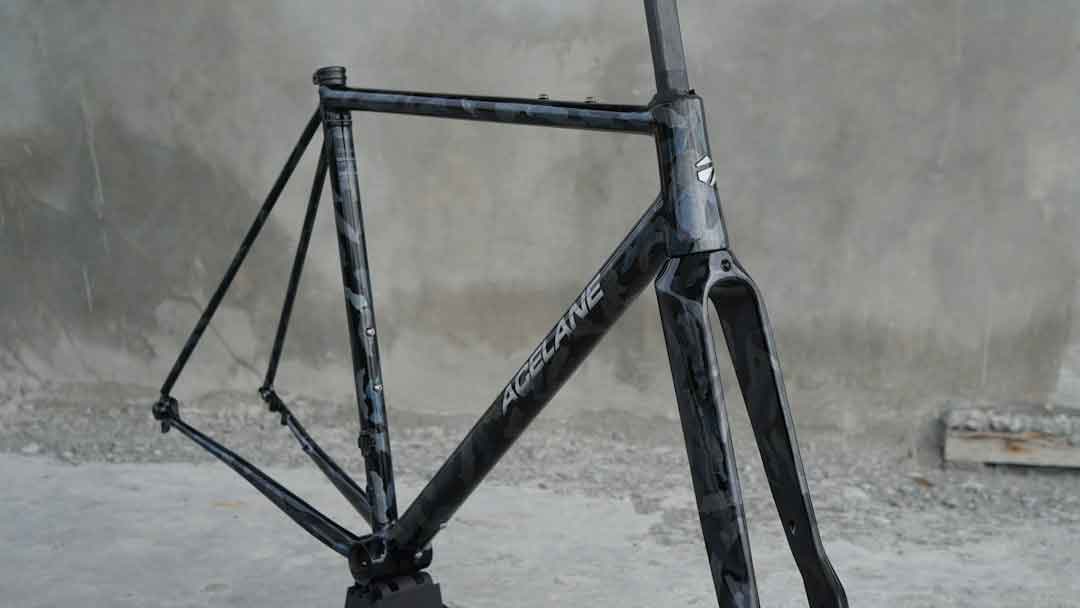
Carbon Frame EN Tested: Why Mondince 130% ISO 4210 Standard Matters for Safety
When searching for a carbon frame, you’ll often see phrases like “carbon frame EN tested” or “ISO 4210 certified”. But w...
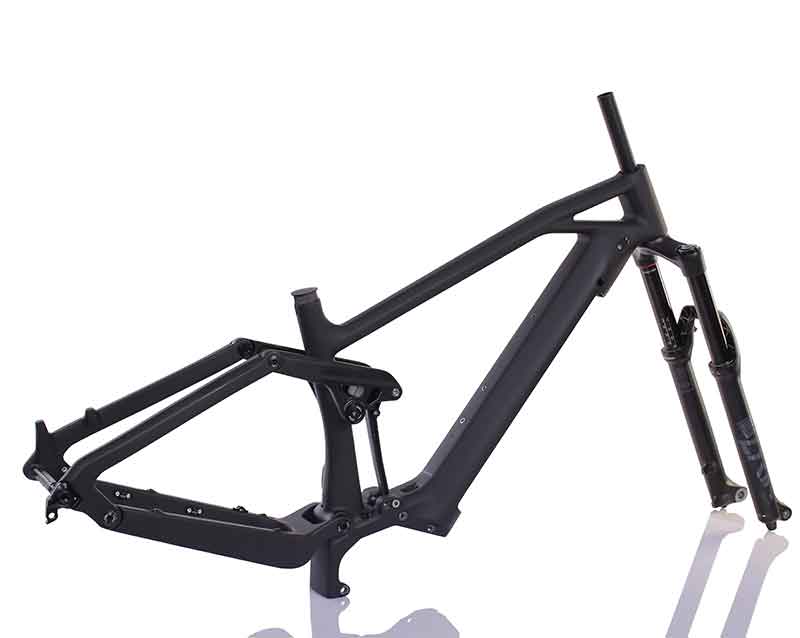
The Ultimate Guide to Choosing Your Carbon Electric Bike Frame in 2025
When building the perfect electric bike, your frame choice determines everything. The carbon electric bike frame has become the gold standard for disc...
No articles available for this topic yet.