
OEM & ODM Customization for Carbon Bike Frames – Complete Guide
Partnering with a reliable OEM/ODM carbon frame manufacturer is the foundation of launching a successful bicycle brand. Whether you are a startup, an established brand, or a team manager looking for custom frames, understanding the OEM process — from initial concept to quality control — is essential for minimizing risk, controlling costs, and ensuring product consistency. This guide covers everything you need to know: OEM vs ODM, customization options (painting, geometry, branding), quality control, ISO 4210 safety standards, and how Mondince Cycle has helped global partners since 2007.
⚡ Quick Navigation
➡️ OEM vs ODM – What’s the Difference?
➡️ Why Choose Mondince for OEM/ODM?
➡️ Customization Options – Paint, Geometry, Branding
➡️ Quality Control & ISO 4210 Testing
➡️ The OEM Process – From Brief to Delivery
➡️ Cost Structure, MOQ & Payment Terms
➡️ FAQ
➡️ Ready to Partner?
OEM vs ODM – Key Differences for Bike Frame Manufacturing
Understanding the difference between OEM (Original Equipment Manufacturer) and ODM (Original Design Manufacturer) is the first step in selecting the right manufacturing partner for your brand.
| Feature | OEM (Original Equipment Manufacturer) | ODM (Original Design Manufacturer) |
|---|---|---|
| Design Ownership | Brand owns the design (custom mold / geometry). | Manufacturer owns the design (existing mold / open‑mold). |
| Customization Level | Full – geometry, carbon layup, tubing shapes, proprietary designs. | Limited – existing platform with custom paint, decals, and components. |
| Minimum Order Quantity (MOQ) | Generally higher – from 20–50+ units per size due to mold and fixture costs. | Lower – 1–10 units available for stock sized frames. |
| Upfront Investment | Higher – mold development plus sample and certification fees. | Lower – based on existing tooling. |
| Exclusivity | Full – no other brand can use your design. | None – same frame may be sold to multiple brands. |
| Lead Time (first batch) | 3–6 months (includes mold and sample approval stages). | 30–60 days primarily for painting and assembly. |
Quick Summary: OEM vs ODM
- Choose OEM – If you require a proprietary geometry, unique tube shapes, integrated components, or a design that sets your brand apart. OEM involves customized production based on the brand’s own design, fulfilling brand and market-specific requirements. It typically requires a higher minimum order quantity and investment to justify mold cost. OEM production is used for brands aiming for distinct geometry, stacking with competitive open‑mold bikes. Common for brand‑exclusive frame geometry.
- Choose ODM – If you are launching a new brand or testing a market and want to minimize upfront investment while still delivering quality carbon frames with custom paint and branding. ODM is based on existing molds, and the supplier development process ensures safety. ODM gives you a high quality frame, custom decals, and full paint control, without the higher MOQ and upfront costs associated with proprietary mold development.
Both OEM and ODM options are available at Mondince. Every finished frame regardless of the model undergoes rigorous 1.3 Times ISO testing and shares the same high standards for safety and performance.
Why Choose Mondince for OEM/ODM Carbon Bike Frames?
Since 2007, Mondince Cycle has been a trusted partner for global bicycle brands, teams, and OEM customers. We specialize exclusively in carbon fiber frames for road, gravel, mountain, and e‑bike platforms. Here is what makes Mondince different:
- High‑Grade Toray Carbon Fiber – All Mondince frames use authentic Toray T700, T800 and T1000 carbon fiber. Toray is the world's benchmark carbon fiber supplier, used by aerospace, automotive, and premium cycling brands globally. Different Toray grades offer progressively higher tensile strength and modulus — T800 provides 28% higher strength than T700, while T1000 and T1100 deliver elite‑level performance for race‑optimized frames.
- 1.3 Times ISO 4210 Independently Tested – Every Mondince frame is independently tested to 1.3 Times the load requirements of ISO 4210 — exceeding the industry safety baseline by 30%. This means your frames carry a safety margin well above legal minimums. Third‑party test reports are available for wholesale customers and OEM partners upon request. ISO 4210 is the international safety standard covering impact resistance, fatigue cycles (100,000+), and rigidness — baseline compliance is mandatory in all regulated markets.
- Modern Component Standards – T47 threaded bottom brackets (creak‑free, serviceable), UDH (Universal Derailleur Hanger) for future‑proof drivetrain compatibility, fully internal cable routing (clean aero cockpit), flat‑mount disc brakes, and thru‑axles (12x100/12x142).
- Comprehensive In‑House Manufacturing – EPS monocoque molding for optimal fiber alignment and smooth internal surfaces, ultrasonic testing to detect internal voids or inconsistencies before frames ever leave the factory, and continuous batch sampling (1‑2% of frames from each production run retested). Control of the entire manufacturing chain ensures consistent quality — no subcontracting or outsourcing of core processes.
- Low MOQ Options – From 1‑set samples for bike fitters up to bulk OEM orders. Flexible terms make Mondince accessible to both startups and established brands.
- Global Experience – Trusted by wholesale, OEM and brand partners worldwide. Comprehensive export documentation, logistics support, and after‑sales service.
Customization Options – Paint, Geometry, Branding & More
Mondince offers a complete range of OEM customization services across four main areas:
1. Custom Paint & Finish (Any Pantone/RAL Color)
- Finish types – Choose from matte, gloss, satin, metallic, or chameleon (color‑shift) finishes.
- Color matching – Provide your Pantone or RAL color code, and Mondince matches it exactly. Many custom paint enthusiasts use online suppliers to provide RAL or Pantone codes and brand assets, with the manufacturer handling the application and matching. Custom painting for direct‑to‑consumer startups remains flexible and allows for brand differentiation without full ODM mold fees.
- Logo application – Water‑transfer decals or stencils applied under clear coat for a seamless, durable finish. Multiple logo placements available: down‑tube, top‑tube, head‑tube, fork legs, seat‑tube, chainstays.
- Custom graphic design – Mondince engineers can help translate your brand identity into professional frame graphics. Provide vector artwork (AI, EPS, PDF, CDR) for accurate reproduction. For complex paint schemes, discuss requirements early in the process.
- MOQ for custom paint – Standard colors available from 1‑set orders. Custom paint (any Pantone/RAL color, branded decals) MOQ typically starts at 30 sets. Discuss your specific needs with the sales team.
2. Custom Frame Geometry (OEM Only)
- Full geometry customization – Adjust every parameter: reach, stack, head tube angle, seat tube angle, chainstay length, wheelbase, bottom bracket drop, fork offset — plus tubing diameters and carbon layup schedule for specific flex/stiffness zones.
- 2D/3D engineering support – Provide your geometry numbers or a reference frame for analysis. Mondince engineers collaborate with you to optimize ride quality, handling, and fit.
- Prototype samples – Before mass production, Mondince produces sample frames for validation. This stage is critical for verifying geometry, fit, and ride feel. Adjustments can be made before committing to full production.
3. Private Label / OEM Branding
- Custom decals – Full control over decal placement, sizing, and finish (gloss or matte). Decals applied under clear coat for durability.
- Custom packaging – Branded boxes, protective foam, assembly kits, component packaging — all tailored to your brand identity.
- Dedicated production runs – Your frames produced in dedicated batches with full traceability.
4. Component Sourcing & Complete Builds
- Full build kits – Mondince can supply complete bikes, sourcing groupsets (Shimano, SRAM), wheelsets, tires, and finishing kits from trusted supply partners. Provide your component wishlist for a consolidated quote.
- Semi‑finished frames (FF – factory finished) – Frames with base coat only, ready for your own local painting.
5. Custom Mold Development (Full OEM Platform)
- Proprietary frame design – For brands requiring a unique frame that cannot be replicated by competitors. Mondince develops custom molds based on your geometry and tube shape specifications.
- Higher upfront investment – Mold development costs amortized over production volume. MOQ generally higher than standard ODM (negotiable).
- Long‑term brand asset – Your exclusive frame design becomes a core part of your brand identity and product differentiation.
Quality Control & ISO 4210 Safety Testing
For OEM partners, consistent quality across every batch is just as important as the quality of the first frame. Mondince maintains rigorous quality control at every stage.
Pre‑Production Quality
- Raw material certification – Toray carbon fiber batch traceability.
- Layup inspection – Visual and ultrasonic checks before molding.
In‑Production Quality
- EPS monocoque molding – Uniform pressure, no internal voids, consistent wall thickness.
- In‑process checks – Dimensional alignment, surface finish, cosmetic inspection.
- Random batch sampling – Additional frames selected for destructive testing to verify structural integrity of each production run.
Post‑Production Quality & Certification
- Third‑party ISO 4210 testing – Mondince frames are independently tested to 1.3 Times ISO 4210 loads.
- ISO 4210 is the international safety standard covering bicycles that replaced the earlier EN standards — EN 14764 (city/touring), EN 14766 (mountain bikes), and EN 14781 (racing bikes). It has been the mandatory standard for bicycles sold in regulated markets since 2015.
- The standard is divided into multiple parts, specifying test methods for impact resistance, fatigue cycles (100,000+), rigidness, brake performance, steering stability, and more.
- What specific tests are performed? Every frame undergoes fatigue testing (simulated pedal forces applied for 100,000+ cycles at 1.3 times standard loads), impact tests (a heavy striker dropped onto the frame from specified heights), and rigidness tests (measuring bottom bracket and head tube deflection under load).
- Safety margin – Testing at 1.3 Times ISO 4210 provides a safety buffer 30% above regulatory minimums — significant for riders loading bikepacking gear or those near maximum weight limits.
- Continuous batch sampling – 1‑2% of frames from each production run are randomly selected and retested to the same 1.3 Times standard — ensuring quality does not decline as production scales.
- Test report availability – Third‑party test reports are available to qualified wholesale customers and OEM partners upon request. Additional EN certification and EFBE test reports available for EU market compliance.
The OEM Process – From Brief to Delivery
Working with Mondince follows a structured, transparent process designed to eliminate guesswork and manage risk. The typical OEM timeline is 3–6 months from initial briefing to first delivery.
Step 1 – Initial Consultation & Briefing
- Share your brand vision, target market, and product goals.
- Define platform type: road, gravel, mountain, e‑bike, full‑suspension, hardtail, or aero.
- Determine OEM or ODM path: custom geometry (proprietary design) or stock geometry with custom paint/branding.
- Discuss budget, MOQ, and timeline expectations.
Step 2 – Design & Engineering (OEM Only)
- Mondince engineers translate your geometry requirements into a complete frame design (2D drawings, 3D CAD models).
- Finite element analysis (FEA) ensures structural integrity meets performance targets.
- Layup schedule engineering specifies carbon fiber orientation for optimal stiffness, compliance, and weight.
- Client reviews and approves design before mold production begins.
Step 3 – Sampling & Prototyping
- Mondince produces pre‑production samples for client validation. This is the most critical stage — you should test ride the sample frames before mass production.
- Install your preferred components, ride the frame extensively, and provide feedback.
- Geometry, ride feel, and paint/finish can be adjusted at this stage. Additional sampling rounds are possible (fees apply).
Step 4 – Mass Production
- Upon sample approval, Mondince proceeds to mass production.
- Regular production updates and photos available.
- Continuous quality checks throughout the manufacturing process.
Step 5 – Certification & Quality Control
- Frames from each production batch are randomly selected for independent third‑party testing to 1.3 Times ISO 4210 requirements — confirmation that each batch meets safety standards, not just prototypes.
- Test reports available for verification.
- Final quality inspection before packing.
Step 6 – Delivery & Logistics
- Frames professionally packed (individual boxes with foam protection) to prevent shipping damage.
- Mondince coordinates international shipping (EXW, FOB Shenzhen, CIF, DDP available).
- Customs documentation, export declarations, and compliance certificates provided.
Step 7 – After‑Sales Support
- Warranty claims processed directly through Mondince — fast resolution, no lengthy back‑and‑forth.
- Replacement parts (hangers, spare bolts) available from stock.
- Future re‑orders streamlined; production records maintained for repeat orders.
Cost Structure, MOQ & Payment Terms
Transparent pricing is essential for OEM partnerships. Here is the typical cost structure for OEM carbon bike frame projects with Mondince:
| Cost Component | Description | Typical Range |
|---|---|---|
| Mold Development (OEM only) | Custom mold creation for proprietary frame design; one‑time cost per frame size. | $3,000 – $10,000+ per size |
| Sample Frame Cost | Covers materials, layup, molding, painting for sample phase; often deductible from first production order. | $1,500 – $2,500 per sample frame |
| Frame Unit Price | Varies by size, carbon grade (T700 / T800 / T1000), paint complexity. | $300 – $800+ per frame (wholesale/OEM) |
Minimum Order Quantity (MOQ) Guidelines
- ODM (stock geometry, custom paint) – MOQ starts at 1‑set samples. Typical bulk orders: 30–50 units for standard frame models; higher volumes for custom paint. Smaller order quantities for stock frames are often provided for brand testing, but deeper customization requires higher MOQ.
- OEM (full custom including geometry) – MOQ starts from 20–30 units per size for the first batch; larger quantities preferred for optimal pricing. Higher MOQ for smaller profit‑per‑frame margins, but more flexible for lower‑volume premium brands.
- Custom paint only – MOQ starts at 30 frames per style, but sampling with 1‑set paint may be possible for prototype verification.
Payment terms – Typical OEM terms: 30% deposit to start production, 70% balance before shipment (based on pro‑forma invoice). LC (letter of credit) available. Payment terms are negotiable for long‑term partners, but standard T/T (bank transfer) methods apply.
Frequently Asked Questions About OEM/ODM Bike Frames
What is the minimum order quantity (MOQ) for OEM carbon frames?
How long does the OEM process take from start to delivery?
Does Mondince offer buyer support for ISO 4210 compliance and other certifications?
Can I order a single sample frame to test before committing to a larger order?
Does Mondince offer complete bike assembly, or just framesets?
How does Mondince protect my proprietary frame design?
Ready to Partner with Mondince?
Whether you are launching a new brand, expanding your product line, or need a reliable OEM partner for carbon bike frames, Mondince Cycle offers the expertise, manufacturing capacity, and quality control you need. With over 18 years of experience, a commitment to 1.3 Times ISO 4210 testing, and flexible OEM/ODM terms, we are ready to help you bring your vision to life.
Related Articles
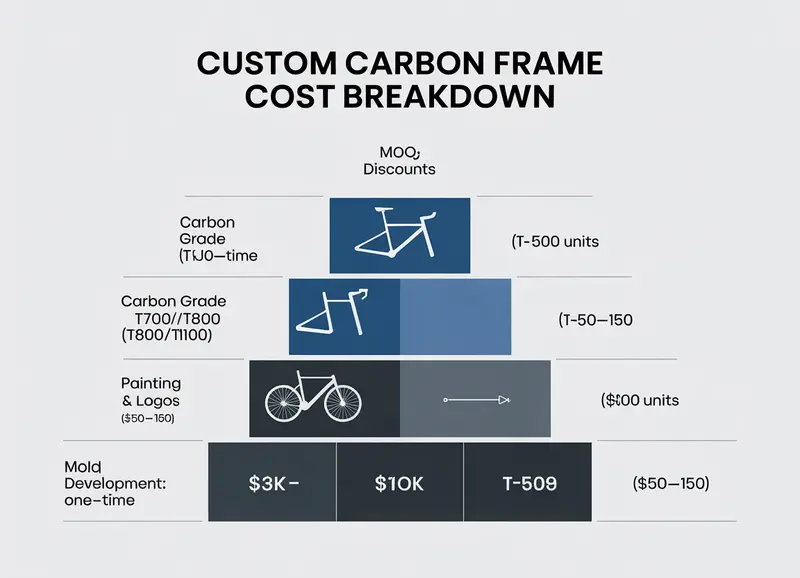
How Much Does a Custom Carbon Bike Frame Cost? – OEM Pricing Breakdown
One of the first questions we hear from brands and custom builders is: "How much does a custom carbon bike frame cost?" The honest answer is: it depen...
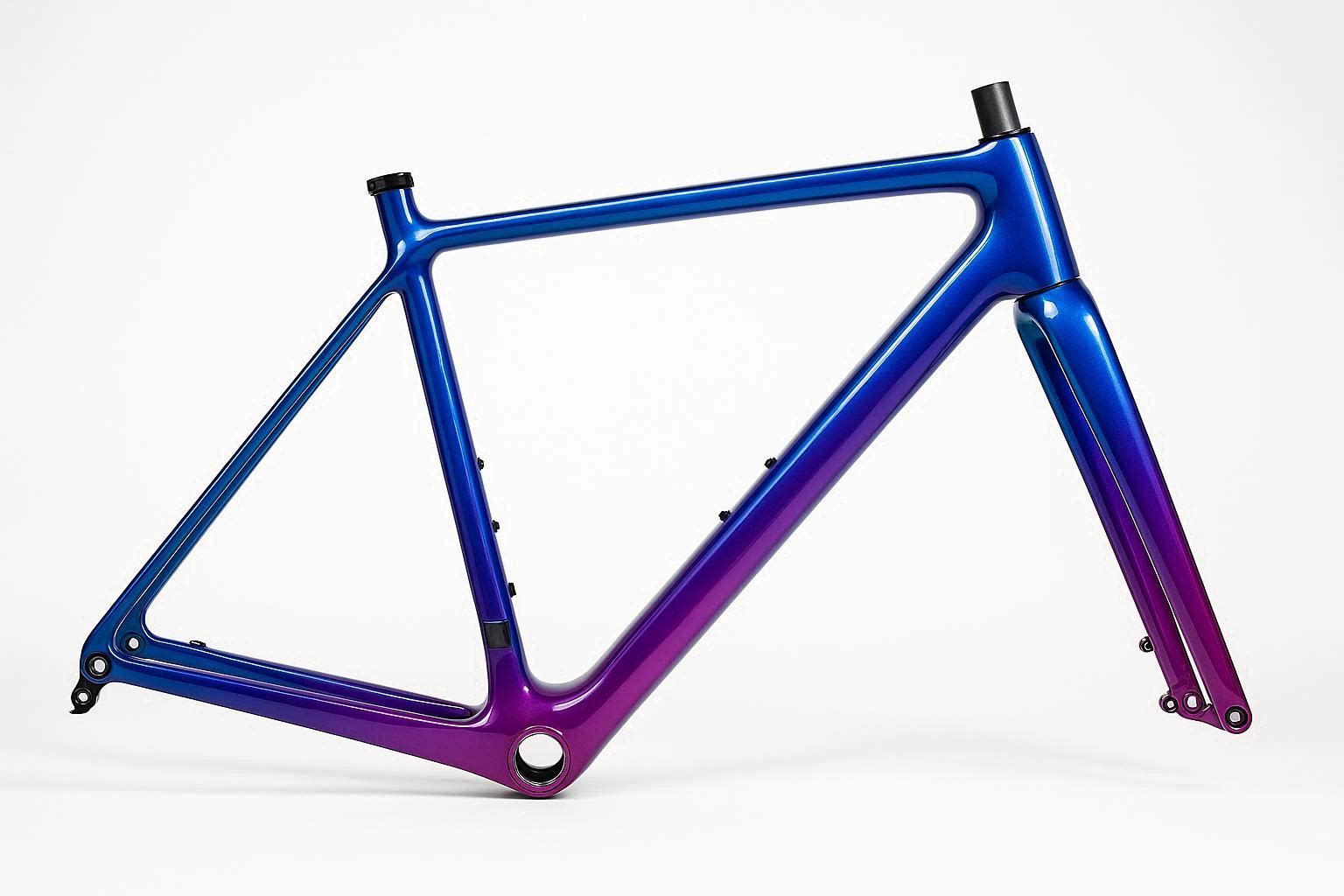
Custom Painting Gravel Frame: Complete Guide 2026
Why Custom Paint Your Gravel Frame? Your gravel frame is more than just a bike — it's a reflection of your personality, brand identity, or team...
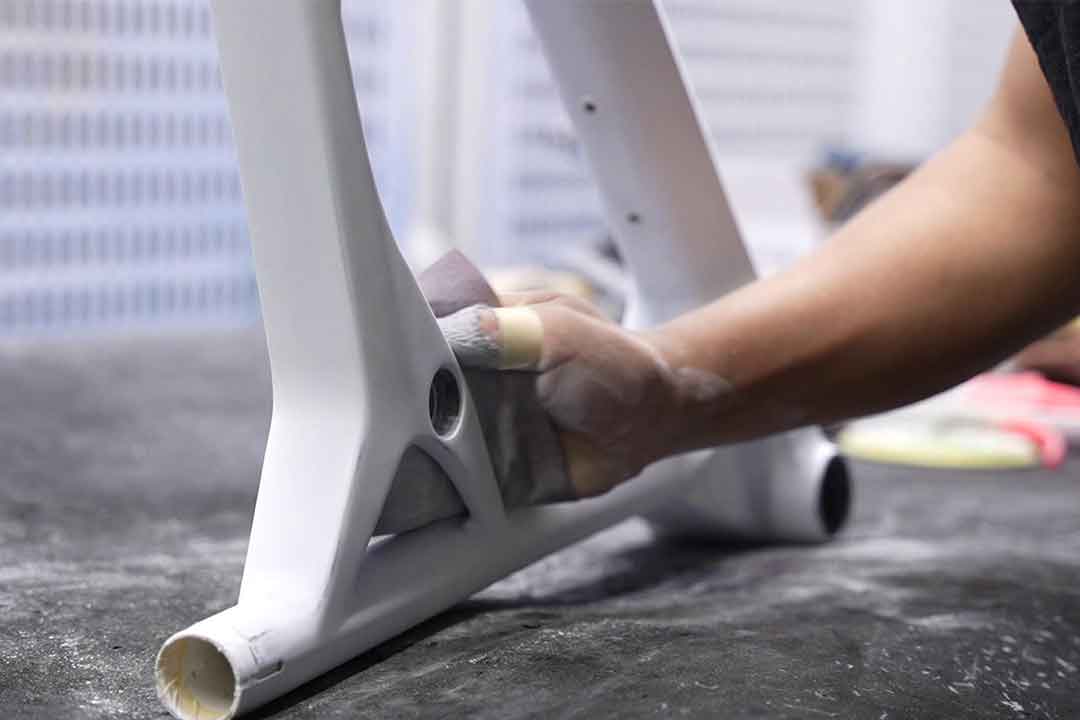
How to Paint a Carbon Fiber Bike Frame – Complete Guide 2026
Can You Paint a Carbon Fiber Frame? Yes, absolutely. Carbon fiber itself can be painted just like any other surface, but there are a few key differen...
No articles available for this topic yet.