Ultimate Guide to Gravel Bike Frames
Everything you need to know about choosing, customizing, and buying a gravel bike frame — from geometry to EN certification, material science to OEM manufacturing.
What's Inside
1. What is a Gravel Bike Frame?
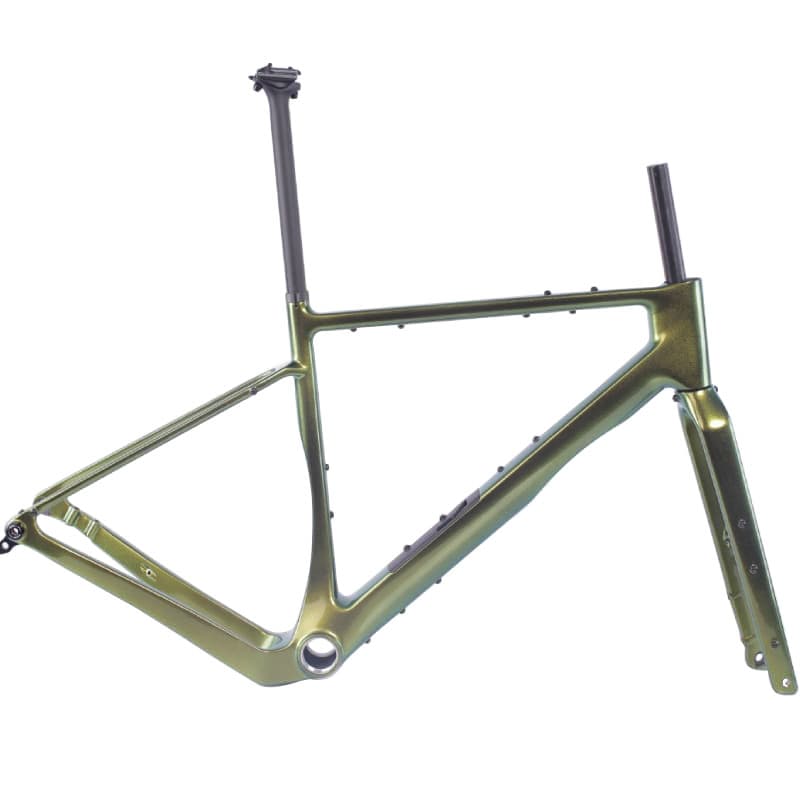
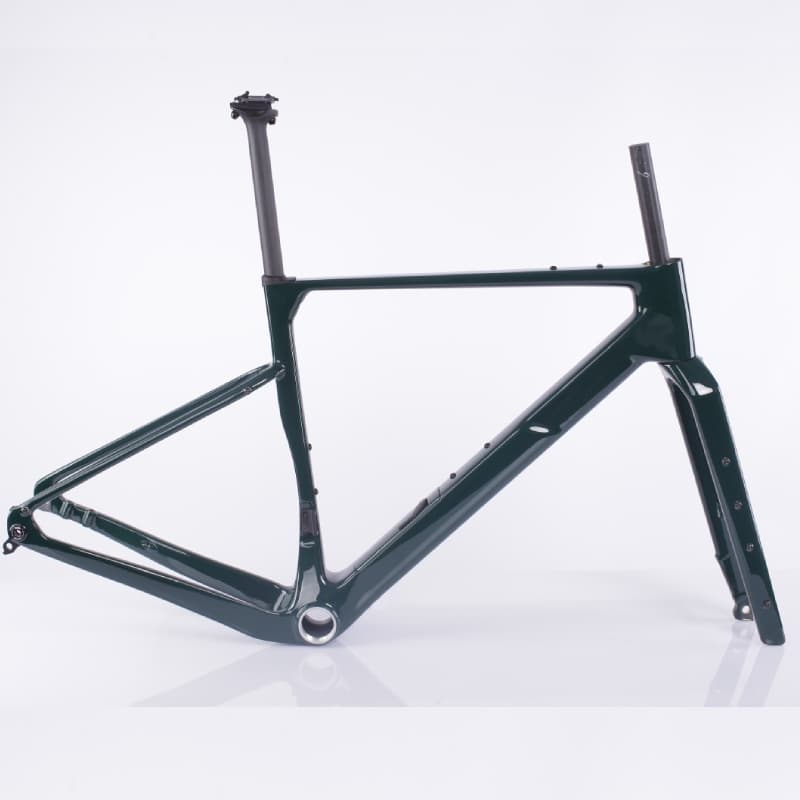
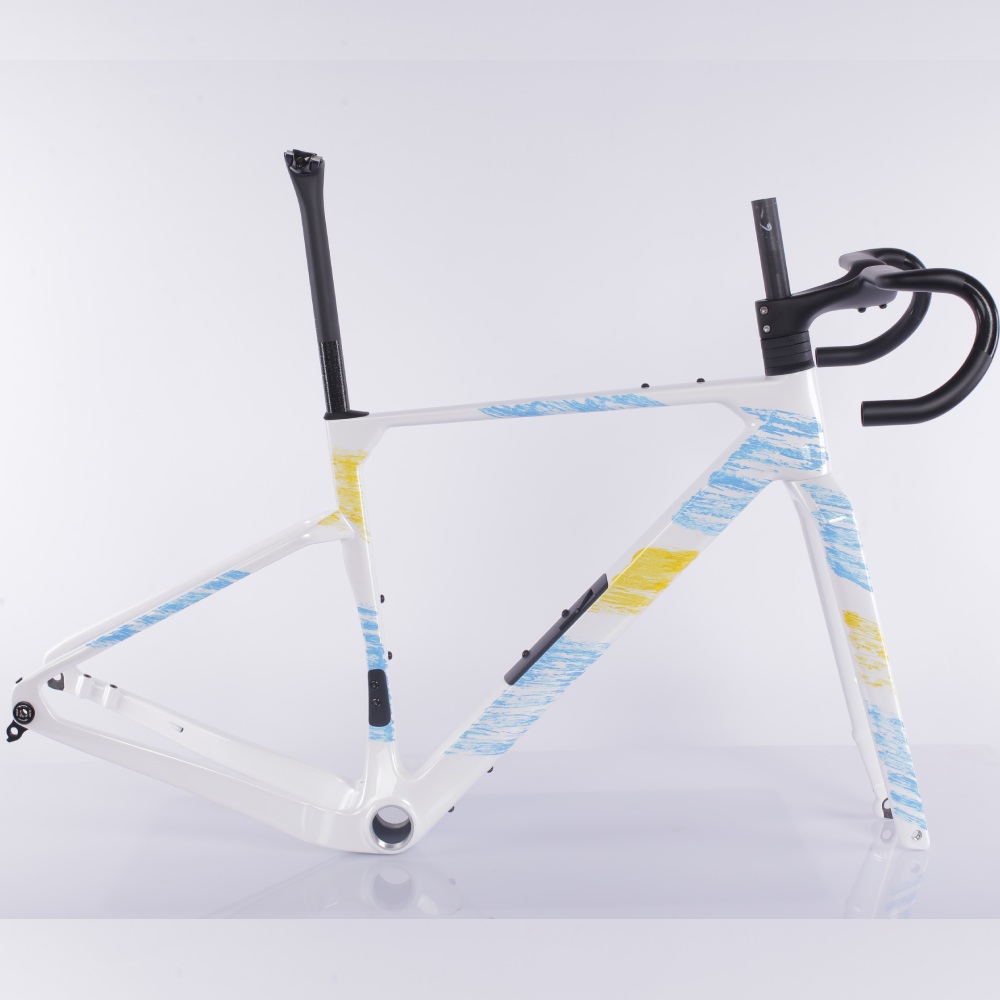
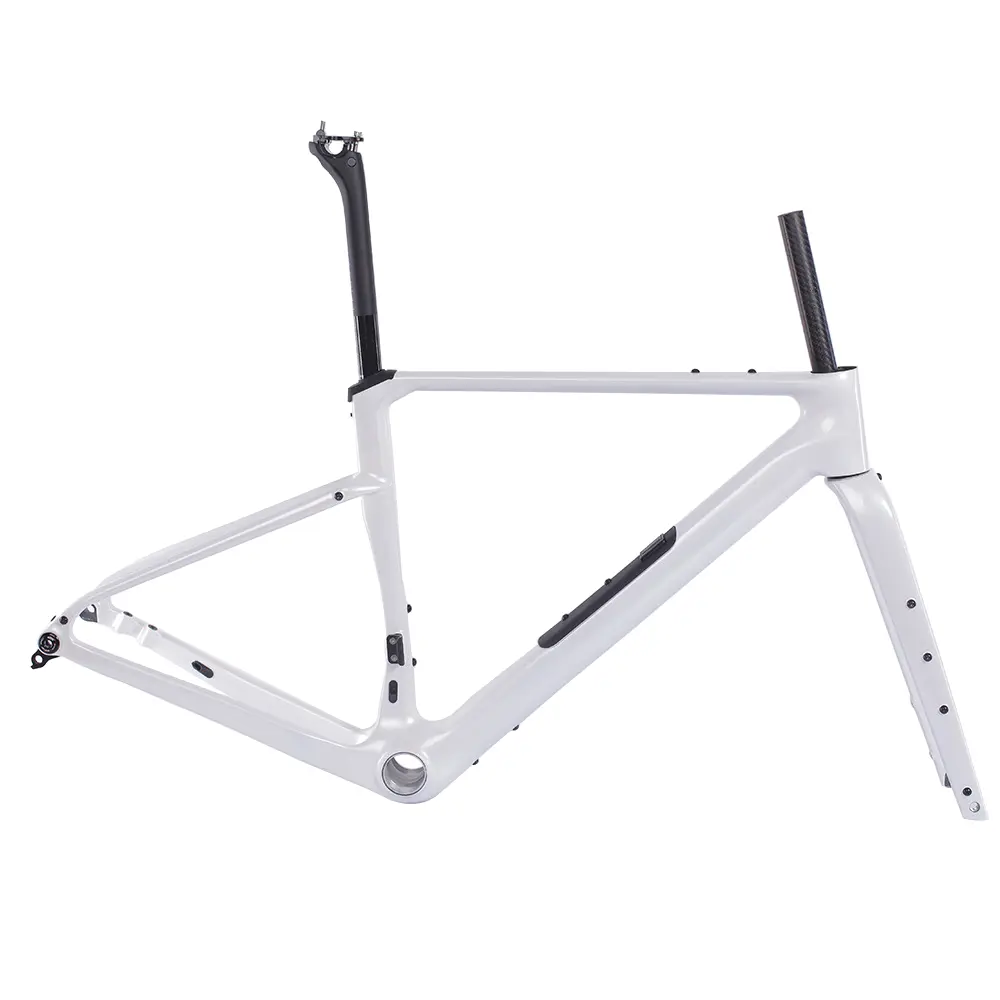
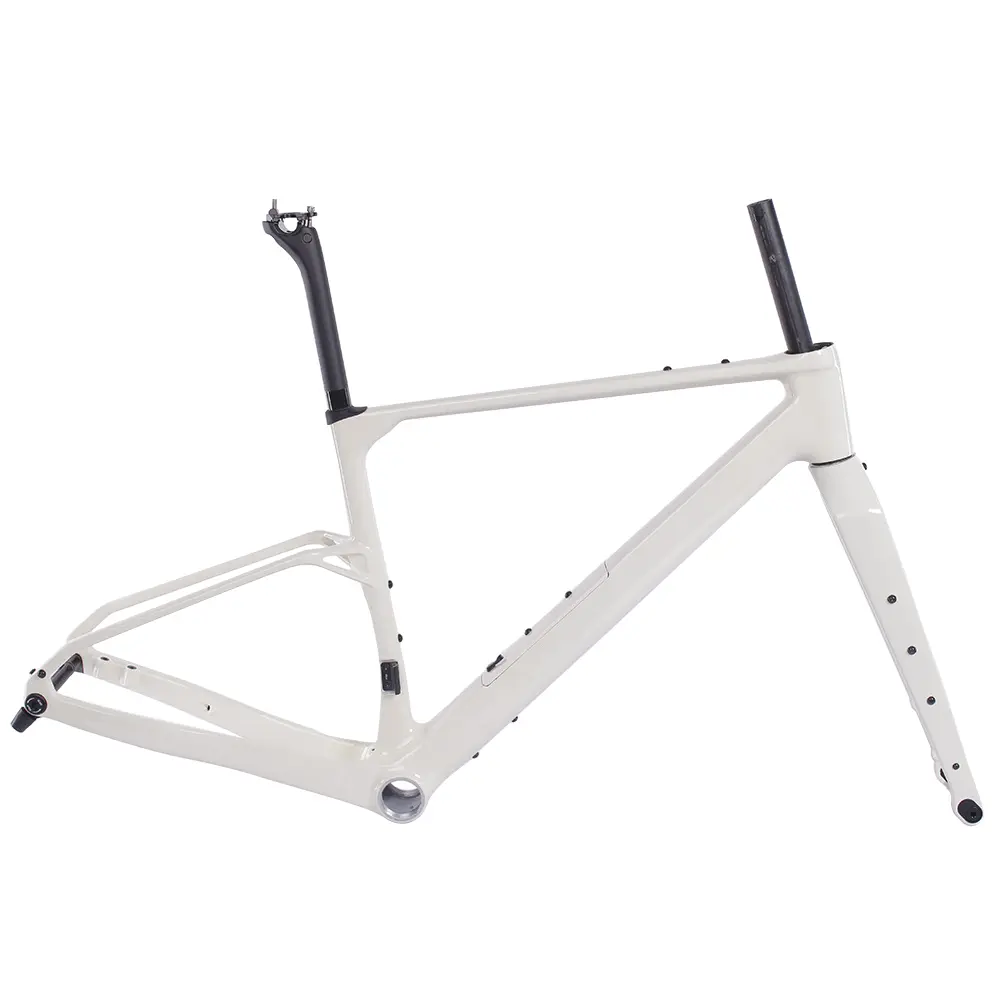
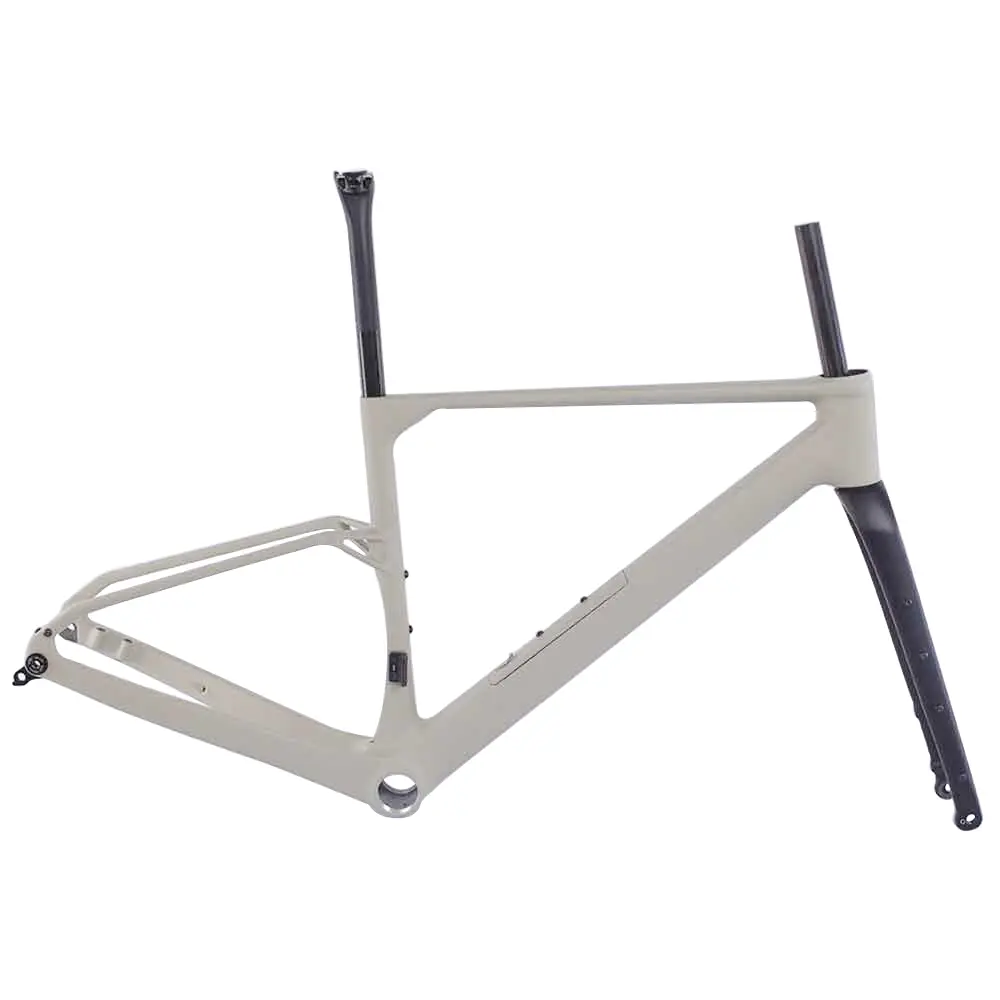
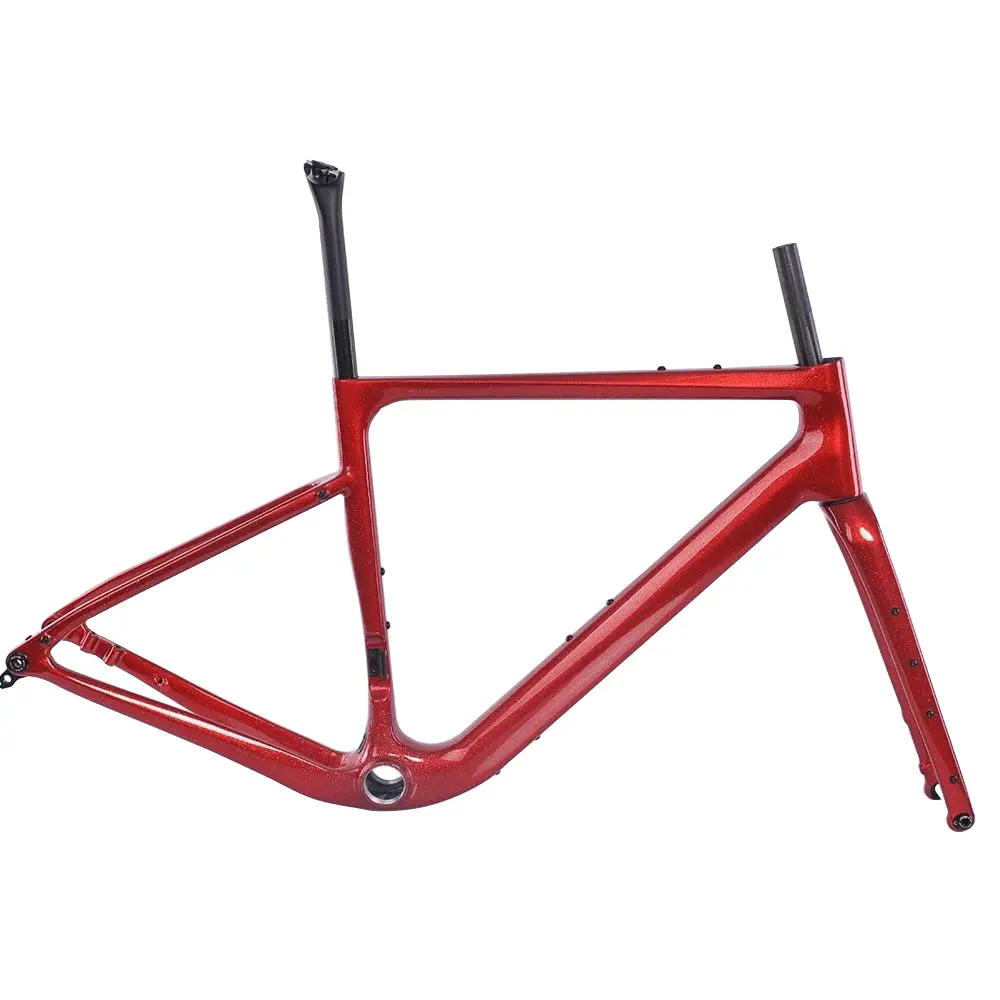
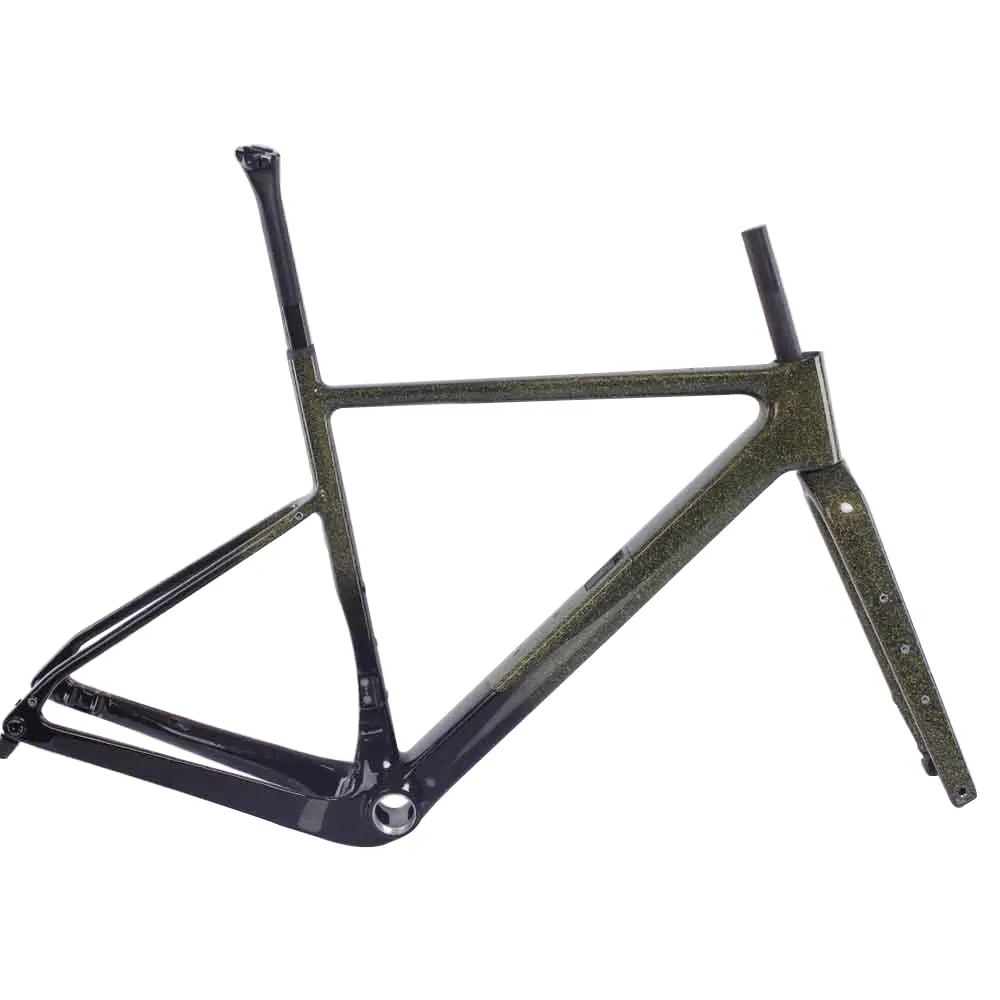
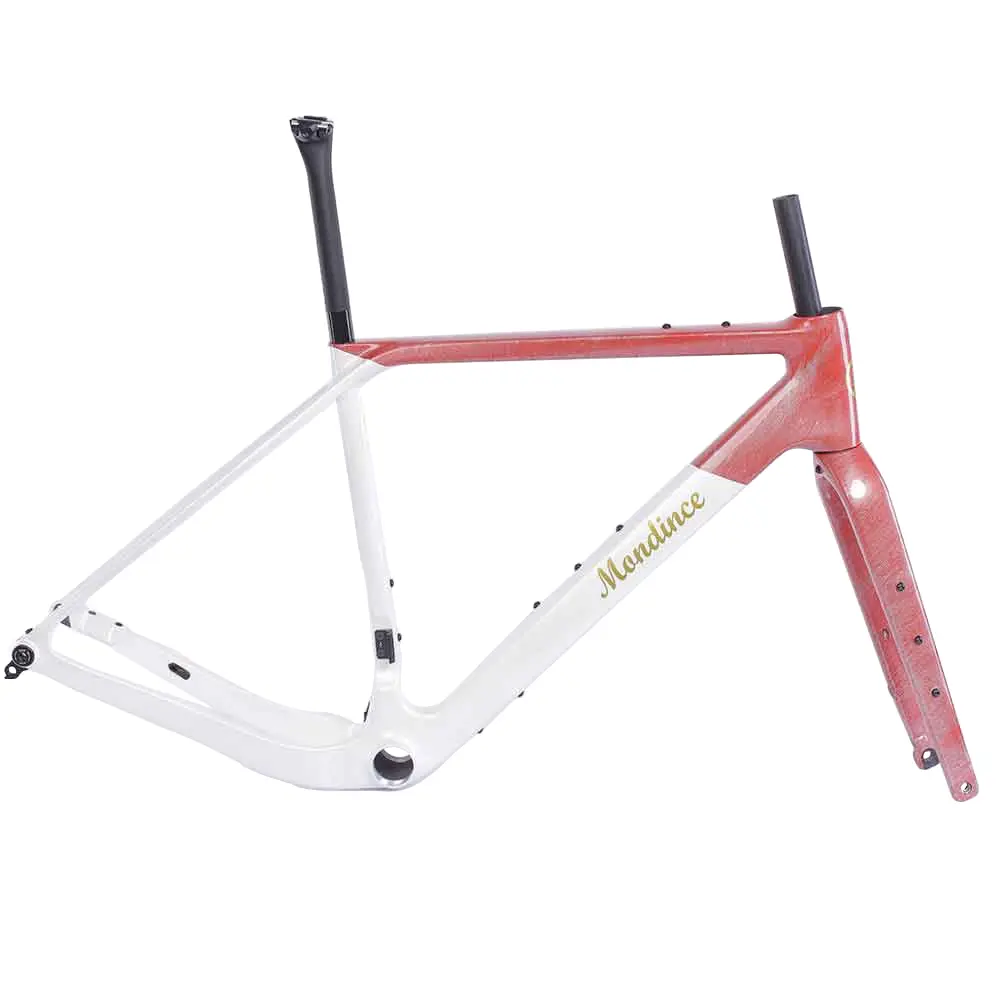
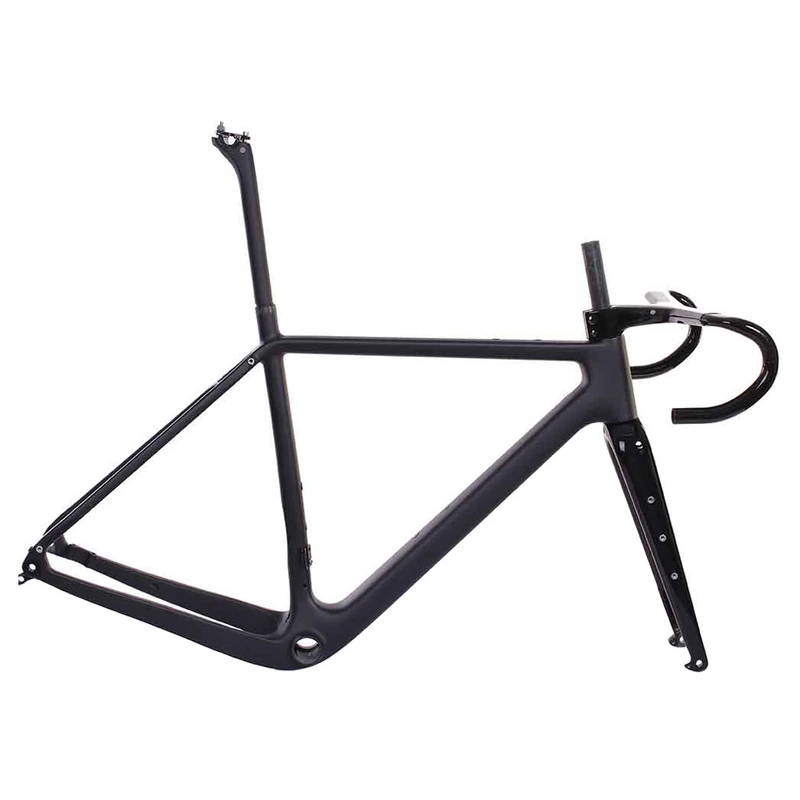
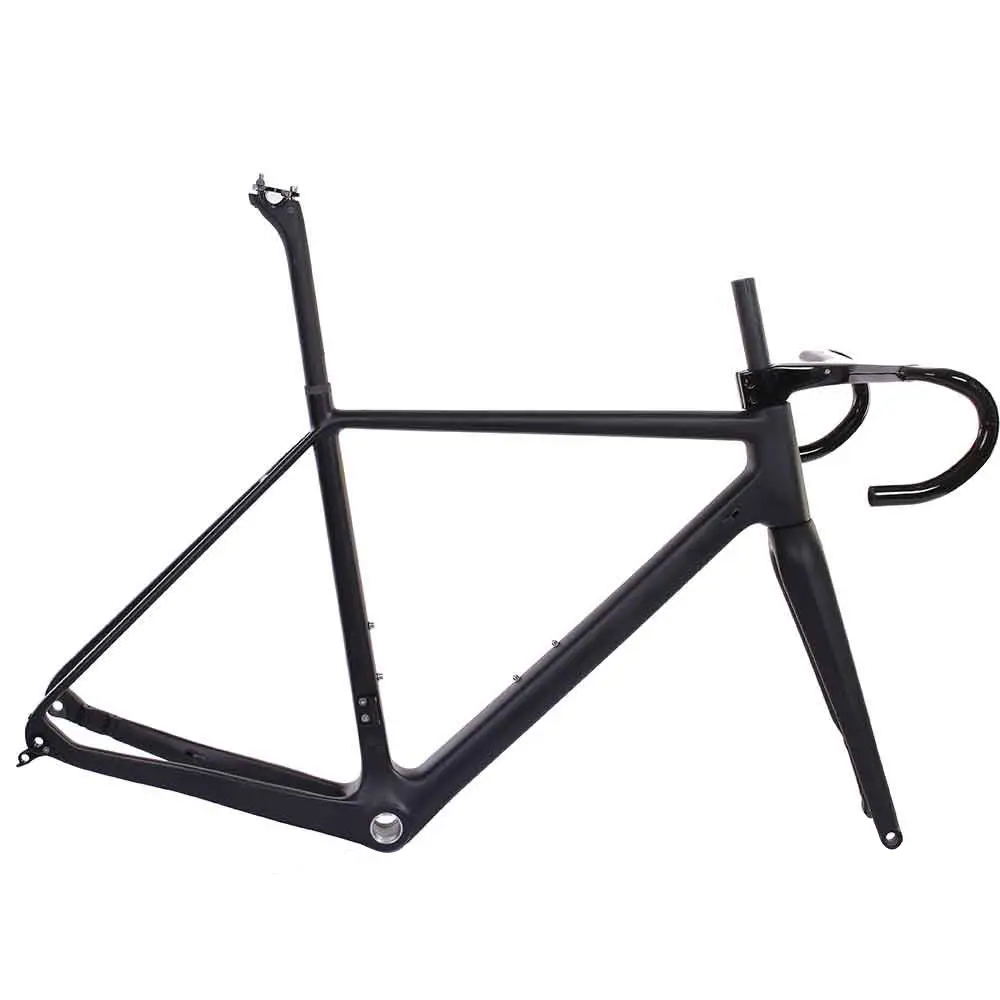
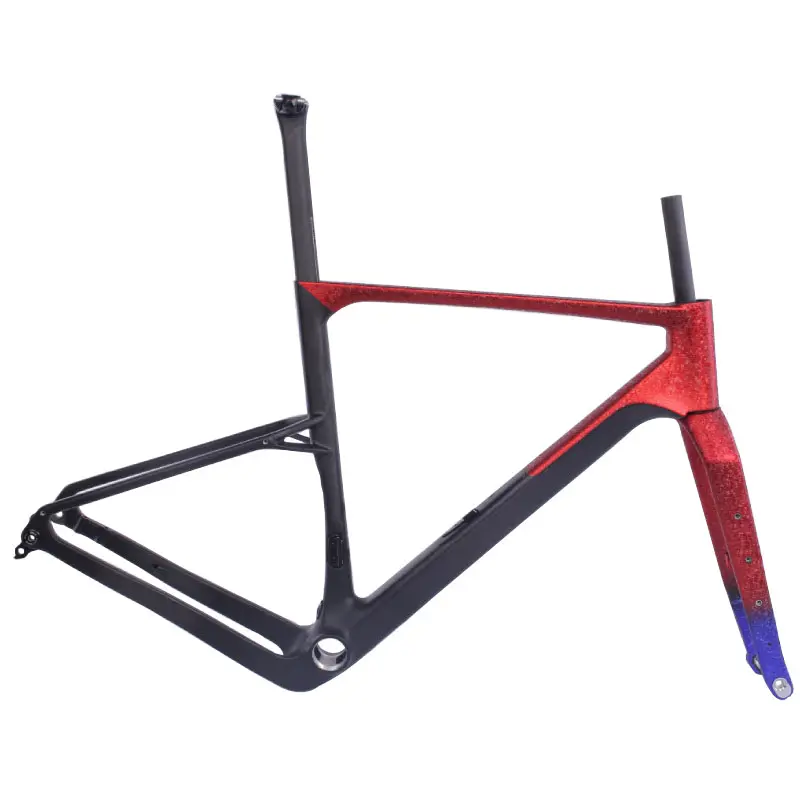
A gravel bike frame is specifically engineered for mixed-terrain riding — combining the speed of a road bike with the durability and stability of a mountain bike. Unlike road bikes designed purely for pavement, gravel frames are built to handle dirt roads, gravel paths, fire roads, and even smooth singletrack trails.
The fundamental difference lies in the geometry. Gravel bikes feature a more relaxed, upright riding position with a longer wheelbase and slacker head tube angles compared to road bikes. This design prioritizes stability and comfort over long distances on unpredictable surfaces, rather than lightning-quick steering feedback.
1.1 Gravel vs. Road: Key Differences
| Feature | Gravel Bike Frame | Road Bike Frame |
|---|---|---|
| Head Tube Angle | Slacker (68°–71°) | Steeper (72°–74°) |
| Wheelbase | Longer → more stable | Shorter → more agile |
| Riding Position | Upright, relaxed | Aero, aggressive |
| Frame Weight | 1,050g–1,200g (carbon) | 800g–1,000g (carbon) |
| Primary Terrain | Mixed, unpaved | Smooth pavement |
| Key Priority | Stability & comfort | Speed & aerodynamics |
2. Carbon vs. Aluminum: Which is Right for You?
When choosing a gravel bike frame material, carbon fiber has become the preferred choice for serious riders and brands alike. Here's why.
Carbon Fiber
Aluminum
2.1 Why Carbon Fiber Dominates Gravel
Carbon fiber offers the exceptional strength-to-weight ratio that serious gravel riders demand.
- Lightweight Yet Durable: Carbon frames can be up to 30% lighter than aluminum while maintaining superior strength.
- Superior Vibration Damping: Carbon naturally absorbs shocks better than metal frames, reducing fatigue on long rides.
- Stiffness Where It Matters: Carbon provides optimal stiffness in the bottom bracket and chainstays for efficient power transfer.
- Aerodynamic Advantages: Modern carbon gravel frames incorporate aerodynamic tube shaping.
- Corrosion Resistance: Unlike metal frames, carbon doesn't rust or corrode.
2.2 Toray T800 vs T1000: Choosing Your Carbon Grade
At Mondince, we use Toray — the world's leading carbon fiber manufacturer — exclusively.
| Specification | Toray T800 | Toray T1000 |
|---|---|---|
| Tensile Strength | 5.8 GPa | 7.0 GPa (21% stronger) |
| Tensile Modulus | 295 GPa | 315 GPa |
| Typical Frame Weight | 1,050g–1,150g | 890g–980g |
| Stiffness-to-Weight | Excellent | Superior |
| Best For | Adventure, Endurance, Value | Racing, Lightweight Builds, Pro Teams |
| EN Certification Level | Tour / XC Level | Gravity Level |
3. Gravel Frame Geometry Explained
Geometry is the mathematical foundation that predicts frame performance. Small changes yield significant outcomes — altering tube angles by only half a degree can dramatically reposition a rider on the bike or change steering performance.
3.1 The Critical Angles
Slacker angles create more trail, increasing stability at high speeds on rough descents.
A slightly steeper angle positions the rider forward for better power transfer on climbs.
Higher BB drop lowers center of gravity, increasing stability on descents.
3.2 Measurements That Matter
- Chainstay Length (420mm–440mm): Longer chainstays provide better traction on climbs and stability when loaded.
- Wheelbase: A longer wheelbase is always more stable — the more frame you have between wheels, the less they'll influence each other.
- Reach & Stack: Gravel bikes prioritize a higher stack and moderate reach for comfort.
4. The Importance of EN Certification
For brands entering the European market, EN certification is not optional — it's mandatory. At Mondince, all our gravel frames are EN certified to Gravity Level, the highest standard for off-road performance.
4.1 The 8 Rigorous EN Tests Explained
4.2 EN vs. ISO: What's the Difference?
ISO 4210 is the international bicycle safety standard. EN standards are the European adoption of these requirements, often with additional rigorous testing. At Mondince, our frames meet both EN and ISO 4210 certifications.
5. Custom OEM Gravel Frames – How It Works
Building your own brand of gravel bikes? Here's how the custom OEM process works at Mondince Cycle.
5.1 From Concept to Container: The 4-Step Process
Consultation
Share geometry, carbon grade, paint colors, quantity, and target market.
Design & Engineering
CAD drawings, carbon layup configuration, weight-stiffness optimization.
Mould & Sample
Mould making (free for large orders), sample production, EN/ISO testing.
Mass Production
Full production with custom painting, logo decals, quality control, and shipping.
5.2 MOQ, Pricing & Customization Options
Custom Paint & Logo
Any YS/Pantone color. MOQ: 30 frames
Custom Geometry
Full geometry customization. MOQ: 50 frames
Full T1000 Upgrade
980g lightweight racing frame. Premium tier
Free Mould
For orders of 500+ frames. Save $3,000–$5,000
"We needed a UCI-legal lightweight carbon gravel frame for our pro team. Mondince delivered a 980g T1000 frame that passed EN Gravity tests and helped us launch in 6 months."
— Technical Director, German Race Brand6. Frequently Asked Questions
7. Conclusion & How to Get Yours
Choosing the right gravel bike frame comes down to understanding your riding priorities: stability vs agility, weight vs durability, value vs ultimate performance. With Mondince Cycle, you get EN-certified quality, Toray carbon engineering, and a partner who's been manufacturing premium frames since 2007.
Whether you're building a brand, launching a pro team, or sourcing frames for a gravel race series, we're here to help you every step of the way — from CAD design to container delivery.
Ready to build your gravel bike frame?
Join 20+ brands worldwide using Mondince OEM/ODM service. From EN certification to custom geometry — we handle the engineering so you can focus on your brand.
Over 50 countries trust Mondince Cycle for their carbon frame needs.