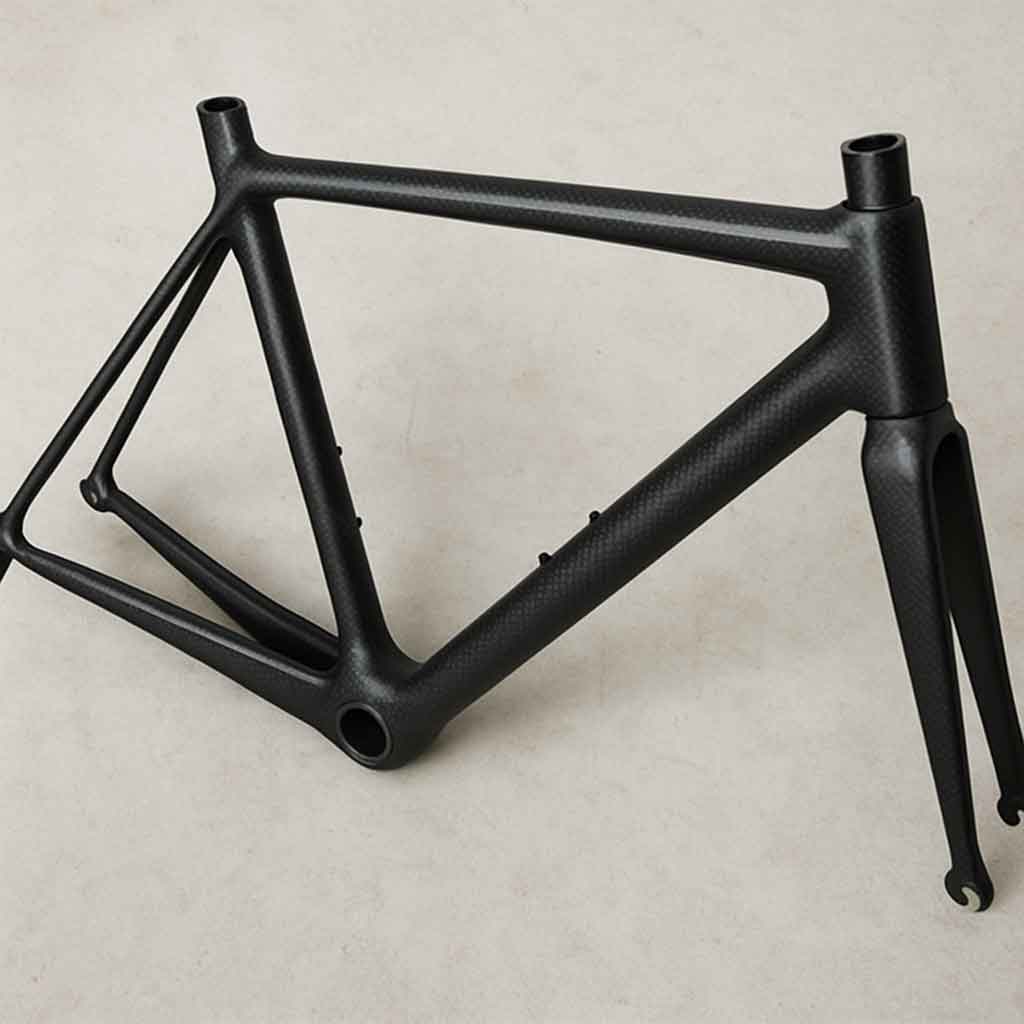

Carbon fiber is a polymer that is exceptionally strong and lightweight. Technically speaking, it's a carbon fiber reinforced polymer (CFRP) – a composite material consisting of thin crystalline filaments of carbon bonded together with a plastic resin. For a complete resource on how carbon fiber applies specifically to bicycles, visit our Carbon Fiber Frame Technology hub.
How Is Carbon Fiber Made?
The manufacturing process starts with a precursor, usually polyacrylonitrile (PAN). The steps include:
- Stabilization – heating the fibers in air to change their chemical structure
- Carbonization – heating to over 1,000°C in an oxygen-free environment to drive off non-carbon atoms
- Graphitization – optional high-temperature treatment to improve modulus
- Surface treatment – etching to improve bonding with resin
- Sizing – coating to protect fibers during handling
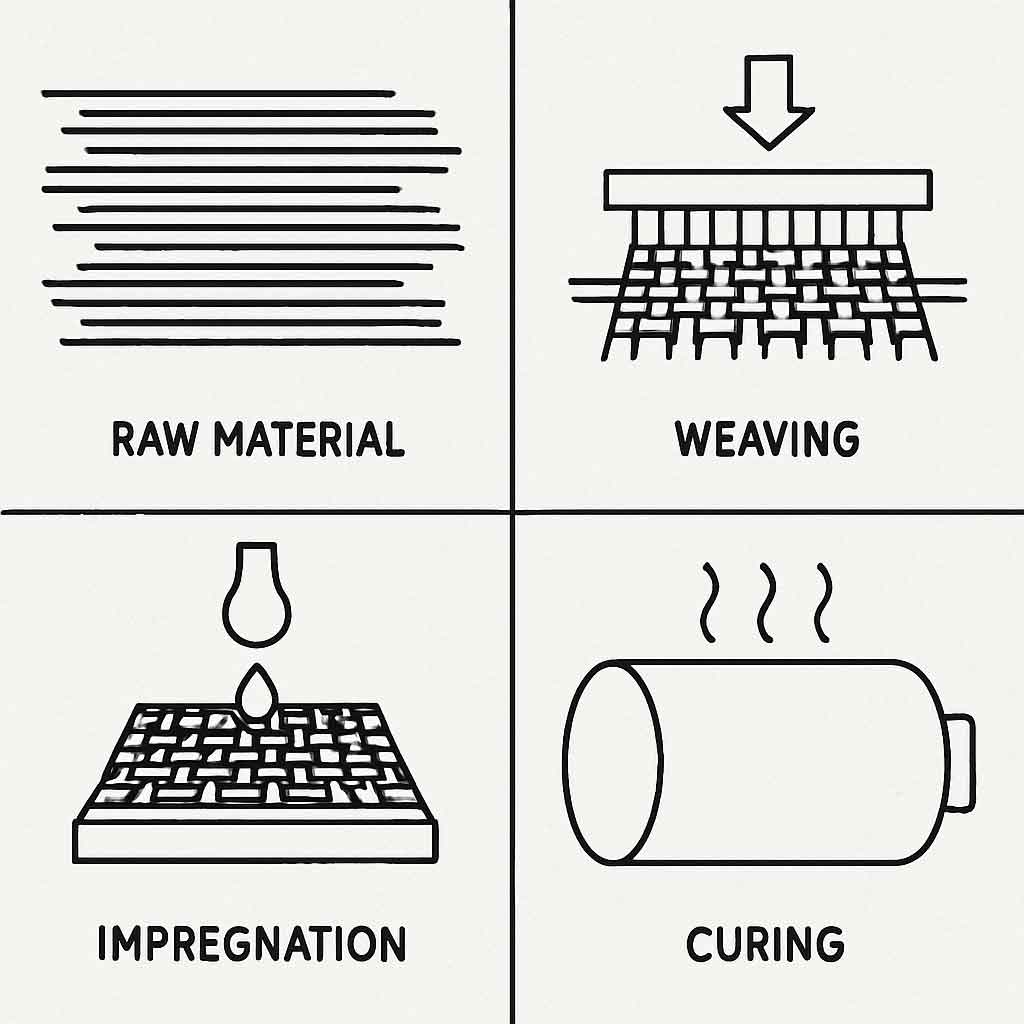
The resulting fibers are then woven into fabric or laid into sheets, then impregnated with epoxy resin and cured under heat and pressure. Mondince uses advanced EPS monocoque molding to ensure uniform internal pressure and void‑free construction. Learn more about our manufacturing process for custom carbon frames.
Key Properties of Carbon Fiber
- High strength-to-weight ratio – up to 5 times stronger than steel at 1/3 the density
- High stiffness – excellent resistance to bending and flexing
- Corrosion resistant – doesn't rust like steel or oxidize like aluminum
- Fatigue resistant – can withstand millions of load cycles without failure; carbon has no fatigue limit
- Low thermal expansion – maintains dimensions under temperature changes
These properties make carbon fiber ideal for high‑performance bicycles. To see how carbon compares to aluminum and steel in real riding, read our Carbon vs Aluminum vs Steel comparison.
Types of Carbon Fiber: T300, T800, T1000, M‑Series, and T1100
Toray (the world's largest carbon fiber producer) uses a letter-number system. T stands for "tensile strength" and M for "modulus". At Mondince, we combine this material expertise with our Carbon Fiber Frame Technology to deliver superior performance across all our framesets.
- T300 – standard modulus, used in early composite parts
- T700 – high-strength modulus, widely used in mid‑range frames
- T800 – 30% higher tensile strength than T300, common in mid-range bike frames
- T1000 – ultra-high strength, used in aerospace and premium bicycle frames
- T1100 – the latest generation, offering even higher tensile strength and stiffness for elite-level performance
- M-series (M40J, M60J) – high modulus (stiffer but more brittle), used in structures where deflection must be minimized
For an in-depth comparison of T800 vs T1000, including weight and cost differences, see our dedicated T800 vs T1000 guide. Our FM126 road frame uses Toray T1100, an even more advanced grade with optimized strength and stiffness.
Carbon Fiber vs Other Materials
| Material | Density (g/cm³) | Tensile Strength (MPa) | Stiffness (GPa) | Cost |
|---|---|---|---|---|
| Carbon Fiber (T800) | 1.8 | 5,500 | 294 | $$$$ |
| Aluminum 6061 | 2.7 | 310 | 69 | $$ |
| Steel (4130) | 7.8 | 670 | 205 | $ |
| Titanium 3Al-2.5V | 4.5 | 900 | 105 | $$$ |
Why Do Bike Manufacturers Use Carbon Fiber?
The combination of low weight and high stiffness allows engineers to create frames that are both responsive and comfortable. Carbon fiber can be laid up in different orientations to tune the ride feel – stiff where power is applied, compliant where road chatter occurs. This is impossible with metals.
Additionally, carbon fiber allows aerodynamic shapes (teardrop tubes, integrated cockpits) that would be too heavy in metal. Our FM076 aero road frame is a perfect example. For gravel and adventure riding, carbon's vibration damping is a major advantage – explore our Ultimate Guide to Gravel Bike Frames to learn more.
Limitations of Carbon Fiber
- High cost – raw material and labor-intensive manufacturing make carbon frames expensive
- Impact sensitivity – a sharp blow can cause internal delamination not visible from outside
- Repair difficulty – repairing carbon requires specialized skills and equipment
- Environmental concerns – recycling carbon fiber composites is still challenging
Despite these limitations, carbon fiber remains the top choice for performance cycling, especially when sourced from a certified manufacturer like Mondince. Every frame we produce is independently tested to 1.3× ISO 4210 standards – 30% above industry requirements – ensuring safety and durability. View our certification details.
Frequently Asked Questions About Carbon Fiber
Is carbon fiber stronger than steel?
In terms of strength-to-weight ratio, yes – carbon fiber is up to 5 times stronger than steel per unit weight. However, pure tensile strength of steel can be higher in some grades. For bicycle frames, carbon fiber's stiffness and weight savings make it superior for performance applications.
Does carbon fiber break easily?
Carbon fiber has excellent fatigue resistance but is not as tough as metals against sharp impacts. A crash that would dent an aluminum frame could crack a carbon frame. However, modern carbon frames are over-engineered – our frames are tested at 130% of ISO 4210 standards. Read our guide to understanding cracks in carbon frames for more details.
What is the difference between T700 and T800 carbon fiber?
T800 has about 30% higher tensile strength (5,500 MPa vs 4,900 MPa) and 10% higher modulus (294 GPa vs 230 GPa) compared to T700. T800 is used in higher-end frames because it allows thinner walls for the same stiffness, reducing weight. For a full comparison of all Toray grades, visit our carbon fiber technology page.
Conclusion
Carbon fiber is a remarkable composite material that has revolutionized bicycle design. Understanding its properties – from strength to weight ratio to manufacturing nuances – helps you make an informed decision when buying a carbon bike frame. At Mondince Cycle, we use only premium Toray carbon fiber (T700, T800, T1000, and T1100). To dive deeper into how we transform these materials into high‑performance frames, explore our dedicated Carbon Fiber Frame Technology page. Every frame is tested to 1.3 times ISO standards. Contact us for custom carbon frame solutions or OEM partnerships.
Ready to build your own carbon bike? Browse our full range of carbon frames or request a custom quote.