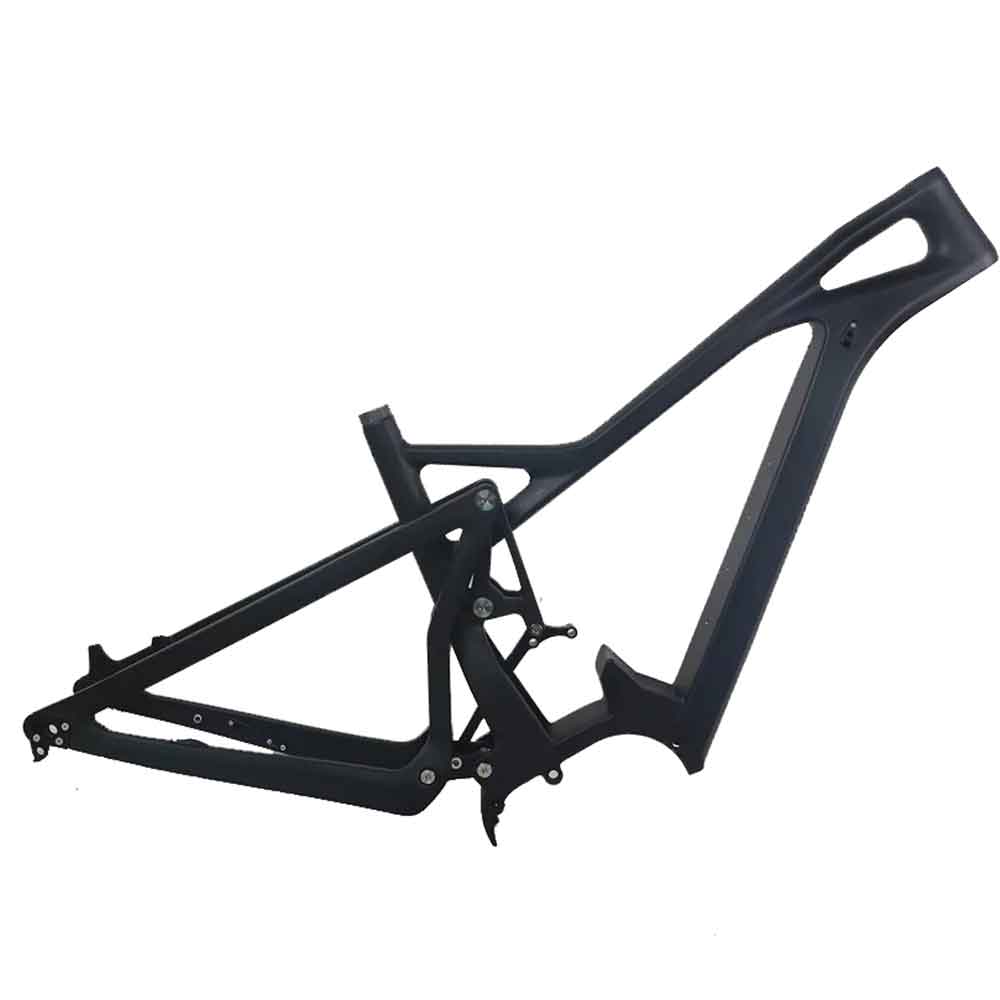

Choosing the right ebike frame is the single most important decision you'll make when building or buying an electric bicycle. Unlike a traditional bike, an ebike frame must integrate a motor, battery, wiring, and often a display — all while maintaining strength, handling, and ride quality.
In this guide, we'll walk you through 7 critical factors for selecting the perfect ebike frame: motor compatibility, battery integration, frame material (carbon vs aluminum), geometry, suspension, tire clearance, and OEM customization options. By the end, you'll know exactly what to look for — whether you're a brand launching an ebike line or an individual building a custom electric bike.
Lightweight, EN/ISO certified, integrated battery, OEM ready.
1. Motor Compatibility – The Foundation of Your Ebike
The motor is the heart of any electric bike. Before you even look at frame colors or geometries, you must decide which motor system you'll use — because the frame must be designed specifically for it.
Mid-Drive vs Hub Motors
| Feature | Mid-Drive Motor | Hub Motor |
|---|---|---|
| Weight Distribution | ✅ Central, low | ❌ Rear or front, unbalanced |
| Climbing Ability | ✅ Excellent (leverages gears) | ❌ Poor on steep hills |
| Frame Integration | Requires custom mounts | Simpler (dropout mounted) |
| Typical Power | 250W – 1,000W | 250W – 750W |
Popular Motor Brands & Their Mounting Standards
- Bosch Gen4 / Smart System – Requires dedicated mounting plates and clearance for the 85Nm motor unit. Used in premium e-MTBs and cargo bikes.
- Shimano EP8 / EP801 – Compact design, compatible with most mid-drive frames. Smooth, quiet, and reliable.
- Bafang M-series (M510, M620, M600) – Larger motor, needs reinforced dropouts. Popular in high-power and DIY builds.
- Fazua Ride 60 – Lightweight, fits in downtube. Ideal for road and gravel ebikes where weight matters.
- Brose / Yamaha / Ananda – Other common systems with varying mounting standards.
Pro tip: Always choose your motor before selecting a frame. Mondince offers frames pre-configured for Bosch, Shimano, Bafang, and Fazua — with motor mounting plates pre‑installed.
📌 Already know you want a Bosch system? Read our dedicated Bosch Gen4 Carbon Ebike Frame Guide – Full Suspension & Integrated Battery.
📌 Related: Bosch Gen4 Carbon Ebike Frames – full suspension, integrated battery, OEM ready.
2. Battery Integration – Integrated vs External
Battery placement dramatically affects handling, aesthetics, and practicality.
Integrated (Downtube) Battery
- Pros: Clean look, low center of gravity, better handling, protected from impacts and weather.
- Cons: Harder to remove, requires custom frame molding, longer lead time for samples.
External (Bottle / Rack) Battery
- Pros: Easily removable for charging, can be swapped between bikes, lower frame cost.
- Cons: Higher center of gravity, exposed to elements, less aesthetic, can rattle.
For most premium OEM projects, integrated battery is the preferred choice. Mondince ebike frames feature custom‑molded downtubes that seamlessly integrate 48V/52V batteries, including Bosch PowerTube (625Wh), Shimano, and Bafang battery systems.
3. Frame Material – Carbon vs Aluminum vs Steel
We covered this in depth in our previous guide, but here's the quick summary for ebike applications:
| Feature | Carbon | Aluminum | Steel |
|---|---|---|---|
| Weight | Lightest (1.9–3.5kg) | Medium (2.5–4.5kg) | Heavy (3.5–6kg) |
| Vibration Damping | Excellent | Poor | Good |
| Fatigue Life | Infinite | Finite (10–15 years) | Infinite |
| Customization | Unlimited | Limited | Limited |
| Cost | Higher | Lower | Lowest |
For high‑performance ebikes (e-MTB, speed pedelecs, premium commuters), carbon fiber is the best choice. For budget or cargo applications, aluminum remains practical.
👉 Read our full carbon vs aluminum ebike frame guide →
⚖️ Still deciding between carbon and aluminum? Our deep‑dive comparison covers 7 factors: Carbon vs Aluminum Ebike Frame – Which One Should You Choose?
4. Geometry – How the Frame Should Fit You
Ebike geometry differs from traditional bikes because of the additional weight and motor torque.
Key Geometry Numbers to Check
- Reach and stack – Determines your riding position. More reach = more stretched out (aggressive). Higher stack = more upright (comfortable).
- Chainstay length – Longer chainstays improve stability at speed but reduce maneuverability. Ebikes often have slightly longer chainstays.
- Bottom bracket drop – A lower BB improves stability but increases pedal strike risk on rough terrain.
- Head tube angle – Slack angles (64–66°) are for enduro / downhill; steeper angles (68–70°) are for XC / commuting.
Mondince offers custom geometry for brand partners — we can tailor reach, stack, chainstay length, and suspension kinematics to your exact specifications.
5. Suspension – Hardtail vs Full Suspension
Ebikes are heavier than regular bikes, so suspension choice matters even more.
Hardtail Ebike Frame
- Best for: Urban commuting, gravel, XC racing, budget builds
- Pros: Lighter, more efficient on smooth terrain, lower maintenance, more affordable
- Cons: Less comfort on rough trails, rear wheel can bounce over bumps
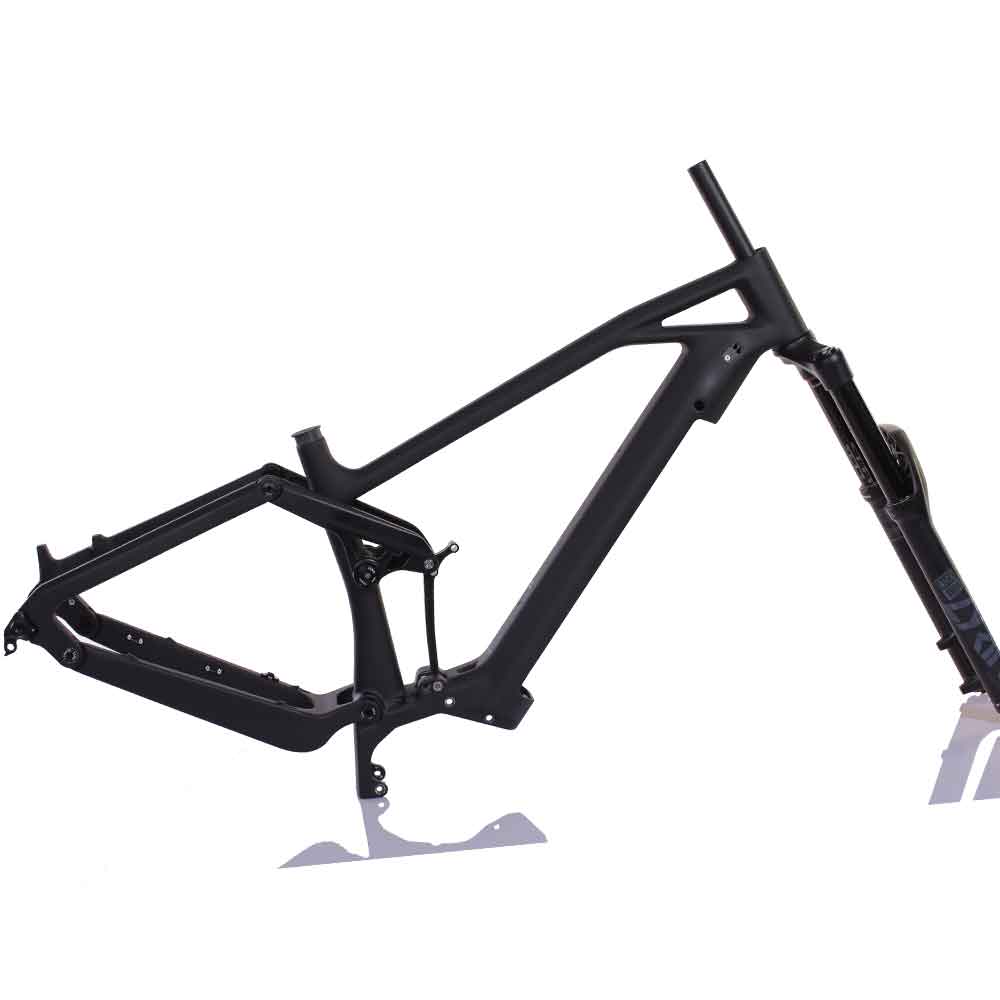
Full Suspension Ebike Frame
- Best for: Trail, enduro, technical descents, all-mountain riding
- Pros: Superior traction, more comfort, better control on rough terrain
- Cons: Heavier, more moving parts (shock + linkage), higher cost
Mondince offers both hardtail (FM218, FM228, FM238) and full suspension (FM198, FM248) ebike frames, as well as long-travel e-MTB frames (FM368, FM388, FM408).
🏔️ Not sure which suspension travel suits your riding? See real examples in our Complete Guide to Choosing a Carbon Ebike Frame – 7 Key Factors.
6. Tire Clearance – Don't Limit Your Terrain
Ebikes often ride on mixed terrain — pavement, gravel, dirt, and even singletrack. Tire clearance determines what you can fit.
- Road / Urban – 32–42mm tire clearance
- Gravel / Mixed terrain – 45–50mm tire clearance
- Trail / Enduro – 2.4–2.6 inch (60–66mm) — often 27.5" wheels
- Plus / Fat – 3.0–4.5 inch — requires wider chainstays and fork
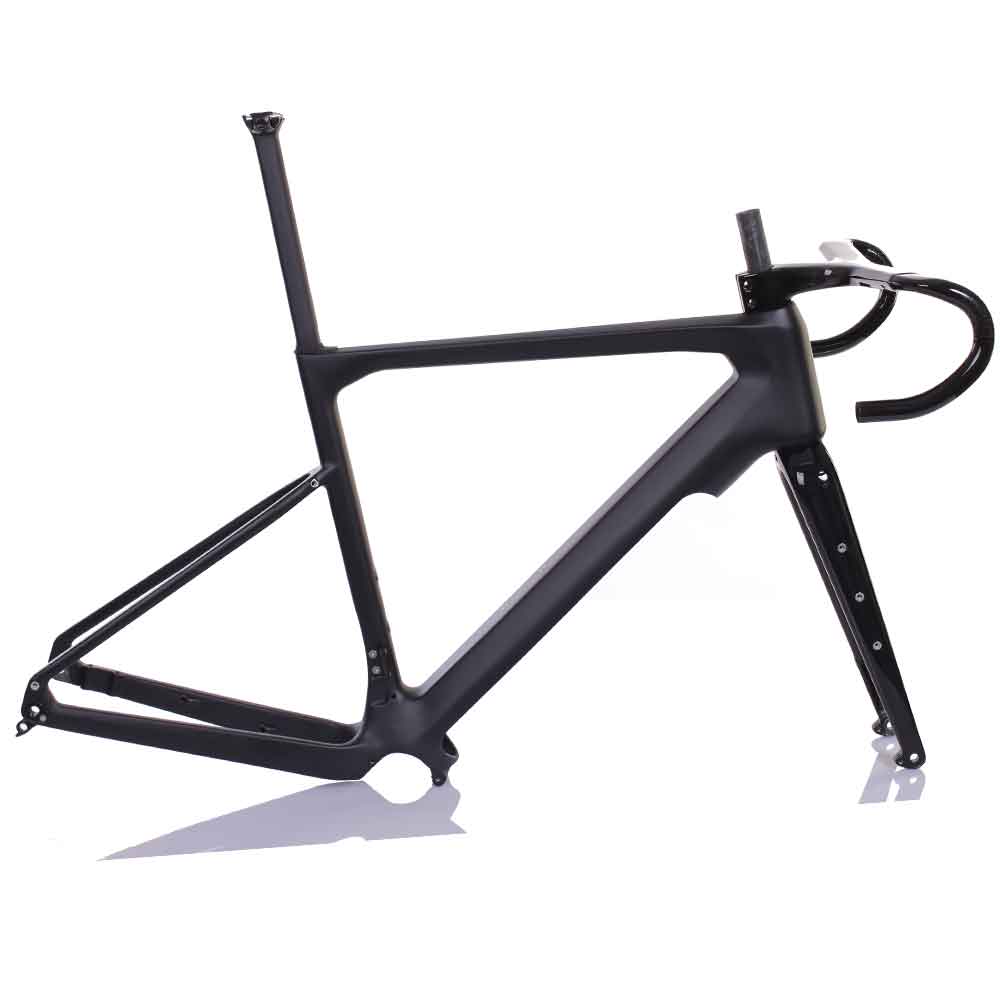
Mondinge gravel ebike frames like the FM396 offer 45mm tire clearance, while full-suspension e-MTB frames support up to 27.5"x3.0" tires.
7. OEM Customization – Paint, Geometry, Branding
If you're a brand, customizing your ebike frame is essential to stand out. Mondince offers:
- Custom geometry – Tailored reach, stack, chainstay length, suspension kinematics, and motor mounting angles.
- Custom painting – Any RAL or Pantone color, matte/gloss/chameleon finishes, logo placement.
- Custom battery integration – Adapt downtube to your battery supplier (with volume orders).
- MOQ flexibility – 1 set for standard colors, 30 sets for custom painting, 50 sets for custom geometry.
- Certification support – EN 15194, ISO 4210, EFBE TRI‑TEST® documentation.
💰 Planning a custom project? Understand the real costs before you start: How Much Does a Custom Carbon Bike Frame Cost? – OEM Pricing Breakdown.
👉 Learn more about OEM custom carbon frames →
Quick Comparison: Mondince Ebike Frame Models
| Model | Type | Motor Compatibility | Battery | Best For |
|---|---|---|---|---|
| FM368 | Full Suspension | Bosch Gen4 CX | Integrated 625Wh | Enduro / Downhill |
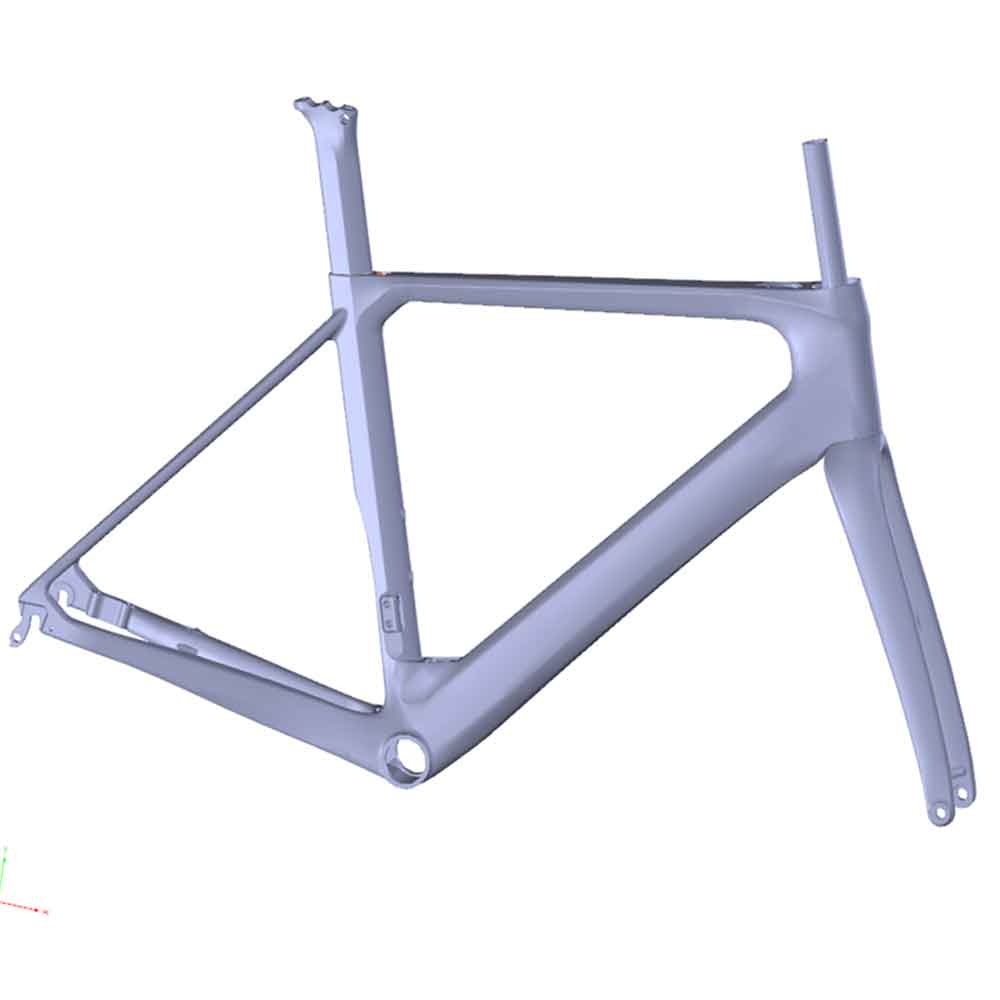
| FM406 | Road Frameset | FSA HM 1.0 hub | Integrated 250Wh | Urban / Commuting |
| FM396 | Gravel | Fazua Ride 60 | Integrated 430Wh | Gravel / All-road |
| FM388/FM408 | Full Suspension | Bafang M620 | External 48V/52V | Aggressive e-MTB |
| FM378 | Full Suspension | Shimano EP8 | External | Trail / All-mountain |
Frequently Asked Questions – Ebike Frame Selection
A: No. Each motor brand has its own mounting standard. Always choose a frame specifically designed for your motor (e.g., Bosch, Shimano, Bafang).
A: Integrated downtube battery provides the lowest center of gravity and best handling.
A: Road-oriented frames: 1.9–2.5kg; hardtail e-MTB: 2.5–3.2kg; full suspension e-MTB: 3.0–4.5kg.
A: Standard colors: MOQ from 1 set. Custom painting: 30 sets. Custom geometry: 50 sets.
A: Yes. Tested to 130% of ISO 4210 standards. EFBE TRI‑TEST® available for EU compliance.
📚 Further Reading – Ebike Frame Deep Dive
Full suspension, integrated battery, OEM ready
Read Guide →7‑factor comparison to help you decide
View Comparison →From sample to mass production – real pricing
See Breakdown →Ready to build your ebike project?
Get a quote for custom carbon ebike frames – OEM, wholesale, or single units.
Contact Our Team →Browse All Ebike Frames →
Bosch Gen4 Ebike Frames →