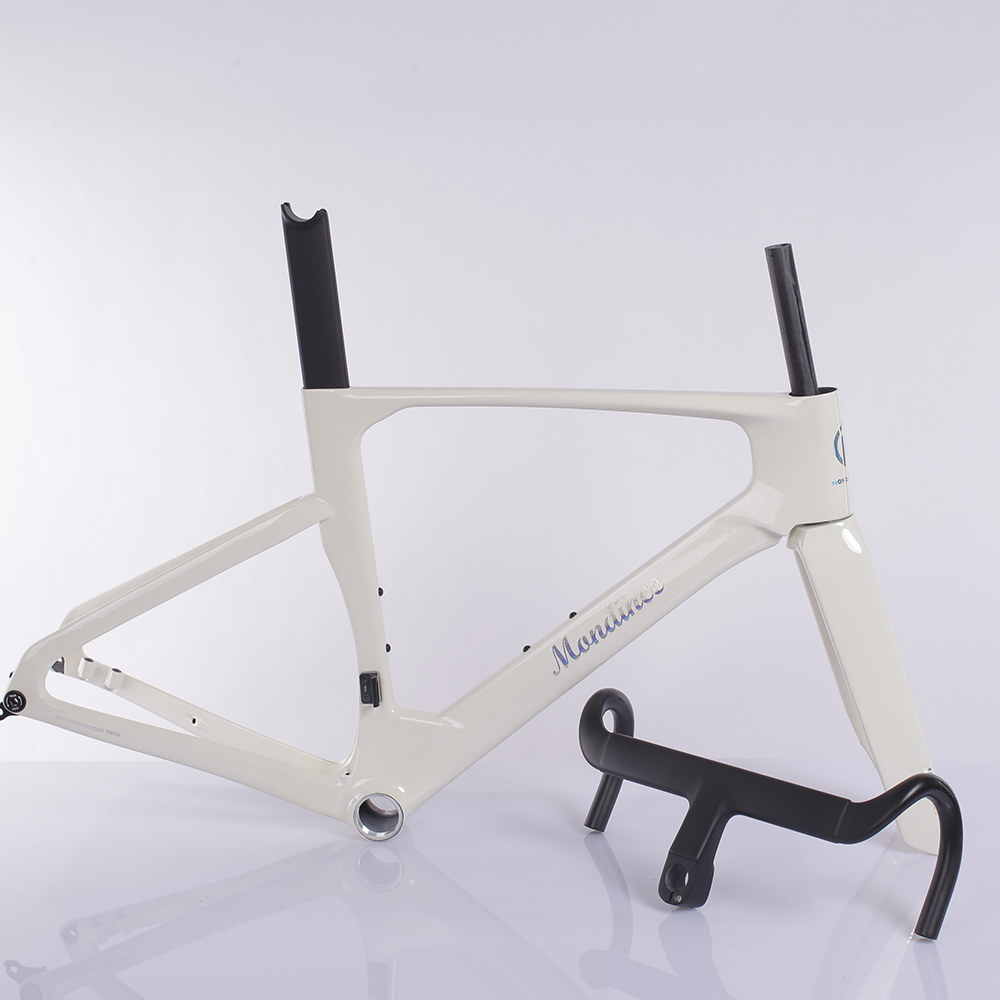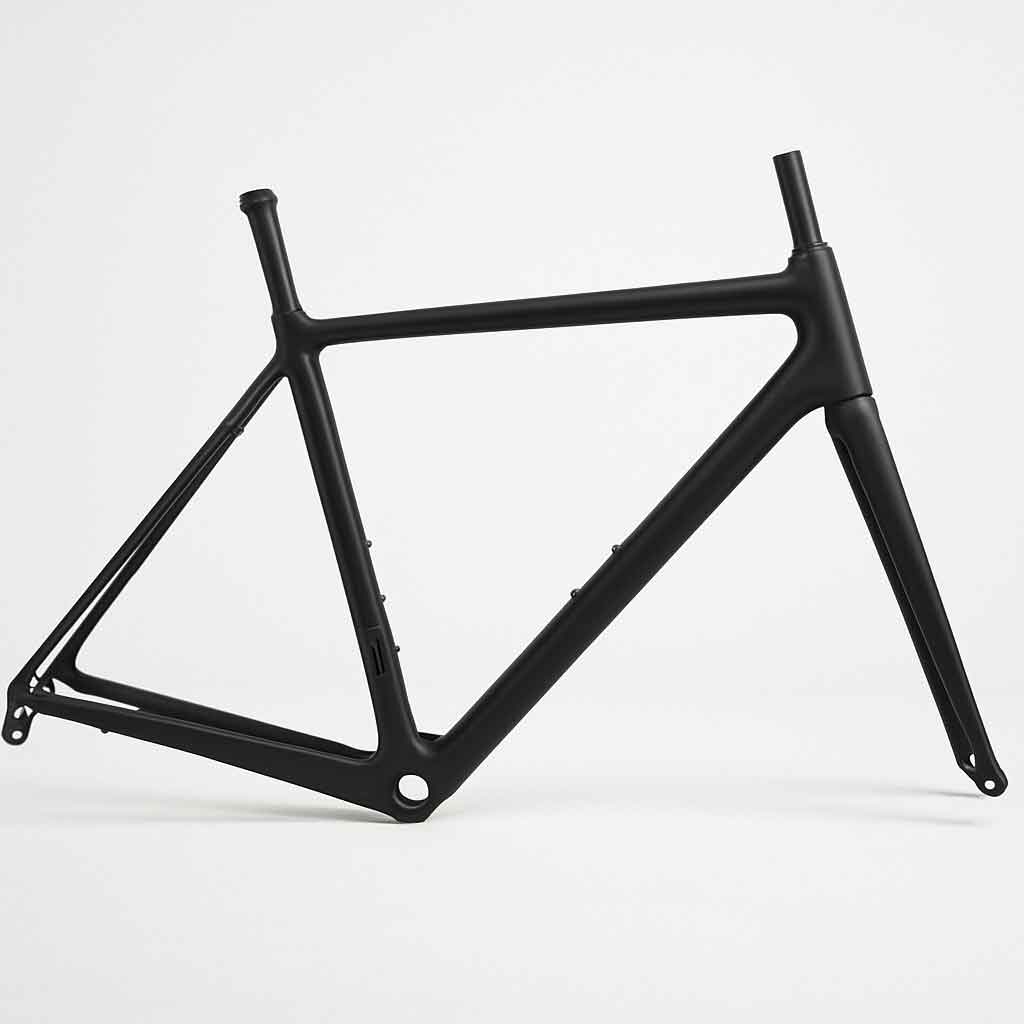

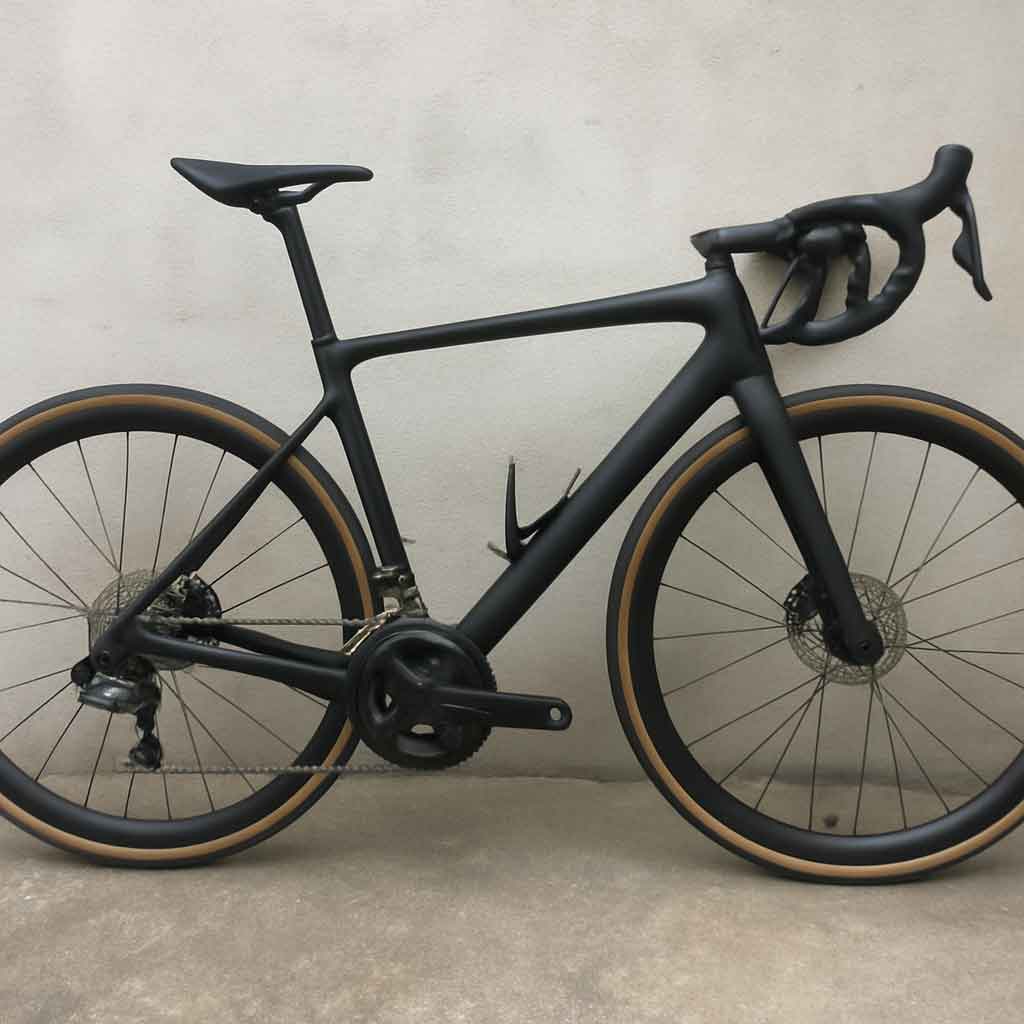
If you are searching for a carbon fiber road bike, you already know that this material has revolutionized cycling. Carbon frames are lighter, stiffer, and more comfortable than traditional aluminum or steel. But with so many options available, how do you choose the right one? In this guide, we break down everything you need to know about carbon fiber road bikes – from frame types and geometry to the best Mondince models for every riding style.
⚡ Quick Navigation
➡️ Why Choose a Carbon Fiber Road Bike?
➡️ Carbon vs Aluminum – What’s the Difference?
➡️ Mondince Carbon Road Frames | FM126, FM106 & FM066
➡️ Carbon Road Bike Size Chart
➡️ How to Maintain Your Carbon Road Bike
➡️ FAQ – Between Sizes, Women's Frames & More
Why Choose a Carbon Fiber Road Bike?
Carbon fiber road bikes have become the gold standard for riders who value performance, weight savings, and ride quality. Unlike metal frames, carbon can be engineered to be stiff where you need power transfer (bottom bracket, head tube) and compliant where you want comfort (seat stays, fork).
- Lightweight: A quality carbon frame weighs as little as 760g (size S) – significantly lighter than aluminum (typically 1,100–1,400g)[reference:0]. This means faster climbing, quicker acceleration, and less fatigue.
- Stiffness & Power Transfer: Carbon‘s high stiffness-to-weight ratio ensures that every watt you put into the pedals goes directly into forward motion. High-modulus carbon layups used by Mondince achieve exceptional stiffness without adding weight[reference:1].
- Vibration Damping: The natural flexibility of carbon fiber absorbs road chatter, providing a smoother, less fatiguing ride – especially noticeable on rough pavement or long distances[reference:2].
- Aerodynamic Shapes: Unlike metals, carbon can be molded into complex aerodynamic tube shapes (Kamm tail, truncated airfoils) that reduce drag and save watts at speed.
At Mondince Cycle, we have been manufacturing carbon fiber road bike frames since 2007, using only premium Toray T800, T1000 and T1100 carbon. Every frame is tested at 130% of ISO 4210 standards – exceeding industry safety requirements.
Carbon vs Aluminum – What’s the Real Difference?
| Feature | Carbon Fiber Road Bike | Aluminum Road Bike |
|---|---|---|
| Weight (frame) | 760–950g (high‑end) | 1,100–1,400g |
| Vibration damping | Excellent – absorbs road chatter | Poor – transmits vibrations to rider |
| Stiffness customization | Yes – tunable per zone | No – uniform stiffness |
| Aerodynamic shaping | Complex, wind‑tunnel tested | Limited by metal extrusion |
| Fatigue life | Excellent (no fatigue limit) | Limited (prone to long‑term fatigue) |
| Price (frame) | $$$ – $$$$$ | $ – $$ |
Aluminum frames offer good value for beginners, but carbon fiber road bikes deliver superior performance, comfort, and longevity. For riders who log serious miles, the upgrade to carbon is well worth the investment.
Mondince Carbon Road Frames – FM126, FM106 & FM066
We offer three distinct road frame platforms, each optimized for a specific riding style. All feature T47 bottom brackets (no creaking), fully internal cable routing (clean aesthetics), and UDH hangers (future‑proof).
🚀 Mondince FM126 – Ultralight Aero Race Frame (T1100 Carbon)
The FM126 is our flagship carbon fiber road bike frame. Weighing just 760g (size S), it uses Toray T800/T1100 carbon with an advanced EPS monocoque molding process that eliminates internal wrinkles and guarantees consistent wall thickness[reference:3].
- Weight: 760g (S) / 840g (M) / 920g (L)
- Material: Toray T800 + T1100 high‑modulus carbon
- BB Type: T47 (threaded, creak‑free)
- Tire clearance: 32mm – light gravel capable
- Best for: Racing, climbing, aggressive group rides
- T47 bottom bracket, fully internal routing, UDH hanger
🏁 Mondince FM106 – Aggressive All‑Round Aero Road Frame
The FM106 takes a more aggressive geometry than the FM126, with a lower stack and more compact wheelbase for instant handling response. Forum reviews highlight it as "the most aggressive road bike in Mondince‘s lineup" – ideal for riders who prioritize sharp steering over all‑day comfort[reference:4].
- Weight: Approx. 950g (size M)
- Material: Toray T800 + T1000 carbon
- BB Type: T47
- Tire clearance: 30mm
- Best for: Fast group rides, crit racing, aggressive fit
- Fully internal routing, UDH hanger, aero tube shapes
🚴 Mondince FM066 – Lightweight Endurance Road Frame
For riders who prioritize comfort on long days, the FM066 features endurance geometry – taller head tube, shorter reach, and longer wheelbase for stability and reduced fatigue. Weighing just 720g (size S) with Toray T1000/T1100 carbon, it‘s one of the lightest endurance frames available[reference:5].
- Weight: 720g (S) / 800g (M) / 880g (L)
- Material: Toray T1000 + T1100 carbon
- BB Type: T47
- Tire clearance: 32mm
- Best for: Sportives, long distances, gran fondos, all‑day comfort
Carbon Road Bike Size Chart – Finding Your Perfect Fit
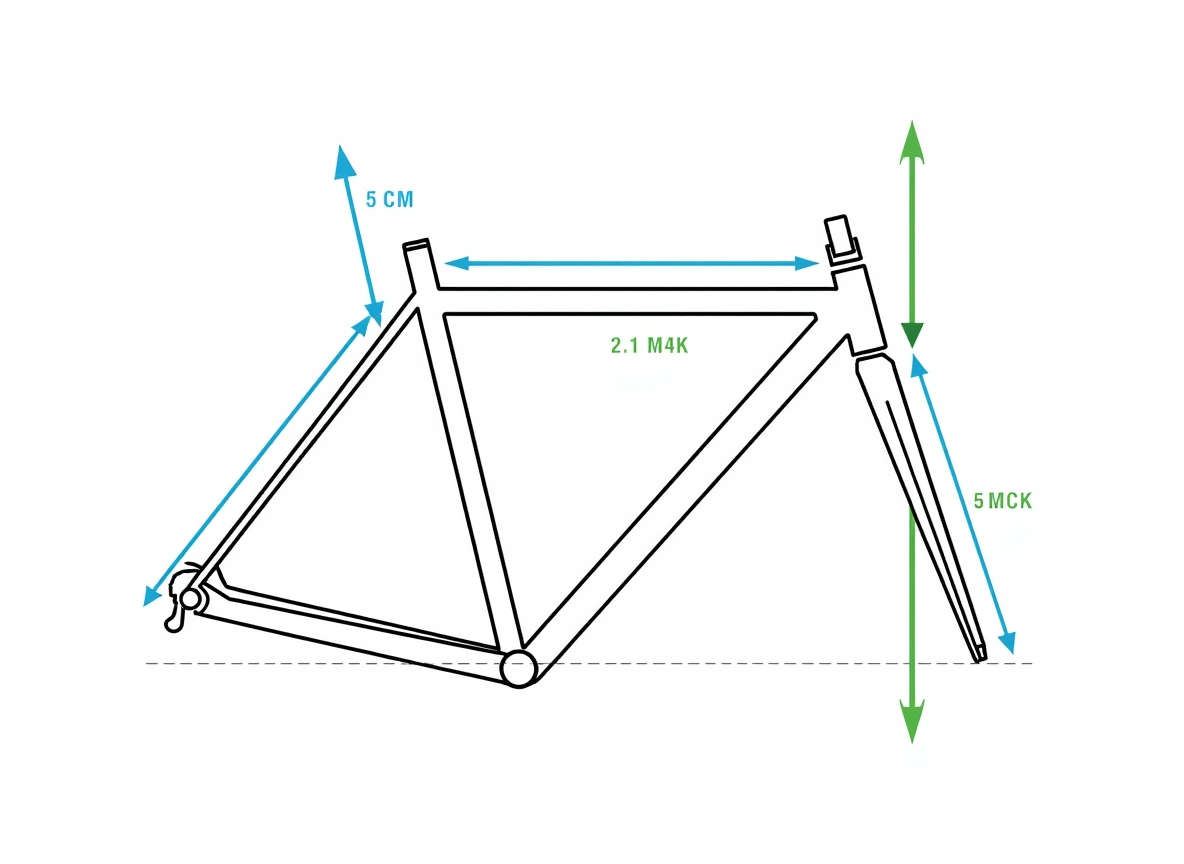
Choosing the correct frame size is critical for comfort, power transfer, and injury prevention. Use the chart below as a starting point, then fine‑tune with stem length and handlebar reach.
| Rider Height | Inseam (cm) | FM126 Frame Size | FM106 Frame Size | FM066 Frame Size |
|---|---|---|---|---|
| 152–160 cm (5'0" – 5'3") | 66–71 cm | 47 (XXS) | 48 (XS) | 47 (XXS) |
| 160–168 cm (5'3" – 5'6") | 71–76 cm | 49 (XS) | 50 (XS/S) | 49 (XS) |
| 168–175 cm (5'6" – 5'9") | 76–81 cm | 51 (S) | 52 (S/M) | 51 (S/M) |
| 175–183 cm (5'9" – 6'0") | 81–86 cm | 54 (M) | 54 (M) | 54 (M) |
| 183–190 cm (6'0" – 6'3") | 86–91 cm | 56 (L) | 56 (L) | 56 (L) |
| 190–198 cm (6'3" – 6'6") | 91–96 cm | 58 (XL) | 58 (XL) | 58 (XL) |
Quick formula: Road frame size (cm) = Inseam (cm) × 0.67. For the most accurate fit, contact our team for personalized advice.
How to Maintain Your Carbon Fiber Road Bike
Carbon fiber is remarkably durable when properly cared for. Follow these best practices to keep your frame in peak condition for years to come.[reference:6]
- Cleaning: Use mild soap, water and a soft cloth. Avoid high‑pressure washers (water can penetrate small cracks) and harsh chemicals like acetone or brake cleaner.[reference:7]
- Inspection: Before each ride, look for visible cracks, deep scratches or unusual creaking sounds. Pay special attention to bottom bracket and head tube junctions.
- Torque specs: Always use a torque wrench when tightening bolts on carbon components. Over‑tightening can crush the fibers. Follow manufacturer recommendations (typically 4–6 Nm for stems, 8–10 Nm for bottom brackets).[reference:8]
- Assembly paste: Use carbon assembly paste on seatposts and handlebars – it increases friction and prevents slipping without requiring excessive clamping force.[reference:9]
- Storage: Keep your frame out of direct sunlight when not in use. UV exposure can degrade the resin over time.
Frequently Asked Questions About Carbon Fiber Road Bikes
What is the actual weight of a Mondince carbon road frame?
What if I am between two frame sizes?
Do women need a different carbon road bike?
Is a carbon fiber frame worth the extra cost?
What is the warranty on Mondince carbon frames?
Ready to Experience a Carbon Fiber Road Bike?
A well‑chosen carbon fiber road bike transforms your riding experience – faster climbs, smoother rides, and more smiles per mile. Whether you choose the aero race performance of the FM126, the aggressive handling of the FM106, or the all‑day comfort of the FM066, Mondince has a frame for your style.
👉 Explore all carbon road frames →
👉 Contact us for custom geometry or OEM inquiries →